ADAD
Updating your news feed...

NEWS EXPRESS is Nigeria’s leading online newspaper. Published by Africa’s international award-winning journalist, Mr. Isaac Umunna, NEWS EXPRESS is Nigeria’s first truly professional online daily newspaper. It is published from Lagos, Nigeria’s economic and media hub, and has a provision for occasional special print editions. Thanks to our vast network of sources and dedicated team of professional journalists and contributors spread across Nigeria and overseas, NEWS EXPRESS has become synonymous with newsbreaks and exclusive stories from around the world.























Loading banners
Loading banners...

By MOHAMMAD TIJJANI
The Nigerian Army Officers’ Wives Association (NAOWA), 1 Division Chapter, has urged women to prioritise regular breast self-examination and seek early medical attention to improve their chances of surviving breast cancer.
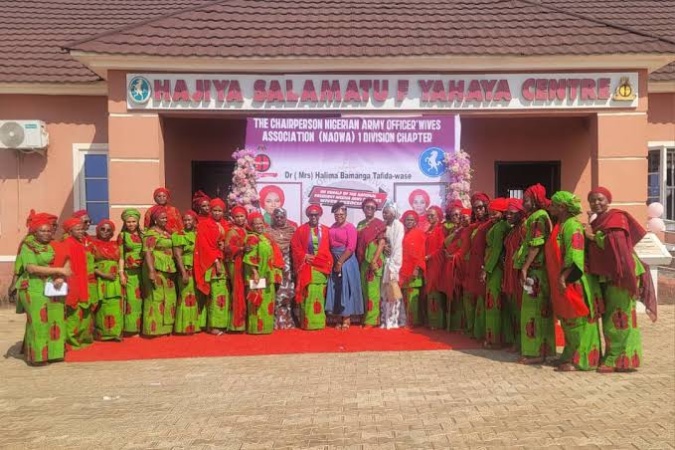
The Chairperson of the association, Dr Halima Tafida-Wase, made the call on Saturday in Kaduna at a Breast Cancer and Mental Health Awareness Programme organised by the association.
The programme, themed, “Her Voice, Her Journey: Embracing Mental and Physical Healing,” was organised to create awareness about breast cancer, promote mental health and encourage survivors to share their experiences.
Tafida-Wase said the programme was organised in recognition of October as Breast Cancer Awareness Month, popularly known as Pink October, as well as the International Mental Health Day.
She explained that the initiative was designed to educate women on breast cancer warning signs, encourage early diagnosis and treatment, and address the psychological challenges associated with the disease.
The chairperson urged women suffering in silence to come forward, assuring them that they were not alone and that the association was ready to support them in accessing medical care.
“My message to women in Kaduna and the 1 Division community is that any woman suffering in silence should know that she is not alone. She should come out because cancer is real,” she said.
She advised women experiencing suspicious symptoms to report to appropriate health facilities, adding that the association would assist them in accessing medical attention.
Tafida-Wase also stressed the importance of regular breast self-examination, describing it as a simple and affordable practice that could help women become familiar with their breasts and identify unusual changes requiring medical assessment.
She noted that military wives carried significant responsibilities in managing their homes while their husbands were deployed for operations, making their physical and mental well-being essential to family stability.
She said breast cancer affected more than the physical health of women, as it could also undermine their identity, confidence, emotional stability and mental well-being.
She called for a supportive community where women could openly discuss their experiences and receive emotional and psychological support throughout their treatment and recovery journeys.
Also speaking, Maj. James Abel, who delivered a lecture on breast cancer, mental health and physical healing, highlighted the relationship between psychological well-being and physical health, particularly among military families.
Abel identified depression, prolonged stress and post-traumatic stress disorder (PTSD) as some of the mental health challenges that could affect military personnel and their families, including spouses exposed to secondary trauma arising from their husbands’ operational experiences.
The medical doctor explained that prolonged stress could contribute to physical symptoms such as migraine, muscle tension, disturbed sleep, digestive problems, fatigue and increased blood pressure.
Abel urged women to recognise signs of emotional exhaustion, seek professional assistance when necessary and deliberately create time for rest and self-care, particularly given the multiple responsibilities they shoulder at home.
A breast cancer survivor, Adejoke Adeyenka, also encouraged women to overcome fear and denial, stressing that cancer was not a death sentence when detected early and appropriate treatment commenced promptly.
Adeyenka said awareness programmes were essential in reaching women who might be unaware of the disease or afraid of seeking medical attention, adding that survivors’ experiences could inspire others to seek help rather than suffer in silence.
She urged women to take advantage of such awareness initiatives, noting that sharing survivors’ stories could provide hope, encourage early diagnosis and help others navigate the challenges associated with breast cancer. (NAN)
•2026 NAOWA Breast Cancer and Mental Health Awareness Programme, organised to commemorate Breast Cancer Awareness Month and World Mental Health Day.