ADAD
Updating your news feed...

NEWS EXPRESS is Nigeria’s leading online newspaper. Published by Africa’s international award-winning journalist, Mr. Isaac Umunna, NEWS EXPRESS is Nigeria’s first truly professional online daily newspaper. It is published from Lagos, Nigeria’s economic and media hub, and has a provision for occasional special print editions. Thanks to our vast network of sources and dedicated team of professional journalists and contributors spread across Nigeria and overseas, NEWS EXPRESS has become synonymous with newsbreaks and exclusive stories from around the world.



















Loading banners
Loading banners...

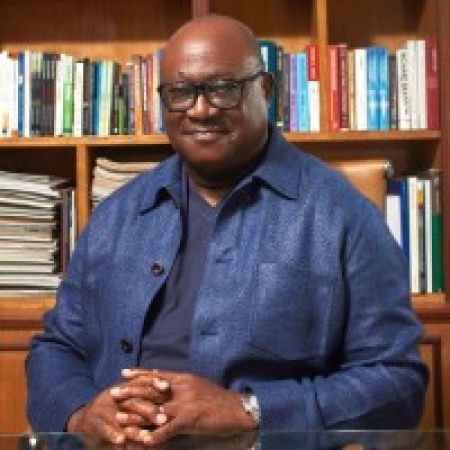
Udeme Ufot, MFR, Group Managing Director, SOU
Being a Keynote Address recently delivered by Udeme Ufot, MFR, Group Managing Director, SO&U, at the School of Media and Communication of Pan-Atlantic University, Lagos
The Vice Chancellor, the Dean and Faculty of the School of Media and Communication, distinguished members of the Pan-Atlantic University community, colleagues from the media and communications industry, invited guests, students, ladies and gentlemen, it is a pleasure and an honour for me to be here today.
Let me begin by congratulating the School of Media and Communication on its 20th anniversary. Twenty years is a significant milestone for any institution, but perhaps even more so for a school dedicated to a field that has changed so dramatically within those same years.
I must say that I am impressed by the developments the school has experienced during the period. I can still remember vividly when the SMC was an idea and how Professor Alos would speak excitedly about the concept of the school, while seeking validation from industry players. Professor Alos later went on to convince me to have SO&U sponsor one of the early Executive Programmes of the school. It is indeed amazing how the institution has evolved in tandem with an industry that has changed to a point where digital communications that was barely considered at its time of inception, has become the main platform for marketing communications.
And that is why today’s theme, “Daring the Future of Strategic Communications Education in a Networked World,” is so appropriate.
For me, the important word in that theme is not future. It is daring. We are not here to predict what the future of communication will look like. We are here to ask a more important question: Do we have the courage to shape it?
Twenty years ago, when this school dared to begin, communication was largely linear. Newspapers, radio and television shaped conversations. Organisations developed messages, the media amplified them, and audiences listened. Today, that model has changed. We live in a networked world where almost anyone can publish, influence and participate, and where information moves across platforms and borders almost instantly. A story can begin in Lagos and become a global conversation within minutes. A single consumer can influence a brand’s reputation. Audiences are no longer simply receiving communication; they are part of creating it.
Marketing communicators now need to be more intentional in developing creative strategies that stimulate audience engagement. The best brand narratives are now outputs of co-creation where audience participation endorse and confer added credibility on the brand. It has become more imperative that consumers have positive experiences of brands as they now have in their hands tools to make or mar brands.
So, as we celebrate the school’s first twenty years, the bigger question is what the future demands of us. What kind of communicators do we need, and what kind of education will prepare them to lead in a world that is more connected, complex and unpredictable?
I believe the first thing we must dare to do is rethink what we mean by strategic communications education. We cannot simply take the curriculum that prepared communicators for the last twenty years and add social media, Artificial Intelligence and a few digital courses. The change is much deeper. The tools have changed, but so have the relationship between organisations and audiences, the speed of information, the nature of influence and the expectations of society.
At SO&U, one lesson our experience has reinforced is that there is rarely a communication solution without first understanding the problem. A brief may appear to be about visibility when the real issue is trust, or about awareness when the real challenge is relevance. Sometimes what an organisation needs is not another campaign, but a better understanding of its audience.
That is why strategic communication begins with understanding the problem, the people, the context and the role communication can realistically play.
We must therefore move beyond teaching communication as a collection of techniques. A press release, print or electronic media campaign, social media post, media interview or event are all outputs. Strategy comes first. The communicator of the future must be a problem-solver, an interpreter, a strategist and an adviser who understands business, culture, technology, data and human behaviour.
At SO&U, we have always believed in Creativity That Works. And for me, the important word is works. A great idea must do more than attract attention. It must change something – perception, behaviour, trust, relationships or business outcomes. We should therefore teach young communicators not simply to produce ideas, but to understand why an idea matters, what problem it solves and what it is expected to change.
To achieve this, effective alliances must be formed with industry, there must be that handshake between town and gown, to ensure that the skills being imparted will be relevant to employers. We must go beyond teaching them to think, but also to be doers. The employers of tomorrow need results, not talk.
We must also dare to move from teaching answers to teaching questions. In a networked world, information is no longer scarce; the ability to make sense of it is. The future communicator must be curious, analytical and culturally intelligent, with strong research and data skills and the ability to distinguish signal from noise.
They must understand the Nigerian consumer deeply while remaining connected to what is happening across Africa and the wider world. Our market may be Nigerian, but our communication environment is global. We should be developing communicators who are globally connected without becoming culturally disconnected.
For too long, our communication education has sometimes been positioned as a consumer of ideas developed elsewhere. I believe we should dare to reverse that relationship. Nigeria has valuable lessons for the world in understanding diverse audiences, informal economies, cultural negotiation, community, resilience and trust. These are not limitations; they are sources of knowledge.
Our opportunity is to turn those experiences into scholarship, ideas, frameworks and practices that can contribute not only to Nigeria and Africa, but to the global conversation.
And then there is technology, particularly Artificial Intelligence.
AI will transform the communications profession. It will change how we research, analyse, create, monitor, personalise and distribute communication. Some tasks will become faster. Some roles will change. New ones will emerge.
But I do not believe the answer is to compete with technology. We should use it to elevate human capability. If AI can create content in seconds, the communicator must know whether that content should exist in the first place. If it can analyse millions of conversations, humans must still understand what those conversations mean. If it can generate ten campaign ideas, the communicator must decide which is strategically relevant, culturally appropriate, and in line with one of the key values of the Pan Atlantic University, ethically responsible.
We therefore need communicators who are AI-literate but human-centred; data-driven but not data-dependent; technologically confident but ethically grounded.
Technology can accelerate production, but it cannot replace purpose. It can identify patterns, but it cannot automatically understand meaning. It can generate possibilities, but it cannot take responsibility for consequences.
In a world where everybody can create content, trust will become more valuable than content, credibility more valuable than volume, and judgement more valuable than speed.
This is why ethics, trust and responsibility must sit at the centre of strategic communications education. The networked world has made communication more powerful, but it has also made misinformation and manipulation easier to spread.
The communicator therefore has a greater responsibility than simply getting attention. We must ask: What does this communication do to people? What does it do to organisations? What does it do to society?
We must teach future professionals that what is possible is not always right, what is trending is not always true, and engagement does not always create value.
Strategic communications cannot be fully understood from a textbook. It is a discipline of practice. You learn from people, markets, culture and mistakes, and sometimes most from the moments when the plan does not work.
But even skills will not be enough. We cannot promise young people that what they learn today will remain sufficient for the next twenty years. It will not.
Platforms will disappear. New technologies will emerge. Jobs will change. Some of the roles that will matter in 2046 do not yet have names.
So, our responsibility is to give students something more enduring than a fixed set of skills: the capacity to keep learning. We must make curiosity a professional habit, encourage them to challenge assumptions, become comfortable with uncertainty and adapt without losing their values.
That, for me, is the real meaning of daring the future.
Daring is not recklessness. It is the courage to imagine something better, the discipline to prepare for it, and the willingness to act before certainty arrives.
It is also the courage to unlearn. Sometimes the biggest barrier to innovation is not that we do not know enough; it is that we are too comfortable with what we already know.
The next generation of communicators must therefore be prepared to challenge the assumptions of our profession. They must ask whether the traditional agency model still works, whether the old boundaries between advertising, public relations, digital, content and experience still make sense, and what happens when consumers become the media and machines become co-creators.
These are not easy questions, but education should not always make us comfortable. Sometimes its greatest value is that it makes us question what we thought we knew.
And perhaps this is where today’s theme becomes even more meaningful.
Daring the Future of Strategic Communications Education in a Networked World is not simply about adding new technologies to an existing system. It is about changing our conception of what a communicator can be.
The communicator of the next twenty years should not simply be a content creator, but a strategic thinker; not simply a media manager, but an interpreter of society; not simply a storyteller, but someone who understands evidence, behaviour and consequences; not simply a user of technology, but someone who understands its possibilities and limitations.
And, importantly, not simply someone who responds to change, but someone who helps organisations and society make sense of change.
So, as we celebrate this important anniversary, perhaps our biggest responsibility is not to ask, “How far have we come?” but “How far are we prepared to go?”
What if we dare to educate communicators who can sit with a CEO and understand what keeps that CEO awake at night; sit with a consumer and understand the culture; sit with a technologist and understand the technology; sit with a journalist and understand the media; and sit with a community and understand lived experience?
What if we dare to prepare people not for the jobs that exist today, but for the possibilities that will emerge tomorrow?
What if we dare to make Nigerian and African communication education a source of ideas for the world rather than simply a consumer of ideas from elsewhere?
And what if we dare to produce communicators who do not simply respond to change, but help organisations, communities and society make sense of it?
That, ultimately, is what I believe this theme should mean.
It means daring to move from communication as a function to communication as strategic leadership; from content to meaning; from attention to trust; from technology to human intelligence; from information to insight; from reacting to change to shaping change; and from preparing people for today’s industry to preparing them to shape tomorrow.
The next twenty years will undoubtedly be more connected, more complex and more unpredictable than the last twenty. But we should not approach that future with anxiety. We should approach it with curiosity, courage, imagination, discipline and confidence.
Because the future of strategic communications will not be determined only by the technology that emerges, the platforms that dominate or the algorithms that become more powerful. Ultimately, it will be determined by the quality of the people we prepare to navigate that future.
And that is why institutions like yours matter.
Behind every communication system are human beings. Behind every technology are choices. Behind every message is a purpose. And behind every future is a generation being prepared to meet it.
So, on this twentieth anniversary, my challenge to the school is simple.
Do not only prepare students for the communications industry. Help them redefine it.
Do not only teach them what the industry knows. Teach them how to discover what it does not yet know.
Do not only give them answers. Teach them to ask better questions.
Do not simply teach them how to use the tools of communication. Teach them how to understand the world in which those tools operate.
And do not simply prepare them for the future. Give them the confidence, skills, judgement and courage to shape it.
Twenty years ago, this School dared to begin.
Today, it has the opportunity to dare again – to think beyond the next platform, the next technology, the next job, and to imagine what strategic communication can become when education, industry, technology, creativity, research and human intelligence come together.
The future is waiting.