ADAD
Updating your news feed...

NEWS EXPRESS is Nigeria’s leading online newspaper. Published by Africa’s international award-winning journalist, Mr. Isaac Umunna, NEWS EXPRESS is Nigeria’s first truly professional online daily newspaper. It is published from Lagos, Nigeria’s economic and media hub, and has a provision for occasional special print editions. Thanks to our vast network of sources and dedicated team of professional journalists and contributors spread across Nigeria and overseas, NEWS EXPRESS has become synonymous with newsbreaks and exclusive stories from around the world.













Loading banners
Loading banners...

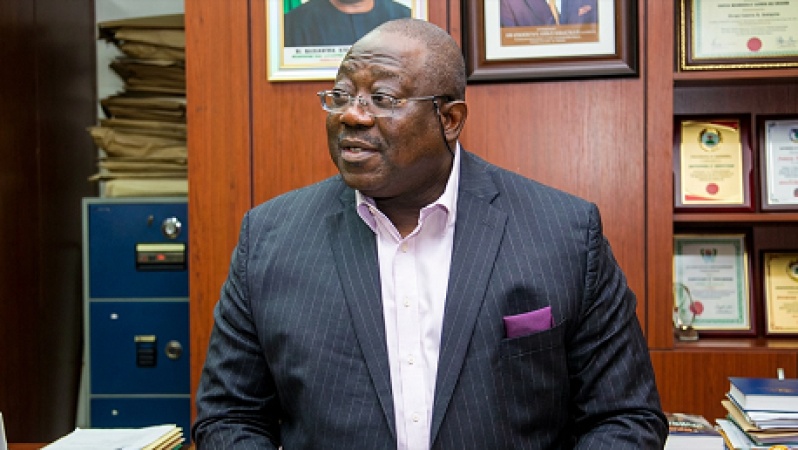
Minister of Power, Mr Tegbe
By ANGELA ATABO
The United Kingdom, Federal Government and participating state governments are seeking increased private sector investment in small hydropower projects to expand electricity access, promote renewable energy and stimulate economic activities in rural communities.
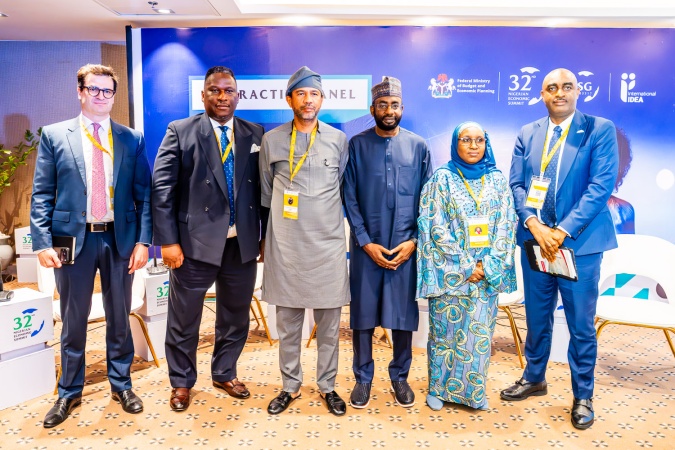
The British Deputy High Commissioner, Vicky Seymour, said this at a UK PACT stakeholder and investor roundtable on small hydropower development in Abuja on Wednesday.
The theme of the roundtable was “Mobilising Private Capital to Catalyse Small Run of River Hydropower at Scale for Rural Electrification and Industrialisation.”
Seymour said the UK was collaborating with Nigerian partners to address barriers to low-carbon growth and attract private investment into renewable energy projects.
She explained that the initiative had supported feasibility studies, dam safety assessments, environmental and social safeguards, financial modelling and transaction structuring for three pilot hydropower projects.
According to her, the projects include the Ikere Gorge in Oyo State, Gari Dam in Kano State and the rehabilitation of the NESCO hydropower cascade in Plateau State.
She said the initiative was being implemented by Africa PPP Advisory (AP3) and Ratio Consulting Ltd. To develop viable projects capable of attracting investment and improving electricity supply.
“The United Kingdom is really proud to work with Nigeria to advance a cleaner, more reliable, and more inclusive energy future,” Seymour said.
She added that the current phase of the initiative was focused on translating research, technical assessments and project preparation into practical implementation across the three pilot sites.
“Our note today is about moving from evidence to action together across the three pilot sites,” she said, emphasising the importance of cooperation among governments, investors and project developers.
Seymour stressed that the success of the energy transition should be assessed by its impact on people’s lives, particularly those living in communities with limited access to reliable electricity.
“Our shared success should be measured by the difference the energy transition makes to people’s lives,” she said.
She noted that dependable renewable electricity could improve livelihoods, create employment opportunities and support economic activities among low-income households, smallholder farmers and vulnerable communities.
The British deputy high commissioner added that the Federal Government’s draft National Small Hydropower Policy, deployment toolkit and project pipeline could provide a consistent framework for expanding small hydropower development across Nigeria.
The Minister of Power, Mr Joseph Tegbe, said the Federal Government remained committed to creating an enabling environment for renewable energy investment through policy reforms, infrastructure concessions and international partnerships.
Tegbe, represented by Mr Martin Olajide, Special Adviser to the President on Power, said the Electricity Act 2023 had broadened opportunities for state electricity markets and increased private sector participation in the power sector.
He explained that hydropower remained an important component of Nigeria’s energy mix alongside gas, solar and decentralised electricity supply, particularly in efforts to improve access in underserved communities.
According to him, the government expects the pilot projects to progress towards financial close, with investors addressing outstanding issues relating to hydrology, power evacuation, power purchase agreements and payment security.
He emphasised that project development must prioritise community benefits, dam safety and environmental protection to ensure that investments deliver sustainable outcomes.
Tegbe further highlighted the proposed integrated poultry project in Oyo State, designed to produce one million eggs daily, as an opportunity to demonstrate the economic benefits of reliable renewable electricity.
He said a hybrid hydropower and solar energy scheme could provide electricity for feed mills, hatcheries, poultry houses and other facilities required for the large-scale poultry operation.
The minister added that coordinated irrigation could support the cultivation of 7,000 hectares of maize and soybeans to supply raw materials for the project’s feed mill.
The Managing Director of the Rural Electrification Agency (REA), Dr Abba Aliyu, said Nigeria had an estimated small hydropower potential of more than 3,500 megawatts, much of which remained untapped.
Aliyu, represented by his Technical Adviser, Mr Jaafar Dikko, said many opportunities were associated with existing dams that could be developed to provide electricity to rural communities, waterworks and agro-processing facilities.
He disclosed that the agency had developed about 48 interconnected mini-grids in partnership with electricity distribution companies and state governments, although most of the existing systems were solar-powered.
Aliyu said the REA was ready to support small hydropower development through public-private partnerships and financing mechanisms capable of attracting the private capital required to implement viable projects.
The Managing Partner of Africa PPP Advisory Services (AP3), Dr Gori Olusina-Daniel, said integrating hydropower with solar energy could increase generation capacity and provide a more reliable electricity supply during both dry and rainy seasons.
He cited the Ikere Gorge project, which had remained dormant for more than three decades, as an example of the opportunities available through renewed investment, government support and collaboration with private developers.
Olusina-Daniel said the project, supported by concessionaire Quint Energy and the Oyo State and Federal Governments, was expected to reach financial close by the end of the second quarter of 2027.
He explained that the proposed hybrid solar-hydropower project could generate about 100 megawatts of electricity for Oyo State and other locations, including potential electricity offtakers connected to the national grid.
He said the roundtable was designed to bring together financiers, engineering contractors, developers, community representatives and other stakeholders to transform underutilised hydropower assets into commercially viable electricity projects.
A highlight of the event was the presentation of recognition awards to the Plateau, Kano and Yobe state governments, as well as the Rural Electrification Agency, for their efforts towards promoting renewable energy development and expanding electricity access in rural communities. (NAN)