ADAD
Updating your news feed...

NEWS EXPRESS is Nigeria’s leading online newspaper. Published by Africa’s international award-winning journalist, Mr. Isaac Umunna, NEWS EXPRESS is Nigeria’s first truly professional online daily newspaper. It is published from Lagos, Nigeria’s economic and media hub, and has a provision for occasional special print editions. Thanks to our vast network of sources and dedicated team of professional journalists and contributors spread across Nigeria and overseas, NEWS EXPRESS has become synonymous with newsbreaks and exclusive stories from around the world.
.webp)





.webp)

Loading banners
Loading banners...

A corps member, Odunayo Kareemat Buliaminu, has called for stronger government support for women farmers in Iwajowa Local Government Area of Oyo State, identifying the rising cost of farming, limited access to agricultural interventions, poor market opportunities and inadequate financing as major barriers to women’s economic empowerment.
Odunayo made the call through her N-PAL (Policy Advocacy Lab) project, titled “From Skill to Sustainability: Advancing Women Economic Empowerment in Iwajowa Local Government,” which seeks to advocate for improved access to agricultural inputs, financing, market opportunities and other forms of support for women farmers in the local government.
The project is supported by LEAP Africa and the Nigerian Youth Futures Fund (NYFF), in affiliation with the National Youth Service Corps (NYSC).
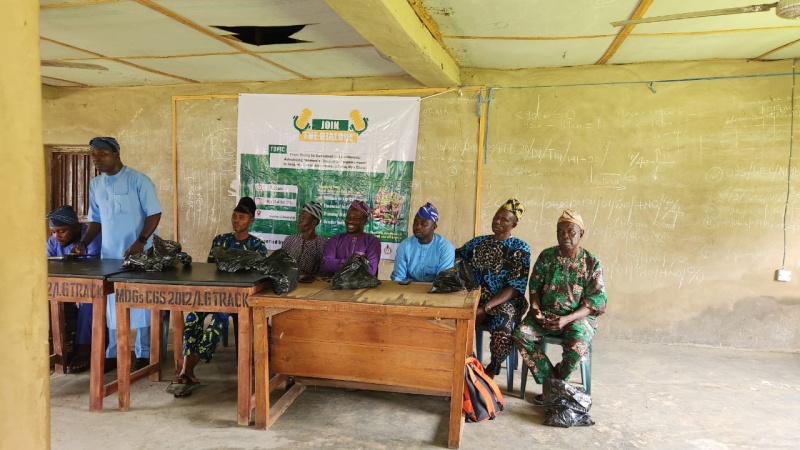
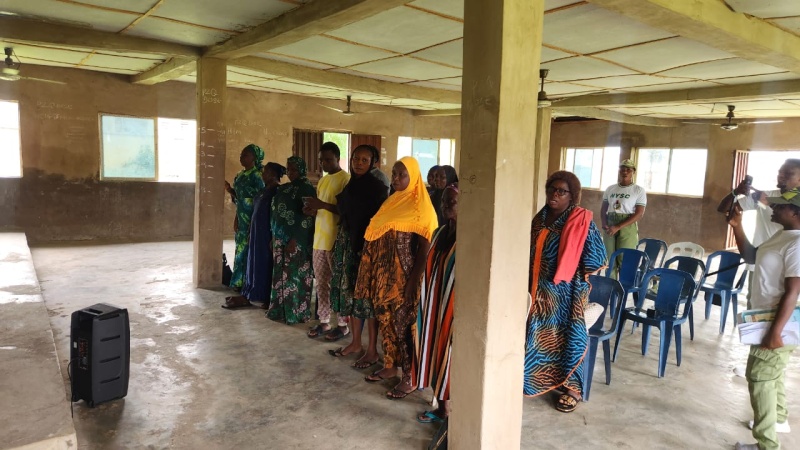
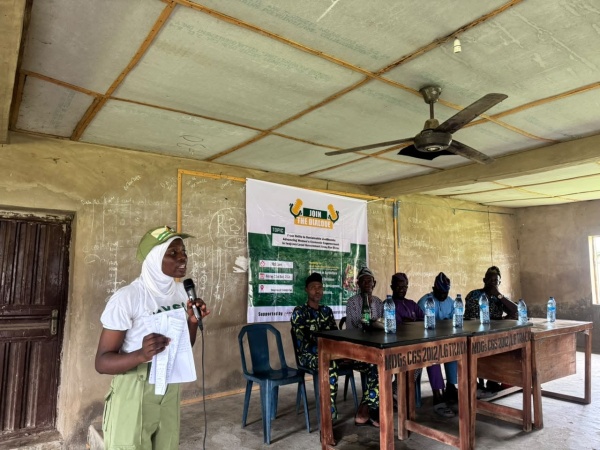
As part of the project implementation, a stakeholder engagement and advocacy meeting was held on Friday, 23 October 2026, at a hall beside the Iwajowa Local Government Secretariat, Oyo State. The meeting provided a platform for women farmers and agricultural stakeholders to discuss the challenges affecting their livelihoods and identify practical steps towards addressing them.
Speaking at the engagement, Odunayo emphasised the importance of supporting farmers, particularly women, as a means of strengthening food security and improving the wellbeing of the wider population.
“Food is one of the basic necessities of life, and farmers play a crucial role in ensuring that food is available on our tables.
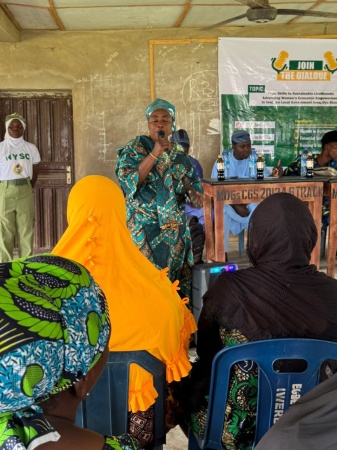
Imagine what would happen if farmers decided not to plant for an entire year; we would all feel the consequences, and many people would struggle to feed themselves. This is why we must listen to farmers, understand their challenges and provide the support they need. Supporting farmers, especially women farmers, is not just about agriculture; it is about food security and the wellbeing of everyone,” she said.
The engagement brought together six Baale Agbe representing farming communities across Iwajowa, two women farmer leaders representing all ten wards in the local government, and representatives of the local government.
During the meeting, women farmers raised concerns about the increasing cost of agricultural inputs, including seeds, fertilisers, herbicides and pesticides. They noted that the high cost of production, particularly expenses associated with weed control and chemical spraying, continues to make farming increasingly difficult for smallholder farmers.
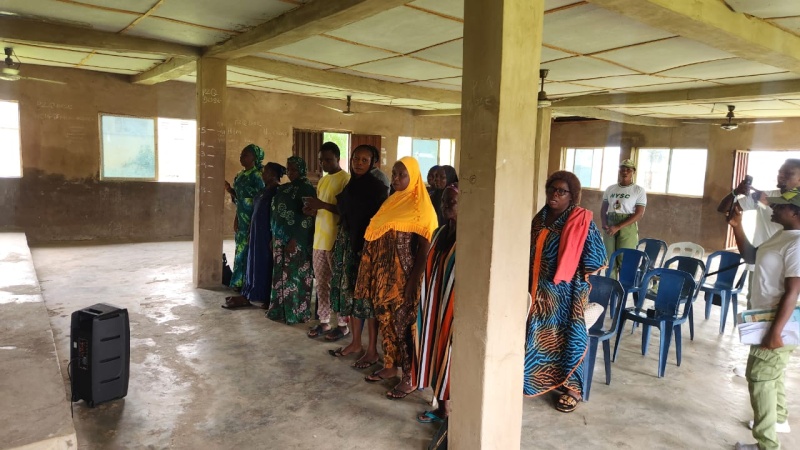
They also expressed concern about limited access to government agricultural interventions.
According to the participants, although they often hear about agricultural incentives, subsidies and other support programmes being distributed to farmers across Oyo State, many farmers in Iwajowa have not benefited from such interventions.
They called for a more transparent and inclusive system to ensure that women farmers in the local government are properly identified and connected to available government programmes.
Beyond the cost of inputs, the farmers identified unpredictable weather conditions as another challenge affecting agricultural production. They explained that changing weather patterns could disrupt planting seasons, affect crop yields and increase the financial risks associated with farming.
The participants further highlighted the difficulty of obtaining fair prices for their produce. They explained that farmers often spend heavily on production but are subsequently forced to sell their produce at prices that do not adequately reflect their investment and labour. This, they said, leaves many farmers without sufficient capital to reinvest in the next farming season.
The farmers also called for improved access to farm machinery and tools, including tractors and other mechanised equipment, noting that these would reduce dependence on expensive manual labour and improve productivity.
Access to affordable financing was another major issue raised during the engagement. The women called for soft loans, low-interest agricultural financing and revolving funds to enable smallholder farmers to purchase inputs and sustain their businesses throughout the farming cycle.
They also appealed for better market opportunities and direct connections with large-scale buyers and agro-processing companies. According to them, stronger market linkages could reduce dependence on middlemen, improve their bargaining power and enable them to earn better returns from their produce.
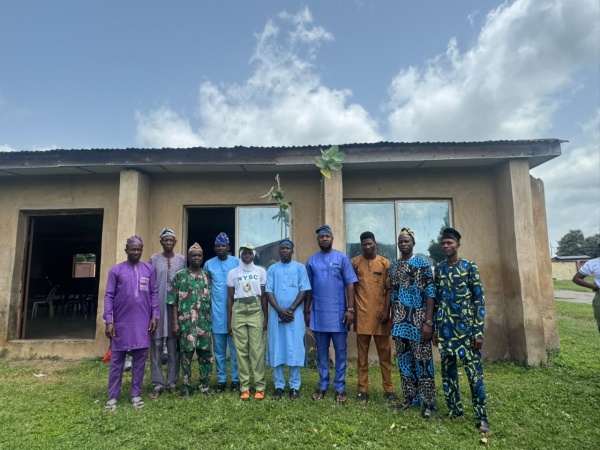
The Baale Agbe who participated in the engagement similarly called for stronger government intervention in agriculture, stressing that farmers should not only be encouraged to produce food but should also receive the financial, technical and market support required to make farming economically sustainable.
They particularly called for improved access to agricultural inputs and equipment, mechanised farming services, affordable financing, market linkages and timely information about government agricultural programmes.
Responding to the concerns raised, the Chief of Staff, Iwajowa Local Government, Mr. Kazeem Oladeinde Hammed, described the engagement as an important opportunity to better understand the challenges facing farmers in the area.
“This programme is an eye-opener and the first of its kind in Iwajowa Local Government. It has given us an opportunity to listen closely to the challenges women farmers and farmers in general are facing, some of which we may not have fully understood before now. Although agricultural inputs are being provided to farmers through various agricultural organisations in the state and the Baale Agbe, we have realised that these interventions may not be reaching everyone who needs them. This engagement has called on us to do more for women in agriculture and farmers generally. We are committed to ensuring that these concerns receive attention and that there is a positive change going forward,” he said.
Hammed also expressed willingness to escalate the issues raised to the relevant authorities and agricultural institutions. He committed to advocating for the inclusion of Iwajowa farmers in government agricultural interventions and exploring opportunities for affordable financing, improved access to farm inputs and stronger connections between local farmers and large-scale buyers.
The engagement further emphasised the importance of strengthening communication between farmers and agricultural institutions, particularly the Ministry of Agriculture and other relevant organisations, to ensure that farmers receive timely information about available subsidies, grants, training opportunities and other interventions.
The meeting was attended by Chief Olaleye Emmanuel, Baale Agbe of Ofeegun Community; Chief Aderibigbe Tijani A., Baale Agbe of Itasa Community; Chief Dauda Afeez, Baale Agbe of Idiko-Ago Community; Chief Naurawin Olagoke, Baale Agbe of Aiyetoro Community; Chief Tajudeen Bisi, Baale Agbe of Iwere-Ile Community; and Chief E.O. Ogunlade, Baale Agbe of Ilaji-Ile Community.
Also present were Mrs. Adebayo Fatimo Oredola, women leader for female farmers across Ijio-Meso, Idiko-Ago, Aiyetoro and Itasa wards, and Mrs. Obakunle Leah Adenike, who represents women farmers across the remaining six wards.
The local government was also represented by Mr. Mustapha Quadri Ajetunde, Deputy Leader, Iwajowa Local Government.
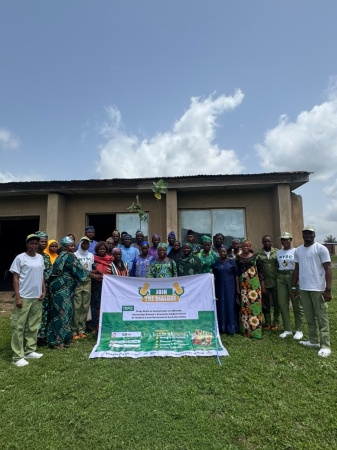
The engagement is part of efforts to move beyond skills development towards creating an enabling environment where women farmers can turn their agricultural activities into sustainable sources of income and economic independence.
For Buliaminu, the advocacy is centred on ensuring that women farmers in Iwajowa are not left behind in agricultural development efforts and that the concerns raised at the grassroots reach the institutions responsible for agricultural policy and support.
The project ultimately seeks to strengthen the connection between women farmers, government institutions and agricultural opportunities while promoting policies and interventions that can improve productivity, income and economic security for women farmers across Iwajowa Local Government Area.