ADAD
Updating your news feed...

NEWS EXPRESS is Nigeria’s leading online newspaper. Published by Africa’s international award-winning journalist, Mr. Isaac Umunna, NEWS EXPRESS is Nigeria’s first truly professional online daily newspaper. It is published from Lagos, Nigeria’s economic and media hub, and has a provision for occasional special print editions. Thanks to our vast network of sources and dedicated team of professional journalists and contributors spread across Nigeria and overseas, NEWS EXPRESS has become synonymous with newsbreaks and exclusive stories from around the world.



Loading banners
Loading banners...

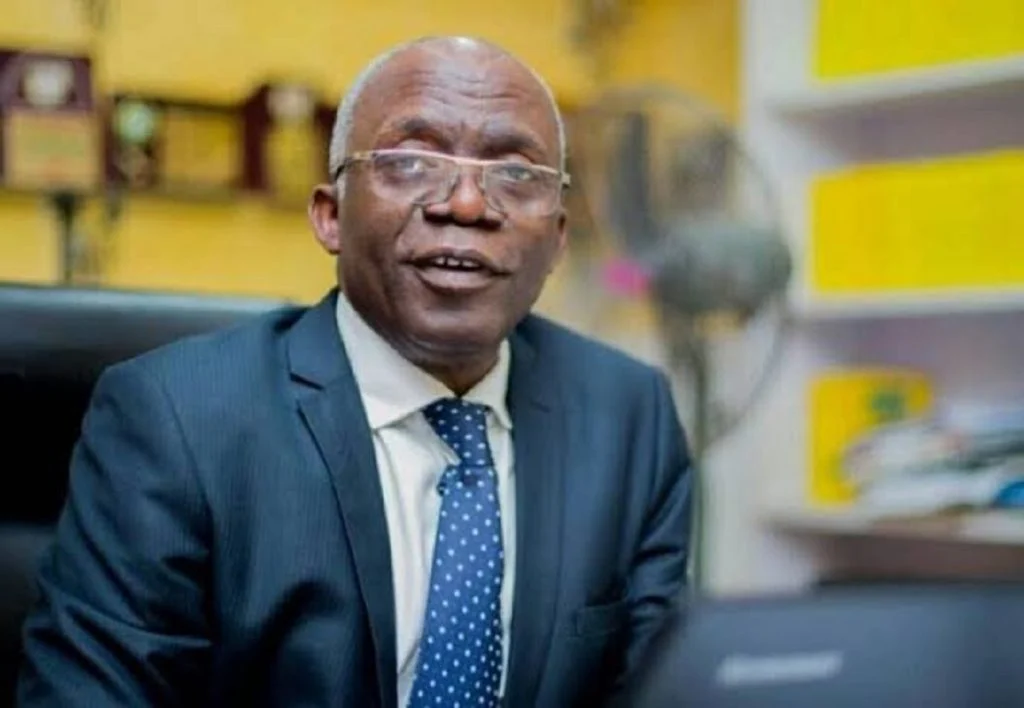
Sir, you’ve been around for a long time. At what point did you decide to read Law and what was the motivation? How fulfilled are you today as a lawyer?
I entered the university of Ife in September 1977 to study English language with a view to becoming a journalist. I thought that journalism would arm me with the vital tools to expose injustice in the society. But in my first year in the university, we had a student protest against the commercialisation of education by the Olusegun Obasanjo military regime. It was a popular protest. The regime reacted violently by unleashing violence on unarmed protesters. Student leaders were dismissed. Radical lecturers were sacked. Even the lawyer of the National Union of Nigerian Students (NUNS), Chief Gani Fawehinmi, was arrested and charged with stealing his own camera. Fortunately, Comrade Alao Aka-Bashorun was the chairman of the Lagos Bar Association at the material time. In that capacity, he mobilised the entirety of Lagos lawyers to defend Chief Fawehinmi. The military regime was disgraced as the frivolous charge was struck out while the defendant was discharged. I was impressed by the public-spirited roles of both Aka-Bashorun and Gani. In my study of Marxism, I also discovered that Vladimir Lenin, Leonard Boudin, Fidel Castro, Nelson Mandela and Oliver Tambo were radical lawyers. I made up my mind that I was going to join the tribe of revolutionary lawyers.
I have collaborated with progressive colleagues to use the law to defend the rights of the victims of injustice in Nigeria and other African countries. We have ensured that Nigerians are no longer detained without trial. From time to time, we challenge the illegal arrest and detention of citizens. We secure freedom for them. We have made representations to the appropriate authorities in Africa to grant pardon to over 320 convicts. We have saved the lives of scores of people who were convicted and sentenced to death. No doubt, our law firm has upheld the rights of oppressed people to access the courts to secure their political and civil rights. Based on our legal submissions, the African Court on Human and Peoples Rights in Arusha, Tanzania has upheld the right of the Saharawi people to self-determination. Even though the court was established in 2006, I am the only Nigerian lawyer who appears there. When I was the president of the West African Bar Association, we successfully campaigned for the expansion of the mandate of the Ecowas Court to empower it to hear human rights abuse that occurs in any of the member state of Ecowas. I am however pained to note that Nigerian citizens who are victims of violent attacks in African countries have been denied access to the African court. It is common knowledge that Nigerians are attacked and even killed in South Africa without any legal challenge. Because the Federal Government has failed to recognise the African Court, we are inhibited in challenging the failure of the Cyril Ramaphosa administration to stop the xenophobic attacks unleashed on African migrants, including Nigerians. No doubt, we have won some socio-economic rights of the people but the judgments have not been fully complied with. To that extent, I am not fulfilled as we have not succeeded in using the law to change the society to substantially improve the lives of the African people. Apart from allowing the IMF and World Bank to impose anti-people economic policies on African governments, the resources of Africa are being mined and expropriated by Western and Chinese companies at give-away prices.
There is an ongoing back and forth between Oyo State governor and the Federal Government on NLNG dividends to the Federation Account. You raised a similar issue three years ago. Why do you think the matter has remained unresolved sir?
With profound respect, the positions of Governor Seyi Makinde and the Presidency have not settled the crisis of federalism involved in the illegal diversion of the dividends payable to the Federation Account. While Governor Seyi Makinde’s claim that every state is entitled to N250 billion is rather misleading, the claim of the Presidency that NLNG has paid roughly $21.5 billion in total cumulative dividends over its history, with less than $3 billion received under the Tinubu administration is not correct. It is however good that the governor decided to draw public attention to the unresolved political and economic crisis arising from the decision to pocket the dividends from the NLNG destined for the Federation Account.
According to the NLNG, it has remitted $10.8 billion in taxes to the Federal Government of Nigeria since it became tax-compliant in 2009. The NLNG has also generated about $149.6 billion in revenue and distributed $47.2 billion in total dividends across all four shareholders. Out of the said sum, the NNPCL received and diverted the $23.1 billion dividend based on the 49 percent stake of Nigeria in the NLNG. In other words, the NNPCL which represents the government on the board of the NLNG has refused to remit the dividends to the Federation Account in total violation of section 162(1) of the Constitution of Nigeria. The National Assembly, National Extractive Industry Transparency Initiative Revenue Mobilisation Allocation and Fiscal Commission have repeatedly called on the NNPCL to remit the dividends to the Federation Account. Those calls have fallen on deaf ears since 1999. We had advised state governors to sue the NNPCL for the recovery of their share from the dividends but the Nigeria Governors Forum has been reluctant to confront the NNPCL. Apart from directing the NNPCL to refund the dividends of $23.1 billion for distribution by the three tiers of government in line with section 162 of the Constitution, it is high time the NLNG was made to remit the dividends earned by Nigeria to the Federation Account without going through the NNPCL.
Former Vice President Atiku Abubakar has called for the return of fuel subsidy while the Federal Government has insisted that fuel subsidy would not be brought back. What is your view on fuel subsidy?
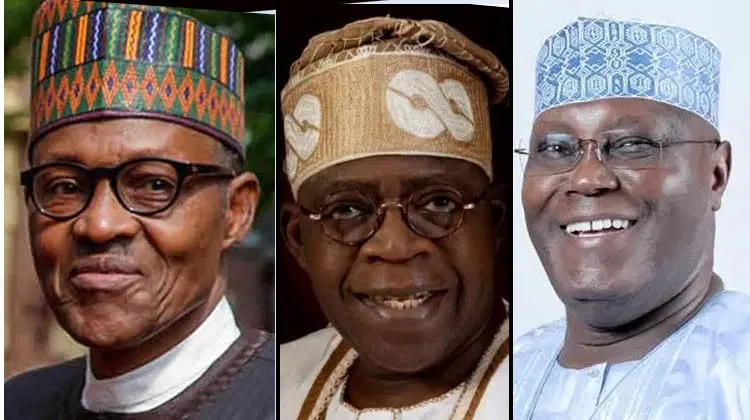
With respect to the management of the economy, the APC, ADC and NDC are birds of a feather. The leaders of these political parties campaigned for removal of fuel subsidy. And when President Tinubu announced that fuel subsidy was gone, Messrs Atiku Abubakar and Peter Obi commended him. Apart from Omoyele Sowore, Donald Duke, Adebayo, the other presidential candidates have swallowed hook, line and sinker the policy of the APC on the removal of fuel subsidies. The question that is not being asked by political leaders is how Nigeria got to this mess. For about two decades, the Federal Government spent between $18 and $25 billion on the turnaround maintenance of the four publicly owned refineries. In 2021, the Buhari administration approved $2.9 billion for the rehabilitation of the four refineries. Thereafter, the Nigerian National Petroleum Company Limited was directed by the government to invest $2.6 billion to acquire 20 percent in the Dangote Refinery. Mr. Aliko Dangote has said that the Federal Government has only 7 percent shares because the NNPCL invested only $1 billion. The NNPCL has not explained how Nigeria was shortchanged in the acquisition of the shares. In his inauguration address of May 29, 2023, President Tinubu administration announced that subsidy was gone. At the same time, it merged the dual foreign exchange policy and embarked on massive devaluation of the national currency. Under these IMF and World Bank approved programmes, the price of fuel jumped from N97 to N1,400 per litre. Owing to the impact of PMS in the running of the Nigerian economy, the prices of other goods and services increased. At the same time, the government stopped subsidising social services while new taxes were introduced. In implementing these dangerous neoliberal policies, the number of multi-dimensionally poor people increased phenomenally. The national minimum wage of N70,000 per month and the poverty alleviation policies of the government were destroyed by devaluation and inflation.
It is true that the government was spending about $10 billion per annum to fund the fuel subsidy scam. The defunct Directorate of Petroleum Resources said that Nigerians were consuming 38 million litres of petrol. The NNPCL was collecting funds for 102 million litres per day. The Nigerian Customs Service publicly challenged the NNPCL to prove that 900 tankers were smuggling fuel out of Nigeria daily. That challenge was never taken up by the NNPCL. Instead of announcing that fuel subsidy was gone, President Bola Tinubu ought to have caused the fraud to be investigated. It is still not late to probe the monumental fraud. In the past, the government allocated 450,000 barrels of crude oil per day for domestic consumption. When the production figure was barely 1 million per day, the allocation was said to have been committed elsewhere. The finance minister has just confirmed that Nigeria currently produces 1.8 million barrels of crude oil per day. What stops the government from allocating 350,000 barrels per day for domestic consumption? That will give the NNPCL not less than 55 million litres of petrol per day in addition to derivatives like jet fuel, diesel and kerosene. The daily consumption of PMS is less than 50 million litres. The 350 barrels will be refined locally and sold to Nigerians instead of asking them to pay landing costs for fuel imported from other countries. The government had once announced plans to refund crude oil locally but the World Bank insisted on fuel import. Since then, the government has not explained why fuel consumed in Nigeria cannot be refined locally. This is the crux of the matter.
At the recent ITV and Radio Pre-Independence Lecture, you defined the Nigerian dream as one of dignity, opportunity, justice and accountable government. Looking at the cost of living, unemployment, insecurity and declining public services today, is that dream still attainable under the present political order, or does Nigeria require a fundamental restructuring?
The Nigerian dream, as I have defined it, is a dream of dignity, opportunity, justice and accountable government. Unfortunately, that dream has been shattered by the failure of successive governments to discharge their fundamental responsibilities to the Nigerian people. Today, millions of Nigerians are struggling to feed, educate and provide shelter for their families. Unemployment is widespread, insecurity has become a serious threat to life and property, and access to essential public services is increasingly beyond the reach of ordinary citizens. These conditions are incompatible with the promise of independence and the aspirations of a democratic society.
However, I do not believe that the Nigerian dream is unattainable. It is possible to realiseit, but certainly not through the continuation of the same policies, economic arrangements and political practices that have brought the country to its present predicament. The realisation of that dream requires the mobilisation of Nigerians, particularly workers, students, farmers, artisans and other oppressed people to challenge the structures that perpetuate poverty, inequality and underdevelopment. Such mobilisation must be directed against both external forces of economic domination and their local lackeys who facilitate the exploitation of the country’s resources at the expense of its people. The fundamental objectives of government must cease to be mere constitutional declarations. They must become practical realities in the lives of citizens. These objectives include popular democracy, the security and welfare of the people, access to quality and affordable education, accessible healthcare, decent housing, employment opportunities and the protection of human dignity. A country cannot meaningfully claim to be democratic when its citizens possess the right to vote but are denied the material conditions necessary to live decent lives.
Fundamentally, the problem is not simply a shortage of resources; it is also the absence of the political will to deploy those resources for the common good. The ruling class has demonstrated a disturbing lack of vision in addressing the structural causes of poverty, insecurity and inequality. Where a political order consistently fails to meet the basic needs of the majority, a fundamental transformation becomes imperative. What Nigeria requires, therefore, is not merely a change of personalities in government but a transformation of the political and economic order. Nigerians must be mobilised to demand a genuinely popular democracy founded on social justice, economic sovereignty, accountability and equitable distribution of national wealth. In that sense, a revolution is certainly called for—not necessarily a violent upheaval, but a profound, people-driven transformation of the institutions, policies and power relations that have frustrated the aspirations of the Nigerian people. The Nigerian dream can still be realised, but it will not be delivered as a gift by the ruling class. It must be secured through organised popular struggle, democratic participation and the determination of Nigerians to insist that the country belongs to all its citizens, not merely to those who occupy positions of political and economic power.
With the 2027 general election approaching, what must INEC do differently to convince Nigerians that votes will be counted, results will be transparently transmitted and the declared winners will truly reflect the choices made at the polling units?
INEC is not alone in bearing responsibility for credible elections. Political parties must respect electoral rules; security agencies must remain impartial; the courts must resolve disputes consistently and expeditiously; and citizens must be able to participate without fear or inducement. Vote-buying, voter intimidation, electoral violence and the use of public resources to secure partisan advantage can undermine the freedom of the voter even where the figures are accurately collated. The Osun experience therefore demonstrates both the importance of transparent result management and the need for more effective enforcement against vote-buying and voter inducement. Security agencies must protect voters without becoming instruments of political coercion, while prosecuting authorities must take credible allegations of electoral offences seriously. The Commission must strengthen its accountability mechanisms. Political parties, candidates, accredited observers and the public should have meaningful access to relevant electoral information, subject to lawful safeguards. Any discrepancy in election results must be capable of independent verification, and complaints of electoral misconduct must be investigated promptly. Electoral officers who deliberately compromise the process should face appropriate disciplinary and criminal consequences. INEC must address recurring problems of inadequate preparation, technological failures, logistical difficulties and the late deployment of electoral materials. These are not minor administrative inconveniences. They can disenfranchise voters, create opportunities for malpractice and undermine the legitimacy of the entire exercise. The Commission must test its technological infrastructure well in advance, publish clear operational guidelines, train electoral personnel and establish transparent procedures for dealing with technical failures. Results recorded at polling units must remain the primary reference point for verifying what eventually emerges at collation centres. Where electronic transmission is required by law, the Commission must establish reliable systems and clear procedures that prevent manipulation, unauthorised alteration or unexplained discrepancies between polling-unit results and declared outcomes INEC should build on the positive aspects of the Osun experience as it prepares for the 2027 general election. The Commission must demonstrate institutional independence, professional competence and a willingness to hold all political parties and candidates to the requirements of the law, irrespective of their political influence.
You warned that conflicting judgments by courts of coordinate jurisdiction on INEC’s powers could sabotage the 2027 elections. With some courts apparently disregarding binding precedents, how much faith do you still have in the judiciary as the final guardian of electoral justice, and who should be held accountable when judges deliver irreconcilable decisions on substantially identical questions.
The judiciary occupies a central position in a constitutional democracy because it is entrusted with the responsibility of interpreting the law, protecting constitutional rights and ensuring that public authorities act within the limits of their powers. Nevertheless, the authority of the judiciary cannot rest solely on the fact that judges wear judicial robes. It must rest on the integrity of judicial reasoning, consistency in the application of the law, fidelity to binding precedents and the confidence of the people that justice is being administered impartially. My concern is not that judges may occasionally disagree on difficult questions of law. Judicial disagreement is inevitable in a functioning legal system. The concern arises when courts of coordinate jurisdiction deliver irreconcilable decisions on substantially identical questions without any legally sustainable distinction, particularly where those decisions concern the powers of INEC and the administration of elections. Such contradictions create uncertainty, encourage forum shopping and expose the electoral process to manipulation by litigants who seek a favourable judicial order rather than a lawful resolution of their disputes. As we approach the 2027 general election, the judiciary must not become an arena in which competing political interests seek contradictory orders capable of frustrating the electoral timetable or undermining the authority of the electoral commission. I nevertheless retain faith in the possibility of judicial reform and in the many judges who continue to discharge their responsibilities with courage and integrity. But faith in the judiciary must not be confused with an obligation to excuse misconduct or institutional failure. Respect for the judicial institution requires us to insist that it meets the standards expected of it under the Constitution. The legal profession also has a responsibility. Lawyers must not encourage judge-shopping, conceal binding authorities or exploit procedural loopholes to procure contradictory orders. The Bar must defend the independence of the judiciary while insisting on professional discipline and ethical conduct. The ultimate objective is not to weaken the judiciary but to restore and strengthen its credibility. Judicial independence must be accompanied by judicial responsibility. The public must be able to trust that cases are decided according to law and evidence, rather than the political interests of the parties involved. Without consistency, accountability and respect for precedent, the judiciary risks losing the very public confidence upon which its authority ultimately depends.
You have argued that election winners should emerge from the ballot box rather than the courtroom. Given Nigeria’s history of electoral malpractice, however, how can the courts refrain from effectively choosing leaders while still providing meaningful remedies when elections are stolen or seriously compromised?
My position is that the people must choose their leaders through the ballot box, not through judicial pronouncements. The courtroom should not become an alternative electoral arena in which political parties seek to obtain through litigation what they could not legitimately secure from the electorate. However, that position must not be misunderstood as suggesting that the courts should abdicate their constitutional responsibilities whenever an election is disputed. The right to challenge an election is an essential component of electoral democracy. Where votes have been unlawfully manipulated, results falsified, eligible voters disenfranchised or electoral laws substantially violated, the courts must provide effective remedies in accordance with the applicable law. The courts must not substitute their political preferences for the choices of voters, but neither should they validate electoral malpractice in the name of respecting the ballot box. Electoral tribunals should not be expected to compensate for the persistent failure of the electoral commission, security agencies and prosecuting authorities to perform their statutory duties. Persons who falsify results, procure fraudulent declarations, intimidate voters or corrupt electoral officials must be investigated and prosecuted where the evidence supports criminal charges. The failure to impose meaningful consequences encourages impunity and makes electoral litigation an inadequate substitute for the effective enforcement of electoral law. Ultimately, the solution is not to diminish the authority of the courts but to ensure that their intervention protects, rather than displaces, the democratic will of the people. The judiciary must remain an impartial arbiter of electoral disputes, guided by evidence, constitutional principles and the law. The ballot box must remain the primary instrument for choosing political leaders, while the courtroom must remain the forum for correcting unlawful interference with that choice. When both institutions discharge their responsibilities faithfully, electoral justice can strengthen democracy rather than undermine it.
You criticised the provision of houses for judges by the executive as illegal. Why should an initiative intended to improve judges’ welfare be unlawful? Is your objection to the houses themselves due to the source of the benefit, the absence of legislative appropriation, or the danger that judges hearing cases involving the donor may be perceived as compromised?
Let me make it clear that I have no objection to improving the welfare of judges. Judges perform an important constitutional function, and they must be provided with adequate remuneration, secure working conditions, appropriate accommodation and the institutional support necessary to discharge their duties without fear or favour. An independent judiciary cannot be sustained if judicial officers are subjected to financial insecurity or deprived of the conditions required for the effective administration of justice. My objection is to the method by which such benefits are provided and the constitutional implications of allowing the executive to confer substantial personal benefits on judicial officers outside the established legal and budgetary framework.
Judicial independence requires not only that judges remain impartial but also that the institutional arrangements surrounding them do not reasonably create an appearance of dependence on litigants or interested public authorities. Where the executive provides a judge with a substantial personal benefit, questions may arise about whether that benefit could influence, or appear to influence, the judge’s independence. Such concerns are particularly serious when courts are adjudicating disputes involving the government. This does not mean that every publicly funded official residence compromises a judge. Properly authorised official accommodation is a legitimate component of judicial welfare in many constitutional systems. The critical distinction is between an institutional entitlement provided under a transparent legal framework and a discretionary benefit that may create a relationship of personal obligation between the recipient and the donor. The solution is for the government to provide judicial welfare through constitutionally sound and transparent mechanisms. The relevant authorities should determine the accommodation needs of judicial officers, provide for them in the budget, ensure that the funds are properly appropriated and establish clear rules governing the administration of such benefits. We must never lose sight of the fact that judicial independence is a safeguard for the ordinary citizen. A worker challenging unlawful dismissal, a community contesting an unlawful acquisition of its land, a citizen alleging a violation of fundamental rights or a political party disputing an electoral decision must be confident that the judge will determine the matter strictly according to law. Consequently, judicial welfare and judicial independence are complementary, not competing, objectives. Judges must be adequately supported, but the support must be provided in a manner that preserves constitutional accountability and public confidence. The executive must not be permitted to convert its responsibility to provide lawful public services into a source of personal influence over the judiciary.
Kidnapping, terrorism, banditry and attacks on rural communities persist despite enormous security expenditure. Is Nigeria’s principal problem inadequate personnel and equipment, weak intelligence, corruption, or the failure to prosecute financiers and perpetrators and what immediate measures would you prescribe?
Kidnapping, terrorism, banditry and attacks on rural communities persist because of lack of adequate protection by security forces. It is a well-known fact that the rural communities are not policed. Instead of policing the entire country with adequate number of security personnel, the people have been made to believe that the establishment of state police is the panacea to insecurity in the country. Under the current security arrangement, every state government has a security agency where operatives are ill-trained, ill-equipped and under-funded. In what way will State Police be run differently? It is undoubtedly clear that state police will soon be established. But in view of the threats of violence traced to some governors and leaders of political parties, the national assembly should be restrained from allowing the state police to take off before the 2027 general election. Otherwise, the election will be marred by violence of unimaginable proportion.
What is your assessment of the present National Assembly: is it exercising meaningful oversight of the executive and defending the public interest, or has it become largely an approving arm of the presidency? What particular action or failure most strongly supports your judgment?
The National Assembly and State houses of assembly have become extensions of the executive organ of government. The 10th National Assembly is the most executive-minded since 1999. It is public knowledge that external loans running to billions of dollars are approved without any debate whatsoever. Candidates nominated for appointments are approved without any confirmation hearing. If and when the candidates appear physically, they are asked to take a bow and go. The practice is completely alien to the Constitution. The defence treaty to have American troops on our soil, explore and mine mineral resources etc are not domesticated by the National Assembly as stipulated by Section 12 of the Constitution. Former governors, who will not allow members of the houses of assembly to question their activities, have found it difficult to challenge the policies of the president. With more governors taking over the Senate, the situation is likely to get worse. With a former governor presiding over the Senate and former governors heading important committees of the senate, the federal legislators consider it unpatriotic to challenge the policies of the president. The members of the ruling party who dominate both chambers of the National Assembly are barred from questioning any policy of the president. The situation is worse in the states, where a number of governors behave like potentates or emperors. The current National Assembly cannot exercise meaningful oversight functions due to compromise and corruption. To start with, members pad and insert items in the national budget. They are called constituency projects. Even though the National Assembly lacks the power to prepare the budget and turn round to approve it, the president allows it. Having compromised itself in the preparation of the budget, the National Assembly lacks the moral and political right to challenge the executive branch of the government.
As a senior advocate and human-rights lawyer, what future do you see for legal practice in Nigeria amid allegations of judge-shopping, conflicting judgments, prolonged litigation, disregard for court orders and the growing cost of obtaining justice? What reforms must the Nigerian Bar Association, the Legal Practitioners Disciplinary Committee and the National Judicial Council undertake?
Allegations of forum shopping in the courts, conflicting court orders, prolonged litigation, disobedience of court orders and the growing cost of litigation have become an integral part of the Nigerian legal system. The members of the ruling class have decided to discredit the courts of record consisting of High Courts, National Industrial Court, Court of Appeal and the Supreme Court. These courts are patronised by the elite and the bourgeoisie. Neither the Nigerian Bar Association nor the National Judicial Council is seriously prepared to address these grave allegations and bail out the ruling class. The system is designed for self-immolation, which will fast-track the revolution. I am mobilising progressive lawyers to promote African dispute resolution, otherwise called alternative dispute resolution. We want poor people to demand representation in the courts by lawyers deployed by the Legal Aid Council or the office of the Public Defender in every state. We want full interrogation of the Customary Courts, Area Courts and Sharia Courts into the legal system. These are the courts that are patronised by the masses. The claim of the ruling class that the judiciary is last hope of the common man is a myth. The common man does not have the financial power to approach the court for legal redress. In fact, the so-called courts of record under the Constitution, which include the Federal High Court, State High Courts, National Industrial Court, Court of Appeal, Customary Court of Appeal, Sharia Court of Appeal and the Supreme Court are largely patronised by the members of the bourgeoisie. Prolonged delay, conflicting court orders are going to continue as the system is too compromised and weak to address them. This is because members of the ruling class are not disciplined to defend the democratic process. The Nigerian Bar Association, the Legal Practitioners Disciplinary Committee and the National Judicial Council cannot arrest the rot as they are constituted by the beneficiaries of the dysfunctional system. The solutions to these problems will have to come from outside the legal system. Ultimately, the system will be changed by the Nigerian people when a new democratic system is established in the public interest.
Finally, sir, after more than a quarter of a century of uninterrupted civilian rule, elections remain disputed, institutions appear vulnerable and citizens increasingly distrust government. Are we consolidating democracy or merely maintaining its outward forms and what gives you hope that Nigerian democracy can survive and improve?
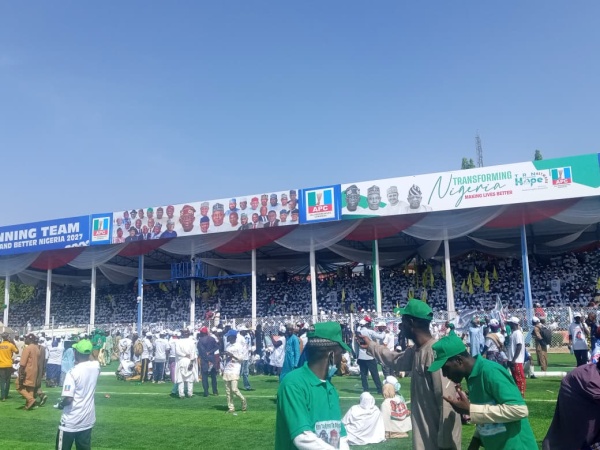
What we have had 26 years of uninterrupted civil rule and not democracy. Citizens cannot trust a political system that excludes and alienate them from governance. Whereas the Constitution provides for participatory democracy, only a few people are qualified to contest elections in Nigeria. Under the constitutional dispensation, only a person who has been educated up to school certificate level is eligible to contest elections. That has excluded about 60 million adults who are said to be illiterate. Among the literate population of about 160 million people, only money bags have the economic wherewithal to pay for nomination and campaign expenses that run to billions of Naira. The EFCC Chairman recently disclosed that some politicians spent between N20 billion and N30 billion to win the primary elections. You can imagine the amount that will be spent on the governorship or presidential elections. That is not democracy but plutocracy. What we have in place is a democratic process that is limited to fat cats. So, when the government talks of one man, one vote, it means that each voter should vote for members of the political class of their choice. As the democratic process is presently constituted, we can only talk of an arrangement that is designed to limit political participation to a handful of politicians. They are funded from the money made from the public purse. A few other participants are funded by government contractors including pipeline monitoring companies. It is common knowledge that teachers, lecturers, lawyers, doctors, farmers, engineers, journalists, etc are excluded from the political system. The current civil rule of thuggery and violence; killings, vote sale and vote buying, senseless dancing at political rallies etc cannot be sustained for long. I foresee a situation whereby a violent political eruption will inexorably lead to a revolutionary overthrow of the rickety democratic process. That is what will lead to the consolidation of popular democracy in Nigeria. It is high time that the democratic process was totally overhauled so as to involve majority of the citizens in the governance of the country. That is what democracy is all about. The struggle against minority rule in the country has to be waged after the 2027 general election. Otherwise, democracy cannot survive in the country. ( Tribune)