 ADAD
ADADUpdating your news feed...

NEWS EXPRESS is Nigeria’s leading online newspaper. Published by Africa’s international award-winning journalist, Mr. Isaac Umunna, NEWS EXPRESS is Nigeria’s first truly professional online daily newspaper. It is published from Lagos, Nigeria’s economic and media hub, and has a provision for occasional special print editions. Thanks to our vast network of sources and dedicated team of professional journalists and contributors spread across Nigeria and overseas, NEWS EXPRESS has become synonymous with newsbreaks and exclusive stories from around the world.







Loading banners
Loading banners...

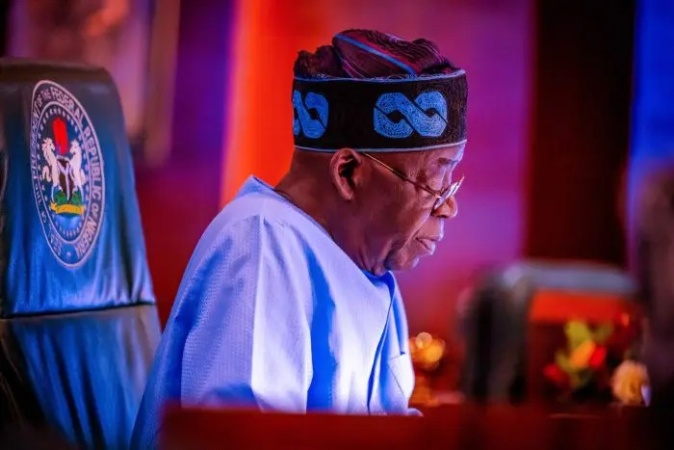
President Tinubu
The Minister of Information and National Orientation, Mohammed Idris, on Monday assured that President Bola Ahmed Tinubu would continue engaging organised labour to address workers’ demands amid the threat of a strike. Idris said the President remained committed to dialogue with labour unions and expressed confidence that the country could resolve outstanding issues in the collective interest.
Speaking during a media engagement, the minister recalled negotiations preceding the approval of the current national minimum wage, saying Tinubu had advocated a shorter interval for reviewing wage agreements.
According to him, the President had proposed reducing the existing five-year review cycle to three years to make wage negotiations more responsive to changing economic conditions.
“I recall that when we were going back and forth on the N70,000 minimum wage, one of the things labour wanted was a review of the period for wage negotiations,” Idris said.
He explained that Tinubu had questioned why workers should wait five years before their wages could be reviewed. “The President said, ‘As we keep going, why do we even have to wait for five years before we review this?’ And it came up that we could review it in three years,” he said.
Idris added that the government would continue engaging labour representatives to address disagreements and find mutually acceptable solutions.
“The President is going to keep to his promise. We will always bring them together and find solutions in the collective interest of our country,” he said.
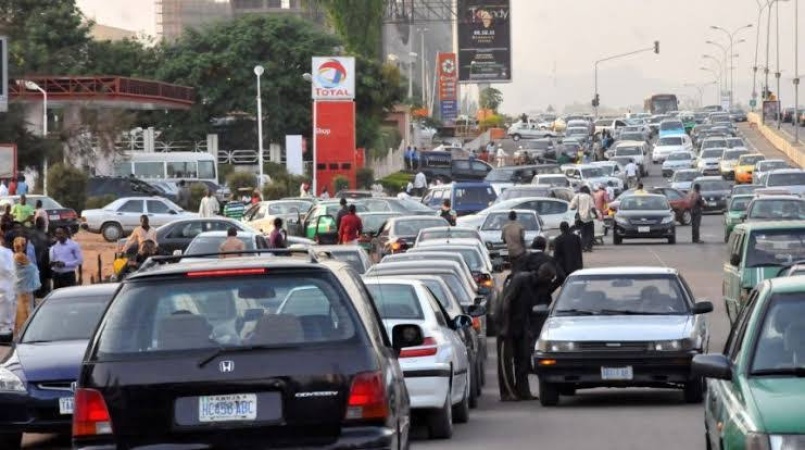
On the federal government’s 30-day petrol discount initiative, Idris maintained that the intervention was not a return to fuel subsidy but a temporary measure to ease the burden of rising energy costs on Nigerians.
He dismissed suggestions that the decision was rushed or that the Nigerian National Petroleum Company Limited (NNPCL) was excluded from the discussions that led to its announcement.
“It is wrong to say that NNPCL was not involved. NNPCL was fully involved,” he said, adding that senior officials of the company and the petroleum ministry participated in the discussions.
According to the minister, the initiative followed deliberations on rising international oil prices and their impact on Nigerian consumers.
He explained that NNPCL had considered foregoing part of its profit to provide temporary relief to consumers facing higher petrol prices.
“NNPCL has looked at this and said, ‘We are making this much profit. Why can’ t we forgo some of that profit so that Nigerians can benefit?’” Idris said.
He described NNPC as a commercially operated company with responsibilities beyond petroleum supply, including safeguarding the country’ s energy security.
The minister said the discount was within the company’ s operational mandate and was intended to make petrol more accessible during a period of elevated prices.
He maintained that the initiative should not be seen as a reversal of the fuel subsidy removal Tinubu announced in May 2023.
He said the administration remained committed to its economic reform programme but was prepared to consider measures to cushion the effects of changing economic conditions on citizens.
Idris also acknowledged concerns journalists raised about difficulties some consumers reportedly encountered when trying to access the discount through digital platforms and payment apps.
“I’ m just getting this information from you for the first time about some of these apps working or not working. Certainly, I will draw the attention of the NNPCL,” he said.
He added that he would alert the relevant authorities to the complaints to ensure implementation challenges did not prevent eligible Nigerians from benefiting from the scheme.
The minister also defended the administration’ s economic reform programme, arguing that recent growth figures pointed to a gradual improvement in the country’ s economic outlook.
Citing figures he attributed to a World Bank report, Idris said Nigeria’ s economy grew 4. 4.2 per cent in the first half of 2026, up from 3. 3.9 per cent in the corresponding period of 2025 and 3. 3.5 per cent in 2024.
He acknowledged, however, that the reported growth had not eliminated the difficulties many Nigerians continued to face.
“Does that mean the challenges are now over? Of course not. But we are seeing a steady movement from one point to another,” he said.
Idris argued that the reforms were intended to address longstanding structural weaknesses rather than sustain economic policies he described as unsustainable.
He said the government sought to build a stronger economic foundation capable of supporting sustained growth and prosperity.
According to him, the adjustment process had been difficult, but the administration remained determined to continue with reforms it believes would improve the economy over time.
The minister urged Nigerians to consider both the immediate challenges and the government’s long-term objectives.
On local government autonomy, Idris reaffirmed the Federal Government’s commitment to strengthening the third tier of government’s financial independence.
He acknowledged that implementation had encountered constitutional and operational challenges but said the administration was working with relevant stakeholders to resolve them.
According to him, a committee comprising representatives of the federal, state and local governments had been established to address bottlenecks in implementing financial autonomy.
He said the process was intended to ensure that local governments could effectively exercise their constitutional responsibilities.
Idris maintained that Tinubu remained committed to the policy, adding that the relevant tiers of government were cooperating to find lasting solutions to outstanding issues.
The minister also said the administration supported press freedom and did not encourage the arbitrary arrest of journalists.
He said he was unaware of any directive from the President instructing members of the presidential media team to facilitate the arrest of journalists.
However, he acknowledged that the government would need to investigate specific allegations of harassment or unlawful arrest before responding conclusively.
Idris said press freedom is essential to democracy but should come with professional responsibility.
“Press freedom is not just one thing. It also comes with the responsibility of those exercising it. Press freedom and responsibility are not mutually exclusive,” he said.
He added that the government wanted continued improvements in freedom of expression and the country’s democratic institutions.
Idris also rejected suggestions that the administration’s infrastructure programme was being driven primarily by the 2027 general elections.
He said the projects were intended to improve connectivity, facilitate trade and create long-term economic opportunities.
“These roads are not being fixed for elections. We are fixing them so that Nigerians can have access, connect cities and create economic corridors for businesses to thrive,” he said.
The minister maintained that infrastructure investment required sustained commitment and difficult decisions, adding that the government’s objective was to create assets that would benefit future generations.
He cited ongoing road projects as part of the administration’s efforts to improve transport networks and support economic activity across the country.
On security, Idris said the government remained committed to improving the armed forces’ and other security agencies’ operational capacity through better equipment, intelligence, logistics, and personnel support.
He acknowledged that security challenges persisted in parts of the country but said the government would continue efforts to protect lives and property.
According to him, the administration was determined to improve the welfare of security personnel and strengthen their capacity to tackle terrorism, banditry, kidnapping and other criminal activities. (The Nation)




