Updating your news feed...

NEWS EXPRESS is Nigeria’s leading online newspaper. Published by Africa’s international award-winning journalist, Mr. Isaac Umunna, NEWS EXPRESS is Nigeria’s first truly professional online daily newspaper. It is published from Lagos, Nigeria’s economic and media hub, and has a provision for occasional special print editions. Thanks to our vast network of sources and dedicated team of professional journalists and contributors spread across Nigeria and overseas, NEWS EXPRESS has become synonymous with newsbreaks and exclusive stories from around the world.












Loading banners
Loading banners...

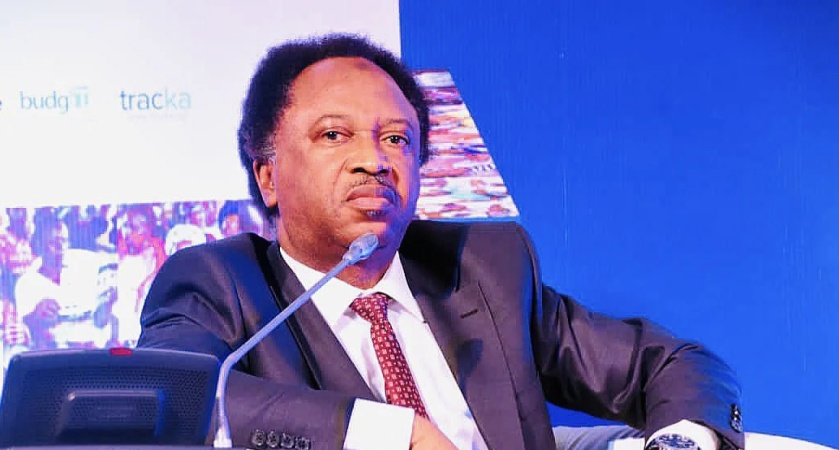
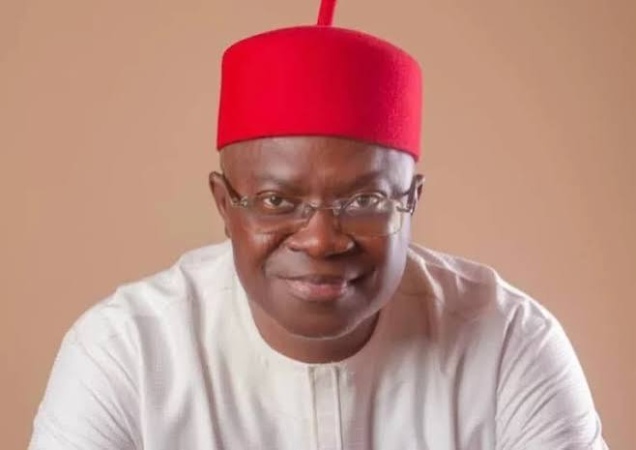
Senator Shehu Sani
Senator Shehu Sani, who represented Kaduna Central Senatorial District in the 8th National Assembly, has warned that any attempt by northern political leaders to wrest power from the South in the 2027 presidential election could trigger renewed agitation in the South-West, South-East and South-South.
He also said that respecting the principle of rotational presidency was critical to national unity and political stability, insisting that the North should allow President Bola Ahmed Tinubu to complete the South’s turn before seeking a return to power.
Sani, who is seeking a return to the Senate to represent Kaduna Central, argued that the North could pursue its presidential ambition in 2031 without disrupting the existing power rotation arrangement.
He spoke during an interview with journalists in Kaduna on Friday, where he addressed power rotation, insecurity in northern Nigeria, the performance of successive administrations and the need for effective representation of the region in the National Assembly.
According to him, any attempt to truncate the South’s turn could create political tensions across the country, particularly if people in the southern regions felt that the presidency had been taken away from them before the end of their expected tenure.
He argued that the relative decline in separatist agitation in parts of southern Nigeria was partly connected to the expectation that people from those regions could aspire to and occupy the presidency.
“Today, if you look at it, the agitation for Biafra has gone to the lowest point because they are hopeful that one of their own is contesting the presidency of this country,” he said.
Sani added that agitation for a Yoruba republic and a Niger Delta republic had also subsided considerably, arguing that the presence of leaders from those regions in the presidency had helped sustain hope in the Nigerian project.
He warned that disrupting the power rotation arrangement could reverse such gains and create fresh political tensions, questioning how a president could govern peacefully if substantial sections of the country felt deprived of their turn.
Sani maintained that the North had no justification for demanding an immediate return to the presidency after former President Muhammadu Buhari, a northerner, spent eight years in office between 2015 and 2023.
“The principle of rotation of power makes it clear that Buhari has been in power for eight years. It is only logical and rational that you have a southerner,” he said.
He also questioned the political arguments being advanced in support of former Vice-President Atiku Abubakar’s presidential ambition, asking why northern voters had supported other candidates against him in previous elections if the region genuinely regarded him as its preferred leader.
Sani recalled that Atiku had contested against former Presidents Olusegun Obasanjo, Umaru Musa Yar’Adua, Goodluck Jonathan and Buhari, arguing that the political calculations surrounding the former vice-president had changed little over the years.
On the performance of the Tinubu administration, Sani acknowledged that insecurity remained a serious challenge but insisted that the current situation should be assessed against the records of previous governments rather than through ethnic or partisan considerations.
He accused some northern political leaders of applying different standards to the security challenges under Buhari and Tinubu, arguing that those who criticised the current administration should also account for their silence during the previous government.
According to him, banditry, terrorism, mass abductions and attacks on schools and communities had persisted across northern Nigeria for more than a decade, with successive administrations struggling to contain the violence.
He cited several school abductions during Buhari’s administration, including the attacks on schools in Dapchi, Kankara, Jangebe and Yauri, as well as the abduction of students from Greenfield University and other institutions in Kaduna State.
He said political leaders should be consistent in demanding accountability from those in power, regardless of whether the president belonged to their ethnic group or region.
“We cannot address security challenges in the country when we shielded our own who failed to address the problem, and now shift blame and use it for political reasons to achieve certain political ends,” he said.
The former lawmaker further argued that effective representation of the North in the National Assembly was essential to addressing the region’s development challenges, particularly insecurity, poor healthcare, educational deficits and poverty.
He said Kaduna State, given its strategic position in northern Nigeria, needed experienced legislators capable of articulating the interests of their constituents and attracting federal projects to the state.
Sani cited his previous tenure in the Senate, claiming that he facilitated the construction of seven to eight primary healthcare facilities, scholarships, educational interventions, women’s empowerment programmes and other projects for his constituents.
He also argued that Kaduna’s multi-ethnic and multi-religious composition required politicians who could build bridges across communities rather than exploit religious and ethnic differences for political advantage.
The former senator expressed confidence in the political prospects of his party in Kaduna State, while insisting that the state’s political dynamics should not be confused with those of other northern states where, according to him, political mobilisation had increasingly relied on religious and ethnic sentiments.
He urged Nigerians to learn from the experiences of previous administrations and recognise that political power was temporary, warning leaders against using public office to intimidate critics or marginalised sections of the population. (Nigerian Tribune)