Updating your news feed...

NEWS EXPRESS is Nigeria’s leading online newspaper. Published by Africa’s international award-winning journalist, Mr. Isaac Umunna, NEWS EXPRESS is Nigeria’s first truly professional online daily newspaper. It is published from Lagos, Nigeria’s economic and media hub, and has a provision for occasional special print editions. Thanks to our vast network of sources and dedicated team of professional journalists and contributors spread across Nigeria and overseas, NEWS EXPRESS has become synonymous with newsbreaks and exclusive stories from around the world.











Loading banners
Loading banners...

By GARBA MUHAMMAD
Enhancing Communities Action for Peace and Better Health Initiative (e-CAPH), with support from the Malala Fund, has launched a three-year push to strengthen policy implementation, financing and accountability for girls’ secondary education in Kaduna State.
The Initiative will seek to translate existing policy commitments into measurable opportunities for girls, with particular attention to school re-entry, retention, safety, education financing and accountability.
Formally titled “Strengthening Policy Implementation, Financing and Accountability for Girls’ Secondary Education in Kaduna State,” the PAF-GSE Kaduna Project will combine statewide advocacy with targeted implementation and evidence generation in Igabi, Chikun, Kagarko, Jama’a, Kubau and Soba LGAs.
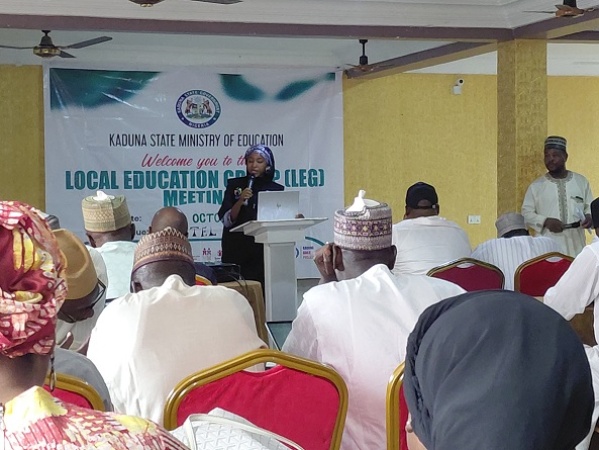
The project was introduced to senior government officials, development partners and other stakeholders during a meeting of the Kaduna State Local Education Group at Hotel Seventeen, Kaduna.
The meeting brought together the Kaduna State Commissioner of Education, Prof. Abubakar Sani Sambo; Chairman, Kaduna State House of Assembly Committee on Education, Hon. Barr. Mahmud Lawal Ismaila; representatives of KADSUBEB, UNICEF, Save the Children, civil society organisations and other education stakeholders.
Presenting the initiative, Project Coordinator Khadija Lawal Aliyu said achieving meaningful progress in girls’ education requires more than policies on paper, stressing the need for adequate financing, implementation and accountability.
“Girls’ education will not advance through policy statements alone. Commitments must be translated into funded actions, safe and workable re-entry pathways, transparent implementation and results that girls can experience in their schools and communities,” Aliyu said.
She said the project would prioritise married adolescents, pregnant girls, young mothers, out-of-school girls and those facing rural, economic, safety or social barriers to secondary education.
Over the three-year period, e-CAPH will work with government and other stakeholders to strengthen implementation of laws and policies addressing child marriage, school re-entry, second-chance education, school safety and protection for married, pregnant and parenting adolescents.
The Initiative will also promote greater transparency in education budgeting and expenditure and advocate increased and better-targeted financing for interventions that enable disadvantaged girls to enter or return to secondary school, remain safe and complete their education.
Among the policy outcomes being pursued is a state-endorsed and consistently applied operational pathway for school re-entry and second-chance education, with clearly defined responsibilities for state, LGA and school authorities.
The project will also advocate dedicated and traceable budget provisions for re-entry, retention, learning recovery, childcare support, school safety and safeguarding, alongside routine publication of education budget allocations, releases, expenditure and performance information.
It further seeks to establish accountability mechanisms through which feedback from girls and communities can inform government decisions, corrective actions and legislative oversight.
A major component of the initiative is “Gani da Ido” — “Eyes on the Ground”, e-CAPH’s financial-tracking and social-accountability mechanism.
The mechanism will generate and organise verified information on government commitments, budget allocations, releases, expenditure and implementation, while providing structured channels for citizens and affected girls to give feedback.
The Initiative comes against the backdrop of the Kaduna State Government’s reported allocation of 25 per cent of its 2026 budget to education.
According to e-CAPH, the project will complement the government’s commitment by examining not only allocations but also releases, expenditure quality and whether public investment is actually removing barriers preventing girls from accessing and completing secondary education.
e-CAPH said the involvement of the Commissioner of Education and the Chairman of the House Committee on Education provides an opportunity to connect executive action, legislative oversight and citizen-generated evidence.
The organisation said It would continue working with the Ministries of Education and Women Affairs and Social Development, Planning and Budget Commission, State House of Assembly, education agencies, LGAs, schools, traditional and religious leaders, civil society, parents, girls and development partners.
The PAF-GSE Kaduna Project carries the public-facing message: “Turning policy commitments into secondary education opportunities for every girl.”
It combines statewide policy advocacy with demonstration work across the six selected LGAs, with the broader objective of ensuring that commitments to girls’ education become visible, measurable and accountable. This version puts the policy implementation, financing and accountability angle in the lead, while bringing “Gani da Ido” forward as a distinctive accountability element of the project.