Updating your news feed...
NEWS EXPRESS is Nigeria’s leading online newspaper. Published by Africa’s international award-winning journalist, Mr. Isaac Umunna, NEWS EXPRESS is Nigeria’s first truly professional online daily newspaper. It is published from Lagos, Nigeria’s economic and media hub, and has a provision for occasional special print editions. Thanks to our vast network of sources and dedicated team of professional journalists and contributors spread across Nigeria and overseas, NEWS EXPRESS has become synonymous with newsbreaks and exclusive stories from around the world.

















Loading banners
Loading banners...

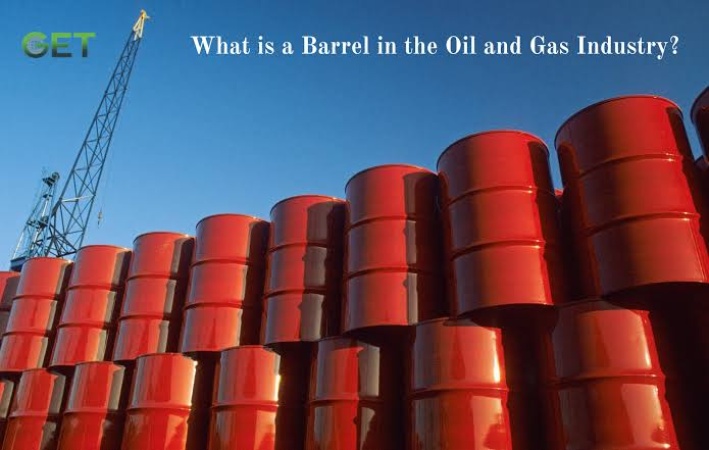
Barrels of crude oil
The increase in crude oil production and the attendant earnings as well as the pipeline protection in Nigeria’s Niger Delta region has contributed to the forex reserves rebound to nearly $55bn.
Checks showed that the huge petrodollar inflows have boosted external reserves position, thereby providing the economy with stronger footings against global shocks.
The Federal Government of Nigeria had appointed Tantita Security Services Nigeria Limited (TSSNL) to protect oil pipelines and other assets, ensuring peace and stability in the Niger Delta, a situation that made Nigeria in recent months earn significantly from ongoing crude oil prices rally.
The Tantita Security Services Nigeria Limited operations have bolstered oil production, sustained peace and stability in the Niger Delta region, boosting accretion to external reserves.
Economists say Nigeria’s external reserves are set to hit the $55 billion mark in renewed rally linked to increased earnings from crude oil export due to continued peace and stability in the Niger Delta region.
The external reserves crossed $54.8 billion on September 22, representing a $20 million gap to hit the $55 billion mark. The position is currently providing the economy with stronger footings against global shocks, and the success of Tantita Security Services Nigeria Limited operations remains a significant contributor to the surge in petrodollar inflows and sustained rise in external reserves.
Daily Trust recalls that President Bola Ahmed Tinubu appointed TSSNL led by High Chief, Dr. Government Oweizide Ekpemupolo, alias Tompolo, due to trust and track-record of success in achieving peace and stability in the Niger Delta region.
The TSSNL operations have also transformed the oil and gas landscape and allowed Nigeria to expand oil production quota and significantly cut rampant oil theft.
As stakeholders advocate for the continued collaboration with TSSNL, the imperative of securing oil infrastructure remains at the forefront of efforts to ensure the nation’s sustainable development.
Nigeria’s position in the reserves movement chart
According to Data from the Central Bank of Nigeria (CBN) website, the current reserves position is far higher than CBN’s projected $51.04 billion year-end target, and will cover over 13 months import for the economy.
The reserves also provide the CBN with the capacity to support the local currency and meet external obligations, and have continued to rise steadily. Further analysis showed that the liquid portion of the external reserves stood at $54.08 billion.
The reserves started with $49.80 billion in June 2026 and crossed the $50 billion mark by June 5, reaching $50.12 billion.
Progressively, on June 15, reserves had increased further to $50.81 billion before rising to their current position. The reserves stood at $51.9 billion on July 31, and continued.
The sustained increase reflects stronger foreign exchange inflows and improved liquidity conditions in the country’s external sector.
Though, the oil prices have soared to $99.63 per barrel due to ongoing war between the US and Iran in the Gulf region. There are also concerns over potential disruptions to key oil transit routes.
For Nigeria, the current oil price is already impacting positively on export proceeds as seen in the second quarter performance.
The strong export performance, especially the N12.91 trillion (approximately N13 trillion) export earnings in the second quarter showed that Nigeria maintained a sizeable merchandise trade surplus during the quarter, with exports significantly exceeding imports.
The National Bureau of Statistics (NBS) data further showed that Asia emerged as Nigeria’s largest export market, receiving goods worth N8.72 trillion, or 32.29 per cent of total exports.
Europe followed with N8.07 trillion, representing 29.87 per cent, while exports to Africa stood at N6.65 trillion, or 24.62 per cent. Exports to the Americas were valued at N3.11 trillion, representing 11.52 per cent, while Oceania accounted for N459.96 billion, or 1.70 per cent.
Also, Nigeria’s exports to Africa, ECOWAS member states accounted for N3.75 trillion, representing 56.39 per cent. India was Nigeria’s leading individual export destination during the quarter, receiving goods valued at N3.29 trillion, equivalent to 12.17 per cent of total exports.
Further gains for Nigeria
With Brent crude trading above $99.63 per barrel—well above Nigeria’s 2026 federal budget benchmark of $64.85—the current rally in global oil prices is expected to strengthen the country’s fiscal revenues, foreign exchange reserves, and exchange rate stability.
Analysts stated that if tensions continue to escalate into a full-scale conflict disrupting the Strait of Hormuz—a vital route that carries roughly 20 per cent of global oil supply—Brent prices could rise far beyond $100 per barrel.
“Higher oil prices typically strengthen Nigeria’s current account balance, improve foreign exchange liquidity and export proceeds,” the Chief Executive Officer, Centre for the Promotion of Private Enterprise, Dr Muda Yusuf, stated in a recent policy brief titled ‘Implications of the Iran–US–Israel Conflict on the Nigerian Economy’.
“This could reduce short-term pressure on the naira and reinforce investor confidence,” Yusuf, a renowned economist, further explained.
For Nigeria, such a surge in crude prices would sustain ongoing stronger export earnings and improved external balances.
Sustaining surge in export proceeds gains would require sustaining the oil assets protection project.
Already, the battle against oil theft requires not only robust security measures. It extends to assigning critical surveillance roles to institutions with tested expertise and commitment to taming the scourge.
Tantita, recently contracted a hi- tech security company, Textron Systems, to deliver three uncrewed aircraft that would enhance the company’s capacity to carry out its surveillance operations on Nigeria’ s oil.
The contract agreement, which was signed and sealed late last year, mandates Textron Systems, USA, to deliver three Aerosonde Mk. 4.7 vertical takeoff and landing (VTOL) uncrewed aircraft systems (UAS) to the surveillance company.
The systems will be delivered in a fully ITAR-Free configuration designed for ease of export to international customers.
IMF speaks on oil earnings
The International Monetary Fund (IMF) predicted significant recovery in Nigeria’s Balance of Payment (BoP) following the ongoing surge in crude oil prices.
In an interview transcript, the Director of the Communications Department at the IMF, Ms. Julie Kozack said oil exporters may witness improvement in balance of payments because of higher oil prices.
She said: “For countries that are energy importers, they may face pressures on their balance of payments. For countries that are oil exporters, their balance of payments may improve because of higher prices. So, we may see a differential effect there. Changes to global financial conditions are likely to affect all countries.
“Nigeria earns over 90 per cent of its forex from crude oil exports, and with Brent Crude trading above $80, Nigeria’s earnings through crude oil export are bound to rise. Murban crude, also hit $85 and sped past it, reflecting the continued freeze of most tanker traffic in the Strait of Hormuz over the Middle East crisis.
Kozack said the oil prices rally has impacted equity markets, and led to a surge in bond spreads.
“We have engaged with finance ministers and Central Bank governors in many countries and regions. We’ve also engaged with regional institutions to discuss and share perspectives on the implications of the conflict and again, how the Fund can best provide support,” she said.
Continuing, Kozack said that countries are most interested in IMF assessment on the global economy, regional economies, and their individual countries.
“Our Managing Director has said recently that in an uncertain world, we do see more countries often turning to the Fund for support. We stand ready to provide that support as needed. Right now, we have not received any formal requests for emergency financing. But of course, as I said, as the situation evolves, as countries reassess their financing needs and their policy options, we stand ready to support them using all of the tools that are available to us,” she said.
Stakeholders speak
An industry expert, Nse Victor Udoh, said pipeline protection enabled national institutions to progress from reactive crisis management to strategic foresight, from temporary containment to durable systems-building, and from uncertainty-driven decisions to calculated national ambition.
According to him, “It is important to clarify the role of pipeline surveillance within the wider energy landscape. Energy security encompasses the full value chain, from exploration and production to refining, distribution, pricing policy, and subsidy frameworks. Pipeline surveillance does not manage these domains.
Udoh who is also the President-General, Niger Delta Progressive Alliance added: “Its mandate is precise: safeguarding critical infrastructure that transports petroleum resources. Yet this single function has proven foundational. Without secure transportation channels, production targets falter, refining plans collapse, exports decline, and fiscal projections become unreliable.
“Asset protection, in this context, is not a supporting activity. It is a precondition for economic order. In effect, the pipeline is the hinge on which the entire petroleum value chain turns. When that hinge is weak, every other link in the chain carries strain. When it is secure, the entire system gains coherence.”
The immediate impact has been operational. Sustained monitoring and rapid response systems have sharply reduced pipeline breaches and illegal tapping. Receipt rates have climbed toward full recovery, with national output rising to levels not seen in recent memory. This redirection has restored Nigeria’s credibility in international oil markets, allowing Nigeria to reclaim market share lost to Angola and Libya.
“Economic stability follows predictability. When crude flows are secure, refineries can plan feedstock intake with assurance. Export commitments can be met without fear of sudden shortfalls. Gas-to-power projects can operate without recurrent shutdown risks.
“Investors can assess Nigeria’s petroleum sector with clearer risk profiles. Surveillance therefore does more than stop theft. It reintroduces reliability into national energy planning. And reliability is the bedrock upon which sustainable economic growth is built.” (Daily Trust)