Updating your news feed...
NEWS EXPRESS is Nigeria’s leading online newspaper. Published by Africa’s international award-winning journalist, Mr. Isaac Umunna, NEWS EXPRESS is Nigeria’s first truly professional online daily newspaper. It is published from Lagos, Nigeria’s economic and media hub, and has a provision for occasional special print editions. Thanks to our vast network of sources and dedicated team of professional journalists and contributors spread across Nigeria and overseas, NEWS EXPRESS has become synonymous with newsbreaks and exclusive stories from around the world.





Loading banners
Loading banners...

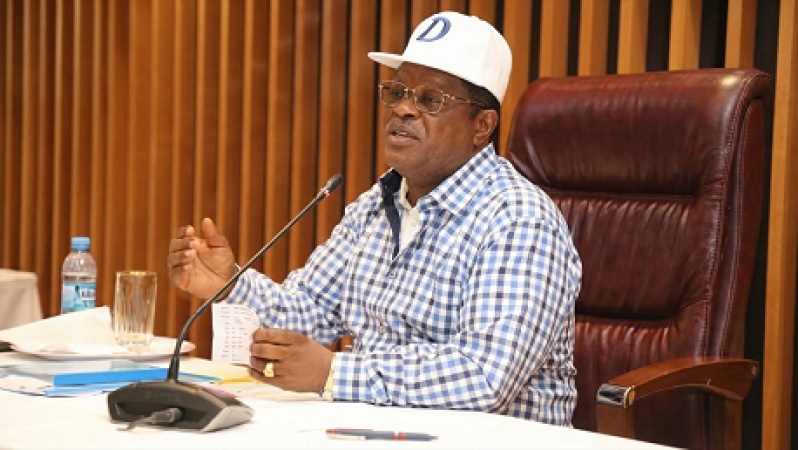
APM presidential candidate Makinde
Presidential Candidate of the Allied People Movement (APM) and Governor of Oyo State, Seyi Makinde, has promised to reset Nigeria within four years if elected president in 2027.
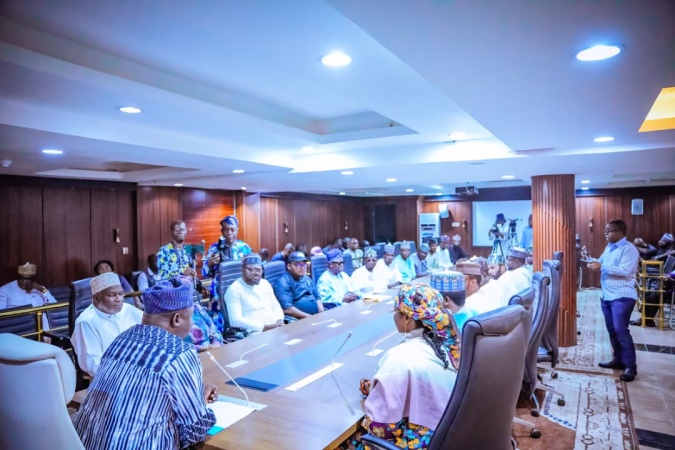
Makinde made the promise on Monday in Lafia, Nasarawa State, during the North Central Town Hall meeting of his campaign.
He described himself as resetter and assured that if elected, in four years, his he will rest this country
“I’m a resetter, are you a Resetter? Together, we shall reset this country,” he said.
Makinde explained that the reset agenda would cover security, education, the economy and the socio-political environment, and can be achieved in one term.
“Listen to me very carefully. The reset agenda can be concluded in four years. After all, we had somebody who was head of state in this country for 10 months and he was able to end military rule and usher in the democracy that we now enjoy,” he said.
According to him, as president from May 29, 2027, he will run a transitional government of national unity that will culminate in new players and a new agenda for Nigeria’s sustainable development.
“We can reset this country. Reset and give Nigeria a new security architecture. Reset and give Nigeria a new path for education. Reset our economy, utilizing data science and logic,” he declared.
Makinde thanked Nasarawa State Governor, Abdullahi Sule, and the government and people of the state for accommodating his team since their arrival, saying they did not play politics with bitterness.
He said he had listened to women groups women in agriculture, market women, physically challenged women and widows and assured them of special programmes, but noted that a general economic reset would lift everyone.
“When the tide is high, all the boats will rise. When we reset Nigeria, reset our economy, the impact will be felt by everybody,” he said.
The Oyo governor said the 2027 election will be decided by Nigerians, not by pundits, pollsters or billionaires.
“This election is not going to be determined by the number of billionaires you have in your corner or how much billion you have to spend. This election will be determined by the people of Nigeria,” he stated.
He argued that effective governance requires energy, citing his own schedule in the last 24 hours which saw him move from Ibadan to Abuja, then a three-and-a-half-hour drive to Lafia, with meetings till 2 a.m.
“What you need for governance, for effective governance, if we have to be sincere with ourselves, is more than what we did over this past 24 hours. So you need a lot of energy,” he said.
Makinde contrasted Oyo State’s budgeting process, which involves touring geopolitical zones to get citizens’ inputs for seven years, with what he described as “voodoo economics” at the federal level.
He faulted the federal government’s announcement of six or seven new army divisions to tackle insecurity midway into 2026, saying there was no provision for it in the 2026 budget.
“I picked the budget for 2026, I was looking for the item relating to setting up of those army divisions. I did not see it. If they have it in the budget, let them bring it out. You cannot just wake up and say without any plan, I am setting up army divisions,” he said.
He added that despite claims of more money accruing to states from the Federation Account, it has not translated to fighting hunger, noting that Oyo’s dependence on federal allocation rose from 65 percent in 2022 back to almost 80 percent after subsidy removal. (Daily Trust)