Updating your news feed...
NEWS EXPRESS is Nigeria’s leading online newspaper. Published by Africa’s international award-winning journalist, Mr. Isaac Umunna, NEWS EXPRESS is Nigeria’s first truly professional online daily newspaper. It is published from Lagos, Nigeria’s economic and media hub, and has a provision for occasional special print editions. Thanks to our vast network of sources and dedicated team of professional journalists and contributors spread across Nigeria and overseas, NEWS EXPRESS has become synonymous with newsbreaks and exclusive stories from around the world.









Loading banners
Loading banners...

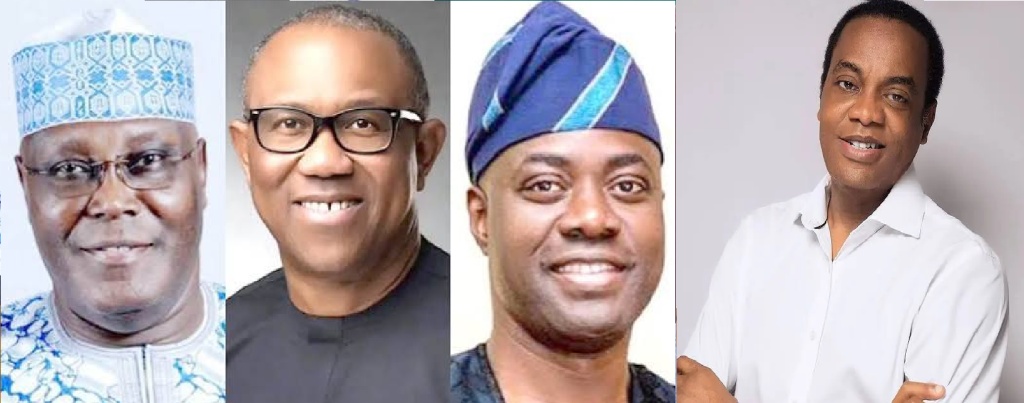
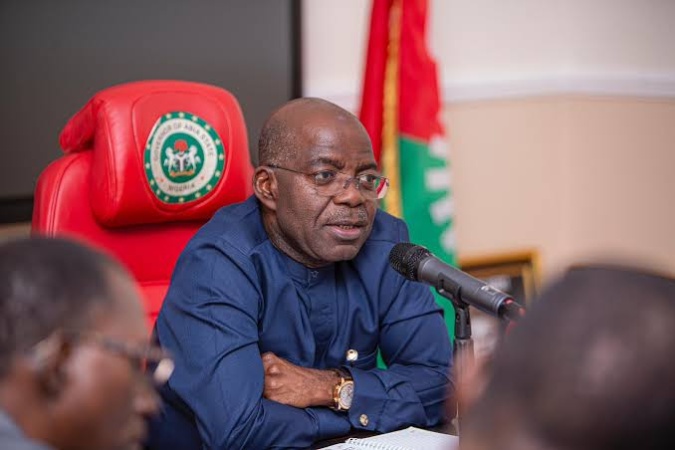
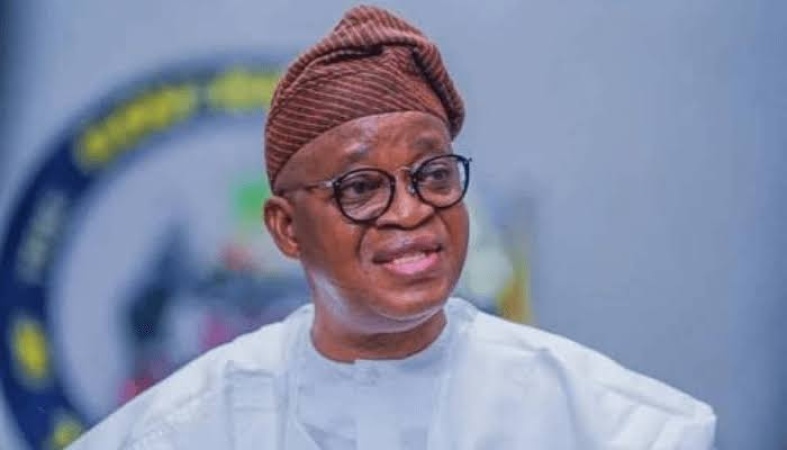
Major opposition figures: Peter Obi, Atiku Abubakar, Seyi Makinde, Donald Duke
Despite the prevailing socio-economic situation in the country, the opposition’s last-minute push to forge a coalition ahead of the 2027 general election may be dead on arrival. A fatal battle of wills, clashing ambitions, statutory deadlines, and contradictions in the lower-level electoral contests have combined to insulate an entrenched ruling party. Deputy Political Editor RAYMOND MORDI examines the issues at stake and why the principal contenders are locked in a deadlock.
Across Nigeria, the realities of everyday governance point to an electorate whose political mood is highly unpredictable. The abrupt removal of petrol subsidies and the aggressive unification of foreign exchange windows by the Bola Ahmed Tinubu administration have unleashed severe socioeconomic shocks. Inflation has severely eroded real wages. Household budgets have shrunk to subsistence levels, and escalating food costs are pressuring working families from the crowded informal settlements of Lagos to the farming communities of the Middle Belt and the far north.
Under standard democratic conventions, an incumbent steering a nation through such acute economic distress would face perilous prospects for re-election. Indeed, the ruling All Progressives Congress (APC) harbours genuine vulnerabilities as the 2027 general election approaches. In a straight, binary contest against a unified opposition, the APC’s mandate would be in immediate jeopardy.
Yet the ruling party approaches next year’s general election with fortified structural dominance. The APC is going into the election far more prepared than its rivals, having systematically expanded its territory to control 31 of Nigeria’s 36 state governments. This overwhelming majority was assembled through sub-national electoral victories and calculated defections by opposition governors and state lawmakers. This concentration of executive authority confers vast sub-national patronage networks. It provides the ruling party with immense logistical reach and the wherewithal to prosecute next year’s general election.
Directly opposite this centralised powerhouse sits an opposition trapped in a dilemma of competing interests. The mathematical reality of the 2023 presidential election remains the foundational reference point for today’s landscape: Tinubu captured the presidency with roughly 37 per cent of the national vote, meaning that over 60 per cent of participating voters cast their ballots for alternative platforms. In absolute numbers, anti-incumbent sentiment formed a decisive, undeniable majority.
Yet, heading into the 2027 election, any expectation that this anti-incumbent majority can be forged into a cohesive electoral bloc is fundamentally detached from political and legal reality. The idea of forming a genuine, legally binding opposition coalition this close to the polls is a structural impossibility. Rather than consolidating behind a common banner, the opposition remains fractured by post-primary realignments, platform swaps, and legal deadlines that have long passed. The operating dynamic is a classic cooperation dilemma: individual opposition figures are prioritising personal political survival, regional leverage, and lifelong ambitions over a collective strategy—even when doing so virtually guarantees their mutual political defeat.
The mirage of a last-minute alliance
Despite the impossibility of a formal merger at this late hour, elements within the opposition continue to project the illusion that a unified front can be cobbled together. They plan to make a fresh attempt to broker an arrangement in Ibadan, Oyo State, within the next week. Spearheaded by renowned political economist Prof. Pat Utomi, under the aegis of the Political Commission established by the Movement for Credible Elections (MCE), the group intends to convene closed-door consultations and a tactical retreat with shortlisted opposition presidential candidates and party leaders.
The initiative aims to build consensus around a single presidential candidate drawn from a disparate assemblage of nine political platforms, including the African Democratic Congress (ADC), the Nigeria Democratic Congress (NDC), and a faction of the People’s Democratic Party (PDP). Promoters of the initiative insist that preliminary talks should be held in private to protect the process from political interference and avoid past arrangements that collapsed over flag-bearer selection.
However, political analysts view the Ibadan initiative as an exercise in futility. Under the Electoral Act 2026, the statutory windows for official candidate nominations, substitutions, and formal political party mergers have closed. The legal architecture governing Nigerian elections leaves zero room for late-stage institutional realignments.
Consequently, the opposition parties subscribing to the Utomi-led arrangement cannot execute a legally recognised merger. They cannot unite their party machineries, pool their financial structures, or create a joint ticket with a single party logo on the ballot paper.
The absolute best this late-stage push can achieve is a patchwork, informal alliance—an elite, backroom deal in which certain candidates agree to step down privately and urge their supporters to vote for a designated consensus flag-bearer. Yet, this informal strategy introduces a fatal operational hazard: the non-transferable ballot leak.
Because the Independent National Electoral Commission (INEC) prints ballot papers based on official candidacies finalised under statutory deadlines, the names and party logos of all registered candidates will still appear prominently on the ballot on election day. In a mass democracy where tens of millions of voters navigate lengthy, visually confusing ballot sheets, an informal candidate withdrawal invariably creates widespread voter confusion.
Voters casting ballots for a candidate who informally withdrew in an elite agreement will still mark that candidate’s printed party logo. These votes will not be assigned or transferred to the consensus choice; they count as separate, valid votes for the withdrawing platform. Thus, an informal alliance fails to consolidate the anti-incumbent vote, shedding crucial percentages to ballot leakage while the unified governing party sweeps the ward totals.
Compounding this structural flaw is a fundamental operational contradiction: the proposed Ibadan arrangement concerns “only” the presidential election. Even if a fragile consensus were reached at the top of the ticket, the constituent opposition parties would still field competing candidates for all other elective positions, including governorships, Senate, House of Representatives, and State Houses of Assembly.
This creates an irreconcilable conflict down the ballot. It is politically delusional to expect rival party machineries—fighting bitterly against one another at the grassroots for legislative and governorship seats—to seamlessly collaborate at the ward level to deliver votes for a single presidential candidate. The resulting organisational friction and mixed messaging to voters will inevitably tear any informal top-tier alliance apart on election day.
Lessons from 2013
The fundamental tragedy of the current opposition is that it completely missed the temporal window necessary to construct an effective political vehicle. A successful mega-coalition cannot be engineered on the eve of an election; it requires a lead time of at least 18 months to two years to align disparate party structures, harmonise ideological frameworks, resolve internal litigation, and navigate the rigorous requirements of electoral law.
The ruling party itself established the historical precedent. Ahead of the 2015 general election, the precursor elements of the APC—the Action Congress of Nigeria (ACN), the Congress for Progressive Change (CPC), the All Nigeria Peoples Party (ANPP), and a faction of the All Progressives Grand Alliance (APGA)—initiated merger talks as early as 2013. That early timeline provided ample opportunity for the constituent parties to surrender their legacy certificates of registration, adopt a single brand identity, resolve internal leadership tussles through transparent national conventions, and build a unified nationwide structure long before INEC’s statutory deadlines took effect.
By contrast, the modern opposition squandered its inter-election period on destructive internal warfare. Even if current opposition leaders had time on their side ahead of 2027, observers overwhelmingly believe they would have still chosen to enter the contest on separate platforms. The unyielding personal ambitions of those leading the major factions dictate a strategy of contesting at all costs—even when it is obvious that their fragmentation directly guarantees a ruling party victory.
The architecture of splintering
PDP’s institutional decay is the primary catalyst for the current fragmentation. For nearly a quarter of a century, the PDP functioned as the sole national counterweight capable of assembling multi-ethnic, cross-regional coalitions spanning the Niger and Benue rivers. Today, that historic umbrella lies shredded, reduced to a hollowed-out arena consumed by internal sabotage and irreconcilable rivalries.
At the centre of the PDP’s institutional paralysis is Federal Capital Territory Minister Nyesom Wike. Retaining strong loyalty within the party’s National Working Committee and exerting decisive influence over multiple state chapters, Wike has aligned his political network directly with the Tinubu administration. Consequently, the PDP leadership finds itself structurally incapable of functioning as a coherent opposition. It cannot discipline high-profile dissenters without triggering immediate legal warfare and structural decimation. Furthermore, it cannot formulate an aggressive national campaign against an APC administration in which its own prominent financier holds a ministerial portfolio.
As Taofik Gani, a lawyer and former Lagos PDP publicity secretary, observed when analysing the landscape, the expected unified challenge has failed to materialise. The opposition, Gani noted, is seriously depleted, disillusioned, and disunited, thereby eliminating the traditional institutional forums that once conscientized voters. The resulting political environment resembles a winner-takes-all system. Frustrated political actors have concluded that if they cannot beat the system, they must join it, leaving ordinary citizens on the streets without a credible alternative vehicle.
The deepening rot within the PDP forced rival heavyweights to migrate elsewhere, dispersing anti-APC voter blocs into distinct, competing camps well past the statutory timeframe for any legal reunification. Veteran former Vice President Atiku Abubakar has shifted his final presidential campaign to the ADC, seeking to transform a historically peripheral platform into an expansive national vehicle.
Simultaneously, Peter Obi, whose 2023 bid on the Labour Party (LP) platform fundamentally disrupted the traditional two-party dynamic, has also migrated. The LP itself became sidelined by intractable leadership disputes, endless factional litigation, and open conflict with the Nigeria Labour Congress. Obi subsequently secured the presidential ticket of the newly registered NDC, running alongside former Kano State governor Rabiu Musa Kwankwaso as his vice-presidential running mate.
Instead of an organised, single challenger confronting the APC juggernaut, the electoral landscape has split into competing groups. Voters must now choose between Atiku’s ADC, the Obi-Kwankwaso ticket under the NDC, and a paralysed legacy PDP incapable of mounting a credible challenge.
The clash of big ambitions
The personal ambitions of the primary contenders reinforce this structural fracturing. None of the principal actors is willing to subordinate individual aspirations to a broader consensus ticket.
For Atiku, the approaching election represents the definitive conclusion of a political odyssey spanning nearly four decades. Atiku, who turns 80 on November 25, has anchored his political identity on an expansive network of patronage, private-sector capital, and deep institutional connections cultivated across the northern establishment since the aborted Third Republic. His campaign views the 2027 race as his ultimate opportunity. Having unsuccessfully contested the presidency by participating in either party primaries or the general election in 2007, 2011, 2015, 2019, and 2023, Atiku retains an unyielding conviction that his agenda is the only viable blueprint for modern Nigeria.
Surrendering his position to a younger challenger is viewed within his inner circle not merely as a personal retreat, but as the reckless abandonment of an unparalleled northern network that no other opposition figure can replicate. Consequently, his strategic advisers maintain that his candidacy remains entirely non-negotiable.
Directly opposing this posture is Obi, whose political capital rests on fundamentally different foundations. His political rise derived from an insurgent coalition of urban middle-class voters, youth movements, and Southern and North-Central Christian electorates who repudiate traditional patronage politics. For Obi, stepping down to serve as a running mate to Atiku—an arrangement they shared during the PDP’s unsuccessful 2019 bid—would represent political suicide. It would alienate the core reformist “Obidient” demographic that fuels his political relevance.
Obi has publicly rejected informal, backroom arrangements. In a recent interview, he framed the dilemma strictly in corporate and institutional terms, equating a merger to two corporations in which neither CEO can retain the top job. He was categorical about shutting the door on accepting a secondary role:
“For the avoidance of doubt, I never stated to anyone at any time that I would be vice president, and it’s unequivocal… I wasn’t even in a position where it was being offered, and I refused.”
The tension among these competing camps is further exacerbated by open political friction from the northern flank. Kwankwaso, whose Kwankwasiyya movement commands passionate grassroots devotion across the urban centres of Kano and the Northwest, has openly pushed for Atiku’s departure from frontline national politics.
While hosting a delegation from the Fulani Farmers Association at his residence in Abuja recently, Kwankwaso dismissed Atiku’s ongoing presidential pursuit in blunt terms, urging the ADC candidate’s own kinsmen to counsel him toward permanent retirement:
“Go to the Wazirin of Adamawa’s house and tell him in Fulani that he needs to focus on his traditional title of Wazirin, given his age and health. If Allah grants us success, we will take good care of him.”
The barb struck at the very heart of Atiku’s political standing, eliciting immediate outrage from the ADC camp. Kwankwaso’s calculations are unmistakable. The NDC ticket seeks to secure northern agrarian and urban votes by casting Atiku as a relic of an older era, while simultaneously relying on Obi’s southern support to mount a cross-regional challenge.
This mutual friction is deepened by the unresolved debate surrounding zoning. Southern political groups argue that basic democratic equity requires an eight-year southern presidency following the eight-year northern tenure of Muhammadu Buhari. Conversely, northern strategists within the ADC assert that in a contest against the APC, pure geographic arithmetic supersedes rotational conventions. They argue that Obi’s appeal remains structurally restricted in the Islamic North, and that only an established northern figure like Atiku can crack the massive vote reservoirs of Kano, Katsina, Kaduna, and Sokoto. The result is a mutual veto, where neither side can concede without alienating its geographic base.
The view from the villa
Within the ruling APC and the presidency, this persistent disarray is observed not with alarm, but with calculated confidence. The ruling party’s strategists view opposition efforts to manufacture unity as completely disconnected from the operational mechanics of Nigerian elections.
Leaders routinely dismiss the opposition’s overtures as brittle arrangements built on conflicting personal agendas, predicting they will inevitably collapse under the strain of genuine campaign logistics. From the administration’s vantage point, paper additions that combine past tallies do not translate into real-world voting behaviour at the polling booths.
Nosa Osaikhuiwu, an advocate of culture change, detailed this reality. He warned against the prevailing opposition assumption that public frustration automatically translates into electoral defeat for an incumbent: “There is a dangerous political delusion taking hold in Nigeria ahead of the election: the belief that because millions of Nigerians are unhappy with the government, the opposition will automatically defeat President Bola Ahmed Tinubu… Elections are not won by likes, reposts, hashtags, or viral videos; they are won by voters going to the polls and making their choices known.”
This critique exposes the core vulnerability of the current opposition posture. While other platforms focus on prestige, digital reach, and organic urban momentum, the APC leverages the hard infrastructure of 31 state governments. State governors command local government councils, influence traditional leaders, and oversee municipal ward-level networks capable of mobilising hundreds of thousands of registered voters who have never used an online forum.
The electoral arithmetic
The practical consequence of this splintered landscape is a mutual cannibalisation of votes that fundamentally insulates the incumbent. Rather than a binary referendum on the administration’s economic stewardship, the contest will be decided across segmented battlegrounds where the anti-incumbent electorate is pulled in divergent directions.
In the northern states, Atiku and Kwankwaso will inevitably split the Muslim and agrarian electorate, diluting the margins required to mount an effective challenge to the APC’s institutional presence in the region. In the South, Obi’s core constituency faces continued pressure from the governing party’s entrenched control of state executive machinery.
Crucially, this relentless opposition infighting would not only fracture the vote but also breed widespread voter apathy. When the opposition cannot present a unified, credible front, frustrated citizens do not simply divide their votes among the remaining challengers; many of them may opt to stay home entirely. Disillusionment with the political class severely depresses voter turnout.
In a low-turnout election, this apathy mathematically multiplies the weight of the incumbent’s ground game. When fewer independent voters show up, the hundreds of thousands of voters mobilised by the APC’s state governors make up a much larger percentage of the total valid votes. By failing to present a single, legally unified presidential candidate and a coordinated campaign structure, the opposition effectively lowers the numerical threshold required for an APC victory. Instead of facing an uphill battle against a consolidated majority, the incumbent can retain the presidency by securing a simple pluralistic lead of roughly 35 to 40 per cent in key states. Government
The road ahead
The window for genuine institutional reconciliation has closed, and no last-minute talks in Ibadan or Abuja can rewrite the Electoral Act 2026 or undo years of missed structural opportunities. Democratic governance requires an organised opposition capable of providing the electorate with a viable, credible alternative to the governing party. Yet, locked in strategic deadlock, Nigeria’s opposition leaders remain trapped by the politics of personal vanity, regional suspicion and sheer legal blindness.
Barring a political miracle that defies both human ego and statutory electoral law, next year’s general election will not be a straight contest between the ruling party and an alternative national movement. Because the idea of a genuine coalition was allowed to die on arrival, the 2027 poll will be nothing more than a race between an entrenched, fully mobilised APC and a fragmented opposition fiercely competing for second place. (The Nation)