Updating your news feed...
NEWS EXPRESS is Nigeria’s leading online newspaper. Published by Africa’s international award-winning journalist, Mr. Isaac Umunna, NEWS EXPRESS is Nigeria’s first truly professional online daily newspaper. It is published from Lagos, Nigeria’s economic and media hub, and has a provision for occasional special print editions. Thanks to our vast network of sources and dedicated team of professional journalists and contributors spread across Nigeria and overseas, NEWS EXPRESS has become synonymous with newsbreaks and exclusive stories from around the world.
















Loading banners
Loading banners...

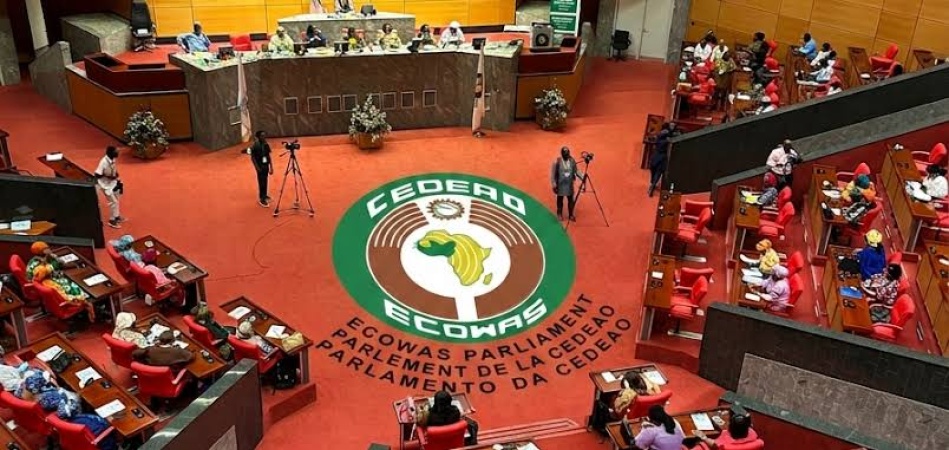
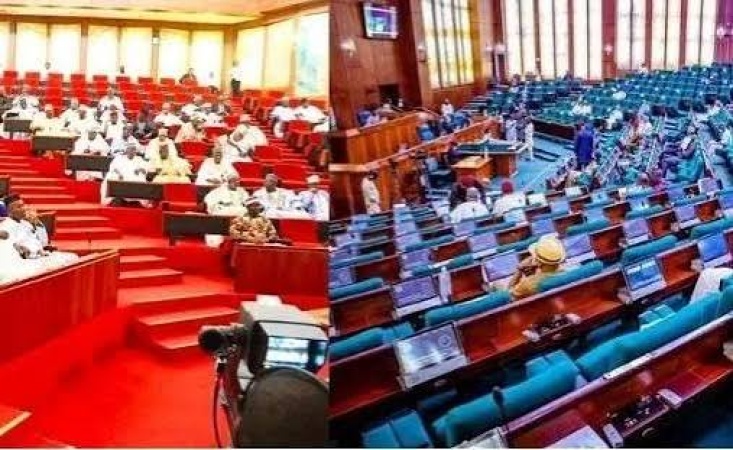
Joint session of the National Assembly
State Houses of Assembly have begun considering the proposed State Police Bill transmitted to them by the National Assembly, with some approving the proposal, others setting up committees, while several are awaiting formal receipt of the document.
The National Assembly had on September 16 transmitted the bill, titled "A Bill for an Act to Alter the Constitution of the Federal Republic of Nigeria, 1999 to Provide for the Establishment of State Police Services; and for Related Matters", to the 36 state legislatures.
Clerk to the National Assembly, Kamoru Ogunlana, said the transmission was in accordance with Section 9 of the 1999 Constitution (as amended).
The amendment requires the approval of at least two-thirds of state Houses of Assembly.
The state legislatures were requested to consider the bill and communicate their resolutions to the National Assembly.
Although the Constitution does not prescribe a specific timeline, the National Assembly urged them to respond within 30 days.
Findings by Daily Trust showed that while some states had commenced consideration, others were preparing to do so when lawmakers reconvene, while a number of assemblies were yet to receive the bill.
Osun approves State Police Bill
The Osun State House of Assembly yesterday approved a resolution supporting the creation of state police.
The resolution was adopted during plenary following a motion by the Majority Leader, Babajide Kofoworola, seconded by Tajudeen Adeyemi.
The Speaker, Adewale Egbedun, said the approved amendment should be forwarded to the National Assembly for consideration.
The bill will require the concurrence of at least 24 state assemblies before the constitutional amendment process can be completed.
Zamfara, Sokoto begin consideration
The Zamfara State House of Assembly Tuesday commenced consideration of the bill during plenary, presided over by Speaker Bilyaminu Isma’il Moriki.
The Director of Legislative Matters, Yusuf Sabo Tsafe, confirmed the development, expressing confidence that the House would consider and pass the bill.
In Sokoto, the State House of Assembly also began consideration of the proposal, with its First Reading conducted on Tuesday.
The Head of the Assembly’s New Media Unit, Aminu Abdullahi, said copies of the bill would be distributed to lawmakers for detailed study ahead of the Second Reading, when members would make their contributions.
He said it was too early to determine whether the House would approve or reject the proposal, adding that lawmakers were expected to proceed on recess on Thursday.
Bauchi sets up ad hoc committee
The Bauchi State House of Assembly has received the bill and constituted an ad hoc committee to consider it and make recommendations.
The Speaker, Abubakar Y. Suleiman, disclosed this during Tuesday’s plenary, saying the House received a message from the Office of the Clerk to the National Assembly.
The committee is chaired by Deputy Speaker Jamilu Ummaru Dahiru, with Majority Leader Auwal Hassan as deputy chairman.
Other members include Chief Whip Musa Wakili Nakwada, Deputy Majority Leader Babayo Muhammad Akuyam, Chairman of the House Committee on Security Garba Lawal, Habibu Umar, Suleiman Sa’idu Darazo and Nasiru Ahmed Ala.
The Clerk of the House, Hauwa Ahmed Abubakar, will serve as secretary, while the Director of Legal Services, Ladi Yarima, is deputy secretary.
The House gave the committee two weeks to examine the bill and report back.
Benue, Nasarawa, Kogi prepare for debate
The Benue State House of Assembly confirmed receiving the bill and said it would be deliberated upon at its next sitting.
The Chief Press Secretary to the Speaker, Zape Michael Upaa, said the next legislative sitting was scheduled for Thursday.
In Nasarawa, Speaker Danladi Jatau said the House received the bill from the Clerk to the National Assembly last weekend and would lay it before members when plenary resumes next Monday.
He said lawmakers were yet to study the proposal in detail but expressed optimism that it would be passed, citing the security challenges facing the country.
Jatau said state police would decentralise the nation’s security architecture and bring policing closer to the people.
The Kogi State House of Assembly also confirmed receipt of the bill but said deliberations would begin when lawmakers resume plenary next Tuesday.
The Chairman of the House Committee on Information, Bode Ogunmola, said the House had been on recess and postponed its expected resumption following the death of former Governor Ibrahim Idris.
Kano, Gombe, Cross River await plenary
The Kano State House of Assembly said it was ready to consider the bill when lawmakers reconvene from recess on September 28.
The Chief Press Secretary to the Speaker, Jibril Ismail Falgore, Ibrahim Sani Shawai, said the Assembly welcomed the proposal as timely amid growing security challenges.
He said lawmakers would thoroughly examine the bill and make necessary amendments or contributions.
In Gombe, Deputy Speaker Sadam Bello Saleh said the bill had been received and was before the Assembly leadership.
He said the Speaker would constitute a seven-member committee under his chairmanship, with the Clerk serving as secretary, to examine the provisions and make recommendations.
The date for formal consideration is yet to be fixed.
Meanwhile, aides to the Speaker of the Cross River State House of Assembly, Elvert Ayamben, said the bill would be considered when plenary resumes on September 29.
Ogun receives bill; Oyo, Lagos uncertain
The Ogun State House of Assembly has received the bill and may commence legislative action next Tuesday.
A lawmaker representing Odogbolu Constituency, Lukman Adeleye, said members received soft and hard copies of the bill on Tuesday and had been asked to study it before reconvening.
Oyo State, the media aide to the Speaker, Oyetunji Oyekunle, said he could not immediately confirm whether the Assembly had received the bill.
However, Speaker Adebo Ogundoyin had in July 2025 expressed support for state police, saying the Conference of Speakers backed the initiative as a complement to the existing security architecture.
The status of the bill in Lagos State was also unclear.
The Chairman of the House Committee on Information, Stephen Ogundipe, was unavailable for confirmation.
The Lagos Assembly had in July renewed its call for autonomous state police and urged state legislatures to fast-track the constitutional amendment.
Borno, Katsina yet to schedule debate
The Borno State House of Assembly confirmed receipt of the bill but said no date had been fixed for deliberation.
A principal officer, who spoke anonymously, said the House considered the proposal a matter of national importance and expected it to be considered soon.
In Katsina, a lawmaker said the bill had been transmitted to the Assembly but was yet to be presented before members for deliberation.
Rivers, Bayelsa, Edo, Kebbi, others yet to receive bill
The Rivers and Bayelsa state Houses of Assembly had yet to deliberate on the bill, with their receipt of the document also unconfirmed.
The Chairman of the Rivers Assembly Committee on Information, Enemi Alabo George, did not respond to inquiries, while his Bayelsa counterpart, Tare Porri, could not be reached.
The Edo State House of Assembly also said it was yet to receive the bill.
The Chairman of its Committee on Information, Donald Okogbe, assured that the proposal would be treated urgently once received.
“It will be treated with the urgency it deserves; we all want a better-secured Nigeria,” he said.
A source in the Assembly said no notification had reached the House as of last week.
Similarly, the Kebbi State House of Assembly said it had yet to receive the bill.
The Assembly’s Public Relations Officer, Mustapha Diri, said the National Assembly had not formally transmitted the documents.
The Ondo State House of Assembly also confirmed that it was yet to receive the proposal.
Its spokesperson, Olatunji Fabiyi, however, described the initiative as a welcome development, saying the state was prepared for state policing.
The Speaker of the Ekiti State House of Assembly, Aribasoye Adeoye, also confirmed that the bill had yet to reach the legislature.
In Adamawa, the Assembly’s Public Relations Officer, Emmanuel Mikloda, said no official communication had been received from the National Assembly.
He said the secretary of the House committee handling the matter confirmed the absence of the document.
N/Assembly clarifies transmission
Meanwhile, the National Assembly has clarified that only the State Police Bill has so far been transmitted to the 36 state Houses of Assembly, contrary to reports suggesting that all pending constitutional amendment bills had been forwarded.
In a statement on Tuesday, Clerk to the National Assembly, Kamoru Ogunlana, said the bill transmitted on September 16 was the proposal seeking to establish State Police Services.
He said other constitutional alteration bills remained before the National Assembly and would be transmitted only after both chambers passed them in identical forms.
The clarification, he said, was necessary to address public speculation and ensure accurate information on the constitutional review process.
Provisions of the state police bill
The State Police Bill, transmitted by President Bola Ahmed Tinubu, was passed by the Senate on June 24, 2026, and by the House of Representatives on July 23, 2026.
It seeks to replace the existing unitary policing structure with a dual system comprising the Federal Police Service and State Police Services.
Under the proposed amendment to Section 214 of the Constitution, each state may establish its own police service, subject to the Constitution and an Act of the National Assembly.
A state police service cannot commence operations until it is established by a law of the relevant State House of Assembly and certified as meeting national minimum standards.
The Federal Police Service would retain responsibility for national security, terrorism, cybercrime, inter-state crimes, arms trafficking and international criminal syndicates.
State police would handle domestic public safety but would not exercise police powers outside their respective states, except as authorised by an Act of the National Assembly.
The bill also provides for exceptional federal intervention in state police operations.
Under specified circumstances, including a breakdown of public order that a state police service cannot or will not contain, serious operational incapacity, or systematic human rights violations, the President may temporarily assume operational command.
Such intervention must be authorised in writing, stating its grounds, territory and duration. Notice must be sent to the affected governor, Speaker of the State House of Assembly, National Police Council and National Assembly within 48 hours.
The intervention would be subject to time limits prescribed by the National Assembly, Senate validation and judicial review.
The bill further proposes safeguards for the appointment and removal of police chiefs.
The Inspector-General of the Federal Police Service would be appointed by the President on the advice of the National Police Council, subject to Senate confirmation.
A state Commissioner of Police would be appointed by the governor on the recommendation of the National Police Council, subject to confirmation by the State House of Assembly.
Both offices would have protection against arbitrary removal, with removal requiring stated cause, fair hearing and approval by a two-thirds majority of the relevant legislature.
The proposed Section 215(7) also prohibits police directives requiring unlawful arrests, detention, investigation or use of force against named persons or groups, as well as actions intended to suppress lawful political activity or enforce the law for partisan, ethnic, religious or personal purposes. (Daily Trust)