Updating your news feed...
NEWS EXPRESS is Nigeria’s leading online newspaper. Published by Africa’s international award-winning journalist, Mr. Isaac Umunna, NEWS EXPRESS is Nigeria’s first truly professional online daily newspaper. It is published from Lagos, Nigeria’s economic and media hub, and has a provision for occasional special print editions. Thanks to our vast network of sources and dedicated team of professional journalists and contributors spread across Nigeria and overseas, NEWS EXPRESS has become synonymous with newsbreaks and exclusive stories from around the world.























Loading banners
Loading banners...

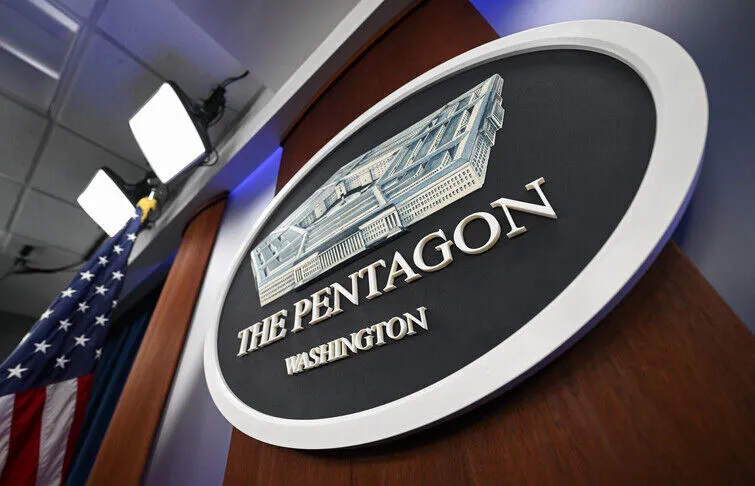
Artificial intelligence is increasing the cybersecurity risks facing the Pentagon’s aging computer networks, as increasingly capable tools allow adversaries to identifnd combine weaknesses in US defense systems more quickly, according to a Washington Post report.
Lt. Gen. Paul Stanton, the Pentagon’s top cyber defense official and head of the army’s cyber defense command, said the Defense Department has experienced a “tenfold” increase in cybersecurity vulnerabilities amid the rise of AI.
“We have postponed and deferred the sustainment and maintenance of our systems to our potential peril,” Stanton said last week at a Washington conference, said the report. “No more.”
The comments came amid an intensifying debate in Washington about the risks of artificial intelligence, following the resignation of Anthropic researcher Jacob Coxon, who warned that the technology could “kill us all by the end of the next decade.”
Cybersecurity experts said the Pentagon’s exposure to AI-enabled cyberattacks poses an immediate national security concern, as adversaries gain more sophisticated tools to exploit weaknesses in US military networks, according to the Washington Post.
They warned that years of deferred maintenance and outdated infrastructure could make the Defense Department’s systems increasingly vulnerable, while upgrading the networks could take years as AI capabilities continue to advance rapidly.
“This has become a pretty urgent priority,” Michael C. Horowitz, director of the defense and national security program at the Council on Foreign Relations, was quoted by the newspaper. “The risk is that adversaries gain a greater ability to disrupt U.S. information networks to get access to American military data and thus compromise national security.” (AA)