Updating your news feed...
NEWS EXPRESS is Nigeria’s leading online newspaper. Published by Africa’s international award-winning journalist, Mr. Isaac Umunna, NEWS EXPRESS is Nigeria’s first truly professional online daily newspaper. It is published from Lagos, Nigeria’s economic and media hub, and has a provision for occasional special print editions. Thanks to our vast network of sources and dedicated team of professional journalists and contributors spread across Nigeria and overseas, NEWS EXPRESS has become synonymous with newsbreaks and exclusive stories from around the world.







Loading banners
Loading banners...

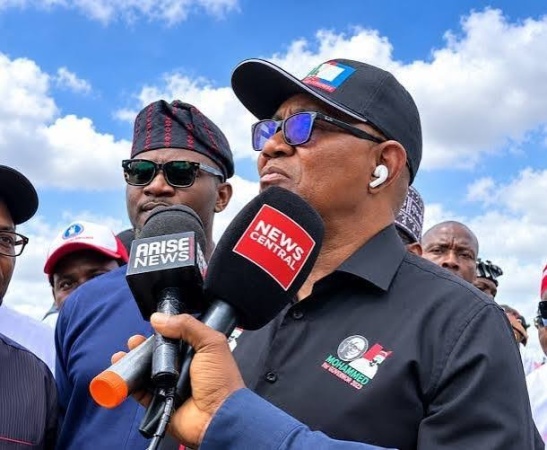
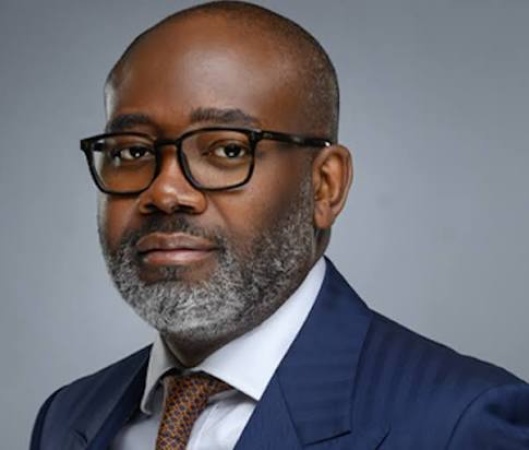
Mr Peter Obi
By IKEAGWUONWU CHINEDU KLINSMANN, Sweden
“Our priorities must be clear: invest in our people, strengthen Primary Healthcare, recruit and retain essential health workers, and ensure every Nigerian, regardless of location or income, has access to quality, affordable healthcare.” – Peter Obi, Presidential Candidate of the NDC, Sept. 14, 2026
PREAMBLE: WHY THIS ELECTION IS A REFERENDUM ON LIFE ITSELF
As Nigeria heads to the polls in the 2027 presidential election, no issue cuts closer to the daily reality of ordinary Nigerians than healthcare. Peter Obi has made this the centrepiece of his campaign, recently reiterating the need to strengthen primary healthcare, recruit essential health workers, and improve the quality of care available to the ordinary Nigerian.
Nigeria’s healthcare system today is not functioning. On the single most telling indicator of whether a health system works which is child survival, Nigeria ranks worst on earth. According to the United Nations Inter-agency Group for Child Mortality Estimation, roughly 115 children under five die per 1,000 live births in Nigeria, the highest rate of any country in the world, ahead of even Niger Republic. Malaria, pneumonia, diarrhoea, and preventable birth complications account for most of these deaths. Conditions that a functioning primary healthcare centre (PHC) should catch and treat long before they become fatal. This is the crisis an Obi presidency is built to confront.
PILLAR ONE OF THE OBI HEALTH AGENDA: FIXING THE SYSTEM, NOT JUST THE SYMPTOMS
An Obi administration will treat health system governance as seriously as it treats financing, because Nigeria’s problem is not only a shortage of money, it is fragmentation, duplication, and thousands of PHCs that exist on paper but not on the ground ("ghost health centres”).
The Obi commitment:
One fully functional PHC per political ward — Staffed, stocked, and open 24 hours. Replacing the current reality where a large share of Nigeria's roughly 30,000 PHCs are non-functional.
A unified referral pathway from PHC to secondary and tertiary hospitals, so no Nigerian family discovers too late that the nearest facility cannot treat them.
A National Health Workforce Registry, ending the scandal of health workers posted to facilities that don’t exist, or paid long after they’ve left service.
Empowered but accountable State Primary Health Care Development Agencies, with real budgets and independently published audits.
An end to the "japa" health worker exodus through better pay, safer conditions, and career pathways. Nigeria trains world-class doctors and nurses; today it mostly exports them.
PILLAR TWO OF THE OBI HEALTH AGENDA: FINANCING AND BUDGETING HEALTHCARE PROPERLY
Nigeria signed the Abuja Declaration in 2001, committing to allocate at least 15% of its national budget to health. It has never come close, with actual allocations hovering around 4–6% for years, forcing millions of Nigerians to pay for care entirely out of pocket and often into poverty.
The Obi commitment:
A ring-fenced, rising health budget, moving progressively toward the 15% Abuja target, with a protected line specifically for primary healthcare that cannot be diverted mid-year for other purposes.
Full, transparent release of the Basic Health Care Provision Fund (BHCPF) — established by law in 2014 but historically under-released. With its 1% Consolidated Revenue Fund allocation tracked publicly down to the ward level.
Expansion of the National Health Insurance Authority (NHIA) toward genuine universal coverage, beginning with automatic enrollment for pregnant women, children under five, and the elderly.
New financing tools: ring-fenced taxes on tobacco and alcohol; diaspora health bonds. Etc. — an avenue through which Nigerians abroad, including the diaspora networks here in Sweden and across Europe, can invest directly in rebuilding the health system back home; and public-private partnerships for equipment and diagnostics.
Community-based health insurance at state level, modeled on schemes elsewhere in Africa that have achieved over 90% population enrollment, so no family is bankrupted by a single hospital bill.
Open budget-tracking dashboards, so citizens and journalists can verify, in real time, whether money allocated to their ward’s PHC actually arrived.
PILLAR THREE OF THE OBI HEALTH AGENDA: REBUILDING PRIMARY CARE THE SWEDISH VÅRDCENTRAL MODEL
This is the core of Peter Obi’s frontline healthcare vision, the direct answer to his call to recruit essential health workers and improve quality of care at the point where most Nigerians actually encounter the health system.
In Sweden, every resident is served by a vårdcentral (healthcare centre), a neighbourhood Clinic staffed by doctors, nurses, midwives, and allied health workers, open on weekdays and backed by evening/weekend urgent care and a 24-hour hospital tier above it. It is the default entry point for all routine and preventive care: children’s growth checks, vaccination schedules, chronic disease management, antenatal visits, and mental health support. Every Swedish child is automatically enrolled in a structured follow-up programme from birth through school age.
The Obi commitment — adapting this model for Nigeria:
Every ward gets a fully staffed PHC functioning as Nigeria’s own “vårdcentral” — minimum staffing of a resident nurse/midwife, a Community Health Extension Worker (CHEW), and a doctor (resident or rotating, depending on catchment size), with a clear, named patient list per ward.
A National Child Health Register, enrolling every newborn at birth for scheduled immunization, growth, and nutrition follow-up, built on simple mobile technology so records aren’t lost the way paper cards are today.
Community Health Workers paid a living wage, recruited from within the communities they serve, ending the practice of treating CHWs as unpaid volunteers.
Proactive follow-up for chronic disease — hypertension and diabetes are rising fast in Nigeria’s cities but are almost never managed proactively at PHC level today; an Obi administration will introduce structured patient recall, not just crisis treatment.
A functioning 24/7 referral and ambulance network linking every ward PHC to a general hospital, closing the gap that currently kills women in obstructed labour and accident victims in transit.
Digital health IDs, so a Nigerian’s medical record follows them from a rural PHC to a state teaching hospital instead of starting from zero at every visit.
PILLAR FOUR: LEARNING FROM DEVELOPING NATIONS THAT GOT THIS RIGHT
Peter Obi’s campaign draws explicitly on proof that health transformation is achievable on a developing-country budget:
Rwanda built a network of nearly 60,000 trained Community Health Workers, about four per village, tied to community-based insurance with over 90% population enrollment — producing some of the sharpest declines in maternal and child mortality on the continent. Rwanda pays its Community Health Worker through cooperatives rather than treating them as volunteers, a direct model for the Obi Community Health Worker plan.
Thailand reached universal health coverage on a middle-income budget through mandatory insurance and a strong district health-centre network — proof that UHC is an organizational choice, not a luxury.
Ethiopia placed two salaried female Health Extension Workers in every village, dramatically expanding rural maternal and child healthcare access from a comparably weak starting point.
Bangladesh, with lower per-capita income than Nigeria, achieved better child survival largely through door-to-door community health worker networks.
The common thread and the model an Obi presidency proposes to replicate is simple: Pay and deploy frontline health workers at scale, push care to the community level, and finance it sustainably. None of these countries needed Nigeria’s oil wealth. They needed political will.
WHY PETER OBI: A RECORD OF DELIVERY IN ANAMBRA
Peter Obi asks Nigerians to judge him not on promises alone but on what he has already done. As Governor of Anambra State (2006–2014):
His administration won the Bill & Melinda Gates Foundation award in 2013 for the best-performing state in the South-East on polio eradication, with Anambra remaining polio-free for five consecutive years. A genuine, independently verified achievement. In fairness, it should be stated precisely: the award recognized polio performance within the South-East region specifically, not a “best in Nigeria” ranking across all health indicators — a distinction Obi has at times stated more broadly than the facts support, as Nigerian fact-checkers have noted.
He partnered with church-run hospitals, funding the turnaround of facilities including Iyienu Hospital (Ogidi), Our Lady of Lourdes Hospital (Ihiala), St. Charles Borromeo Hospital (Onitsha), Holy Rosary Hospital (Onitsha), and St. Joseph Hospital (Adazi-Nnukwu) — stretching limited state resources through existing mission-hospital infrastructure rather than building costly parallel systems.
He built the Joseph Nwilo Heart Centre at St. Joseph Hospital, Adazi-Nnukwu, where cardiac operations are performed. A rare level of specialist care for a state-funded facility.
He left Anambra the least-indebted state in the federation, according to the Debt Management Office, reportedly handing over a fiscal surplus to his successor — the same fiscal discipline his campaign proposes to apply to a national health budget.
This record is the foundation of the Obi campaign’s claim to competence on healthcare. It is fair to note, as his critics do, that governing one state for eight years is a different scale of challenge than reforming a federal health system across 36 states, and that Anambra itself still has healthcare access gaps today. The Obi campaign’s argument is not that the job is finished, but that the underlying instincts — cost-effective partnerships, fiscal discipline, and prioritizing frontline care over prestige projects are exactly what a national overhaul requires.
THE FULL OBI HEALTH AGENDA: ADDITIONAL COMMITMENTS
Local pharmaceutical manufacturing — Nigeria imports roughly 70% of its drugs; an Obi administration will invest in domestic production to cut costs and reduce exposure to counterfeit medicine.
Mental health integration into PHC-level care, currently almost entirely absent.
A functioning national emergency medical service — ambulances and a toll-free emergency line, which most states still lack today.
A strengthened Nigeria Centre for Disease Control (NCDC) for early outbreak detection.
An independent Health Sector Anti-Corruption and Transparency Unit, because past health interventions have too often failed to procurement fraud and ghost projects rather than a lack of funds alone.
Investment in clean water, sanitation, and nutrition, the upstream drivers of child mortality that no hospital-focused policy can fix alone.
THE CASE FOR VOTING PETER OBI IN 2027
Nigeria’s 2027 presidential election is, among other things, a referendum on whether the country continues to accept a health system that lets its children die at the highest rate on earth or finally builds one that works. Peter Obi has placed frontline, primary healthcare at the centre of his platform, backed by a gubernatorial record of targeted health investment and fiscal discipline. For the millions of Nigerian families who have lost a child, a parent, or a sibling to an illness a functioning clinic should have caught in time, this manifesto is the case that a different outcome is possible and that it depends on who leads next.
THE CHOICE BEFORE NIGERIANS
Continue with a system that produces one of the highest mortality rates in the world or elect the one leader who has consistently told the truth about healthcare, who has a proven record of delivery, and who has placed the strengthening of primary healthcare and the welfare of ordinary Nigerians at the centre of his presidential campaign.
Peter Obi is that leader.
Vote for a Nigeria where healthcare finally reaches the ordinary Nigerian.
Vote Peter Obi.
Vote For the NDC.
•Pharm. Ikeagwuonwu Chinedu Klinsmann is NDC Country Chairman, Sweden. He can be reached viajakason86@gmail.com