
Updating your news feed...
NEWS EXPRESS is Nigeria’s leading online newspaper. Published by Africa’s international award-winning journalist, Mr. Isaac Umunna, NEWS EXPRESS is Nigeria’s first truly professional online daily newspaper. It is published from Lagos, Nigeria’s economic and media hub, and has a provision for occasional special print editions. Thanks to our vast network of sources and dedicated team of professional journalists and contributors spread across Nigeria and overseas, NEWS EXPRESS has become synonymous with newsbreaks and exclusive stories from around the world.








Loading banners
Loading banners...

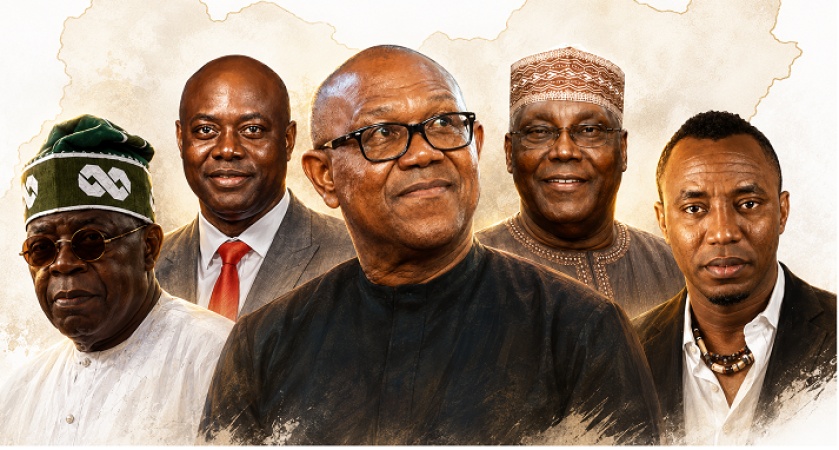
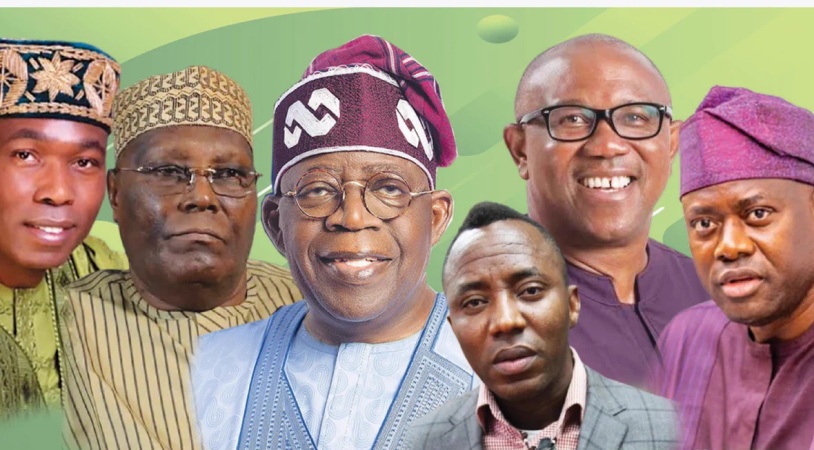
Prominent presidential candidates for the 2027 election
Fuel subsidy, which President Bola Tinubu sought to remove from the centre of Nigeria’s economic policy with his May 29, 2023 announcement ending the former petrol subsidy regime, is back at the centre of the 2027 presidential contest as candidates split over how to deliver cheaper fuel without worsening the country’s fiscal burden.
Former Vice President and African Democratic Congress (ADC) presidential candidate, Atiku Abubakar, has promised to restore a form of petrol subsidy if elected, arguing that Nigerians have endured the pain of its removal without receiving commensurate benefits.
His position has drawn opposition from the Presidency and the All Progressives Congress (APC), which insist that returning to subsidy would undermine ongoing economic reforms and recreate the fiscal pressures associated with the policy.
Accord presidential candidate, Gbenga Olawepo-Hashim, has also made petrol pricing central to his economic proposition, proposing N605 per litre as a starting point and arguing that the price could fall further through lower production costs, increased domestic refining and exchange-rate reforms.
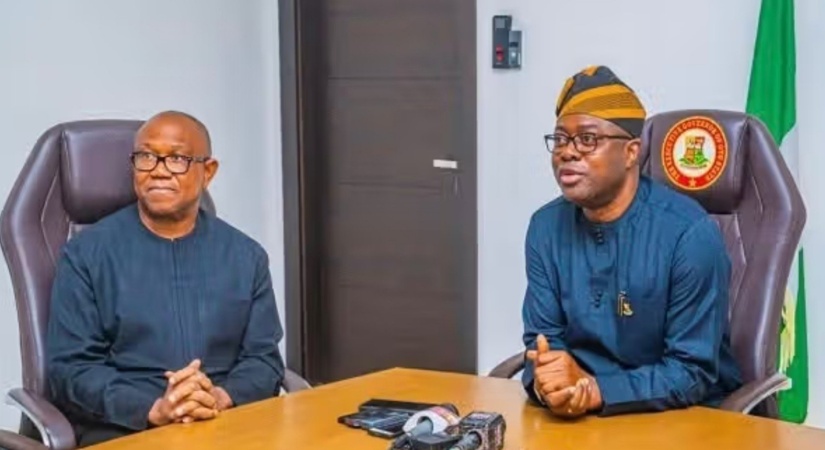
The presidential candidate of the Allied Peoples Movement (APM), Seyi Makinde, yesterday rejected a return to the old fuel subsidy regime if elected in 2027, promising instead to restructure domestic crude allocation to reduce petrol prices and ensure Nigerians benefit directly from the country’s oil resources.
Makinde said the proposed reform of the petroleum sector under his administration would ensure that crude supplied to Nigerian refineries was priced in a manner that reflected Nigeria’s status as an oil-producing country.
He spoke in Abuja during the commissioning of the APM presidential campaign headquarters, where he formally unveiled his “Reset Nigeria” agenda and opened the party’s campaign machinery ahead of the 2027 general elections.
The Oyo State governor argued that crude supplied to local refineries should not be priced as though it were imported, saying a properly structured domestic crude allocation system could reduce the burden on consumers without resorting to opaque petrol subsidies.
“Why should crude oil supplied to Nigerian refineries be priced as though Nigeria does not produce crude oil?” he asked.
Makinde said Nigeria’s oil resources must provide “a real and measurable benefit to Nigerians”, adding that such benefits should be built into the petroleum pricing system rather than delivered through interventions at the petrol pump.
He said his proposed approach would provide greater transparency across the petroleum value chain, covering crude oil production, domestic crude allocation, refining, transportation, distribution, taxation and retail margins.
The APM candidate said Nigerians should be able to understand how petrol prices were determined, who received what share of the proceeds and where inefficiencies contributed to rising costs.
“That is what it means to Reset Nigeria. It means that we stop accepting systems that nobody can explain. It means that the government must show its workings,” he said.
Adebayo rejects petrol subsidy, promises N200/litre in 12 months
For his part, the presidential candidate of the Social Democratic Party (SDP), Adewole Adebayo, ruled out restoring petrol subsidy if elected president in 2027, promising instead to reduce the pump price to about N200 per litre within 12 months.
Adebayo said the solution to Nigeria’s fuel crisis was increased domestic refining, effective management of crude allocation and targeted measures to cushion the impact of high petrol prices on Nigerians.
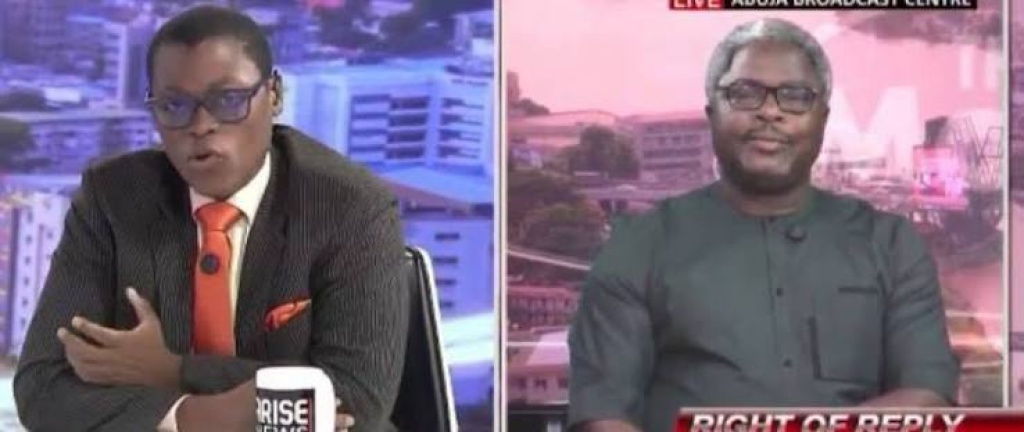
He spoke as a guest on TVC News’ Politics On Sunday with Femi Akande, where he argued that restoring the subsidy after its removal would be economically impractical.
“Anyone now who is saying that he wants to restore the subsidy doesn’t know what he’s talking about,” Adebayo said.
He likened subsidy removal to a medical procedure, arguing that the policy could not simply be reversed after its consequences had taken effect.
“You cannot restore the subsidy after you have abolished it,” he said.
Adebayo said the SDP had warned before the 2023 election that removing the subsidy without first addressing corruption, inadequate refining capacity and exchange-rate pressures would worsen economic hardship.
He said his administration would prioritise ensuring that Nigeria’s refineries operate efficiently, arguing that the country could reduce the cost of petroleum products by processing more crude locally.
Asked whether his strategy could bring the price of petrol down to N200 per litre, Adebayo replied: “Yeah, it will.”
Subsidy may influence voting behaviour, say UI dons
Two political scientists at the University of Ibadan said the removal of fuel subsidy and its impact on the cost of living could become a significant factor in determining voting behaviour in the 2027 general elections.
Professor of Political Science at UI, Remi Aiyede, said the consequences of subsidy removal had made it an issue politicians were likely to exploit in their campaigns, with opposition parties already placing it prominently in their messages to voters.
Aiyede, however, cautioned against assuming that the policy alone would determine the election outcome, noting that previous Nigerian elections had not always been decided primarily by government performance or a single policy direction.
He said the manner and timing of the subsidy removal were as important as the policy itself, with critics arguing that adequate measures should have been put in place before implementation.
The don also cited concerns over inadequate consultation and the sequencing of subsidy removal alongside other major economic measures, including the floating of the naira and social intervention programmes intended to cushion its impact.
According to him, the policy had had “significant consequences for the cost of living” and was therefore capable of influencing voters, but its ultimate electoral impact would depend on how Nigerians weigh it alongside other political and economic issues.
Also, the Head of the Department of Political Science at UI, Prof David Enweremadu, said subsidy removal had become a major political issue because of its ripple effects on the prices of goods and services.
He said the depreciation of the naira and other economic policies had compounded the hardship, with increased petrol prices affecting workers, motorists and Nigerians dependent on public transportation.
He said higher transportation costs had also increased the cost of moving agricultural produce and other commodities, particularly to rural communities.
The don said it was therefore unsurprising that opposition parties were capitalising on the hardship associated with subsidy removal as they prepare for the 2027 elections.
Falae: Reversing subsidy could cripple government finances
Former Secretary to the Government of the Federation (SGF), Olu Falae, warned that reversing the removal of petrol subsidy could further weaken Nigeria’s economy and significantly reduce government revenue.
Falae, who is also the traditional ruler of Ilu-Abo in Akure North Local Government Area of Ondo State, said a return to subsidy could leave the Federal Government and states with insufficient resources to pay salaries and fund infrastructure, hospitals, roads and other essential public services.
He, however, faulted the way the policy was removed, arguing that the government should have introduced measures to cushion its impact before taking the decision.
According to him, the subsidy regime largely benefited downstream operators, marketers and importers rather than ordinary Nigerians.
Falae, nevertheless, cautioned against reversing the policy without considering its fiscal consequences, warning that subsidy could sharply reduce revenues available to the government.
He also argued that subsidy removal should have been accompanied by a more aggressive transition to alternative energy, particularly gas.
He said the government should have expanded the availability of gas-fuelling stations and promoted gas-powered transportation before, or alongside, the removal of fuel subsidy.
Although he acknowledged ongoing efforts to establish gas stations, he said their number remained inadequate to provide meaningful relief.
Falae maintained that the priority should now be to grow the economy and improve workers’ remuneration rather than introduce policies that could further worsen the hardship facing Nigerians.
Kila: Politicians turning subsidy into campaign tool
A JEAN Monnet Professor of Strategy and Development, Anthony Kila backed Falae’s concerns, accusing politicians of turning the subsidy debate into an instrument of political mobilisation.
Kila said a complex economic policy had increasingly been reduced to political slogans, with politicians taking positions based largely on the popularity or unpopularity of subsidy removal.
He argued that major economic decisions should be subjected to detailed, rigorous and transparent analysis before being presented to Nigerians.
According to him, Nigeria’s long history as an oil-producing country has created strong public expectations around petrol prices, making subsidy a particularly sensitive issue.
He said the sensitivity of the issue should make consultation and careful policy planning more important, rather than less.
Kila also faulted political leaders for changing positions on major policies without sufficiently explaining why such changes had become necessary.
He said policies could legitimately be reviewed when circumstances changed or new information emerged, but government and political leaders had a responsibility to explain the reasoning behind such decisions.
He warned against politicians promising to reverse subsidy removal simply because the policy had become unpopular without explaining how such a move would be funded or sustained.
Adeniran: Voters must look beyond headlines
Former Minister of Education, Professor Tunde Adeniran, urged Nigerians to look beyond headlines and political sound bites in assessing competing positions on petrol subsidy.
Adeniran said many Nigerians formed opinions from headlines without taking time to understand the substance of arguments advanced by political actors and other stakeholders.
He said proper assessment of the subsidy debate required Nigerians to examine not only what politicians said but also the reasoning and circumstances behind their positions.
According to him, some politicians make contradictory statements, while others adopt positions largely to counter their opponents.
He said this made it necessary for voters to look beyond immediate political messaging when assessing candidates and their policies.
“Many people follow the headlines. They do not read the substance of what those candidates or some panellists are saying,” Adeniran said.
He stressed that understanding the substance of the debate was necessary to determine whether proposals being advanced were based on sound reasoning or political expediency.
PFN: Voters must scrutinise candidates’ promises, funding plans
The Director of the Directorate of Politics and Governance of the Pentecostal Fellowship of Nigeria (PFN), Pastor Femi Emmanuel, urged voters to look beyond regional considerations, friendship and popularity when assessing candidates ahead of the 2027 elections.
Emmanuel said voters should focus on issues affecting Nigerians and the capacity of candidates to deliver on their promises.
He noted that social programmes and other government interventions were often constrained by available budgets, stressing the need for voters to examine how candidates intended to finance their proposals. (The Guardian)




