
Updating your news feed...
NEWS EXPRESS is Nigeria’s leading online newspaper. Published by Africa’s international award-winning journalist, Mr. Isaac Umunna, NEWS EXPRESS is Nigeria’s first truly professional online daily newspaper. It is published from Lagos, Nigeria’s economic and media hub, and has a provision for occasional special print editions. Thanks to our vast network of sources and dedicated team of professional journalists and contributors spread across Nigeria and overseas, NEWS EXPRESS has become synonymous with newsbreaks and exclusive stories from around the world.














Loading banners
Loading banners...

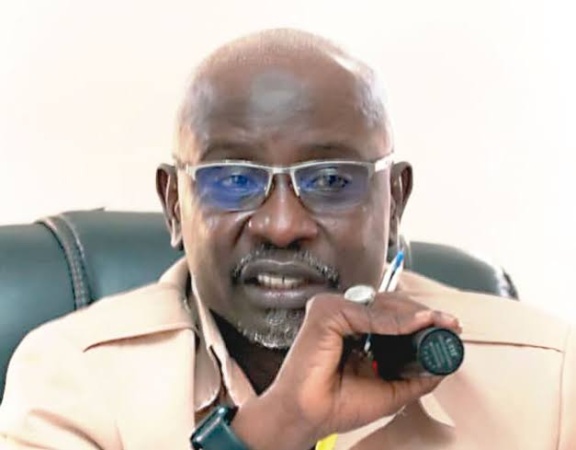
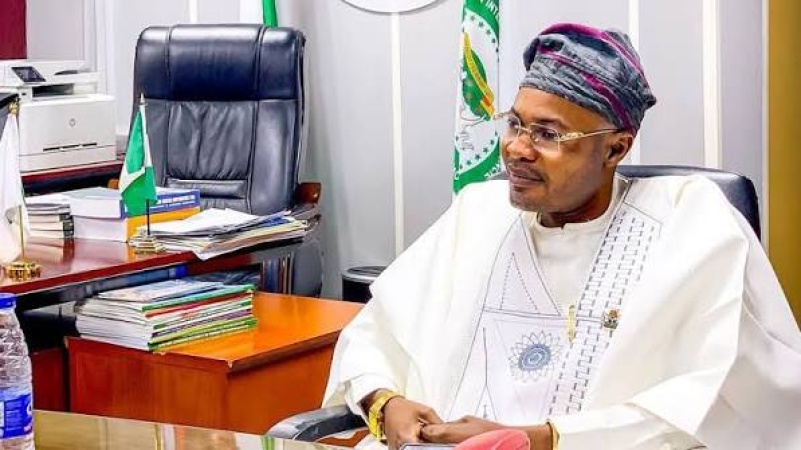
SSANU National President, Comrade Muhammad Haruna Ibrahim
•Rising hardship leaving members struggling with healthcare, food, transport, school fees
University workers are increasingly abandoning their cars and struggling to afford basic necessities as the rising cost of fuel, healthcare, food and other essentials continues to squeeze their incomes, the Senior Staff Association of Nigerian Universities (SSANU) has said.
National President of SSANU, Comrade Muhammad Haruna Ibrahim, disclosed this in an interview with the Nigerian Tribune, lamenting that the worsening economic hardship was taking a heavy toll on non-teaching staff in federal universities.
He said many workers had been forced to park their vehicles because they could no longer afford the cost of fuelling them, while transportation, medical bills, electricity, cooking gas and school fees were also placing unbearable pressure on their incomes.
“So many of our people have parked their cars because they cannot afford to fuel them,” Ibrahim said.
He added: “You cannot fill your tank with N100,000 and use it for one week, and it is finished. When you calculate it over four weeks, that is N400,000 on petrol alone. Where will you get money for electricity? Where will you get money for gas to cook? Where will you get money to pay school fees?”
The SSANU president said the situation had become particularly distressing because workers were not only struggling to meet household obligations but were also finding it increasingly difficult to access healthcare.
“Today in Nigeria, to treat malaria, even at primary healthcare centres, you need nothing less than N30,000 because you have to do the blood tests, get diagnosed and then get drugs for five days,” he said.
According to him, the financial strain was contributing to declining morale among university workers, with members constantly contacting the union leadership to complain about their deteriorating welfare.
“My members cry to the leadership ear all the time. They call on phone to know what is happening, they lament, and their morale is very dampened,” he said.
Ibrahim linked the hardship partly to the failure of the Federal Government to commence payment of the reviewed Consolidated Non-Teaching Staff Allowance (CONTTA) two months after the agreement revising the allowance was signed.
The government and the university non-teaching staff unions signed the reviewed agreement on June 29, 2026, after years of negotiations over the 2009 agreement.
The SSANU president stated that the reviewed CONTTA, which provides a 35 percent increase in the allowance for non-teaching staff, was intended to cushion some of the work-related expenses borne by university workers, including data subscriptions, professional memberships, conferences, seminars and presentations.
But, he said, no federal university had received funds for its implementation two months after the agreement was signed.
“No federal university has been able to get one dime, one naira for the implementation,” Ibrahim said, adding that the development had dampened the excitement that followed the signing of the agreement.
He said the situation was also being compounded by what he described as the non-remittance of pension contributions deducted from workers’ salaries.
The union leader warned that the continued deterioration of workers’ welfare could have consequences beyond individual households, arguing that poorly motivated university staff could undermine the quality and sustainability of tertiary education.
“If universities are poorly funded and the staff are angry and hungry, you will continue to have bad products, and then the country will be in for it,” he said.
Ibrahim therefore appealed to President Bola Ahmed Tinubu to prioritise funding for education and ensure the implementation of agreements reached with university workers.
“Our call to the President and his lieutenants is to prioritise expenditure. They need to prioritise expenditure,” he said.
“University education and education generally are priorities anywhere in the world.”
He warned that continued inadequate funding could ultimately weaken the university system, stressing that education remained central to national development.
“If we continue to have this drop in releases in the education sector, definitely, the system will crumble. The government must seriously prioritise expenditure, and fund our universities,” the SSANU president said. (Nigerian Tribune)




