ADAD
ADAD
Updating your news feed...
NEWS EXPRESS is Nigeria’s leading online newspaper. Published by Africa’s international award-winning journalist, Mr. Isaac Umunna, NEWS EXPRESS is Nigeria’s first truly professional online daily newspaper. It is published from Lagos, Nigeria’s economic and media hub, and has a provision for occasional special print editions. Thanks to our vast network of sources and dedicated team of professional journalists and contributors spread across Nigeria and overseas, NEWS EXPRESS has become synonymous with newsbreaks and exclusive stories from around the world.












.webp)
Loading banners
Loading banners...

With a few months left to the Federal Government’s target of converting one million vehicles to compressed natural gas (CNG), the initiative is stalled at 12 per cent penetration, a shortfall that heaps N58.6 trillion post-premium motor spirit (PMS) subsidy removal burden on struggling Nigerians.
About three years after it was rolled out, the interventionist programme (CNG) is short of the promise of cutting the volume of PMS consumed by motorists or significantly altering fare price setting nationwide.
Although President Bola Tinubu directed the rollout of 500 additional CNG refuelling stations across Nigeria as part of efforts to reduce the cost of high fuel prices, most stakeholders have doubted the target is achievable, as only 90 stations have been created in about three years of post-subsidy removal.
Against the disbelief, the Presidential Compressed Natural Gas Initiative (Pi-CNG) said it has certified over 400 conversion centres, established over 90 refuelling stations and trained over 7,700 technicians. It claimed it has also converted over 120,000 vehicles, secured over $2.5 billion in investment and created 10,000 jobs.
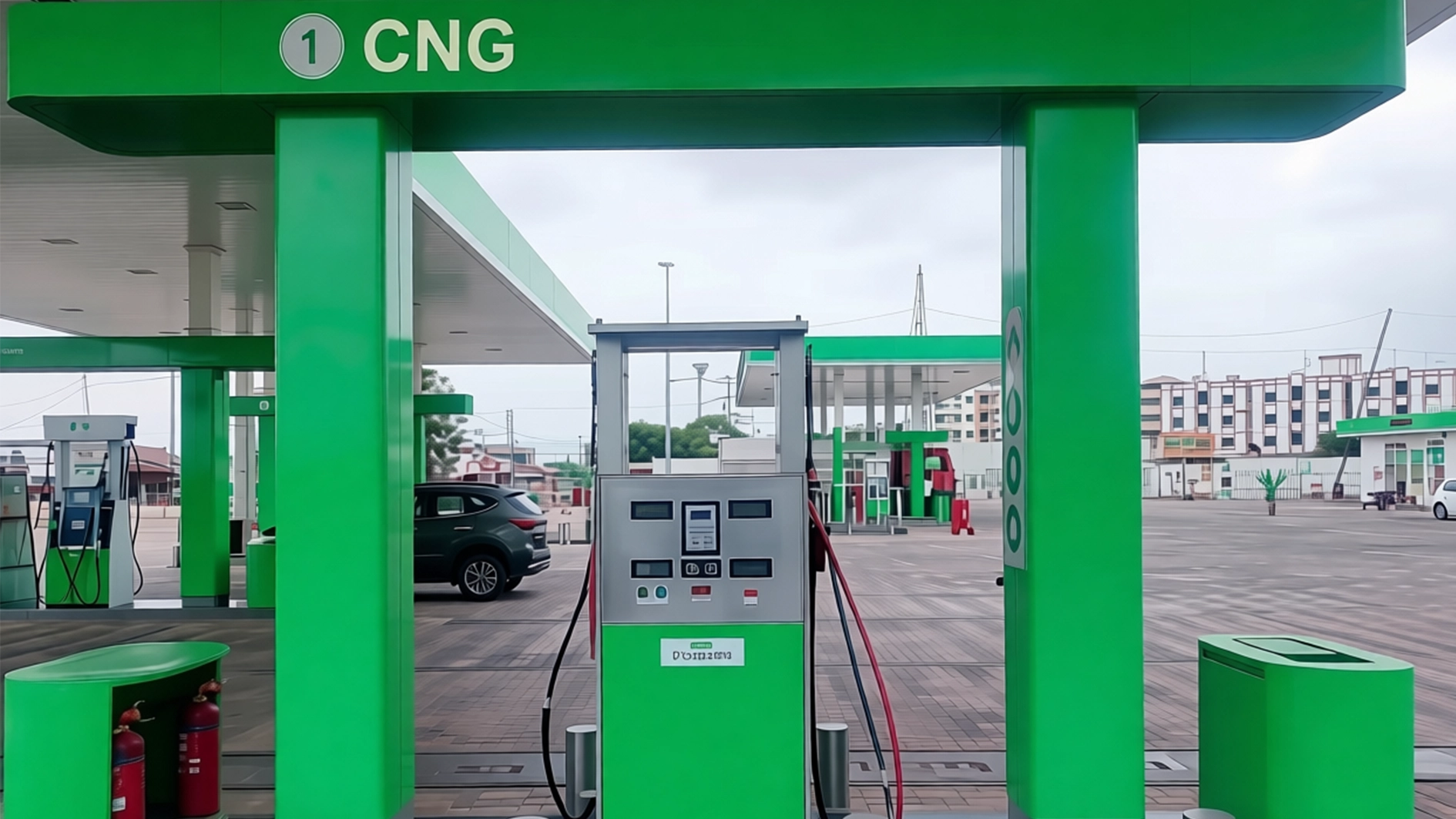
Yet visits to CNG stations across Abuja, Kano, Lagos and other states tell a different story.
At the Rolling Mother station in Jabi on Sunday, motorists queued for hours, with several disclosing they had waited since 4 am. The station only opened around noon.
At the Nipco station near Next Cash & Carry, Abuja, the facility was deserted, with an attendant explaining that CNG had not been sold there in three months owing to a faulty compression machine.
At the NNPC station in Gudu, two pumps struggled to serve a long queue, one of about 10 stations across the capital city.
Before the subsidy was removed in May 2023, the average retail price of premium motor spirit (petrol) in March 2023, according to the National Bureau of Statistics (NBS), stood at N263.76 per litre.
At an average national consumption of 50 million litres a day, the monthly fuel cost that month came to about N407 billion. In the last four years of former President Muhammadu Buhari’s administration, Nigerians paid roughly N4.884 trillion a year for fuel, with the government cushioning the difference through under-recovery by the Nigerian National Petroleum Company Limited.
By June 2023, the average retail price had jumped to N545.83 per litre, a 210.31 per cent increase that doubled the monthly bill to N819 billion. By September, it was N626.21, pushing the monthly bill to N939 billion. October saw N630.63, while in November and December the prices were N648.93 and N671.86 respectively.
The year’s average worked out to N624.69 per litre or roughly N11.2 trillion for the year, up from the N4.8 trillion paid the year before.
In 2024, the average petrol price climbed further to N872.09 per litre. It opened at N668.30 in January, rose through N679.36 in February, N696.79 in March, N701.24 in April and N769.62 in May, eased to N750.17 in June, then resumed its climb to N770.54 in July.
The second half of the year saw sharper increases: N830.46 in August, N1,030.46 in September, N1,184.83 in October, while the price peaked at N1,214.17 in November, before easing to N1,189.12 in December.
At the same average daily consumption of 50 million litres, the yearly burden on households rose to N15.9 trillion.
The NBS data shows petrol’s national retail price in 2025 ranged between N1,027 and N1,239 per litre, closing the year at N1,048.63. The year’s average of N1,104.88 per litre pushed the annual burden further, to N19.8 trillion. In the first half of 2026, prices rose sharply again: N1,034.76 in January, N1,051.47 in February, N1,288.54 in March, N1,532.93 in April, and a peak of N1,596.25 in May, before easing to around N1,300 in June. The six-month average of N1,300.33 per litre put the estimated aggregate fuel consumption in the half-year at N11.7 trillion.
Since the subsidy was removed, Nigerians have parted with about N58.6 trillion on petrol alone.
The pressure is not limited to the pump. Per the NBS Transport Fare Watch report, average bus fares within Nigerian cities rose to N1,431.25 per trip in May 2026, 2.43 per cent up from April and 38.63 per cent year-on-year. Intercity bus fares climbed to N9,699.55, a 21.89 per cent year-on-year increase, while domestic airfares rose to N157,552.19, up 20.86 per cent. Motorcycle fares rose the steepest of all, 52.45 per cent up to reach N1,072.51.
For many Nigerians, transport now consumes an outsized share of personal income. Mary Micheal, a real estate broker, said her daily commute from Area 1 to Centenary City costs N7,500 to N10,000 by InDrive, and that transportation swallows about 48 per cent of her earnings.
Zipporah Peter, a communications lead at Lincoln University, Abuja, said roughly half her salary goes to transport. Donen Danga, a real estate practitioner, said a Jabi-to-Berger trip at N100 in 2023/2024 now costs N400.
Motorists also gave practical and psychological reasons for staying with petrol. A Kano-based motorist, Ibrahim Muktar, said his UK-used Honda Civic is unsuited to CNG conversion even as the process costs N600,000 to N700,000, typically requiring a deposit with the balance in instalments.
An e-hailing operator, Victor Shola, said he avoids CNG chiefly because of the queues, cutting the need to wait four to six hours and sometimes overnight. He would rather buy an electric vehicle than endure the stress of conversion.
Mustapha Adesina, another e-hailing driver who converted three weeks ago, admitted CNG has slashed his running costs. An 80-litre cylinder holding roughly 20 to 21 standard cubic metres (SCM) costs about N10,000 at N500 per SCM and it can generate N40,000 to N45,000 in fare revenue, covering journeys of around 120 kilometres, he said. He spent N800,000 on a UK-used fibre cylinder and kit bought privately, rather than the option of about N700,000 new iron cylinders at conversion centres.
But he still queues for hours and estimates fewer than 40 per cent of drivers have converted. This suggests fare reduction attributable to CNG remains limited.
The state-level picture is uneven, as Lagos has received about 20 operational buses since November 2024, with an expanding refuelling network and plans for up to 2,000 buses under public-private partnerships. However, the programme remains in its pilot phase.
Oyo and Ogun led early rollouts with 17 buses launched in October 2023, while Oyo has since converted 70 vehicles free of charge. Ekiti received 15 buses, but a stakeholder said its seven conversion centres are yet to start operation even as the state has no CNG filling station.
Enugu is building a mother station for the south-east, while Cross River, Osun, Edo, Plateau and Ondo report little or no federal support. Niger State procured 200 buses but has received only 100.
In Kano, federal tricycles and buses ply routes such as Zaria Road, though the state does not control them; hence, fares have not fallen since gas is unsubsidised at the pump. A vendor, ASAD Energy, said no formal subsidy agreement exists with the Federal Government.
The P-CNGi had said 160 buses had been deployed to transport unions and state transit companies across Oyo, Ekiti, Kogi, Kwara, Lagos and the FCT, cutting fares on some routes by as much as 50 per cent. The initiative has also produced 807 buses, procured 3,500 tricycles and trained 1,000 technicians, targeting 100,000 conversions this year and one million by 2027.
A human rights lawyer, Malachy Ugwummadu, argued the initiative’s troubles stem from poor implementation planning rather than a flawed premise, citing the shortage of conversion plants and stations and the cost burden on Nigerians already reeling from subsidy removal.
Femi Falana, a leading human rights activist and lawyer, urged deeper partnerships with private operators to expand bus availability.
The Federal Government has approved import duty and VAT exemptions for CNG, LPG and electric vehicles to accelerate adoption. Whether such incentives close the gap between rhetoric and reality before 2027 is a question millions of queuing motorists live daily.
The Federal Government has approved import duty and VAT exemptions for CNG, LPG and electric vehicles to accelerate adoption. Whether such incentives close the gap between rhetoric and reality before 2027 remains open, a question millions of queuing motorists live daily. (Guardian)