ADAD
ADAD
Updating your news feed...
NEWS EXPRESS is Nigeria’s leading online newspaper. Published by Africa’s international award-winning journalist, Mr. Isaac Umunna, NEWS EXPRESS is Nigeria’s first truly professional online daily newspaper. It is published from Lagos, Nigeria’s economic and media hub, and has a provision for occasional special print editions. Thanks to our vast network of sources and dedicated team of professional journalists and contributors spread across Nigeria and overseas, NEWS EXPRESS has become synonymous with newsbreaks and exclusive stories from around the world.













Loading banners
Loading banners...

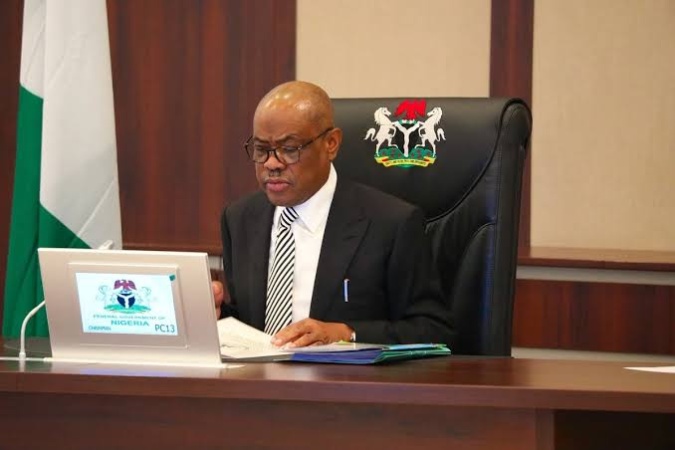
Minister of Finance and Coordinating Minister of the Economy, Taiwo Oyedele
The Federal Government yesterday said the removal of the petrol subsidy and the liberalisation of the naira have generated N15.8 trillion in savings for the federation between June 2023 and December 2025.
The Minister of Finance and Coordinating Minister of the Economy, Taiwo Oyedele, says the money saved from the reforms has created additional fiscal space for governments to fund critical programmes, pay workers and pensioners, invest in infrastructure, support vulnerable Nigerians and expand access to credit.
But three years after the reforms began, a different question is being asked across communities: what impact has the additional money had on the lives of ordinary Nigerians?
While the Federal Government points to higher allocations, wage adjustments, infrastructure, student loans, social transfers, agricultural interventions and other programmes as evidence of what the reforms have made possible, Nigerians are asking questions about the impact of the savings.
According to Nigerians and economic analysts, the benefits remain limited or uneven.
For many Nigerians, the removal of subsidy has brought higher petrol prices, increased transportation costs, rising food prices and a general increase in the cost of living.
They argue that the increased revenue available to governments has not translated into improvements that are sufficiently visible in their communities.
The subsidy removal has seen the federal allocation accruable to the three tiers of government – federal, states and local governments – skyrocketing in the last three years.
The Federal Government, 36 states and 774 local government councils shared a record N3.007tn from the Federation Account in July 2026, the highest monthly FAAC allocation ever recorded since the removal of subsidy.
This represented a 281.7 per cent increase compared to N786.161bn shared in May 2023 prior to the reforms.
‘How the money was spent’
Oyedele, while presenting the government’s reform scorecard at a media conference titled “The Benefits, Costs and Harm Prevented,” said the reforms should not be assessed only by their immediate costs but also by the economic damage they prevented and the opportunities they created.
According to him, the federal government mobilised N15.8 trillion in resources for the Federation from subsidy savings between June 2023 and December 2025.
Of the N15.8 trillion, the federal government received N5.4 trillion, while N10.4 trillion was shared among the states and local governments.
The federal government also generated N3.1 trillion in incremental independent revenue, principally from remittances by government-owned entities, during the period.
Oyedele said the additional resources had enabled the government to undertake programmes that would have been more difficult to finance without the fiscal space created by the reforms.
“Altogether, the federal government’s incremental resources over the period — subsidy savings, independent revenue, and incremental borrowing — came to N20.4 trillion,” he said.
According to the Minister, the government’s additional borrowing amounted to N11.9 trillion. He argued that the borrowing would have been “far higher and economically destabilising” without the fiscal space created by the reforms.
The federal government, he said, spent N30.64 trillion in incremental expenditure during the period.
Of that amount, N9.39 trillion went into wage adjustments, minimum wage increases and allowances for public servants, while another N9.37 trillion was spent on external debt servicing. A further N6.5 trillion, according to the minister, was spent on strategic infrastructure.
Oyedele said the amount spent on wage adjustments was higher than the federal government’s entire share of the savings from subsidy removal.
The Minister also explained that the increase in the naira cost of external debt servicing was largely a consequence of the depreciation of the local currency.
He noted that while the dollar value of Nigeria’s foreign debt remained unchanged, the amount of naira required to service the debt increased significantly following the depreciation of the currency.
“If we were paying $1 million before in interest on our foreign debt, it is still the same $1 million, but instead of N460, it’s now N1,415,” Oyedele said.
“That’s more naira that we need to incur. And I’ve said this before, when you have debt service to pay, you don’t negotiate, you don’t delay, you pay. Because delays or defaults have consequences.”
For the Minister, the reforms were not primarily about increasing government revenue.
Rather, he said they were necessary to address what he described as “entrenched corruption in the artificially managed fuel subsidy and foreign exchange markets”.
He maintained that the government’s assessment of the reforms should therefore go beyond the immediate pain experienced by citizens and consider the longer-term benefits and the economic harm that would have occurred had the old system continued.
He also cited gains in the capital market, infrastructure development and improved access to affordable credit.
According to the Minister, the reforms had supported wealth creation through capital market gains and provided resources for programmes targeted at students, consumers, small businesses, homeowners and vulnerable households.
He said the government had expanded access to student loans through the Nigerian Education Loan Fund, NELFUND, while also supporting affordable consumer and small and medium enterprise credit.
Other interventions, he said, included subsidised mortgage and housing schemes and social transfers targeted at about 15 million vulnerable households.
The government also strengthened agricultural interventions as part of efforts to improve food security and reduce the impact of rising food prices on households.
Oyedele further cited improved fuel availability and efforts to address energy shortages despite global economic shocks as some of the outcomes of the reforms.
He said the reforms had also helped restore investor confidence, resulting in increased local and international investments.
On taxation, the Minister said the government had introduced exemptions for low-income earners and small businesses while working towards a more business-friendly tax environment.
Summarising the gains, he said, “The savings and reforms helped in wage increases and timely payment of salaries and pensions, settlement of pension arrears and gratuities owed to retirees, wealth creation for millions of Nigerians through capital market gains, transformative infrastructure development nationwide and a top globally friendly student loan scheme (NELFUND) and affordable consumer/SME credit.”
In the same vein, the Minister of Information and National Orientation, Mohammed Idris, described subsidy removal as one of the administration’s most difficult economic decisions, saying resources previously spent on subsidies should instead finance investments capable of delivering more sustainable benefits.
“The decision to remove the fuel subsidy was undoubtedly one of the most significant and difficult economic reforms undertaken by this administration,” he said.
Nigerians: We’re yet to feel impact, only politicians do
But many Nigerians lamented that the subsidy windfall has not translated into improvement in standards of living at the grassroots level.
Paul Oyewusi, the managing director, POMA Point Limited, said government intervention is still very minimal compared with the savings from the removal of subsidy.
He stressed that the cost of living still remains high, calling on the government to itemise the projects done with the fund.
“I won’t say how I felt about myself and business or businesses around me because things are still very high. We still buy things at very high prices. The price of fuel is still high and above what the government set there. If the price of fuel is up, it definitely impacts so many things in the economy.
“The cost of data for the Internet is high. I think it would be great if they could itemise how they spent this money; we can know what this money was used for. It is important they explain what they did with the money,” he said.
In Kano, some residents expressed mixed feelings about the increased funds available to governments following the removal of the petrol subsidy.
Musa Abdullahi, a trader, said increased allocations had not translated into better infrastructure in his area.
“The roads are still bad, the market is congested, and drainage is poor. If billions are truly coming, we should feel it. For now, nothing has changed in my life except that transport and goods are more expensive,” he lamented.
A school teacher, Zainab Aliyu, acknowledged that the state government had made some efforts but said much more needed to be done.
“The state renovated some classrooms in our area, and they claimed it was from the increased allocation. But when you hear the kind of trillions being shared, you expect bigger projects that touch everyone. What we’ve seen is too small compared to the amount they say is coming in,” she said.
For Abdulrahman Garba, a commercial driver in the Kano metropolis, the removal of the subsidy has mainly increased his operating costs.
“Fuel is costly, transport fares went up, but I don’t see new buses, better roads, or anything that makes my work easier. For me, the extra money the government is getting has not reduced the suffering,” he said.
Residents of Rivers and Bayelsa states criticised governments at all levels for what they described as a failure to use the funds saved from subsidy removal to implement tangible projects across the country.
A human rights activist, Comrade David-West Benewarie, said he had not seen feasible projects in Bayelsa State or at the local government level that could be directly linked to the increased resources.
He argued that the funds had not translated into better living standards, particularly as citizens continued to contend with inflation and high prices of goods and services.
“As a matter of fact, the increase in allocation is feasible, but then in terms of projects, they are not feasible. If at all they are projects to that extent, they are very minimal. In the various states, how many projects are they executing? N15.8 trillion, such a huge sum of money, but the impact is not felt, in terms of the living standards of the people,” he said.
Benewarie questioned why the increased revenue had not been matched by greater investment in domestic refining and other infrastructure.
He said, “Again, you cannot realise this amount of money, and the refineries, none of them is working, or President Tinubu cannot give us a mini refinery in the first place, for this number of time or years that the fuel subsidy has been removed, so I think the impact is not there, the impact is only felt by the politicians, they are the ones disbursing the money to themselves, is it not before us that the National Assembly budgeted huge sums of money for SUV vehicles, so they are the ones feeling the impact of fuel subsidy removal.
“You can’t tell me a kg of gas is N1,000 plus; we are buying petrol at the cost of N1,250 or thereabouts, depending on your location, so I am not seeing any impact even at the state level and the local government level. What project has been carried out by the council chairmen?”
A Port Harcourt-based analyst, Dr. Fyneface Dumnamene Fyneface, who is also Executive Director of the Youths and Environmental Advocacy Centre, said the government needed to demonstrate more clearly how the funds were being used.
He argued that if Nigerians could not feel the impact of subsidy removal through improved infrastructure and other meaningful interventions, the government should reconsider its approach.
“We have not seen this money saved from fuel subsidy reflected in the lives of the people of Nigeria. Nigerians are suffering. Many of them are going to bed hungry every night. The cost of food is skyrocketing; hardship from house rents, shop rents and office rents is biting Nigerians very hard.
“So the money that has found its way into the hands of the government at all levels is not reflected in the lives of Nigerians as expected. So, going forward, I think Nigerians should demand from the government at all levels what they are using this money saved from fuel subsidy removal to do.”
Another Port Harcourt resident, Mr. Chinasa Charles, questioned whether ordinary Nigerians had seen any evidence of the savings the government said had been generated from subsidy removal.
He compared the performance of governments before and after subsidy removal and questioned whether the increased allocations had translated into better public services.
“Do the present governors perform better than the set of governors of 2015 to 2023? Then there was no fuel subsidy removal. What projects have you seen? What has the federal government done? Has Tinubu’s government completed the East-West Road? Have we from Rivers State seen work on the much-talked-about Lagos-Calabar road? Then where is the money for fuel subsidy? Are they using it for re-election campaigns?”
Mixed reactions in Borno
In Borno State, however, reactions were more divided, with some residents acknowledging that local governments had undertaken projects while others argued that the scale of development remained inadequate compared with the resources available.
Major Stanley K. Ngadda (Rtd), a former member of the House of Representatives who represented the Hawul/Askira federal constituency, expressed dissatisfaction with the pace of development in his constituency. He said the level of development did not reflect the financial allocations available to local councils.
However, Salihu Ndahi, a resident of Hawul Local Government Area, offered a contrasting assessment. Ndahi commended the current chairman, Yusuf Mamman, for what he described as notable projects executed during his tenure.
He pointed to the drilling of boreholes across several communities, including Shafa, Tashan Alade, Sabon Kasuwa, Azare and Kwajafa, saying the projects had improved access to potable water.
He also said the council had rehabilitated primary healthcare clinics and constructed perimeter fencing in communities including Mbulatawiwi, Sakwa, Kukurupu and Sabon Kasuwa.
Ndahi added that the administration was rehabilitating 20 housing units previously destroyed by Boko Haram insurgents, while also renovating primary school roofs damaged by storms.
The differing assessments in Borno demonstrate the complexity of measuring the impact of increased government revenue.
While some communities may have benefited from specific projects, others may not have experienced similar interventions, raising questions about the distribution, implementation and accountability of public funds.
Experts weigh economic impacts of subsidy savings
Economic scholar, Professor Ndubisi Nwokoma, criticised the economic impact of fuel subsidy removal, arguing that while the policy improved public finances and increased funds available to state governments, its benefits have not translated into improved living conditions for ordinary Nigerians.
Nwokoma said the increased revenue available to governments following the removal of the subsidy had enabled some states to meet salary obligations and undertake other spending. However, he argued that the broader economic impact had been negative for households.
According to him, rising fuel prices increased transportation costs, which subsequently pushed up the prices of goods and services.
“The benefits are nothing because the poverty index increased because people were paying more,” he said, noting that higher transport costs affected the movement of goods from one location to another.
He argued that although state governments had more resources at their disposal, the additional funds had been used differently across the country, with some governments deploying them positively while others engaged in what he described as reckless spending.
Nwokoma said the situation had contributed to the high cost of governance, arguing that the additional public resources had largely circulated within government circles rather than reaching ordinary Nigerians.
“Those who operate at the government level are the beneficiaries of the removal. The politicians have more money to throw around,” he said.
The economist also criticised what he described as poor management of public resources, arguing that increased government revenue had not translated into sufficient investment in critical infrastructure.
He questioned why major road infrastructure remained in poor condition despite increased government revenues.
“So we are still borrowing; we didn’t have more money to establish the economy. Roads were not better,” he said, citing the condition of roads around Benin as an example.
Nwokoma described the situation as “pure mismanagement of the economy,” arguing that the government had failed to demonstrate sufficient prudence in managing public resources.
He also expressed concern about the broader direction of the economy, saying economic conditions were already deteriorating.
Another economic analyst, Samuel Caulcrick, urged Nigerians to take up their state governors.
“People should go and face their governors. The governors that took 10.4 trillion, what did they do with it? Ask your governors where my road, water, hospital, school?
Speaking on whether the additional revenue from fuel subsidy removal had translated into tangible benefits for Nigeria and its citizens, an economist at Al-Hikmah University, Ilorin, Dr Mohammed-Bashir Yusuf, said the impact was already being felt in some areas of the economy, but had yet to sufficiently reach ordinary Nigerians.
He explained that the impact should be assessed at two levels, distinguishing between improvements in the broader economy and changes in the living conditions of citizens.
“There are two things we need to differentiate now. There is economic growth and there is economic development.
“When we talk about growth, we talk about an increase in GDP, as you can see, and that is at the macro level. And we need that to be able to stabilise the economy,” he said.
Yusuf said some of the gains from the government’s increased revenue and economic reforms were already reflected in areas such as foreign reserves, foreign direct investment, infrastructure financing and improved confidence in Nigeria’s ability to meet its financial obligations.
However, he acknowledged that these improvements had not yet translated into a corresponding improvement in the daily lives of most Nigerians.
“When they say the economy is good, the government is correct. When the masses say, ‘We don’t see the impact,’ then the masses are also correct.
“What we are saying is that it has not trickled down to the masses so that we will feel the impact. So they are two different things,” he said.
Yusuf also defended the government’s continued borrowing despite the additional revenue generated from subsidy removal, saying the existence of increased revenue did not automatically eliminate the need for borrowing. (Daily trust)