ADAD
ADAD
Updating your news feed...
NEWS EXPRESS is Nigeria’s leading online newspaper. Published by Africa’s international award-winning journalist, Mr. Isaac Umunna, NEWS EXPRESS is Nigeria’s first truly professional online daily newspaper. It is published from Lagos, Nigeria’s economic and media hub, and has a provision for occasional special print editions. Thanks to our vast network of sources and dedicated team of professional journalists and contributors spread across Nigeria and overseas, NEWS EXPRESS has become synonymous with newsbreaks and exclusive stories from around the world.













Loading banners
Loading banners...

Geregu Power Plc
Four years after issuing Nigeria’s largest-ever corporate bond for a power generation company, Geregu Power Plc stunned the capital market by defaulting on its debt obligations.
Earlier this month, the FMDQ Securities Exchange tagged the company’s N40.09 billion senior unsecured bond as being in “credit default” after the utility giant skipped its eighth semi-annual coupon and fourth scheduled principal instalment. While the total bond is worth N40.09 billion, Faruk Yusuf, managing partner at Segun Sulaiman & Co, noted on Arise TV that exactly N6.03 billion was due and left unpaid as of July 28, 2026, after earlier principal and interest payments had been made.
How did one of Nigeria’s premier listed power companies reach this point? The path to default is a complex web of ambitious acquisitions, massive shareholder payouts, and allegations of depleted escrow accounts.
July 2022: The bond is born
Geregu priced the N40.09 billion bond on 28 July 2022 at a fixed coupon of 14.50 percent, with a seven-year tenor running to maturity on 28 July 2029.
It was the first tranche of a N100 billion multi-instrument debt programme and, at the time, the largest corporate bond ever sold by a company in Nigeria’s power sector. The offer had opened on 1 July and closed on 14 July, oversubscribed.
Proceeds were earmarked to help fund Geregu’s acquisition of the 434-megawatt Geregu 1 plant.
At the time of issuance, Geregu was controlled by Amperion Power Distribution Company, which held roughly 99.9 percent of the business. Amperion was in turn controlled by Femi Otedola, through Amperion and Calvados Global Services, and Otedola chaired Geregu’s board.
Akin Akinfemiwa served as chief executive officer. Geregu listed on the Nigerian Exchange’s Main Board by introduction that October, becoming the first power generation company admitted to the main board.
2023: Geregu paid a $4 million bid bond to BPE for Geregu II
Data gleaned from Geregu’s 2023 financial statement showed the power company obtained a $4m bid bond in favour of the Bureau of Public Enterprises for the acquisition of Geregu II.
A bid bond provides a guarantee to the project owner that the bidder will complete the work if selected. The bid bond gives the owner assurance that the bidder has the financial capacity to execute the price quoted in the bid.
BusinessDay’s findings showed there was no public confirmation of a final award of Geregu II to Geregu Power Plc.
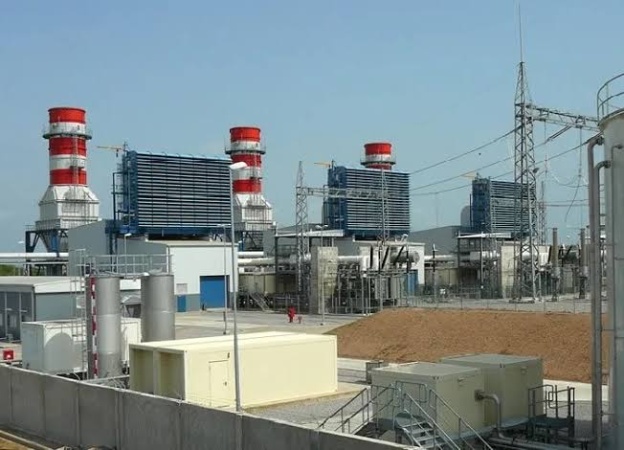
Geregu Power Plant II is a 434-megawatt (MW) gas-fired open-cycle power station located in Ajaokuta, Kogi State, Nigeria.
May 2024: Siemens Energy MOU signed for 1,200mw power boost
On 29 May 2024, Geregu and Siemens Energy signed a memorandum of understanding in Berlin to jointly develop capacity-expansion plans at the Geregu 1 site.
The framework outlined a roughly threefold expansion, from 435MW to 1,200MW, through an upgrade of the Geregu 1 Power Plant from its current capacity of 435MW to 500MW, establishing combined-cycle operations to generate an additional 200MW, and building new facilities using lower-emission turbines with an added capacity of 500MW to create Geregu 3.
Otedola led the Geregu delegation; Siemens Energy’s Middle East and Africa managing director, Dietmar Siersdorfer, led the German side. The announcement came as Geregu’s first-quarter 2024 profit nearly quadrupled year over year.
29 December 2025: MA’AM Energy acquires 95% of Amperion
MA’AM Energy Limited, a vehicle linked to Abdulaziz Yari, a former Zamfara State governor, acquired a 95 percent equity interest in Amperion Power Distribution on 29 December 2025, becoming Amperion’s new controlling shareholder and, by extension, taking indirect control of roughly 77 percent of Geregu’s issued share capital, about 1.925 billion shares.
The transaction was valued at approximately $750 million and was financed by a consortium of Nigerian banks led by Zenith Bank, with BlackBirch Capital advising.
Otedola and Calvados Global Services exited, and Otedola’s daughter, Olawunmi Otedola, resigned as a non-executive director along with four independent directors.
The board accepted the resignations of Otedola as chairman and of Akinfemiwa and deputy CEO Julius Omodayo-Owotuga.
17 January 2026: New board proposes 2025 dividend
At a board meeting on 15 January 2026, Geregu’s newly reconstituted board approved audited financial statements for the year ended 31 December 2025 and recommended a dividend of N9 per ordinary share, up from N8.50 the prior year, for a total payout of N22.5 billion, a roughly 82.5 percent payout ratio on 2.5 billion outstanding shares.
2 July 2026: First AGM under new board
Geregu held its 14th AGM virtually on 30 June 2026, chaired by Yari. Shareholders approved the N9-per-share dividend, payable to holders on the register as of 13 April 2026, adopted the 2025 audited accounts, reappointed PricewaterhouseCoopers as auditor, and approved seven new board appointments, including Yari and several other non-executive and independent directors.
Results were disclosed on 2 July. Yari, who indirectly controls roughly 1.921 billion shares through MA’AM Energy’s Amperion stake, was the dividend’s largest single beneficiary, collecting an estimated N17.2 billion.
August 2026: Turbines went offline
Geregu said in August 2026 it had committed to a major maintenance programme on its gas turbines, ultimately costing roughly N61.47 billion, aimed at preserving the plant’s long-term capacity and reliability.
The overhaul takes billable generation offline during the work, with a severe effect on the top line as second-quarter revenue dropped to N419.1 million, against N55.87 billion in the same quarter of 2025.
For the first half of the year, revenue tumbled 78.7 percent to N18.65 billion while profit after tax fell 88 percent to N2.54 billion. Net margin contracted to 13.34 percent from 23.23 percent a year earlier.
Geregu’s declining top-line is not in isolation. Nigerian power producers were owed roughly N6.8 trillion as of March 2026, with gas suppliers alone owed about N3.3 trillion of that total.
Gas-fired plants nationally were running on less than half their required fuel supply earlier in the year, and national generation had slipped to around 4,300 megawatts.
The maintenance bill arrives at the same moment the sector’s chronic cash crunch is biting harder; gas-fired plants nationally are receiving less than half the fuel they need, and total generation has fallen to around 4,300 megawatts.
August 9, 2026: FMDQ marks the bond in default
An updated listing status from FMDQ Securities Exchange shows Geregu has missed both its eighth semi-annual coupon payment and its fourth scheduled principal bullet repayment on the Series 1 note. The exchange classifies the instrument as being in “credit default.”
It is the first payment miss of the bond’s life and lands roughly midway through its seven-year term rather than at maturity, a distinction that matters for how bondholders and rating agencies read the severity of the event.
Geregu’s own share price has already priced in some of the stress, sliding 27.7 percent year-to-date to N825.70 as at 14 August from N1,141.50 at the start of January.
Rating agencies split
The two agencies covering the bond diverged sharply on how to treat the miss. GCR Ratings held Geregu’s national scale long-term issuer rating at A(NG) with a stable outlook, on the view that generation and revenue will recover once the overhaul is complete.
Agusto & Co took the opposite path by withdrawing its A- rating on both the company and the bond entirely, citing not just the missed payments but concerns about the reliability of the financial information available to assess creditworthiness going forward.
Experts’ take
According to Yusuf of Segun Sulaiman & Co, who is also close to Geregu, the bond was originally raised to fund the acquisition of a separate power plant, a deal that collapsed after the company could not satisfy BPE requirements.
With that acquisition dead, the prior management placed the unused proceeds into an interest-yielding escrow account, intending to draw on it as coupons and principal came due.
He said correspondence exchanged during the December 2025 ownership transfer indicated the escrow funds were still intact and available.
“We went behind and carried out a review of their books and discovered that, yes, that money was kept in an escrow account, which is right, generating interest,” Yusuf said.
When the new management went to draw on the account to cover the N6.03 billion payment due on 28 July, it found the money had already been used by the prior owners, precipitating the default.
Responding to questions on why the matter was not made public earlier if the funds were discovered to be missing, Yusuf said the regulators had already been informed.
Yusuf said regulators were already aware of the matter and that a process was underway, which he said was why neither the company nor its new owners had gone into detail publicly.
Ebipere Clark, a former special adviser to the Central Bank governor on infrastructure and industry, questioned whether the company’s strong profitability under prior ownership reflected an optimistic accounting treatment of amounts owed to it by the Nigerian Bulk Electricity Trading Plc, noting that gas costs alone typically account for about two-thirds of a thermal generator’s monthly bill.
“Something is going on at Geregu itself,” Clark said.
He added that Geregu was among the generating companies expected to receive an early tranche of the federal government’s repayment of long-standing sector debts, which he said should support the company’s recovery.
BusinessDay’s findings showed Geregu is among the gencos awaiting a share of N500 billion in power-sector arrears, part of a N4 trillion settlement the federal government is working through via a sovereign-guaranteed bond program issued by NBET Finance Company.
Analysts flagged that inflow as a factor that could ease the liquidity crunch, though the timing remains outside Geregu’s control. (BusinessDay)