ADAD
ADAD
Updating your news feed...
NEWS EXPRESS is Nigeria’s leading online newspaper. Published by Africa’s international award-winning journalist, Mr. Isaac Umunna, NEWS EXPRESS is Nigeria’s first truly professional online daily newspaper. It is published from Lagos, Nigeria’s economic and media hub, and has a provision for occasional special print editions. Thanks to our vast network of sources and dedicated team of professional journalists and contributors spread across Nigeria and overseas, NEWS EXPRESS has become synonymous with newsbreaks and exclusive stories from around the world.











Loading banners
Loading banners...

Six battlegrounds that will define 2027 governorship race
The ruling All Progressives Congress (APC) enters the 2027 general election with overwhelming control of governorship seats across the country. Still, Kano’s Kwankwasiyya split, Adamawa’s Binani factor, Makinde’s Oyo machine, and the OK Movement’s southern push are keeping key races open. Deputy Political Editor RAYMOND MORDI examines how the resistance in the six states could threaten the ruling party’s dominance.
The governorship election scheduled for February 6, 2027, will test whether the overwhelming state dominance of the All Progressives Congress (APC) can be converted into another sweeping mandate. Following a series of defections from the People’s Democratic Party (PDP) and other parties between April 2025 and March 2026, the APC has claimed control of 31 of Nigeria’s 36 states. The defections involved governors, legislators and local political structures. This numerical dominance provides the ruling party with a significant structural advantage, granting it control over state resources, local government machineries, and the traditional incumbency leverage that has long defined Nigerian electoral outcomes. NigerianEconomic Updates
Yet that dominance is also shaping a more complicated reality on the ground. The rush of governors into the APC has not eliminated competition; rather, it has relocated it. In several states, the big fight is no longer simply APC versus “the opposition” in the old sense. It is APC versus newly energised platforms, splintered legacy parties, and local coalitions led by politicians who believe the APC’s very size has created vulnerabilities: unresolved primaries, zoning quarrels, and the resentment that follows high-profile defections.
The opposition map is no longer built solely around the former ruling PDP. Following its adoption as the main opposition coalition platform mid-last year, the African Democratic Congress (ADC) has become the arrowhead of opposition in parts of the North and North-Central despite the legal challenges that have dogged its progress. The emergence of the Nigeria Democratic Congress (NDC), formally registered by the Independent National Electoral Commission (INEC) in February 2026 following a court order, has added a new layer to that competition, especially as it has become a magnet for heavyweight opposition figures. However, the NDC’s rapid rise remains legally exposed, with questions over its registration and ballot access still tied to continuing litigation. For now, the party has become the most important challenger across much of the South, especially the Southeast, after Peter Obi and Rabiu Musa Kwankwaso joined the party and Obi secured its presidential ticket. The Obi-Kwankwaso ticket, otherwise known as the OK ticket, has given the NDC a southern identity with northern reach, though the strength of that formula varies from state to state. NigerianEconomic Updates
Against that national backdrop, six states stand out as unusually competitive and newsworthy heading into the 2027 general election, precisely because they combine incumbency power with unstable party coalitions and credible alternative tickets that have emerged from the primaries. Kano, Adamawa, Oyo, Enugu, Delta and Kwara each show a different version of the same national story: APC dominance on paper, and battleground politics in practice. In these battleground states, the central tension lies between the APC’s drive for total national hegemony and a determined opposition trying to prove that the 31-state map is a fragile equilibrium. As candidates move from post-primary consultations toward the official campaign period, the focus shifts to the specific local political weakness where the ruling party’s hold on power is most vulnerable.
Kano: the battle for Kwankwasiyya’s soul
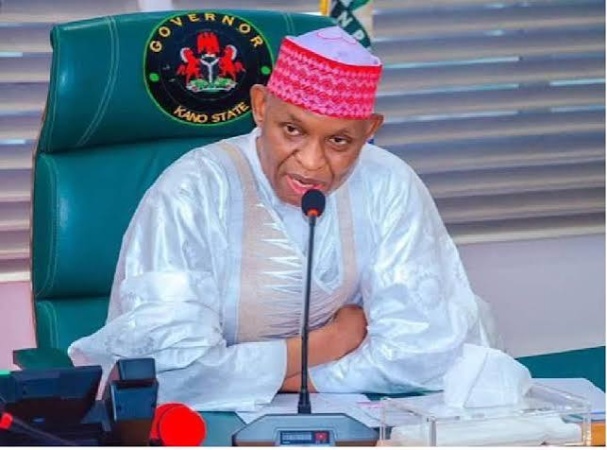
Kano State remains the most volatile and unpredictable theatre of the 2027 cycle. The state has spent much of the last three years embroiled in a complex struggle involving the emirate system and the rivalry between the New Nigeria People’s Party (NNPP) and the APC. Governor Abba Kabir Yusuf, elected in 2023 on the platform of the NNPP, defected to the APC on January 26, 2026, ending months of speculation and bringing the state government under the ruling party’s control. The defection gave the APC a sitting governor and a tested campaigner, but it also turned the 2027 race into a referendum on loyalty inside the Kwankwasiyya Movement.
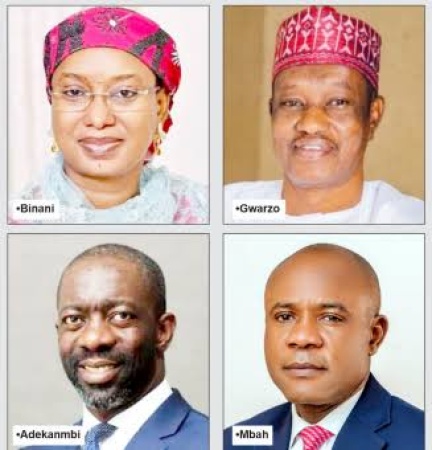
The NDC is the main opposition threat. Aminu Abdussalam Gwarzo is its governorship candidate, and he has picked Mustapha Rabiu Musa Kwankwaso, son of Rabiu Musa Kwankwaso, as running mate. That ticket gives the NDC access to the emotional capital of Kwankwasiyya, even though part of the movement now sits with Yusuf in the APC. The ADC has endorsed Ibrahim Khalil as its candidate, but current evidence suggests the central race is between the APC and the NDC, with the ADC seeking to become a third force.
Kano’s fault lines are not mainly ethnic or religious. They are organisational and personal: who owns Kwankwasiyya, whether Yusuf’s incumbency can absorb the movement that produced him, and whether Kwankwaso can mobilise enough voters outside government control. The APC starts ahead structurally, but the NDC has the sharper emotional message.
Adamawa: the post-Fintiri succession
Adamawa enters the 2027 general election as one of the most complicated races in northern Nigeria. Ahmadu Umaru Fintiri’s defection from the PDP to the APC in February 2026 initially appeared to strengthen the ruling party’s hand in the Northeast. Yet the June 2026 APC governorship primary produced an upset. Tijjani Ahmed Galadima emerged victorious with a commanding delegate tally, sidelining Fintiri’s preferred candidate, Felix Tangwami. A reported 40-60 power-sharing arrangement excluded the governorship slot from Fintiri’s camp, diminishing the governor’s post-defection influence.
The result turned Adamawa from a managed APC succession into a multi-centre power struggle. National Security Adviser Nuhu Ribadu was reported to have backed Galadima, further reshaping local power equations involving Fintiri, former Vice President Atiku Abubakar and ex-APC governorship candidate Aishatu Dahiru Ahmed.
The NDC’s Ahmed, popularly known as Binani, is the most formidable opposition figure in the race. She formally joined the NDC in May 2026, saying the decision was prompted by pressure and advice from her political base. Analysts have described her as the candidate to beat in the state’s February 2027 contest, reflecting both her name recognition and the lingering memory of the disputed 2023 race.
However, the ADC has made significant inroads in Adamawa North and Central senatorial districts, positioning itself as the party of the youth and the civil service. The field is crowded. Former Senator Ishaku Abbo has emerged as the Labour Party candidate, while the PDP has adopted Maurice Vunobolki.
The main issues includeincludee zoning, especially agitation for Adamawa Central, security, youth unemployment, Christian-Muslim balancing and the residual influence of former Vice-President Atiku Abubakar in his home state. The APC has the government structure, but Binani’s NDC candidacy makes Adamawa a genuine battleground rather than a routine succession.
Oyo: Makinde’s machine versus APC recovery
In Oyo, the 2027 election is not primarily about the APC returning to power. The more important question that would be determined by that contest is whether Governor Seyi Makinde can successfully transfer his political structure and influence to a successor. It is one of the states where the APC’s national dominance does not automatically translate into local certainty, as the state enters a post-Makinde era. Governor Makinde, elected on the PDP platform, is not eligible for another term in 2027, and his camp has been forced Into succession management rather than incumbency defence owing to the crisis that weakened the PDP as a platform for the 2027 general election.
Following an alliance between Makinde’s faction of the PDP and the Allied Peoples Movement (APM), he has emerged as the latter’s 2027 presidential candidate. The Oyo governor’s preferred candidates for elective positions in the state are also contesting on the APM platform. As a result, Bimbo Adekanmbi has emerged as the APM’s consensus candidate in Oyo, with Makinde openly identifying him as his preferred successor. At the APM event, Makinde advised Adekanmbi to build his own path while retaining policies that benefit the people.
The APC, which sees Oyo as a vital missing piece in its Southwest collection, has endorsed Senator Sharafadeen Alli as its flagbearer in the governorship race. However, the state chapter has also had to manage disputes over whether the endorsement truly represented the party as a whole. That tension matters in a state where division within the APC has repeatedly weakened its electoral chances.
The issues are continuity, infrastructure, urban renewal, agrarian security, Ibadan dominance and the balance between federal alignment and local trust. The APC will argue that Oyo should return to the national ruling party. But the Makinde-backed APM ticket begins with a strong succession machine. Oyo is therefore a battleground because the APC has federal alignment, while Makinde retains the state-level machine and a popular succession narrative.
Enugu: the NDC tests its Southeast claim
In the Southeast, Enugu State offers a different dynamic. Governor Peter Mbah is seeking re-election on the APC platform. Given the Labour Party’s strong 2023 showing in the state and the wider Obi wave in the Southeast, the state is the clearest test of the NDC’s proposition in the region. The NDC has emerged as the most potent opposition force in the state, absorbing the energy of the now-faded Labour Party wave.
Nevertheless, the opposition landscape in Enugu remains crowded and visibly unstable, and this gives the ruling APC an advantage.
Mbah defected from the PDP to the APC in October 2025, taking with him a large chunk of the state’s governing structure and ending the PDP’s long hold on Enugu politics. Yet he must prove that with his defection, he has not only changed his party label but also carried his supporters along to the new platform. The APC framed the move as a step toward bringing the Southeast closer to the centre, while critics described it as part of a broader wave of defections that is weakening opposition politics.
The NDC has announced Prof James Ene-Nwannaji as its governorship candidate, making Enugu a direct contest between APC incumbency and the NDC’s claim to be the South’s most energised opposition platform. The PDP remains, with reports that former Minister Uche Nnaji has emerged as its candidate. Still, the party’s structure has been badly shaken by Mbah’s exit and subsequent defections of lawmakers to the APC.
The main issues are performance, security, infrastructure, zoning traditions and the politics of federal alignment. Mbah has endorsements and incumbency. The NDC has the regional mood, Obi’s wider southern pull and anti-defection sentiment. Enugu currently leans structurally toward the APC, but a strong NDC showing would validate the party’s Southeast strategy.
Delta: the old machine under a new flag
In Delta State, a traditional stronghold of the PDP, a revitalised APC is witnessing a historic challenge from the NDC. Governor Sheriff Oborevwori is nearing the end of his first term, and his administration has been marked by efforts to consolidate the “MORE” agenda. He defected with major PDP structures into the APC in April 2025, and has been ratified as the party’s 2027 governorship candidate, thereby consolidating incumbency under the ruling party label.
However, the 2026 political season has seen a massive realignment in the South-South. The NDC has positioned itself as the main opposition vehicle in the region, attracting defectors dissatisfied with the ruling party’s dominance and perceived neglect of certain interests. Former APC heavyweights like former Deputy Senate President Ovie Omo-Agege and former Delta State Speaker Victor Ochei are among the experienced politicians who have joined the party. Deacon Chris Iyovwaye has emerged as the NDC governorship candidate, and his campaign is being sold as technocratic and development-focused.
The competition In Delta is increasingly viewed as a battle between the incumbent’s established political machinery and the NDC’s rising populist appeal. The APC’s advantages are incumbency and an inherited statewide patronage network. The NDC’s opportunity lies in whether figures such as Omo-Agege and Ochei can convert elite defections into votes, especially across Delta Central and Delta North.
The ADC adds another layer through Chief Great Ovedje Ogboru, a familiar name in Delta governorship politics, who won the party’s primary despite internal disputes later requiring reaffirmation by the state chapter.
The APC’s chances depend largely on its ability to present a unified front, a task that has historically proven difficult in the state. With the campaign set to begin, the focus remains on whether the NDC can successfully disrupt the long-standing patronage networks that kept the state in the PDP’s column for nearly three decades before the latest wave of defections.
Kwara: the Otoge legacy re-examined
Kwara State, the site of the 2019 ‘Otoge’ (Enough is Enough) revolution, is at a crossroads. Governor AbdulRahman AbdulRazaq is completing his second term, making the 2027 race an open contest. Governor AbdulRazaq’s attempt to install a successor is facing stiff opposition from the ADC and the NDC. The unity that defined the 2019 movement has largely evaporated, replaced by factionalism within the ruling APC.
The A’C has become the primary beneficiary of the APC’s internal friction, attracting several key architects of the original Otoge movement who have since fallen out with the governor. In Ilorin, the state capital, the political conversation is dominated by the question of whether the APC can maintain its grip without the singular focus of removing the Saraki dynasty, which once defined Kwara politics.
The NDC has also carved out a niche by focusing on the civil service and the state’s educational sector. Early opposition claims and local political chatter suggest that the ADC is targeting Kwara South, while the APC maintains a strong presence in Kwara North. The central district of Ilorin remains the ultimate prize and the most contested area. Analysts suggest that the 2027 governorship race in Kwara will be less about ideological differences and more about which party can best manage the diverse interests of the state’s traditional and modern elites.
The APC has elected Speaker Yakubu Danladi-Salihu as its flag bearer, while the ADC has chosen former House of Representatives spokesman Zakari Mohammed as its candidate. Both of them are from Kwara North, weakening the ADC’s zoning argument. The PDP has unveiled Bolakale Kawu as its governorship candidate, pairing him with Cornelius Fawenu as running mate in an explicitly faith-balanced ticket presentation that the party framed as part of its readiness for 2027.
The APC retains the stronger structure and the AbdulRazaq network. But if aggrieved APC aspirants remain lukewarm, or if ADC successfully frames the race around equity, security and economic renewal, the Kwara governorship race could become more competitive.
The path forward
Across these six states, the APC has the clearest structural advantage: governors, defectors, federal alignment, campaign resources and party machinery. But the contests are still open. Kano tests whether Kwankwasiyya can survive a split. Adamawa tests Binani’s NDC appeal against APC succession. Oyo pits APC recovery against Makinde’s succession project. Enugu and Delta will show whether the NDC’s southern and Southeast strength can become governorship votes. Kwara gives the ADC a zoning-based opening.
The months ahead will be decisive. Running-mate choices, litigation, defections, reconciliation efforts and campaign mobilisation could still tip the balance. For now, the APC is ahead nationally. In these battlegrounds, however, dominance is not the same as certainty. (The Nation)