ADAD
ADAD
Updating your news feed...
NEWS EXPRESS is Nigeria’s leading online newspaper. Published by Africa’s international award-winning journalist, Mr. Isaac Umunna, NEWS EXPRESS is Nigeria’s first truly professional online daily newspaper. It is published from Lagos, Nigeria’s economic and media hub, and has a provision for occasional special print editions. Thanks to our vast network of sources and dedicated team of professional journalists and contributors spread across Nigeria and overseas, NEWS EXPRESS has become synonymous with newsbreaks and exclusive stories from around the world.




















Loading banners
Loading banners...

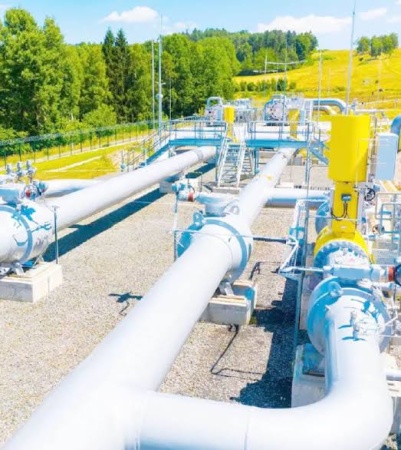
Stakeholders in the oil and gas sector have welcomed the Nigerian Upstream Petroleum Regulatory Commission (NUPRC) projection that Nigeria’s upstream oil and gas sector is to attract between $30 billion and $50 billion in offshore investments between 2026 and 2030.
According to the Commission, the investment pipeline will be driven by 22 major offshore projects expected to boost crude oil production, create jobs, expand energy infrastructure, and strengthen the country’s energy security.
They believe that achieving these milestones will require peace and stability in the Niger Delta and protection of national assets, especially oil pipelines through Tantita Security Services Nigeria Ltd (TSSNL) operations.
Nigeria is determined to achieve $30 billion and $50 billion in offshore investments between 2026 and 2030 is real, according to the Nigerian Upstream Petroleum Regulatory Commission (NUPRC).
The NUPRC attributed the improved outlook to reforms introduced under the Petroleum Industry Act (PIA), improved licensing transparency, and faster project approvals.
Since 2024, the regulator has approved more than $57 billion in Field Development Plans, with several projects already progressing to Final Investment Decisions.
The Commission also said preparations for the 2026 Licensing Round are underway as it seeks to attract further investment into Nigeria’s upstream sector. The planned projects are expected to support the government’s target of increasing crude oil production to 2 million barrels per day by 2027 and 3 million barrels per day by 2030.
Gaining the oil sector backing in this milestone journey requires more than policy pronouncements from the NUPRC.
It requires investment drive, attractiveness to global energy markets and support of domestic players in the industry.
President General, Niger Delta Progressive Alliance, Nse Victor Udoh, said to effectively harness the oil revenue requires that the Niger Delta, a region severally described as the goose that lays the golden eggs, must also be at peace and oil infrastructure across the region well secured.
He explained that it is where the Federal Government of Nigeria’s appointment of Tantita Security Services Nigeria Ltd (TSSNL) to protect oil assets and ensure peace and stability in the Niger Delta comes to play.
He added that the singular act will contribute positively to achieving $30 billion and $50 billion in offshore investments between 2026 and 2030, as predicted by NUPRC.
Daily Trust recalls that President Bola Ahmed Tinubu had appointed Tantita Security Services Nigeria Limited (TSSNL) led by High Chief, Dr. Government Oweizide Ekpemupolo, alias Tompolo, to protect Nigeria’s oil assets in the Niger Delta region.
The appointment was to enable TSSNL, through its security operations, support the national economy in getting the full benefits of oil resources.
The TSSNL works in collaboration with other security outfits to achieve its goals of securing oil assets and ensuring peace and stability in the Niger Delta region.
As stakeholders advocate for the continued collaboration with TSSNL, the imperative of securing oil infrastructure remains at the forefront of efforts to ensure the nation’s sustainable development.
In the development process of any society, certain assets contribute to the advancement of society and its people. These assets ensure economic or monetary benefits for the people. These assets could be regarded as operating assets, non-operating assets or leased assets, among others.
The impact of TSSNL’s operations was captured in a recent survey, with majority of the respondents attributing the de-escalation of security incidents in the Niger-Delta region to the pipeline surveillance operations executed by TSSNL.
As captured in the Armed Conflict Location and Event Data project (ACLED), violent events declined by 20.9 per cent in the South-South geopolitical region between 2023 and 2025. The rate of fatalities arising from such violent events in the oil rich region declined by 8.3 per cent within the same period of time.
Although the rate of similar conflicts declined by a higher margin of 26.9 per cent in the South-East region, the rate of fatalities resulting from such events increased within the region by 8.3 per cent.
The violent events tracked by ACLED within the period under review include violence against civilians, battles between the authorities and armed groups, protests, strategic developments, riots, and explosions/remote violence.
The South-West recorded a decline of 14.1 per cent in the total number of incidents between 2023 and 2025. However, the fatality rate increased by 12.21 per cent. The picture takes a different look in the three geopolitical regions of Northern Nigeria.
Further analysis of the database showed that North-West incidents increased by 127.9 per cent between 2023 and 2025 and in the process, recorded an increase of 99.1 per cent in fatality rate.
Tech-based surveillance
Tantita recently contracted a hi- tech security company, Textron Systems, to deliver three uncrewed aircraft that would enhance the company’s capacity to carry out its surveillance operations on Nigeria’s oil.
The contract agreement, which was signed and sealed late last year, mandates Textron Systems, USA, to deliver three Aerosonde Mk. 4.7 vertical takeoff and landing (VTOL) uncrewed aircraft systems (UAS) to the surveillance company.
The systems will be delivered in a fully ITAR-Free configuration designed for ease of export to international customers. These aircraft will significantly enhance security operations for the protection of Nigeria’s vital oil and gas infrastructure.
The sale also includes options for training and additional aircraft to support planned capability expansion, building on a previous Foreign Military Sale (FMS) contract to the country.
The Aerosonde Mk. 4.7 VTOL UAS offers a runway-independent configuration powered by Hybrid Quadrotor technology, enabling vertical takeoff and landing.
Its proven performance and benchmark-setting reliability make it an adaptable solution for security operations across Nigeria’s high-risk sectors.
“The Aerosonde Mk. 4.7 VTOL UAS is a mature, highly reliable, and industry-proven autonomous solution that will provide Tantita Security Services with transformational capability to execute their security operations,” said David Phillips, Senior Vice President, Air, Land and Sea Systems.
Stakeholders speak
In a published report, President General, Niger Delta Progressive Alliance, Nse Victor Udoh, said pipeline protection enabled national institutions to progress from reactive crisis management to strategic foresight, from temporary containment to durable systems-building, and from uncertainty-driven decisions to calculated national ambition.
“It is important to clarify the role of pipeline surveillance within the wider energy landscape. Energy security encompasses the full value chain, from exploration and production to refining, distribution, pricing policy, and subsidy frameworks. Pipeline surveillance does not manage these domains.
“Its mandate is precise: safeguarding critical infrastructure that transports petroleum resources. Yet this single function has proven foundational. Without secure transportation channels, production targets falter, refining plans collapse, exports decline, and fiscal projections become unreliable.
“Asset protection, in this context, is not a supporting activity. It is a precondition for economic order. In effect, the pipeline is the hinge on which the entire petroleum value chain turns. When that hinge is weak, every other link in the chain carries strain. When it is secure, the entire system gains coherence.
“The immediate impact has been operational. Sustained monitoring and rapid response systems have sharply reduced pipeline breaches and illegal tapping. Receipt rates have climbed toward full recovery, with national output rising to levels not seen in recent memory.
“This redirection has restored Nigeria’s credibility in international oil markets, allowing Nigeria to reclaim market share lost to Angola and Libya.
“Economic stability follows predictability. When crude flows are secure, refineries can plan feedstock intake with assurance. Export commitments can be met without fear of sudden shortfalls. Gas-to-power projects can operate without recurrent shutdown risks
“Investors can assess Nigeria’s petroleum sector with clearer risk profiles. Surveillance therefore does more than stop theft. It reintroduces reliability into national energy planning. And reliability is the bedrock upon which sustainable economic growth is built.
With predictable flows, national budgeting becomes more credible, infrastructure planning becomes more precise, and long-term contracts become easier to negotiate.
Already, traditional rulers and community leaders in the Niger Delta have called for continued support for Tantita Security Services Limited following a vote of confidence passed on the firm by the National Assembly of Nigeria.
The leaders said the company’s involvement in securing oil and gas pipelines has led to visible improvements in oil-producing communities, particularly in reducing crime and creating jobs for youths.
Speaking on the development, the President-General of the Isoko Development Union, Christopher Akpotu, praised the joint committee of the Senate and House of Representatives for dismissing petitions filed against the firm.
He described the decision as a positive step for the Niger Delta and urged stakeholders to focus on economic gains rather than internal disagreements. “That is the right way to go,” he said. “There are many opportunities in the oil and gas sector. We should focus on how to derive more benefits rather than fighting over what has already been allocated.”
Akpotu warned that continued disputes among communities could allow outsiders to take over opportunities meant for host communities. “At the end of the day, if we continue fighting, we give room to those who have no stake in our communities to take what rightfully belongs to us,” he added.
Similarly, the President-General of the Ughelli Descendants Union, Sam Akpemegi, said the company has improved security since it began operations, noting that both visible and intelligence-based strategies have been deployed. “They have done very well and improved security since they began operations,” he said, adding that the firm’s activities now cover a large number of communities.
In the same vein, the Odiologbo of Ofagbe Kingdom, Ogaga Ikpoku, supported the decision of the National Assembly, describing it as timely and beneficial to peace and stability in the region.
He said that overall asset protection has also produced environmental and social dividends, particularly in the Niger Delta.
“Illegal refining and pipeline sabotage once left waterways polluted, farmlands infertile, and communities trapped in cycles of hazard and insecurity. With sustained surveillance operations dismantling illegal sites and preventing repeated breaches, ecological recovery has begun,” he said. (Daily Trust)