Updating your news feed...
NEWS EXPRESS is Nigeria’s leading online newspaper. Published by Africa’s international award-winning journalist, Mr. Isaac Umunna, NEWS EXPRESS is Nigeria’s first truly professional online daily newspaper. It is published from Lagos, Nigeria’s economic and media hub, and has a provision for occasional special print editions. Thanks to our vast network of sources and dedicated team of professional journalists and contributors spread across Nigeria and overseas, NEWS EXPRESS has become synonymous with newsbreaks and exclusive stories from around the world.








.webp)













Loading banners
Loading banners...

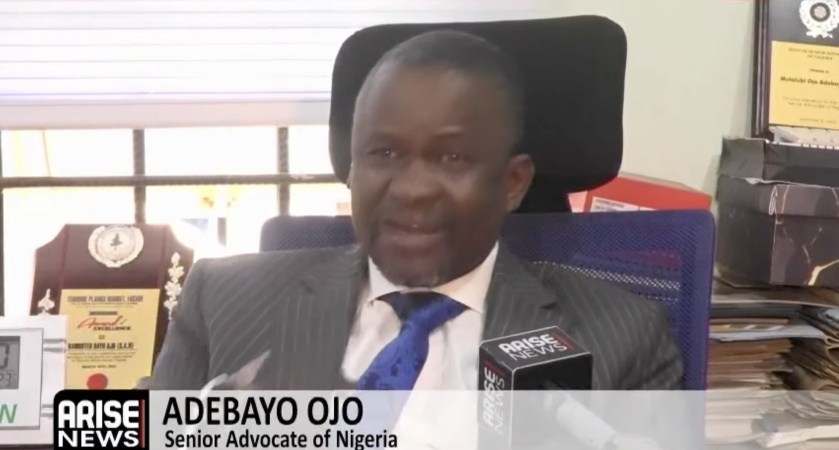
Senior Advocate of Nigeria (SAN), Adebayo Ojo, has dismissed reports that the Court of Appeal delivered conflicting judgments on the Independent National Electoral Commission’s (INEC) powers ahead of the 2027 general election, insisting that only one appeal has been determined by the appellate court.
The clarification follows widespread reports that two separate panels of the Court of Appeal had issued contradictory rulings after one panel restored INEC’s authority to enforce its revised timetable for the 2027 elections while another reportedly invalidated provisions of the Electoral Act relating to party membership registers and candidate nomination procedures.
Speaking during an interview on ARISE NEWS on Friday, Ojo said the only Court of Appeal judgment he was aware of was delivered on Monday in an appeal filed by INEC against the judgment of Justice Mohammed Umar of the Federal High Court, Abuja, in a suit instituted by the Youth Party of Nigeria.
“The only judgment which I am aware of was given by the Court of Appeal on Monday,” he said.
According to him, the Youth Party had challenged Section 29(1) of the Electoral Act 2026 after the Federal High Court ruled that INEC lacked the power to prescribe timelines for political parties to submit membership registers and the names of nominated candidates.
Ojo said the Court of Appeal overturned that decision after finding that the Youth Party had no legal standing to institute the suit.
“The Youth Party of Nigeria lacked the locus standi to institute the lawsuit against INEC,” he said.
He added: “The court also held that the party had not shown that it was inhibited, restricted or inconvenienced in any way by the legislation.”
The senior lawyer explained that although another Federal High Court judgment delivered by Justice Emeka Nwite Omotoso in a suit filed by the Social Democratic Party (SDP) also dealt with INEC’s powers over election timelines, the appeal arising from that decision has not yet been heard by the Court of Appeal.
“The second one, the judgment of Omotoso, has not come before the Court of Appeal for determination. It has not come,” he said.
He argued that this made claims of conflicting appellate decisions untenable.
“The Court of Appeal cannot give a judgment in one case and then turn around and give a spontaneous contrary judgment in another matter,” Ojo said.
Asked whether media reports had misrepresented the proceedings, Ojo maintained that only one appeal had so far been decided.
“Only one appeal was heard, and that was the appeal by the Youth Party.”
He also clarified that the Labour Party was not involved in the litigation.
“The Labour Party did not file any case before the Federal High Court. It was the SDP that filed the other case.”
Ojo maintained that the reports of conflicting Court of Appeal judgments stemmed from confusion between the appellate court’s decision in the Youth Party case and the separate Federal High Court judgment in the SDP matter, whose appeal is yet to be determined. (Arise News)