ADAD
ADAD
Updating your news feed...
NEWS EXPRESS is Nigeria’s leading online newspaper. Published by Africa’s international award-winning journalist, Mr. Isaac Umunna, NEWS EXPRESS is Nigeria’s first truly professional online daily newspaper. It is published from Lagos, Nigeria’s economic and media hub, and has a provision for occasional special print editions. Thanks to our vast network of sources and dedicated team of professional journalists and contributors spread across Nigeria and overseas, NEWS EXPRESS has become synonymous with newsbreaks and exclusive stories from around the world.

.webp)
.webp)

Loading banners
Loading banners...

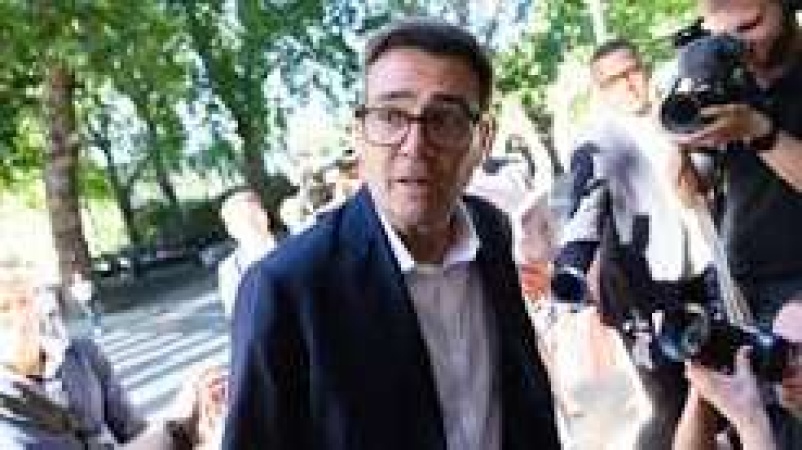
Andy Burnham will take over from Sir Keir Starmer as Labour leader on Friday, after winning the support of the party's MPs.
It means he will soon become the UK's prime minister - the seventh in the last 10 years.
Burnham becomes Labour leader on Friday - but he will not become prime minister until Monday, three days later.
The process on Monday will begin with Starmer meeting King Charles to formally offer his resignation as prime minister.
The King will meet Burnham soon afterwards, when he will ask him to form a government. Once Burnham has accepted, he will officially be the UK's prime minister.
Both meetings usually happen at Buckingham Palace.
Burnham will then head to Downing Street, where he is likely to give a speech outside No 10.
Starmer won a landslide general election victory two years ago - but he began losing public support within weeks of arriving in Downing Street after a series of policy mis-steps and U-turns.
The final straw for many Labour MPs was when right wing party Reform UK swept the board at local elections in May, leaving many of them fearing Reform leader Nigel Farage would win the next general election.
Burnham had long had ambitions to be Labour leader - but could only challenge for the top job as a sitting MP.
He returned to Parliament a month ago in a by-election, with his victory over the Reform candidate convincing many Labour MPs he was the right candidate to replace Starmer.
Other senior Labour figures - such as former health secretary Wes Streeting - abandoned their own leadership ambitions and got behind Burnham, along with the overwhelming majority of the party's MPs.
It means he will become Labour leader without a contest.
In the UK, prime ministers are not directly elected, unlike US or French presidents - they are the leaders of the party with the most MPs in the House of Commons.
This means the UK can change prime ministers without an election - something that has happened with increasing frequency in recent years.
Burnham could call a general election when he takes over as prime minister, but appears to have ruled that out.
Burnham has said he will stick broadly to the policies that Labour was elected on in 2024 - in particular not raising the main rates of income tax, VAT or National Insurance.
But he has also begun to set out some policy plans of his own.
A key priority will be to hand more power to councils and authorities away from parliament. That would involve giving them more control in areas such as housing and transport.
As part of that he wants to create another No 10 team more than 150 miles north of London, based in Manchester.
Burnham has also given clues around his welfare, social care, immigration and defence plans - and suggested a wealth tax could be on the cards - but in many areas he hasn't announced specific policies.
He'll also need to appoint key roles in his cabinet, such as chancellor, home secretary and foreign secretary.
Discussions will be under way, but none of his cabinet members have been confirmed yet.
The short answer is – we don't know. Burnham will certainly want to bring in a new team of ministers, but he has kept the identity of them very close to his chest and is likely to spend the weekend making the final decisions.
He has already appointed James Purnell, a close friend and ally from his last stint in government, to the key backroom role of chief of staff. And former transport secretary Louise Haigh, who ran Burnham's by-election campaign, is also likely to be given a role as a minister in his Downing Street operation.
But the most intense focus has been on who he will appoint as chancellor to replace Rachel Reeves.
Energy Secretary Ed Miliband was long thought to be the most likely candidate, but Home Secretary Shabana Mahmood has now emerged as the frontrunner.
Handing out cabinet jobs is always a balancing act between ensuring the different wings of the party are represented and securing a gender balance in the top team. An all-male line-up in the major cabinet roles would not be a good look.
Burnham is married to Marie-France van Heel. They met while they were students at Fitzwilliam College, University of Cambridge, in 1989.
They have been together for more than 30 years and married since the early 2000s.
Van Heel has worked in marketing and strategy for many years, notably for Sky, and has also been involved in the logo designs for the BBC and England Rugby.
The couple have three children - Jimmy, Rosie and Annie.
Burnham was born in Liverpool in 1970 and grew up in Cheshire. He is a lifelong Everton fan and keenly into sports.
He studied English at the University of Cambridge and first worked in journalism before moving into politics in his early 20s.
He became an MP for the first time in 2001 and held cabinet roles in former prime minister Gordon Brown's government, before eventually standing down as an MP in 2017.
During that time, he twice ran for the Labour leadership - he lost on both occasions.
Most recently, Burnham was mayor of Greater Manchester, a role he held from 2017 until last month.
He drew praise while mayor for his work to transform the region's transport system, and gained a strong reputation as a voice for the north of England.
Not many international leaders have commented on Burnham's ascent to power.
US President Donald Trump has not said much about Burnham so far, but has said he suspects that he is "extremely liberal". The pair are on opposite sides of the political spectrum.
Russia said it did not expect a change in its poor relations with the UK with Burnham in charge.
British support for Ukraine, and Russian hostility towards the UK, have been the key aspects of recent history between the two countries.
In Ukraine, there is some concern about the risk of political instability in Britain. Starmer has said the UK's support "will not waver" when the new prime minister takes charge. (BBC News)