ADAD
ADAD
Updating your news feed...
NEWS EXPRESS is Nigeria’s leading online newspaper. Published by Africa’s international award-winning journalist, Mr. Isaac Umunna, NEWS EXPRESS is Nigeria’s first truly professional online daily newspaper. It is published from Lagos, Nigeria’s economic and media hub, and has a provision for occasional special print editions. Thanks to our vast network of sources and dedicated team of professional journalists and contributors spread across Nigeria and overseas, NEWS EXPRESS has become synonymous with newsbreaks and exclusive stories from around the world.










Loading banners
Loading banners...

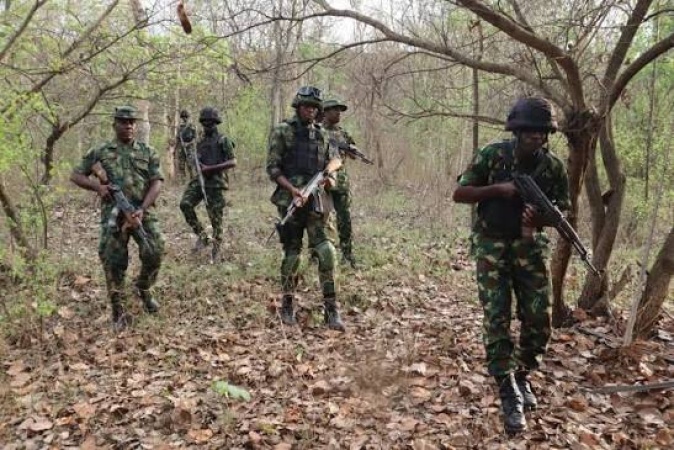
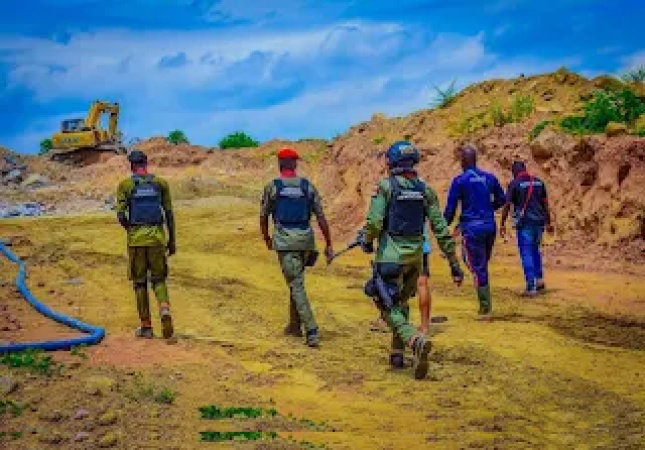
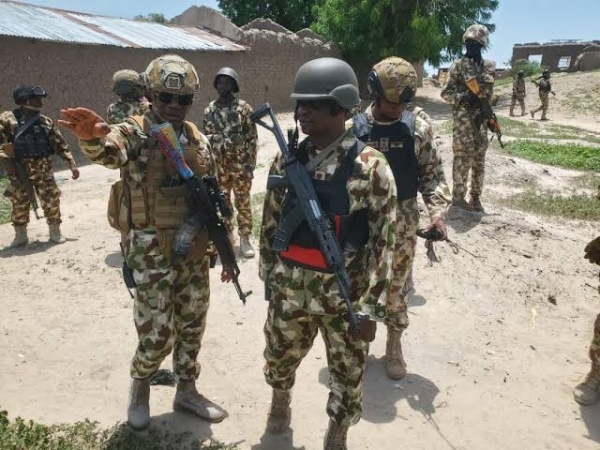
File photo: military officers
For quite some time, youths from the South-East region of Nigeria have shown a worrying reluctance to enlist in the Nigerian Armed Forces.
The situation reached a fever pitch a few years ago, prompting military authorities to convene a stakeholder engagement aimed at alerting the people in the region.
The engagement, held in Enugu, drew participants from different states in the South-East, who made valuable contributions on the way to addressing the issue.
Even with concerted, multi-stakeholder interventions involving the military, state governors, traditional rulers, and politicians, the security situation continues to worsen.
Just recently, the Chief of Army Staff (COAS), Lt.- Gen. Waidi Shaibu, expressed concern over the persistently low enlistment of youths from the South-East geopolitical zone into the Nigerian Army.
Shuaibu spoke at the Amasiri-Edda Army Recruit Training Depot, Ebonyi, during the passing-out parade ceremony of 90 recruits of the 99 intake.
The first trained soldiers since the depot was established in November 2025.
According to the COAS, the recruitment quota allocated to the South-East remains largely unfilled for several years, saying that the situation is unacceptable in all ramifications.
He appealed to opinion moulders, traditional rulers, parents, community leaders and other stakeholders in the region to encourage eligible youths to take advantage of the recruitment opportunities available in the Army.
Shuaibu described military service both as a career as well as an honourable calling that embodies patriotism, leadership and national service.
“Ndigbo, I humbly appeal to you to encourage your youths to take their rightful place in the defence of our fatherland.
“For some time now, the recruitment quota allocated to this zone has not been fully utilised. This should not continue.
“I, therefore, urge community leaders, parents, guardians and elders across the South-East to encourage our young men and women to regard this depot as their own and step forward to serve the nation,” the COAS said.
He said that the depot was the first primary military training institution in the South-East geopolitical zone.
According to him, the establishment of the depot reflects the Federal Government’s commitment to promoting national integration, inclusiveness and balanced development across the country.
In an interview with the News Agency of Nigeria (NAN), Igwe Ikechukwu Asadu, the Chairman of Enugu State Traditional Rulers Council, said the situation was a sad one.
Asadu said that everything must be done to redirect the attention of the South -East youths to enlist in the military and support in the fight against insecurity in Nigeria.
“We have to sensitise our youths on the issue of national integration, and on the need to work together as a nation.
“We have to sensitive them on the issue of citizenship; we have no other country except Nigeria,” he said.
Asadu said that traditional rulers in Enugu State had often enjoined youths to support and participate in government policies as the country remained one indivisible entity.
He, however, advised the military hierarchy to improve the condition of service of army personnel, adding that many South-East youths did not have hope in the system.
In the same vein, Mr Jerry Enoja, a legal practitioner and Chairman of the Civil Liberties Organisation (CLO), in Enugu State, lamented the situation, saying it was an abnormality.
Enoja reminded the youths that Nigeria belonged to everyone irrespective of tribe and religion.
He said that the Nigerian Constitution made it compulsory that every part of the country must be represented in national institutions including the military and the police.
“So, it is the constitutional rights of South-East youths to enlist in the Army, Police and any other para-military institutions.
“But there are complaints that the army personnel are under-paid; many of them from my village cannot build a house after spending many years in the military.”
The CLO chairman also said there had been some complaints and information peddled about unfavourable practices against soldiers from the South-East, which instilled fear into the youths.
“Though, I am not a soldier but I think that most of these unverified and unsubstantiated rumours actually instill fear into the youths,” he said.
In his submission, a retired senior army officer, Lt.-Col. Chizoba Ugwu, debunked rumours of marginalisation of officers and soldiers from any particular zone.
“Igbo youths should forget all those trash that our people use to frighten our people; they are not true.
“Join the army and fight for your country; do not sit there and allow foreigners to overrun our country,” he said.
In her contribution, a woman leader in Enugu Community, Mrs Adaeze Obeagu, attributed the apathy toward joining the Army to the fear of being killed.
“A lot of Igbo women don’t want their sons and daughters to enlist in the Army for fear that they may be posted to the war front to be killed.
“No woman is ready to lose her loved ones just like that,” she said.
All in all, stakeholders say there is a need for community leaders, military authorities, traditional rulers, and youth organisations in the South-East to keenly engage eligible youths, and give them assurances that will disabuse their minds of concerns on ethnic profiling or lopsided deployment hazards. (NAN)