ADAD
ADAD
Updating your news feed...
NEWS EXPRESS is Nigeria’s leading online newspaper. Published by Africa’s international award-winning journalist, Mr. Isaac Umunna, NEWS EXPRESS is Nigeria’s first truly professional online daily newspaper. It is published from Lagos, Nigeria’s economic and media hub, and has a provision for occasional special print editions. Thanks to our vast network of sources and dedicated team of professional journalists and contributors spread across Nigeria and overseas, NEWS EXPRESS has become synonymous with newsbreaks and exclusive stories from around the world.















Loading banners
Loading banners...

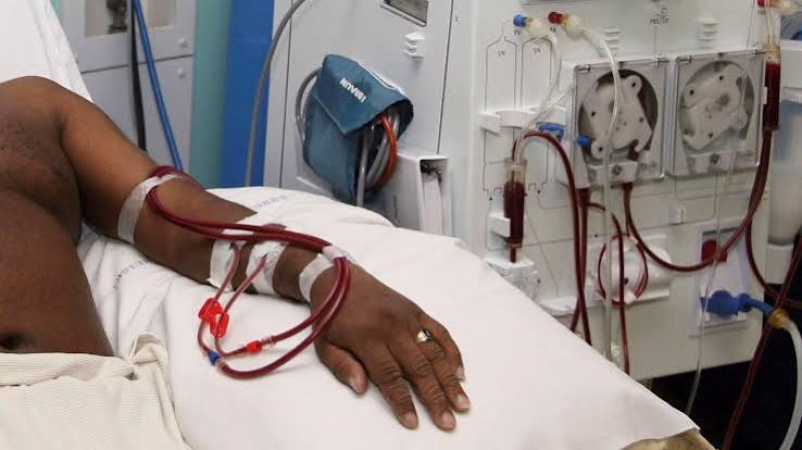
A cancer patient undergoing dialysis
A new report released by the World Health Organisation (WHO) has estimated 20.6 million new cases of cancer and close to 10 million deaths are recorded globally every year, while the disease remains the second leading cause of death, after cardiovascular disease.
This was as the Federal Government expanded financial support for cancer patients through targeted health funds and insurance initiatives, while ramping up investments in local research, drug production and clinical trials to improve access to affordable cancer care.
The WHO report noted that cancer claims more than 26,000 lives daily, and without urgent action, yearly cancer cases are projected to rise to nearly 35 million by 2050.
According to the WHO Global Status Report on Cancer 2026, developed jointly with the International Agency for Research on Cancer (IARC), reversing this trend will require a fundamental shift towards a people-centred approach that responds to the health needs and lived experiences of affected people and communities.
The report provides a comprehensive analysis of progress across key areas, including political commitment, cancer prevention – particularly through tobacco control and vaccination programmes – and investment in treatment.
However, the report also reveals persistent and widening inequities in access to prevention, diagnosis, treatment and supportive care, leaving millions of people without the services they need.
Analysis of the report showed that while 87 percent of women with breast cancer survive at five years after their diagnosis in high-income countries, only about 42 percent do so in low-income countries. Fewer than one in three countries include cancer care in their Universal Health Coverage (UHC) packages.
The report, which highlighted cancer rates in different regions, revealed that the burden of the disease varies markedly across regions, adding that in 2024, Asia accounted for the largest share, with more than half of all cancer cases (50.7 percent) and deaths (56.5 percent), Europe carried a disproportionately high burden, contributing 21 percent of global cases and 20 percent of deaths despite having only about nine percent of the world’s population.
In contrast, many countries in Africa and parts of Asia experience lower incidence but disproportionately high mortality.
It further revealed that lung cancer remains the leading cause of cancer death globally.
Lung, prostate and colorectal cancers are among the most common in men, while breast, lung and colorectal cancers account for a substantial share of the burden among women.
Speaking on the report, WHO Director-General, Dr Tedros Ghebreyesus, stated that cancer “is a deeply personal disease that touches nearly all of us”, whether a person survives cancer should never depend on where they were born or what they earn.
He stated that the inequities documented in the report “are not inevitable; they are the consequence of choices, and they can be reversed through stronger and unified action.”
Nearly four in 10 cancer cases globally are linked to preventable risk factors, particularly infections such as human papillomavirus (HPV), hepatitis B and C, and helicobacter pylori, alcohol, tobacco use, high body mass index and insufficient physical activity, highlighting the critical role of prevention.
Director of WHO’s International Agency for Research on Cancer (IARC), Dr Elisabete Weiderpass, noted that “though there are reductions in some cancer rates in countries that have implemented prevention policies, progress has been too slow.”
Director-General of the National Institute for Cancer Research and Treatment (NICRAT), Prof. Usman Malami, disclosed the financial support expansion at the ‘Best of American Society of Clinical Oncology Africa 2026’ conference in Abuja, according to presentation slides obtained yesterday.
The conference, organised in collaboration with the African Organisation for Research and Training in Cancer (AORTIC), was themed ‘From Global Discovery to Local Delivery: Driving Africa to the Cutting Edge of Cancer Care’.
Malami said the Federal Government had introduced several interventions to reduce the financial burden of cancer treatment, acknowledging that the cost of care remained beyond the reach of many Nigerians.
He explained that the Catastrophic Health Fund (CHF), domiciled under the National Health Insurance Authority (NHIA), subsidises cancer prevention, diagnosis, chemotherapy and radiotherapy for eligible patients.
He added that NICRAT also manages the National Cancer Health Fund, which provides financial assistance to indigent cancer patients.
“These are initiatives by the government to support the people of Nigeria suffering from this dreadful disease,” Malami said.
According to him, experts attending the conference would examine landmark studies presented at the recent ASCO Annual Meeting and identify those that could be adapted to African health systems.
“What we are trying to do is domesticate expensive treatments by producing much-needed medicines locally and translating global research into actions in our clinics,” he said.
Special Adviser on Research and Innovation to the Minister of State for Health, Dr Lolade Adewale, said the government was strengthening financial protection for cancer patients through expanded insurance coverage.
According to her, drugs such as Nivolumab and Keytruda are now being provided free of charge to eligible participants through clinical trials, reducing the need for Nigerians to seek treatment abroad.
Immediate past president of AORTIC, Dr Miriam Mutebi, said Africa contributes only about eight per cent of global cancer research, despite carrying a significant share of the global disease burden. (The Guardian)