ADAD
ADAD
Updating your news feed...
NEWS EXPRESS is Nigeria’s leading online newspaper. Published by Africa’s international award-winning journalist, Mr. Isaac Umunna, NEWS EXPRESS is Nigeria’s first truly professional online daily newspaper. It is published from Lagos, Nigeria’s economic and media hub, and has a provision for occasional special print editions. Thanks to our vast network of sources and dedicated team of professional journalists and contributors spread across Nigeria and overseas, NEWS EXPRESS has become synonymous with newsbreaks and exclusive stories from around the world.
.webp)


.webp)
Loading banners
Loading banners...

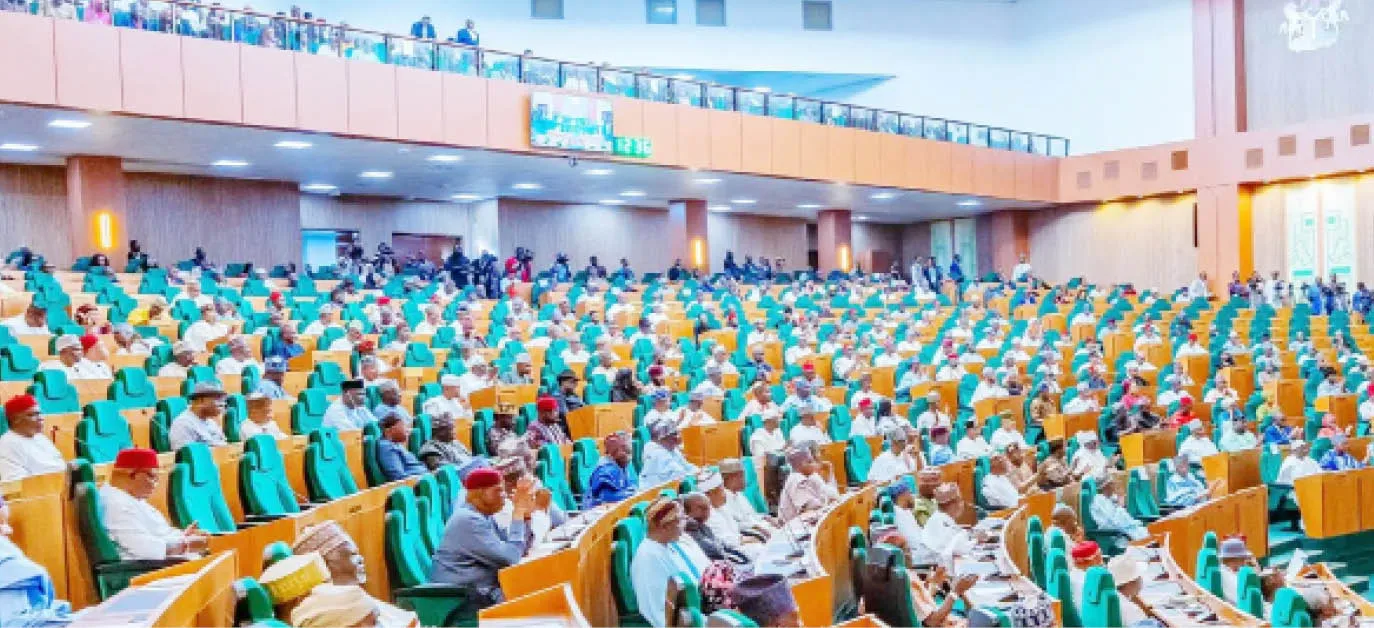
The House of Representatives on Wednesday resolved to invite the Minister of Budget and Economic Planning and the Director-General of the Budget Office of the Federation to explain how the N1.3 billion allocation of the ‘fictitious’ Presidential Foreign Investment Promotion Council (PFIPC) found its way into the 2026 budget.
The resolution followed the adoption of a motion of urgent public importance moved by Hon. Yusuf Gagdi (APC, Plateau), who described the scandal as a serious threat to the credibility of Nigeria’s appropriation process and public financial management.
This is coming after President Bola Ahmed Tinubu’s directive to the Independent Corrupt Practices and Other Related Offences Commission (ICPC) to investigate the activities of the controversial council and submit a report within 30 days.
The Senate had distanced itself from the PFIPC, its purported Director-General, Prince Adeniyi Adeyemi, and the council’s N1.3 billion allocation in the budget, maintaining that the scandal is an executive matter it would not dabble into, except it receives a petition to that effect. It further declined on Wednesday to investigate the matter.
The Chief of Staff to the President, Femi Gbajabiamila, had issued a disclaimer, dismissing the existence of the PFIPC, but Adeyemi countered, describing it as “a cloud of public misrepresentation, institutional denial and a deliberate attempt to silence legitimate questions that concern matters of national interest.”
Consequently, the Presidency, in a July 1 statement by the Special Adviser to the President on Information and Strategy, Bayo Onanuga, tagged Adeyemi a “con artist” and stated that the police had filed a criminal charge against him.
The statement was, however, silent on the inclusion of the disputed council in the budget and an alleged sum of N400 million Adeyemi claimed to have paid Gbajabiamila by proxy to facilitate his appointment. A further scrutiny of the statement raised more critical questions bordering on public accountability, transparency and institutional integrity.
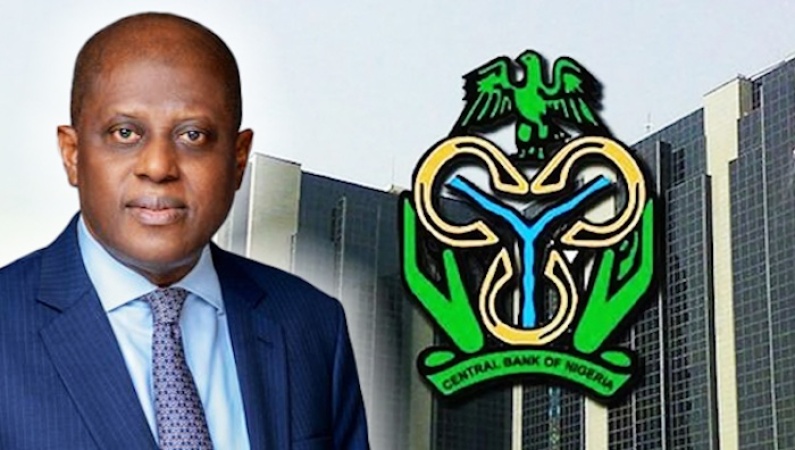
Findings further revealed that Adeyemi got approvals for the employment of 300 staff members and an office space at the Federal Secretariat, Abuja, and opened accounts with the Central Bank of Nigeria (CBN).
But the Office of the Accountant General of the Federation (OAGF) insisted that the disputed council had no account with the apex bank, contradicting the Presidency’s statement that Adeyemi used fake documents and misled the OAGF to fraudulently open a CBN account.
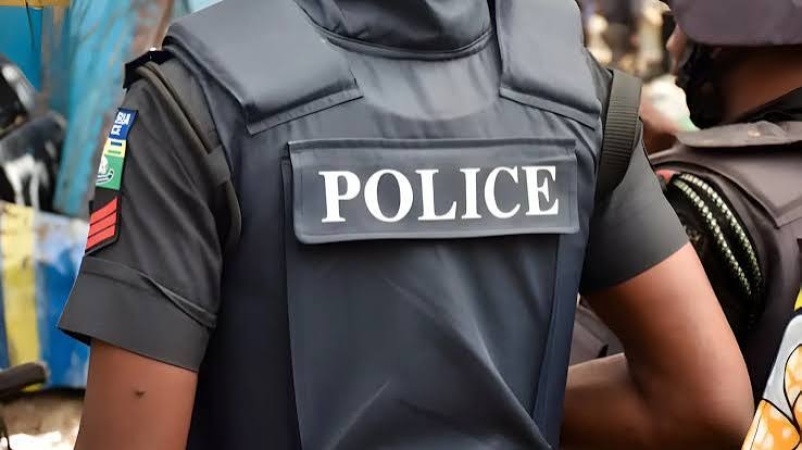
After Adeyemi went into hiding, police raided his family residence in Ogbomoso, Oyo State, on Monday and arrested his father, who was later released after questioning.
Moving the motion for the probe of the controversial council at the plenary on Wednesday, Gagdi recalled that it operated from the Federal Secretariat Complex in Abuja and engaged with several government institutions.
He told lawmakers that the organisation is already the subject of criminal proceedings before the Federal High Court in Abuja, stressing that the House inquiry would be limited to the budgetary implications and institutional failures that enabled the phony council to gain official recognition.
According to him, the organisation relied on a document claiming it was established under “Chapter N2117 Laws of the Federation of Nigeria.”
He, however, said records of the National Assembly showed that no legislation establishing such a council had been enacted, adding that the closest existing law was the Nigerian Investment Promotion Commission (NIPC) Act.
Gagdi expressed concerns that more than N1.3 billion was reflected in the 2026 budget for the council, saying the development raised fundamental questions about the integrity of the budget preparation and approval process.
“The ease with which a single unestablished entity was processed through official channels suggests a systemic vulnerability rather than an isolated administrative lapse,” he said.
Following the adoption of the motion, the House resolved to constitute an ad hoc committee to trace how the budgetary provision found its way into the budget, from the executive proposal through legislative consideration.
Lawmakers also directed that all ministries, departments, agencies and government bodies contained in the 2025 and 2026 Appropriation Frameworks be verified against their respective legal instruments of establishment.
The House further requested the Office of the Accountant-General of the Federation to confirm that no public funds had been released and that no payment warrants would be issued in favour of the PFIPC pending the conclusion of the investigation.
It also mandated the Budget Office of the Federation to, henceforth, submit alongside every appropriation bill a comprehensive and certified list of all agencies proposed for funding, indicating the enabling law establishing each of them to prevent the inclusion of fictitious entities.
In his contribution, Deputy Speaker Benjamin Kalu, disclosed that he had personally received representatives of the organisation after his office was sent a letterhead bearing the Presidency’s insignia.
According to him, the correspondence, dated May 2, 2025, came from a body identifying itself as both the Presidential Economic Advisory Council (PEAC) and the Presidential Foreign Intervention Promotion Council.
Kalu said the letter carried a federal secretariat address, an official-looking government logo and a “.gov.ng” website, prompting his office to verify the organisation’s location before granting the delegation an audience.
He said although officials confirmed that the organisation operated from the stated office, the visitors abandoned the policy issues contained in their letter during the meeting and appeared more interested in taking photographs.
“This shows that having the Presidency on a letterhead is no longer sufficient proof that an agency is genuine,” the Deputy Speaker said, adding that the House must establish how the organisation secured office accommodation within the federal secretariat and gained access to senior government officials.
Senate rejects move to probe council’s budget
The Senate on Wednesday declined to launch a comprehensive investigation into the operations and growing controversy surrounding the PFIPC, following a motion moved by Senator Kawu Sumaila (APC, Kano South), who raised a point of order during plenary.
Citing Order 9 and Rule 9(c) of the Senate Standing Orders (2026), Sumaila presented a motion titled, “Urgent Need to Investigate the Budgetary Allocation, Operations, and Controversy surrounding the purported Presidential Foreign Intervention Promotion Council (PFIPC) to safeguard the Integrity of the Senate and the Federal Government.”
In his presentation, Sumaila argued that the swirling controversy surrounding the council directly threatened the integrity of the Senate, the credibility of the National Assembly and the legislature’s constitutional oversight and appropriation powers.
“The Senate notes with concern that, in recent weeks, the public space has been inundated with allegations, controversies, accusations and counter-accusations concerning an entity known as the Presidential Foreign Intervention Promotion Council (PFIPC),” Sumaila stated.
Senator Kawu urged the Senate to strongly condemn the administrative lapses, internal collaborations, or fraudulent schemes that allowed a seemingly nonexistent entity to be smuggled into the 2026 Appropriation Act under Budget Code: 0111062001.
He formally requested that the Committees on Ethics, Code of Conduct and Public Petitions, alongside the Appropriations Committee, investigate how the sum of N1,302,978,784 was proposed, scrutinised, justified and approved.
The senator also raised questions on the ministries, departments, agencies, or public officials that facilitated the inclusion of the council and whether any funds had already been released, committed, or spent, and if any bank accounts had been opened under this specific budget line.
The Deputy Senate President, Senator Barau Jibrin (APC, Kano North), who presided over the plenary, however, ruled against opening a parliamentary debate on the matter, noting that the executive was already taking steps to address the scandal. He urged lawmakers to await the outcome of the inquiry.
Speaking to journalists after the plenary, Senator Sumaila insisted that the Senate should conduct its own investigation into the controversial N1.3bn budgetary allocation, despite the upper chamber’s decision to await the outcome of the probe ordered by the President.
He said, “I am more concerned about the budget because it directly affects our National Assembly. Constitutionally, we are empowered to make a budget for Nigeria. The executive will lay a proposal before us, and then we will start working on it from A to Z.
“Therefore, to our surprise, this issue came up that there is a hidden budget, which may have been released. Therefore, I drew the attention of the Senate to the need to constitute a committee, either ad hoc or standing, to find out what really happened.
“We have two ways of arriving at how a budget can be inserted. One, it may come from the executive, and, definitely, it can also come from us. In the course of our budgetary process, the National Assembly constitutionally has the power to add, subtract, change or amend the budget.
“Therefore, I am more concerned to know whether the proposal, which included that agency, came from the executive; but if it is from the National Assembly, who is responsible for pushing or facilitating its inclusion in the national budget? This is what I am after.”
I didn’t defend council’s budget, says Adeyemi
Meanwhile, the purported DG has explained that he was in police detention when the 2026 budget was being prepared, adding that he did not defend the council’s allocation at the National Assembly.
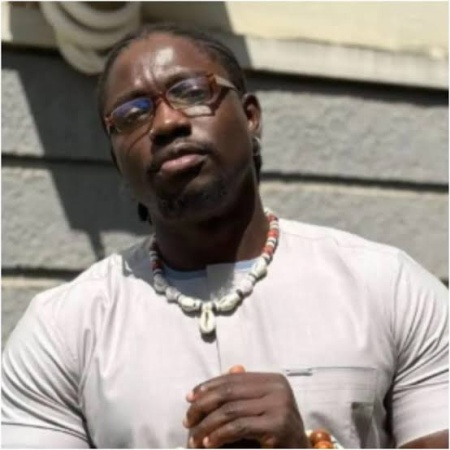
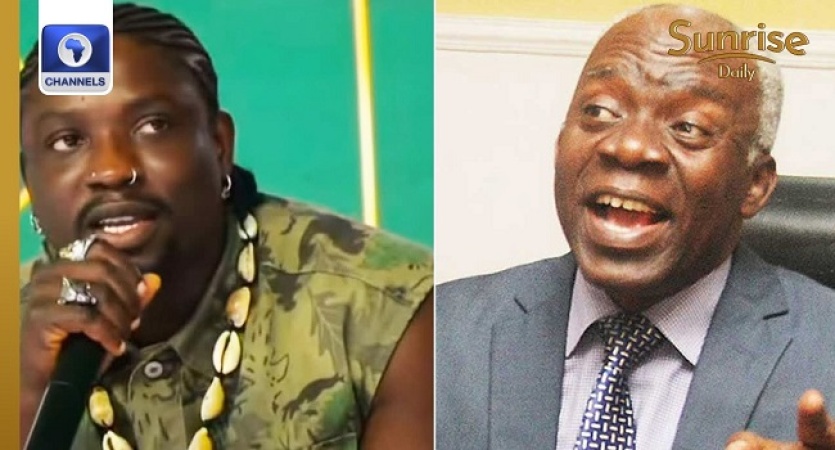
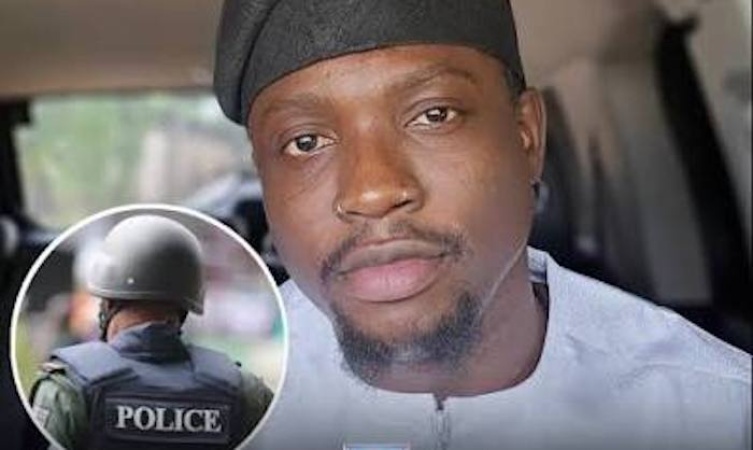
Adeyemi spoke in a video interview with social media influencer, Martins Vincent Otse, popularly known as VeryDarkMan (VDM).
He said, “I was in detention for 23 days during the period the budget was being prepared. I did not prepare or defend any budget, and nobody went to defend it on my behalf. That is why I am confused about how the agency found its way into the national budget.
“When the Presidency, through the Chief of Staff, said the agency does not exist, I wondered how an agency that found its way into the national budget could suddenly be described as fake.”
Adeyemi stated that he never met Gbajabiamila physically, but communicated with him through his (Adeyemi’s) late associate, Dolapo Tanimola. He said he could neither accuse the Chief of Staff of lying nor confirm he was telling the truth, insisting that only an impartial probe could establish the facts.
“I think three times I have spoken with Gbajabiamila, through my late friend, Dolapo Tanimola. I would not say he is lying, and I won’t say he is telling the truth. That is why, during my press conference, I pleaded with Mr President to set up an investigative panel to look into this whole issue and unravel the truth to know who is involved,” he said.
Adeyemi’s latest comment came on the heels of Gbajabiamila’s request that the embattled ‘DG’ should retract the allegations and apologise or face a N10 billion defamation suit.
Atiku demands independent probe
Former Vice President Atiku Abubakar has demanded the immediate establishment of a Special Independent Commission of Inquiry comprising 10 eminent Nigerians nominated by the Federal Government, the African Democratic Congress (ADC), the National Democratic Coalition (NDC), the Peoples Democratic Party (PDP), civil society organisations, the Nigerian Bar Association, retired judicial officers and other respected Nigerians of unquestionable integrity.
He, however, said President Tinubu’s directive to the ICPC to investigate the activities of the disowned council was a reluctant but significant response.
Atiku, in a statement on Wednesday by his Senior Special Assistant on Public Communication, Phrank Shaibu, said the President’s latest directive amounted to an admission that the police investigation the Presidency repeatedly relied upon was either incomplete or incapable of answering the fundamental questions Nigerians continued to ask.
He said, “Only one week ago, the Presidency emphatically told Nigerians that the matter had already been investigated by the Police following petitions from the Chief of Staff in October 2025; that the suspect had been arrested; that searches had been conducted; that documentary exhibits had been recovered; that bank accounts had been traced; that statements had been obtained; and that criminal charges had already been filed before the Federal High Court.
“If all of that is true, what exactly is the ICPC expected to spend another thirty days investigating? If the police investigation was comprehensive, another investigation is unnecessary. If another investigation has become necessary, then the inevitable conclusion is that the earlier investigation was insufficient. The President cannot simultaneously maintain both positions without contradicting his own government.”
Atiku said the contradiction became even more striking when the President directed the ICPC to investigate “the wider circumstances” surrounding the alleged PFIPC.
“That directive is, in itself, a repudiation of the earlier narrative that this was merely the handiwork of one alleged impostor. The issue before Nigerians is no longer whether one individual allegedly forged documents. The issue is how an organisation the Presidency insists never existed, allegedly acquired office accommodation, interacted with government institutions, sought diplomatic recognition, reportedly conducted recruitment exercises, operated multiple bank accounts and projected the authority of government over an extended period.
“Institutions do not accidentally confer legitimacy. Bureaucracies do not unknowingly sustain official-looking operations for months. Somewhere between the Presidency’s denials and the appearance of official legitimacy lies the truth Nigerians deserve to know,” he added.
The former vice president described the 30-day timeline for the probe as both excessive and difficult to defend.
According to Atiku, what Nigerians demanded was not another internal government investigation, but an independent probe. He said allowing a government agency to investigate allegations whose outcome may ultimately reflect on the same government falls short of the standard of independence Nigerians expect.
“The Federal Government is itself central to this controversy because the questions being asked concern the conduct of public institutions, official processes and possible institutional failures. In every constitutional democracy, a party whose conduct is under scrutiny cannot simultaneously appoint itself investigator, judge and final authority over its own case.
“The African proverb warns that when alleged thieves sit in judgment over one another, justice becomes the first casualty. Whether one accepts the proverb literally or not, its wisdom is timeless: no one should be a judge in his own cause,” the statement read.
Atiku demanded that an independent commission should be empowered to conduct a comprehensive investigation into every aspect of the PFIPC affair; review the findings and investigative records already compiled by the police and other security agencies; summon any serving or former public official whose testimony may assist the inquiry; prepare and publish a White Paper containing its findings and recommendations; conclude its assignment within one month and publish its report without requiring approval or clearance from any organ of government.
“That is the minimum standard of transparency Nigerians should accept. Anything less will leave the unavoidable impression that the government prefers to investigate itself behind closed doors rather than submit to genuinely independent scrutiny,” Atiku added. (Daily Trust)