 ADAD
ADADUpdating your news feed...

NEWS EXPRESS is Nigeria’s leading online newspaper. Published by Africa’s international award-winning journalist, Mr. Isaac Umunna, NEWS EXPRESS is Nigeria’s first truly professional online daily newspaper. It is published from Lagos, Nigeria’s economic and media hub, and has a provision for occasional special print editions. Thanks to our vast network of sources and dedicated team of professional journalists and contributors spread across Nigeria and overseas, NEWS EXPRESS has become synonymous with newsbreaks and exclusive stories from around the world.
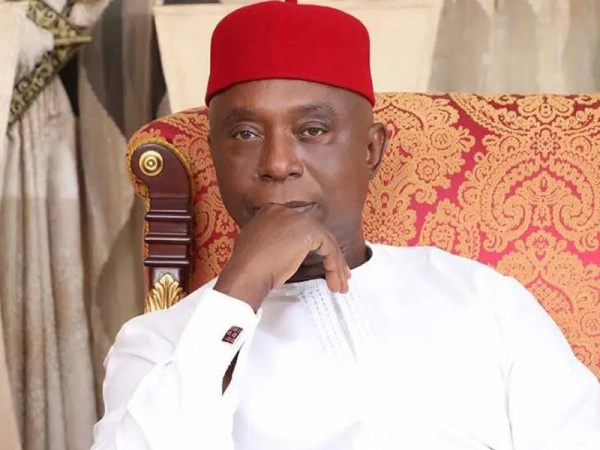
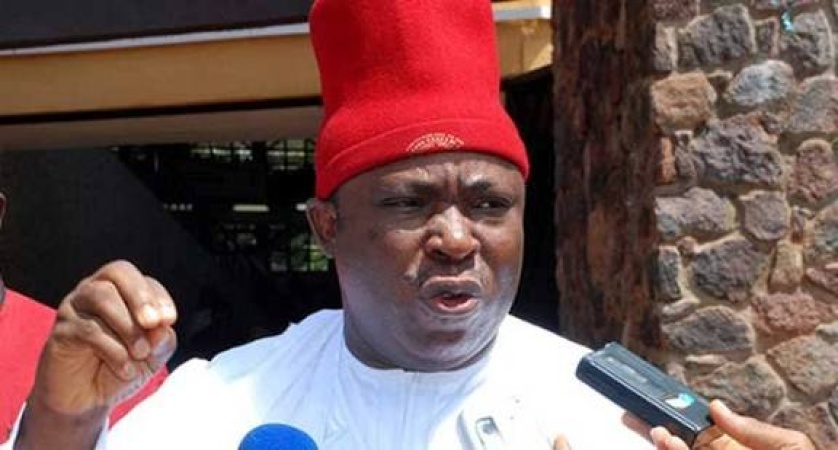
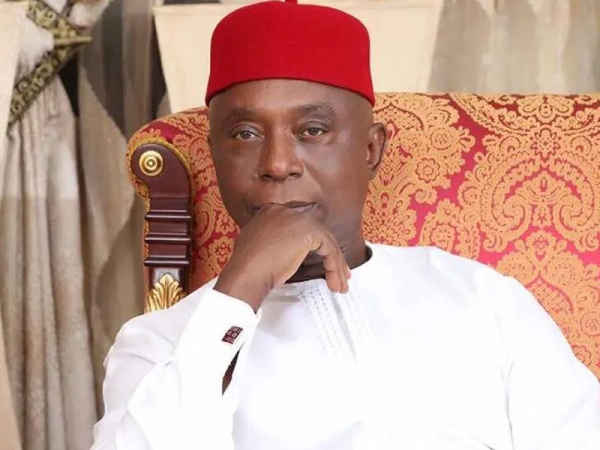
Embattled Delta North senator, Ned Nwoko
ALPHONSUS AGBORH examines the political intrigues in Delta North Senatorial zone and the way forward for the sitting Senator, Ned Nwoko in a battle where Ifeanyi Okowa, Victor Ochei have taken centre stage for the contest in 2027.
Uneasy calm has pervaded the camp of Senator Ned Nwoko representing Delta North in the red chamber of National Assembly for some time now after the Delta North Senatorial District’s primaries of the All Progressive Congress (APC), on May 18, 2026.
The result of the election was not in his favor as he was defeated by the former governor, Senator Ifeanyi Okowa, who polled 113,309 votes as against Nwoko’s 2,612 votes.
The senator protested vehemently that he was rigged out blaming the state government for the woes. But the state quickly debunked the allegations, accusing Nwoko of disconnecting from grassroots politics, insisting that that led to his defeat.
Nwoko was also blamed for relying too heavily on political influence outside the state while neglecting party structures and stakeholders at home.
It was widely believed that Nwoko’s emergence as senator in 2023 was a “scholarship” allegedly facilitated by former Delta State Governor, Ifeanyi Okowa, who directed his loyalists to support Nwoko at the time.
He was accused of not appreciating the support that brought him to office and did little to maintain relationships with party members and community leaders across Delta North without connecting with commissioners, House of Assembly members, local government chairmen or ward leaders who work directly with the grassroots.
But the embattled senator claimed he won the election, alleging it was marred by manipulation, intimidation and procedural violations. He also described the exercise as fundamentally flawed and didn’t reflect the will of the delegates.
The senator blamed the state machinery for working against him. To him there is hope as the result of the election could only be announced from Abuja and not in the state. The senator said that he had absolute confidence that Abuja would do the needful to upturn the result.
This is based on the statement by the National Publicity Secretary of APC, Mr. Felix Morka, that only the National Working Committee (NWC) of the APC, acting through its duly authorised channels of communication, was empowered to announce the list of candidates emerging from its primary elections and other constitutionally prescribed processes.
Another hope is anchored on the assurance by the Senate President, Godswill Akpabio, who raised the hope that some senators who failed to secure their parties’ tickets would return. As at the time of this report, there was no indication on the way forward for the distinguished senator, whether he is defecting to another political party or remain in APC and watch the game to the end.
Nevertheless, the political analysis of Senator Ned Nwoko’s electoral journey must begin with one reality that he is no longer fighting a conventional opposition battle. Rather, he is confronting a multi-layered political challenge involving former Governor Ifeanyi Okowa, former Speaker Victor Ochei, who has secured the ticket of the Nigeria Democratic Congress for the senatorial zone and of course entrenched interests within Delta politics. The battle is as much about influence and succession in Anioma politics as it is about a senate seat.
Nwoko securing a ticket in another platform to enable him go back to the senate in 2027 if the status quo remains tasky as he would be battling many forces, one of them is facing Ifeanyi Okowa who defeated him at the primary election.
Okowa has an enduring political network.
Despite leaving the government house in 2023, he remains one of the most influential political figures in Delta North. He possesses a deep grassroots structure built over decades as local government chairman, commissioner, secretary to state government, senator and governor. His political reach cuts across the nine local government areas of Delta North in particular and in the state in general.
More importantly, Okowa’s return to the senate contest signals that he is not ready to relinquish control of Anioma politics. His recent criticisms of Nwoko’s handling of the Anioma State campaign show that the rivalry is no longer hidden.
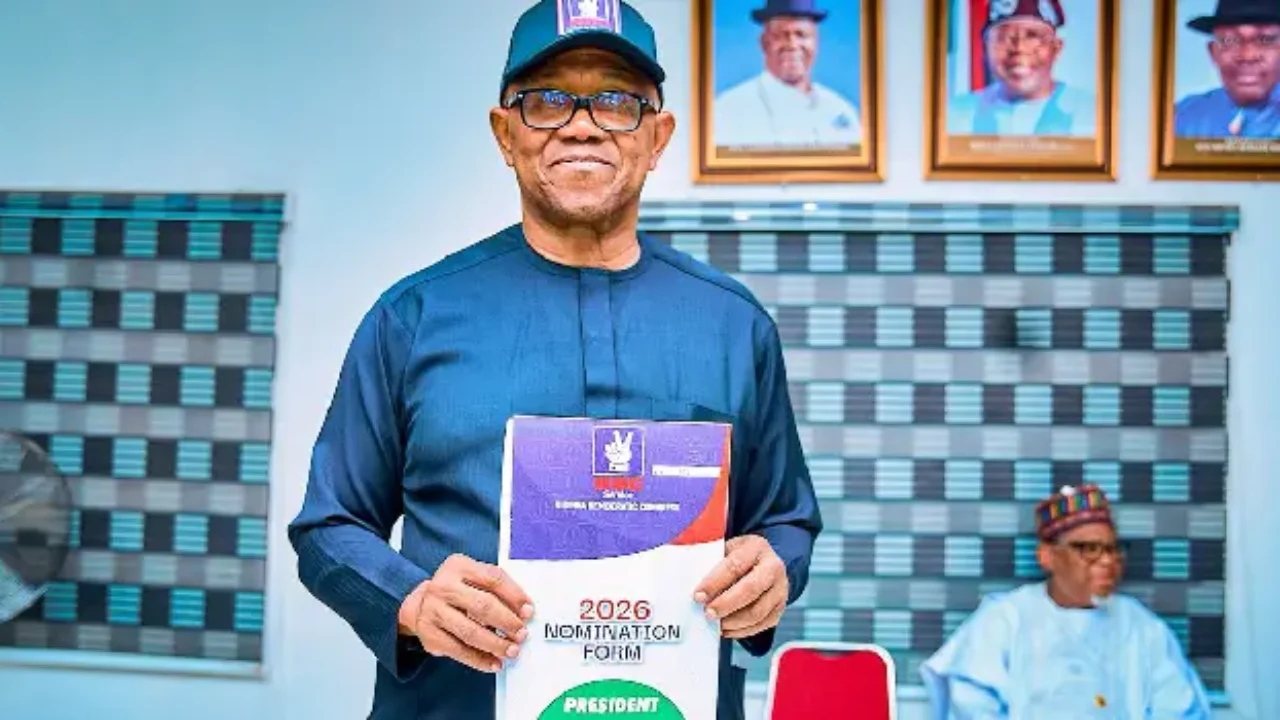
Secondly, the emergence of Victor Ochei, the former speaker of the state house of assembly and until recently an APC heavyweight into the race under NDC complicates the equation for both Nwoko and Okowa. Reports indicate that many supporters see him as an alternative to both Nwoko and Okowa, creating a possible three-way struggle for Anioma political leadership.
If Ochei successfully mobilises his supporters under the new platform, he could split votes that might otherwise have gone to either Nwoko or Okowa.
Yet another is the resistance to the “Ned phenomenon”. Nwoko’s camp has repeatedly argued that elements within the political establishment became uncomfortable with his growing influence, particularly his high-profile campaign for Anioma State creation.
His supporters believe his rise has unsettled existing power blocs that fear his increasing popularity and national visibility.
On the other hand, there are workable forces for the sitting lawmaker including the power of incumbency unlike his rivals.
Incumbency provides visibility, access to federal institutions and an opportunity to showcase constituency projects and legislative initiatives before the next election.
No doubt, Anioma State creation has become his signature issue. Whether one agrees with his approach or not, Nwoko has become nationally associated with the Anioma State project. The campaign has elevated him beyond the traditional role of a senator and given him a cause around which supporters can rally.
Even critics acknowledge that the issue has become central to Delta North politics. Many younger voters and politically independent stakeholders see Nwoko as challenging an old political order that has dominated Anioma politics for years.
Several pressure groups including a coalition of youths from the nine local government areas in the zone recently rejected Okowa senatorial ambition, accusing him of dominating the political space for decades just as others are paying bills for him to contest. That perception could help him attract support from voters seeking a new direction.
Going forward, Nwoko possesses significant personal resources, strong media presence and name recognition that few politicians in Delta North can match. Those factors make him a formidable electoral opponent regardless of party platform.
Now, is defection from APC to another party a better alternative for him to move ahead?
The answer depends on timing and political calculations.
For some political analysts, it could free him from internal party battles, allow him to emerge as the undisputed leader of a new political coalition. But for others, defection would mean surrendering the advantages of a ruling-party structure because new parties often lack ward and polling-unit machinery needed to win elections.
Voters may prefer a candidate with an established platform rather than one leading another political experiment. However, the final assessment on a broader spectrum is that defection appears to carry more risks than benefits for Ned Nwoko.
Unlike Ovie Omo-Agege, who left APC after losing a primary battle, Nwoko still holds elective office and remains one of the most visible APC figures in Delta North. His strongest asset is not merely his party affiliation but the political momentum generated by the Anioma State campaign and his incumbency.
The bigger challenge before him is not necessarily choosing another party. It is finding a way to neutralise Okowa’s extensive political network while preventing Ochei from emerging as the compromise candidate for voters who are tired of the Nwoko-Okowa rivalry.
In the current circumstances, strengthening his existing political base and broadening support for the Anioma project may be a safer strategy than embarking on a fresh defection.
The 2027 contest in Delta North increasingly looks less like a party battle and more like a struggle for who becomes the undisputed political leader of Anioma after Okowa. (Nigerian Tribune)