 ADAD
ADADUpdating your news feed...

NEWS EXPRESS is Nigeria’s leading online newspaper. Published by Africa’s international award-winning journalist, Mr. Isaac Umunna, NEWS EXPRESS is Nigeria’s first truly professional online daily newspaper. It is published from Lagos, Nigeria’s economic and media hub, and has a provision for occasional special print editions. Thanks to our vast network of sources and dedicated team of professional journalists and contributors spread across Nigeria and overseas, NEWS EXPRESS has become synonymous with newsbreaks and exclusive stories from around the world.
•Policy reflection and actionable steps
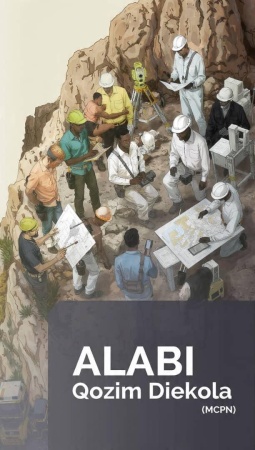
By ALABI Qozim Diekola
In June 2026 the Federal Government made an announcement that the Minister of Solid Minerals Development, Dr. Dele Alake, described as one of the most significant breakthroughs in Nigeria’s mining sector in recent memory. After exploration work verified by the Nigerian Geological Survey Agency, a world-class polymetallic mineral province was confirmed in Kaduna State. The belt holds platinum group metals, gold, nickel, copper, lithium and rare earth elements, all in exceptionally high grades. This news arrived at a time when reforms in the solid minerals sector have already pushed government revenue from about six billion naira to over seventy billion naira within a few years. The geology is no longer in doubt. The real question facing the nation is whether these minerals will become the foundation for shared prosperity, or whether Nigeria will walk the same troubled path it followed with crude oil.
To understand the stakes, we must first grasp what these materials are and why the world is competing for them. Lithium has earned the nickname “white gold of the twenty-first century” because it is the backbone of rechargeable batteries. Every smartphone, laptop, electric vehicle and solar storage system depends on it. Global demand is rising sharply as nations shift away from fossil fuels. Early estimates by Steron Mining put lithium reserves at 3.3 million metric tonnes at its Abuja site, and Kaduna’s deposits have been described as high-grade. A lithium processing plant was commissioned in Kangimi, Kaduna in May 2024, though it still awaits full commercial approval.
Platinum group metals such as platinum, palladium and rhodium are rare and resistant to corrosion. They are indispensable for catalytic converters that clean vehicle emissions, for hydrogen fuel cells, for medical devices and for high-end electronics. The presence of world-class platinum group metals in Kaduna places Nigeria in conversation with South Africa and Russia, the two countries that currently dominate that market.
Rare earth elements are a group of seventeen metals including neodymium, dysprosium and terbium. The name is misleading because they are not scarce in the earth’s crust, but finding them in concentrations that can be mined economically is rare. They are irreplaceable. Without them there are no permanent magnets for wind turbines and electric motors, no advanced electronics or smartphones, no precision defense systems, no lasers, fiber optics or medical imaging equipment. Kaduna’s rare earth deposits are therefore strategic minerals that the world needs for clean energy technologies and for the next generation of manufacturing.
Gold, nickel and copper occur alongside these critical minerals. Nickel and copper are also essential battery metals, while gold remains a reliable earner of foreign exchange and a hedge against global economic uncertainty. Together they give Kaduna’s mineral belt a diversity that can protect Nigeria from the price swings of any single commodity.
The importance of this discovery to Nigeria’s economy rests on three pillars. First, it offers a genuine path to economic diversification beyond oil. For sixty years oil has funded the budget but also created volatility and left other sectors underdeveloped. Mining revenue has already grown tenfold under the current administration’s reforms. Lithium, platinum and rare earths can build a new export base that is tied more closely to the technologies of tomorrow than to the fossil fuel markets of yesterday.
Second, the discovery positions Nigeria at the center of the global energy transition. The race for critical minerals is reshaping geopolitics. Countries without access to these resources will remain dependent on China, the Democratic Republic of Congo and Australia. Nigeria can move from being an importer of finished goods to a supplier of the materials that make those goods possible. Minister Alake rightly observed that the Kaduna find places Nigeria among emerging destinations for strategic minerals and for sustainable mining investment.
Third, the sector can create jobs and drive industrialization. Mining alone employs geologists, engineers and technicians. Processing creates a second wave of jobs in manufacturing, logistics, power and services. If Nigeria chooses to convert lithium into battery components instead of shipping raw ore, the value addition will remain within the country. The Tinubu administration has already prioritized local processing, refining, manufacturing, logistics, technology transfer and skills development, and Kaduna’s minerals give those priorities real substance.
Whether this wealth becomes a blessing or a curse will not be decided by the rocks beneath the soil but by the quality of governance above it. Natural resources are tools, and tools can build or destroy depending on the hand that holds them. The curse appears when competition for mining areas fuels banditry and communal clashes, a challenge already present in parts of Kaduna. It appears when poorly regulated operations pollute water, destroy forests and damage public health, concerns that have already surfaced around the Kangimi lithium plant. It appears through Dutch disease and corruption, when overreliance on one sector strangles agriculture and manufacturing, and when raw export sends ninety percent of the profit abroad, as happened with crude oil. It also appears when weak regulation allows informal mining and middlemen to exploit both the land and the people.
The blessing appears when revenue is taxed transparently and invested in roads, schools, hospitals and power. It appears when lithium, nickel and copper are turned into a battery manufacturing hub, and when platinum and rare earths anchor advanced manufacturing and green technology industries. It appears when mining forces the country to invest in geology, metallurgy and engineering skills that strengthen the entire economy. It appears when control of critical minerals gives Nigeria negotiating power with the United States, the European Union and China.
Mr. President, Kaduna’s lithium, platinum and rare earths can become the cornerstone of your economic diversification agenda, but only if Nigeria deliberately avoids the mistakes of the oil era. Seven actions will make the difference.
First, value addition must move from policy to law. By 2027 Nigeria should prohibit the export of raw lithium ore, unprocessed rare earth concentrate and raw platinum. Indonesia’s nickel ban shows how a country can force investors to build refineries and battery plants domestically. The billions of dollars already committed to processing projects must be tied to factories in Kaduna, not only to pits in the ground.
Second, create a Kaduna Critical Minerals Corporation that gives the state and host communities a direct equity stake of at least thirty percent. The Kangimi lithium plant model, where Kaduna Mining Development Company holds thirty percent equity, is a strong start. Every mining license nationwide should include similar ownership for the state and for communities. That turns residents from spectators into stakeholders and prevents the bitter cry that outsiders took the minerals and left nothing behind.
Third, fund geological exploration and data as a public good. Weak geological information is one of the biggest barriers to mining investment. The Nigerian Geological Survey Agency should be resourced to map the entire country to modern standards and make that data public. When data is open, investors spend less on exploration, secret deals become harder, and the country attracts more serious partners.
Fourth, secure the mining corridor before any large refinery is built. No investor will commit a billion dollars to a plant where insecurity is high. A dedicated Solid Minerals Security Taskforce should be deployed to Kaduna and to other mineral belts. Without security, minerals will be smuggled out by illegal miners and the state will lose both revenue and control.
Fifth, build a Critical Minerals Fund and a skills pipeline. Kaduna State has already launched a one hundred and fifty million dollars Green Mining Investment Fund for early exploration. That model should be scaled nationally. Part of the mining revenue should finance scholarships in geology, metallurgy and chemical engineering at institutions like Ahmadu Bello University Zaria, the University of Lagos and the Federal University of Technology Minna. Nigeria cannot afford to import all the engineers needed to develop its own resources.
Sixth, enforce world-class environmental standards without exception. Environmental impact assessments, mine closure plans and water protection must be mandatory and audited by independent agencies. Pollution data should be published online for public scrutiny. The global market now demands responsibly sourced minerals. If Nigerian lithium is extracted carelessly, buyers like Tesla and Volkswagen will simply turn to Australia or Canada.
Seventh, use Nigeria’s leadership role in the Africa Minerals Strategy Group wisely. The Minister of Solid Minerals Development; Dr. Dele Alake described Nigeria’s renewed mandate in AMSG as both an honor and a responsibility. Nigeria should lead African nations to negotiate as a bloc on critical minerals. Instead of fifty-four countries competing against one another, Africa should demand that processing plants be located on the continent and that prices reflect true value. Kaduna’s minerals give Nigeria the credibility to lead that effort, but only if the minerals are managed with integrity at home.
Lithium, platinum and rare earths in Kaduna are not magic. They are opportunity. Oil was a blessing that turned into a curse because Nigeria exported crude and imported poverty. These new minerals can fund a new Nigeria if three principles guide them: process here, not abroad; benefit communities, not only companies; and plan for fifty years, not five.
Mr. President, your administration has already moved mining revenue from six billion naira to seventy billion naira. That is clear progress. The Kaduna discovery is the moment to move from revenue to transformation. Handled with transparency, security and local value addition, these minerals can power Nigeria for the next century. Handled carelessly, they will become another resource that enriched a few and left the majority poorer. The choice, and the legacy, rests with you.
•ALABI Qozim Diekola (MCPN), an IT Professional and a university lecturer, writes from Offa, in Kwara State.