ADAD
ADAD
Updating your news feed...
NEWS EXPRESS is Nigeria’s leading online newspaper. Published by Africa’s international award-winning journalist, Mr. Isaac Umunna, NEWS EXPRESS is Nigeria’s first truly professional online daily newspaper. It is published from Lagos, Nigeria’s economic and media hub, and has a provision for occasional special print editions. Thanks to our vast network of sources and dedicated team of professional journalists and contributors spread across Nigeria and overseas, NEWS EXPRESS has become synonymous with newsbreaks and exclusive stories from around the world.












.webp)











Loading banners
Loading banners...


Students sitting for the JAMB exams
The Joint Admissions and Matriculation Board (JAMB) has hinted that the cost of obtaining the Unified Tertiary Matriculation Examination (UTME) form may be reviewed upward in the future as rising operational expenses continue to put pressure on the conduct of the examination.
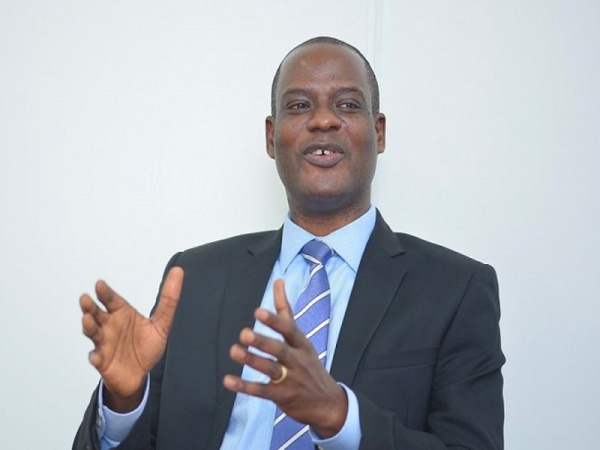
The board’s Public Communication Adviser, Dr. Fabian Benjamin, stated this during a dialogue organised by the Education Writers’ Association of Nigeria (EWAN), via Zoom.
The dialogue, themed ‘2026 Admission Policy Review and JAMB Scorecard: A Conversation with the Registrar’.
Dr. Fabian Benjamin stressed that his comments represented an economic analysis rather than an official position of the board.
According to him, the prevailing economic realities suggest that Nigerians should not rule out such a possibility.
Benjamin, who was reflecting on the board’s activities over the last decade under the leadership of the Registrar, Prof. Ishaq Oloyede, added, “Based on the cost of things and the demands from service providers, one should not be surprised if there is an increase in the future. But that is not my position; the registrar and the management will make such decisions.”
He said the current UTME registration fee stands at N3,500, following a reduction from N5,000 in 2018, a move the board said was made possible by prudent management and operational savings.
Benjamin explained that despite remitting over N50 billion as operating surplus to the Federal Government in the last ten years, JAMB should not be viewed as a revenue-generating agency.
According to him, the remittances were in line with government regulations requiring public agencies to return a percentage of their excess earnings to the treasury.
He noted that a significant portion of the money paid by candidates does not remain with JAMB, as the board pays private Computer-Based Test (CBT) centres that host examinations nationwide.
Out of more than 1,000 accredited CBT centres across the country, he said JAMB directly owns fewer than 50, making the board heavily dependent on private operators.
“Many of these centres have continued to complain that what they receive is no longer commensurate with current realities, considering the rising cost of electricity, equipment maintenance and other operational expenses,” he explained.
He said the development suggests that any future review of UTME fees would likely be driven by inflationary pressures and increased service delivery costs rather than a desire to generate additional revenue.
Benjamin recalled that one of the major reforms introduced by the current administration was the migration from an expensive satellite-based examination system that reportedly cost about N1.2 billion annually to a synchronised telecoms-based platform costing less than N100 million.
The transition, he said, enabled the board to cut waste, improve efficiency and ultimately reduce examination fees for candidates.
“Our fee is among the lowest, not only in Nigeria but even when compared with examination bodies across Africa and internationally,” he stated.
According to him, while many Nigerians advocate further reductions or even free registration, such expectations may not align with the realities of running large-scale technology-driven examinations.
Meanwhile, Benjamin defended the one-year validity period for UTME results, explaining that the examination is essentially a selection and ranking exercise rather than a certification examination like the Senior School Certificate Examination (SSCE).
He argued that extending the validity period beyond one admission cycle would require a complete restructuring of the examination model, including the introduction of aptitude testing and continuous assessment mechanisms.
The JAMB spokesman maintained that although such changes are technically possible, they may not necessarily serve the interests of candidates who wish to improve their scores in subsequent years.
As debates continue over the affordability of tertiary education and access to admission opportunities, the prospect of a future increase in UTME fees is likely to generate fresh conversations among parents, students and education stakeholders across the country. (Daily Independent)