ADAD
ADAD
Updating your news feed...
NEWS EXPRESS is Nigeria’s leading online newspaper. Published by Africa’s international award-winning journalist, Mr. Isaac Umunna, NEWS EXPRESS is Nigeria’s first truly professional online daily newspaper. It is published from Lagos, Nigeria’s economic and media hub, and has a provision for occasional special print editions. Thanks to our vast network of sources and dedicated team of professional journalists and contributors spread across Nigeria and overseas, NEWS EXPRESS has become synonymous with newsbreaks and exclusive stories from around the world.






.webp)



.webp)

Loading banners
Loading banners...

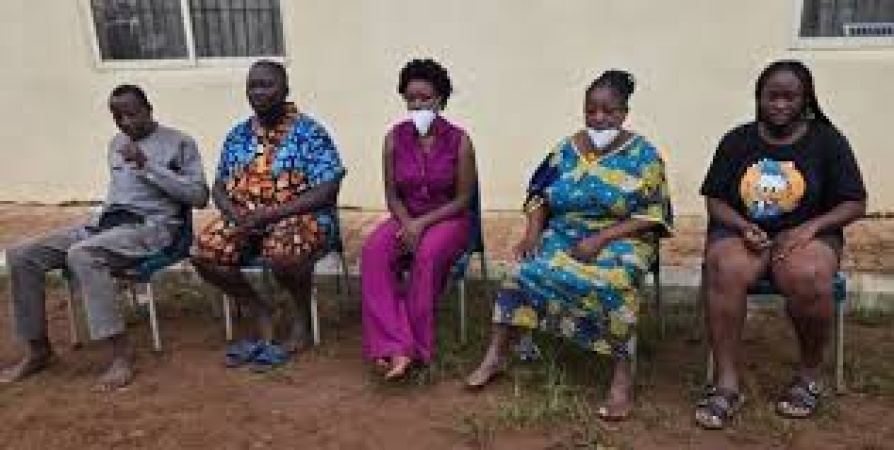
The survivors
It was supposed to be an ordinary Thursday afternoon on the Benin-Lagos Expressway. Travellers returning from burials, market trips and family visits were heading westward when gunmen emerged from the thick forest fringe at Ogbere in Ogun State, opened fire on moving vehicles, caused multiple collisions and dragged five terrified passengers into one of the most impenetrable forest corridors in the Southwest.
Within 24 hours, all five were free. Four of their abductors were dead while one fled with gunshot injuries.
Four more suspected kidnappers and 84 other suspects arrested during joint police operations codenamed KOSAYE, directed by the Inspector General of Police (IGP) Olatunji Disu to rid Lagos and Ogun states of bandits, kidnappers and other vicious criminals, also headlined the official flag-off of the operation translated in English as “no place for criminals” at the Police Training School, Ipero, Ogun State.
The ambush
Jimoh Gbadamosi, 58, a farmer from Edo State, was aboard a commercial vehicle heading to Ibadan when the convoy hit the Ogbere stretch. He had barely fathomed what was happening before the shooting started.
“The kidnappers came out and started shooting,” he recalled. “A lot of vehicles were stopped. Even the vehicle I was in, we had to run into another one. The ones behind also ran into us, so we had an accident.”
Before he could recover from the collision, the gunmen were at the doors.
“They opened the door, brought us out and immediately demanded our phones, wallets, everything; even my key holder.”
Five passengers, drawn from three different vehicles, were marched at gunpoint into the forest. Gbadamosi, his female colleague going to Ibadan and three women returning to Lagos after a funeral in Anambra and Enugu states were now in the hands of armed kidnappers who were very clear about what they wanted.
Amara Comfort Nsofor, a 26-year-old student who had just buried her father and grandpa in Oraifite, Anambra State, was still processing the shock when the shooting began.
She had been sitting in a Sienna bus with her mother, Mrs Nsofor, her sister (hospitalised) and her aunt, Mercy Out, 52, when the ambush occurred.
Her last coherent memory before chaos consumed everything was her aunt screaming: “Run! Run!”
“I held my sister. I was like, what’s happening? My sister started screaming. Everybody was saying, bend down, bend down,” she said.
Then she noticed her sister was bleeding. One of the gunmen approached the vehicle, helped open the sliding door, and the pretence of assistance lasted precisely as long as it took to separate the passengers.
“He separated me and my auntie from my mum and my sister and directed us into the bush,” Amara recalled.
Her mother and her bleeding sister were left behind. Amara, still clutching her phone, whispered to her aunt: “Should I call my uncle?” Her aunt told her no. The gunman had already issued his warning: “If you make any attempt to call anybody in the bush, he will kill you.”
They kept walking.
Inside the forest
The five captives were taken deep into what Mercy Out, 52, a widow from Akwa Ibom State, described as “a terrible thick bush, closer to the road than you would ever imagine. If they clear that road, they will not have a hiding place near the roadside.”
The kidnappers, five men, all armed, communicated among themselves in fluent Fulani, occasionally switching to Pidgin English when addressing their captives. They wore black trousers. One had on a red shirt; others wore polo tops. Their faces were covered.
Their team leader, whom they called Babangida, did most of the talking, narrated the victims.
Gbadamosi, who has some familiarity with Fulani, recognised the language immediately. “They are speaking Fulani, no doubt about that,” he said.
“I didn’t understand everything, but I know.”
Babangida addressed the captives directly. Did they know where they were? Did they understand the mission? The answer was obvious” One by one, the victims were handed phones and told to call their families for ransom.
Gbadamosi was told to produce N40 million. His colleague was quoted N30 million. Together, that was N70 million for two individuals taken from the same car.
“I told them there’s no way I can find that money,” Gbadamosi said. “I’m a farmer. I know how I left home.”
Amarachi’s family was given a similar figure. When her aunt attempted to negotiate, first to N50 million and then lower, Babangida was unmoved.
“He was like, okay, talk, which amount you get?” Eventually, they settled on N40 million.
Amarachi said she called her sister, still at the scene of the accident and by then being treated at a hospital. “I don’t want to die here,” she told her. I just want to come home.”
Her sister told her to keep the line open. Help was coming.
“But I didn’t know whether to believe her or not, and it seems the gunman noticed I was prolonging the call, so he ordered that I switch off the phone.
“He went to my settings to reset it, and then took the phone, an iPhone 16 with him,” she recalled.
They resumed walking.
“We kept moving from one place to another throughout the night and in the morning too. They asked us to sit down. One of them cut grass so we could lie down,” Amara narrated.
It was in that rough clearing, somewhere deep inside the Ogbere forest, that they would eventually be found.
Mrs Out had pleaded with their captors in the most human terms she could manage. “I am a widow. I suffered for 12 years to train my children. Will I die like this?”
Their leader’s reply was without mercy: “Even if you die, God will keep the children.”
She fell silent. She prayed.
‘Your case is different’
Ogechi Onuorah, 46, from Enugu State, was returning to Lagos after burying her mother when her bus was caught in the ambush.
When she told the kidnappers she was from Enugu State, their leader told her that her case was different: they were targeting Igbo people on that road because their people had killed Fulani men and shot their cattle.
“For that reason,” she recalled him saying, “my own case was different.”
She was asked to bring N50 million, and when she called her husband on the phone, she negotiated from N500, 000 upward to N5 million before the leader told her to sit down and say nothing more because she was not serious.
The women received neither food nor water throughout their captivity.
When faith becomes a lifeline
Like Out, Gbadamosi, took his case to God in prayer. When their captors noticed him performing his Salat prayers using tayammum, the Islamic practice of purifying oneself with sand in the absence of water, they challenged him.
“What are you doing? Are you an Alfa?” they asked. He replied that he was a Muslim and that no condition, however dire, excused him from prayer. They did not understand, but they did not stop him either. They had no religion, he concluded.
“We were begging them in the name of Allah, but they didn’t budge. All they were after was money.”
The rescue
It was close to 4pm on Friday when the sound of gunshots tore through the forest from the direction of the expressway.
Gbadamosi had just finished his prayers not up to 10 minutes earlier. The kidnappers, growing suspicious at the sound, began to move. Then Gbadamosi heard something else: voices, speaking Yoruba.
“We all discovered that the men who kidnapped us were running away. We were surprised. Then we sensed it might be the Nigeria Police.
“When we first heard the gunshots, I told the others to lie down. We all lay flat,” he said.
When it became clear the approaching voices belonged to police officers, the captives began to crawl towards the sound.
Amara said that moment of rescue was visceral and overwhelming. She heard the shots. Her aunt dragged her down. Another woman in the group heard Yoruba voices and crawled towards them, calling out: “I beg your help, please. They’ve kidnapped us.”
Amara ran in that direction and then stopped when she remembered she had left her aunt behind. “I looked back and said Auntie, come. But she shouted back that I should keep running, that she was coming,” she said.
When she broke through the tree line and saw the officers, she grabbed the nearest one and held on. “I can’t walk. I don’t know, I don’t know.”
All five captives were brought out alive.
‘May stray bullets never meet them’
At the press conference, each of the five rescued victims spoke. The gratitude was unscripted and unrestrained.
“What I saw from the Nigeria Police really surprised me,” Gbadamosi said.
“It is like I didn’t even dream that such could happen in Nigeria.”
He urged the federal government to develop the forests, either through mechanised farming or commercial leasing to companies to deny criminals the cover they need. He also called for more robust checkpoints along the Ogbere axis.
“Not just small checkpoints; real checkpoints,” he said.
Then, with the directness of someone who has seen the police at both their worst and their best, he offered a rare public defence of the force: “My message to Nigerians is that we should change our orientation and perspective about the Nigeria Police. They are working and trying their best.”
Mrs Out, whose composure appeared to cost her great effort, put her appeal to government in the simplest possible terms: “Please, clear that bush. The bush is terrible, and it is closer to the road than you would know.
“If they clear it now, the kidnappers will have no hiding place.”
Then she turned to the officers who had come for them: “The police risked their lives to save ours. May God almighty bless and keep them.
“May stray bullets never meet them wherever they go.”
Mrs Onuorah echoed the call for permanent checkpoints and implored authorities to pay special attention to the eastern corridor. “Even if you shout, nobody will hear you. Even if you cry, nobody will hear you.
“There should be permanent and increased police presence on that road.”
She also praised the police, saying: “The police are working. They rescued us under 24 hours. They are working.”
Amarachi, the youngest of the five, said almost nothing. She had buried her father four days before her abduction. Her sister was in hospital with a gunshot injury.
Her aunt had steadied her throughout the ordeal. What she wanted, in the end, was just to be home, and she expressed her gratitude to the team for her safe rescue.
A mother’s tears of joy
While her daughter Comfort was being marched through the Ogbere forest by armed men demanding N40 million, her mother, Mrs Blessing Nsofor, was lying in a gutter beside the expressway with a bullet lodged in her arm, using her sweater to stop the bleeding.
Nsofor, a widow from Gowon Estate, Egbeda, Lagos, had buried her husband just days before the ambush. She was returning to Lagos with her daughters and sister when the gunmen struck.
A young man stepped out of a vehicle parked in the middle of the road, walked up to her and looked her in the face. “Come out,” he said, “or I will shoot you.”
She managed to climb down. He shot her anyway.
“As you see my hand, there is a bullet there,” she told journalists, her arm in bandages.
The bullet had not yet been removed, with the procedure scheduled for Saturday, but she had refused to wait at the hospital. She wanted to see her family.
Her eldest daughter was still on admission. Both women had been left for dead at the roadside while the kidnappers herded five others into the forest.
After the gunman fired, Nsofor jumped into a roadside gutter and lay flat. Her injured daughter fell on top of her. She removed her sweater, which she had worn as widowhood clothes, and tied it around the wound to slow the bleeding. Then she got up and started walking.
A motorcyclist she flagged down refused to carry her. She pressed on until she reached a street where a man sitting with a roadside trader helped her, walking her through to the nearest police station.
When officers saw the state she was in, they moved immediately. They located her eldest daughter, transported both women to hospital, and when three facilities turned them away, the Divisional Police Officer personally ensured they were admitted at the General Hospital, where they remained at the time of the briefing.
Nsofor appeared at the Police Training School, Ipero on a day she was medically scheduled to be in the operating theatre. She had come because she needed to see her daughter and her sister with her own eyes.
When she spoke to journalists, her voice carried both the exhaustion of trauma and something close to exhilaration. “I just lost my husband and then I almost lost my sister and my daughter. I wouldn’t have been able to bear it,” she said.
She paused, then added a detail that silenced the room: “That girl, Amara, she is a twin. The other one died and God left this one for me. Even now she’s in school.”
She raised her unbandaged arm.
“I have been among those criticising the police,” she said. “But with what my eyes saw and how they rescued my family, I say you people are excellent. You people do much in Nigeria. I give them 100 per cent.”
Operation KOSAYE (no place for criminals)
At the joint press briefing yesterday signaling the official flag-off of KOSAYE by Commissioners of Police (CP) Lagos and Ogun states, it was confirmed that four of their abductors were killed in the exchange of fire.
Another four suspected kidnappers, arrested during forest sweeping operations were said to be in custody.
Announcing the birth of the operation, Ogun State Commissioner of Police, Bode Ojajuni, said it was initiated by IGP Disu, and backed by the governors of Lagos and Ogun states, who provided the logistical resources needed for its execution.
“The aim of the operation is to wipe out banditry, to the extent that it exists in the two states, clear large expanses of ungoverned forest territories and eliminate other criminal elements.
“We are here to allay the fears of citizens amid unfounded rumours of banditry and kidnapping,” he said.
He outlined the sphere of operation, which covers areas from Ikeja to Kara Bridge, the Redeemed Camp and the Isheri Corridor, then through Owode Egba to Ogere, extending to Ijebu Ode, Ajibandele and the J4 corridor at the Ondo State boundary, as well as Epe, Ikurudu, Ogijo, Etokin and surrounding areas.
“While the operation was ongoing, there was a security breach along the J3-J4 corridor at the fringe of the Benin-Sagamu Expressway. On the marching order of the Inspector General of Police, Operation KOSAYE moved in and rescued five victims.
“In the course of that rescue, four kidnappers were neutralised and four suspected kidnappers arrested in addition to 84 other suspects apprehended across the Lagos-Ogun stretch,” he said.
Displayed at the venue were recovered weapons: battle axes, AK-47 rifles, pump-action shotguns, assault rifles, English pistols, locally made pistols and mobile phones.
The CP Lagos State, Tijani Fatai, said the operation had exposed as false the rumours that bandits had taken over Ogun State and infiltrated Lagos.
“All the bushes across both states have been thoroughly combed and cleared. The thick forest corridors cutting across Lagos and Ogun have been systematically sacked,” he said.
CP Fatai was emphatic that the operation was not winding down. “This is a continuous exercise. It will go on for as long as is necessary,” he said.
The police chiefs alluded to the critical role technology played in rescuing the victims unhurt, including getting precise coordinates through unmanned drones.
They expressed confidence the joint operation would be replicated across other states and called on their colleagues to collaborate in securing shared corridors.
CP Ojajuni, responding to questions, acknowledged that increased checkpoints along the affected axis would follow, and noted that local communities and native residents, who know the terrain better than external security detail, were integral partners in the operation.
On the 84 suspects in custody, he explained that standard procedure required that anyone found in the bush unable to give a satisfactory account of themselves be taken in for interrogation. “Some suspects will be screened out in the course of the process. Those found culpable will be made to face the law,” he stated. (The Nation)