

ADVERTISEMENT

ADVERTISEMENT
Updating your news feed...

NEWS EXPRESS is Nigeria’s leading online newspaper. Published by Africa’s international award-winning journalist, Mr. Isaac Umunna, NEWS EXPRESS is Nigeria’s first truly professional online daily newspaper. It is published from Lagos, Nigeria’s economic and media hub, and has a provision for occasional special print editions. Thanks to our vast network of sources and dedicated team of professional journalists and contributors spread across Nigeria and overseas, NEWS EXPRESS has become synonymous with newsbreaks and exclusive stories from around the world.


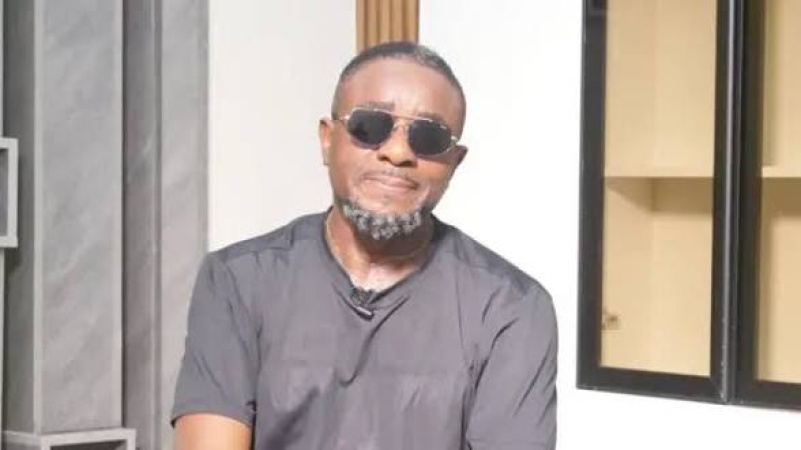
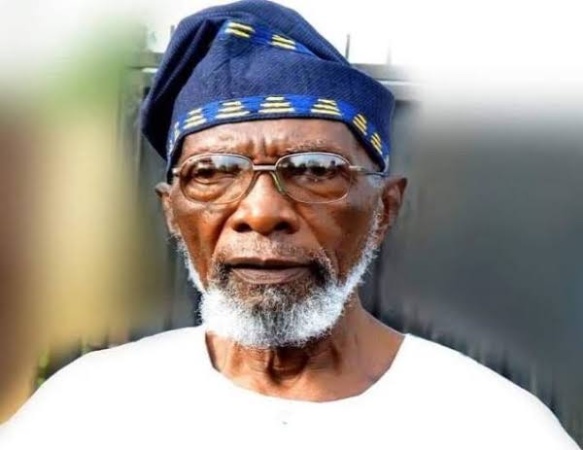
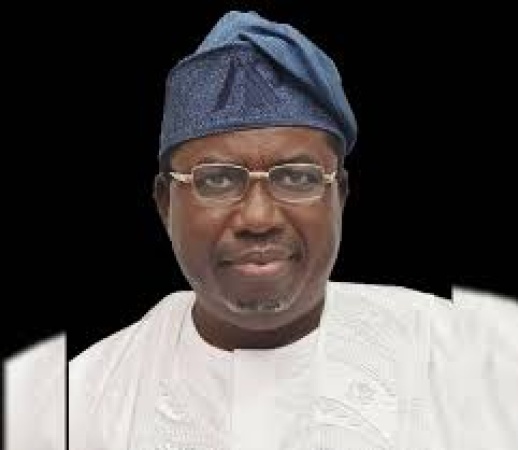
Late foremost Marxist Historian, Dr Segun Osoba
By BIODUN OLAMOSU
Dr. Segun Osoba hailed from Ijebu-Ode, presently in Ogun State where he started life as a toddler and spent the last part of his life on retirement.
His early educational pursuit at the primary and high schools started from this ancient city of Ijebu-Ode. The Ijebu people of the Yoruba extraction placed much value on western education and entrepreneurship, the very reason they belonged to one of the early generation of the educated elites and business tycoons in the country.
Segun Osoba had his first degree in history at the University College, Ibadan (now University of Ibadan) in 1959. He thereafter taught history at his alma mater, Ijebu-Ode Grammar School briefly before he proceeded to Moscow in the old USSR in 1963 in pursuant of his postgraduate degrees and gained his PhD history before coming back to Nigeria in 1967.
He returned to Nigeria immediately thereafter as a teacher of history at the University of Ife (now Obafemi Awolowo University). He was the first scholar in Nigeria to undertake the study of history from the materialist or monist perspective as opposed to the idealistic school of thought. Like Karl Marx would say, all hitherto history was the history of class struggle. Put in other way, all aspects of life embody contradictions thereby leading to opposition and to be resolved in one way or the other in form of thesis and antithesis resulting to synthesis. It is therefore only by materialistic perspective that history could best be fully understood.
Segun Osoba had written widely – books, papers, articles, monographs that included issues on the history of the trade unions in Nigeria and Africa; political economy, national liberation movement, characterisation of the Nigerian bourgeoisie and Nigerian power elite from the Marxist approach to history. This materialistic method in scholarship distinguished him from other history scholars of his generation. As a pioneer of this approach to the study of history, he had made considerable progress as not a few of his students were won over to this idea and have been a world renowned history scholars like himself.
One significant point about Dr, Segun Osoba is that as a Marxist, he cherished the Marxist tradition of combining theory with practice. I personally first came in contact with him in the course of practical struggle at meetings of Alliance for Democratic Rights (ADR) usually held at Comrade Ola Oni residence, 3 Odeku Close, New Bodija, Ibadan. Alliance for Democratic Rights took the form of united front approach in working together of different existing socialist groups to fight for a common cause. The groups involved in the formation included Comrade Ola Oni led Socialist Workers Party, Ife Socialist Collective led by him (Segun Osoba) and the Ilorin Socialist group. Attendance at meetings of the organisation was usually lecturers and students from these schools. It was at such meeting I first met the trio of Segun Sango, Lanre Arogundade and Muyiwa Adebayo while Lanre was the NANS president.
Hardly was there any meeting of the ADR not being attended by Dr. Segun Osoba. The activities of this united front organisation was not limited to working within the different groups only but its work extended to cover working with the ranks and file members of other trade unions. For example, the SWP in Ibadan worked with the pioneer NLC in Oyo State led by Comrade Ibrahim, the Ife Collectives on their own organised the Ife branch of NLC in organising workers in the area on that platform. The branch also organised its own May Day as festival of the workers on annual basis. ADR was also committed to organising monthly public educational programmes for the working people held at Mapo Hall in Ibadan. Facilitators for the programmes were drawn from members of the groups in University of Ife, University of Ibadan and University of Ilorin.
It is significant to also acknowledge the great impact such organisation had in influencing the class struggle at the time beyond their numbers at meetings; as the scope of the struggles were not limited to these three university campuses but linked with other groups across the country. These included groups domiciled in other universities such as the University of Nigeria, University of Jos, University of Calabar, Ahmadu Bello University, Zaria, University of Lagos, Bayero University, Kano and University of Benin. I can also confirm members of the group sharing the same platform in public lectures in the factory floors in Ibadan with leading trade union leaders such as Michael Imoudu, Wahab Goodluck, Kolagbodi and Dapo Fatogun.
The mutual interactions and collaborations existing between comrades drawn from the various groups when there were cause for mass action form the various reason I do not share the narrative being propagated around by some people that Nigerian socialists are divided beyond measure. There is nothing wrong in having different groups based on different tactical issues but always ready to struggle together in space and time on common strategic basis. In comparison with the conservative political elites, their division into different political parties cannot be assumed that they are not united ideologically and politically. What the socialists and Marxists organising under different groups need is to strengthen their forces intrinsically linked with the labour movement in pursuing the cause of transforming society along their own image in working together at the level of practice on strategic planning of action and implementation accordingly.
Military rule like the civilian rule by the top military Generals and politicians respectively have been albatross to the country’s developmental progression for the past sixty-six years and these were shared in equal measure of thirty-three years between the two forms of bourgeois dictatorship. So there have been quest for the way forward at both ends. The leftists and socially committed scholars were not left out in finding a way out of the country’s problems. Even when such participation of the Left scholars at the instance of the military and civil rule can best be described as that of tokenism, but with the success made out of such opportunities, they had proved beyond reasonable doubt their resilience and commitment to the cause of changing Nigeria and her people for better. This shows that all things being equal, in a favourable environment with right leadership and left-driven socialist ideology and programme of action, the possibility of achieving sustainable developmental goal could best be assumed.
A typical instance to justify such truism as this was the case of the appointment of the two socialists, Drs. Segun Osoba and Bala Usman to the Constitutional Conference in drafting the 1979 Constitution. The duo produced what was being referred to as the minority report towards the 1979 constitution. This formed an important portion of the constitution – Chapter II titled the Fundamental Principle of Socio-Economic Rights that comprised needs of the working people including living wage, education for all, better health condition, housing and pension. Unfortunately, this important aspect of the constitution, the ruling elites treated with disdain and contempt as these are regarded as unjusticiable. Nevertheless, despite this anti-poor elite consensus against the minority report, its purpose in propelling the agitation of the working people for their economic rights since 1980s has been on the ascendance.
When last I met Dr. Segun Osoba in company of Comrade Femi Aborisade and Professor Abubakar Momoh at the Ijebu-Ode Recreation Club he made invaluable contribution to the topic introduced by Momoh over Comrades not being security conscious; and he was happy to meet with us. He earlier requested from Comrade Niyi Fasanmi if he thought I could do a good work in writing the biography of Comrade Ola Oni as according to him the work would require a versatile author as Ola Oni was a Comrade of many parts. This was a typical case of mutual respect I knew existed between Comrades of that generation despite not sharing the same group.
•Biodun Olamosu is National Coordinator, Centre for Social Policy & Labour Research (SOPLAR), 8, Signs & Wonders Shopping Complex, Ekotedo-Iyalobe Street (Opposite Central Hotel), Dugbe, Ibadan. He can be reached via +2348125048832.