

ADVERTISEMENT

ADVERTISEMENT
Updating your news feed...

NEWS EXPRESS is Nigeria’s leading online newspaper. Published by Africa’s international award-winning journalist, Mr. Isaac Umunna, NEWS EXPRESS is Nigeria’s first truly professional online daily newspaper. It is published from Lagos, Nigeria’s economic and media hub, and has a provision for occasional special print editions. Thanks to our vast network of sources and dedicated team of professional journalists and contributors spread across Nigeria and overseas, NEWS EXPRESS has become synonymous with newsbreaks and exclusive stories from around the world.

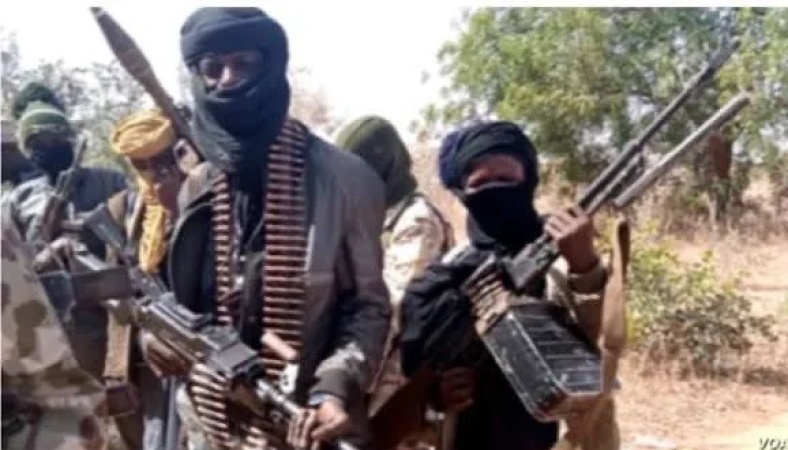
There is a detail buried in a press briefing in Kaduna last Thursday that I found rather troubling. It was offered by the former National Youth Service Corps (NYSC) Director General, Brigadier General Maharazu Tsiga (rtd). He was in the state to honour the memory of his late colleague, Major General Rabe Abubakar (rtd), who was abducted alongside his wife on 30 May 2026 in Katsina State but later died in captivity on 13 June. Tsiga had himself spent 56 harrowing days in the hands of bandits last year and in Kaduna, he shared a particular experience. While in captivity, according to Tsiga, he witnessed an early morning exchange in which a bandit leader, referred to as Kachala, received a phone call concerning the purchase of ammunition. Curious, Tsiga said he asked the bandit leader how such transactions were conducted and whether he could be involved. Tsiga was told, in clear terms, that being a retired officer, he was no use to bandits and that their business was with those who still occupy positions of authority.
That statement, if taken seriously, opens a window into the structure of Nigeria’s insecurity problem. It suggests that the machinery sustaining armed groups in parts of the country is not operating in isolation. It points to a network that extends beyond the forests and frontlines, into institutions and offices that are expected to uphold the law. But this is not the first time such insinuations have surfaced in public discourse. What is different here is the source—a retired general speaking from direct experience as a captive. This, of course, is not to malign our soldiers who daily make sacrifices to keep our nation secure; it is to admit that there are a few bad eggs within the system.
Over the years, Nigerians have asked difficult questions. How do criminal groups maintain access to sophisticated weapons? How do ransom payments move in such volumes without traceable consequences? How do these networks persist despite repeated military operations across affected regions? How come bandits invade some communities not long after troops leave? While Tsiga’s account does not answer these questions, it adds a disturbing layer that cannot be ignored. There is also the bitter irony to his revelation. Tsiga regained his freedom through contributions reportedly mobilised by colleagues, including many of the serving and retired officers who were with him in Kaduna last week. But the real concern is his confirmation of what many Nigerians have always whispered: there are insiders who trade in official arms and ammunitions with criminals.
On an issue like this, it may be important to add a caveat, especially because there are those who enjoy negative stories about our country. This is not a challenge peculiar to Nigeria. The only difference is about accountability. In other countries, when such criminal behaviour is detected—and there are always efforts to stay ahead of the criminals—culprits are brought to justice. On 30 March this year, for instance, a United States Marine was charged with stealing ammo and weapons, including a shoulder-fired missile system, and conspiring to sell them in his home state of Arizona. According to federal prosecutors, the officer used his position as a technical specialist at the School of Infantry West to steal at least one Javelin missile system, thousands of rounds of military-grade ammunition and other weapons-related material between February 2022 and November 2025.
While conducting ‘sting operations’ to detect such crimes and holding culprits accountable are the standard practice in most countries, that has not been the case in Nigeria and over the years, I have had to wade in on this vexatious issue with the most recent being ‘The Enemies Within’ (February 2020) and ‘An Army at Crossroads’ (May 2021). I wrote the latter following the arrest and parade by the Zamfara State Police Command of a notorious 30-year-old gun runner from Niger Republic, Shehu Ali Kachala. The suspect claimed he was importing the weapons into our country through the assistance of some unnamed Nigerian military personnel. He also said he had sold 450 rifles and 8000 live ammunitions to different criminal gangs in Zamfara, Kaduna, and Niger States. Two months earlier, the Zamfara State Government announced that a Nigerian soldier and his girlfriend were caught supplying ammunition and military uniforms to armed bandits. The soldier was reportedly arrested through community-driven intelligence. Up till now, we still do not know how the two cases were resolved.
In September 2016, General Lucky Irabor, (who later became the Chief of Defence Staff but at that period, Theatre Commander in Maiduguri) said some soldiers were selling arms and ammunition to Boko Haram in what he described as “a betrayal of the Nigerian people”, even though he gave no further details. In November 2017, a State Security Service (SSS) Director, Mr Godwin N. Eteng, made chilling revelations before a House of Representatives Joint Committee investigating the influx of small arms and light weapons into the country. “We had a situation where in one of the armouries belonging to one of the armed forces, many pistols just got missing with quantities of ammunition and all the pistols are new. In the armoury, no place was broken into, but the weapons were missing,” Eteng told the lawmakers.
In June 2019, the police command in Kaduna State arrested a Lance Corporal serving in one of the military units in Jaji Military Cantonment, allegedly for selling arms to kidnappers. A year later in 2020, the Conflict Armament Research (CAR), an international conflict research group, released a report that some of the weapons with which herdsmen and farmers fought were traced to “stockpiles of Nigerian defence and security forces”. Of the 148 different weapons discovered and analysed, according to the report, “Nigerian-manufactured small-calibre ammunition—including cartridges manufactured as recently as 2014—is the second-most prevalent type of ammunition in this data set.” It then concluded: “Four of the weapons in the data set were previously in service with Nigerian national defence and security forces. CAR has established this through formal tracing and the analysis of secondary marks applied to the weapons, which identify their users.”
What the foregoing suggests is that we learnt no lesson from Niger Delta where militancy was sustained for several years, essentially due to arms and ammunitions that were procured from official armouries. Breaking that syndicate helped in no small measure to weaken the capacity of the militants before the late President Umaru Musa Yar’Adua came up with the amnesty deal. In my book, ‘Power, Politics and Death’, I detailed a report of the Board of Inquiry convened by then Chief of Army Staff, the late Lt. General Luka Yusuf, which investigated huge theft of arms at 1 Base Ordnance Depot (1BODK), in Kaduna. The report concluded that “some of the soldiers involved in the theft of weapons actually escorted the stolen arms in uniform to their destination in Niger Delta.”
The investigation was itself spawned by allegation that an arms syndicate which involved some soldiers and officers of the Nigerian Army, had been breaking into the arms sheds in 1BODK, the Ordnance Sub Depot (OSD) in Jaji and the Ordnance Field Park (OFP) in Calabar to steal weapons. Some of the stolen arms and ammunition included among others, GPMGs, Sterling SMG, Bren LNG, AK 47 rifles, grenades, and rocket launchers, as well as several fragmentation jackets. At the end, about a dozen military officers were court-martialled and sentenced to various terms of imprisonment.
As an aside, without understanding the context of the Niger Delta amnesty deal by my late principal, part of which I explained in my 2022 column, Tompolo and the Amnesty Deal – THISDAYLIVE, some Northern governors have been quick to offer all kinds of ‘amnesty’ packages to criminals. But even when Niger Delta militancy is completely different from the pure criminality that goes by the fanciful name of ‘banditry’, the Yar’Adua amnesty was preceded by a strong military offensive that left the militants with no option except they were prepared to die. The Niger Delta Amnesty deal was offered by the Nigerian State from a position of strength.
To address the current security challenges that we face as a nation, we need a firm resolve from the leadership, at all levels, and a coherent national policy. I stated this much in my column, ‘when the state kneels before the gun’, following the publicised meeting in Gemi Forest between chairman of Safana local government area in Katsina State, Abdullahi Sani Safana (alongside some traditional rulers) with bandits. If some government officials believe that offering ‘carrots’ to bandits is the solution while others believe in a law-and-order approach, the problem will continue to defy solution. Indeed, that approach has led to a situation in which many communities would rather deal directly with bandits for their survival with dire consequences.
Right now, about 50 residents from Magamin Diddi village in Maradun Local Government Area, Zamfara State, are in the hands of bandits. According to reports, following incessant attacks and desperate to access their farmlands during this raining season, these community elders went to the adjourning Muntsira forest to meet a bandit leader named Jammo. They have not returned home after more than two weeks. “They did not inform the authority before embarking on such dangerous step they have taken,” Zamfara State Governor, Dauda Lawal told BBC Hausa Service during the week. “They are on their own…who sent them to negotiate? It certainly was not the government. We have consistently stated that we do not support negotiations with terrorists.”
I plead with Governor Lawal not to abandon those Zamfara elders to their fate. If top government officials could go to these forests for meetings with bandit leaders, I don’t think the Zamfara elders should be criminalized for what turned out to be a desperate misadventure. But here is the bigger issue: If banditry has become so entrenched, it is not only because of those who carry arms in the forest. On Monday, the US designated a Nigerian national and three companies operating in the country as alleged facilitators of financial activities linked to the Islamic State of Iraq and Syria (ISIS). That explains why Tsiga’s account of communication between abductors and external actors, especially references to procurement of ammunition, demands scrutiny. Who facilitates such access? Who benefits from its continuation? And why has it proven so difficult to dismantle these supply chains despite years of military operations?
To answer those questions, what is required is not only operational response but structural interrogation of the ecosystem that sustains violence. The question Tsiga has raised albeit indirectly, is whether there exist, within the structure of state and society, actors who enable the persistence of armed violence for personal or political gain. And until that question is answered with courage and evidence, the country will continue to treat symptoms while ignoring the disease. It will also be difficult to rid our country of kidnappers, bandits, and sundry other criminal cartels.
The Angry Judge
There is hardly any aspect of our society that does not come with its own peculiarities, and our judicial system is no exception. One recurring challenge is the tendency by some lawyers—whether out of desperation, overzealousness, or poor judgment—to prolong litigation unnecessarily. Matters that have been concluded often find their way back into the courts through creative legal maneuvers. The situation becomes even more troubling when lawyers attempt to challenge decisions of the Supreme Court under the guise of seeking a review. In some instances, fresh proceedings are initiated at lower courts on matters that have already been conclusively settled by the apex court. Such conduct not only clogs the justice system but can also test the patience of judges who are expected to protect the finality and integrity of judicial decisions.
Yet, while such actions may understandably cause frustration, judges, in my view, must exercise restraints as frequent displays of anger can undermine the dignity of the courtroom and discourage those seeking justice. Yes, firmness is an essential judicial quality, but excessive hostility can also create an impression of bias, discourage open engagement, and ultimately weaken public confidence in the fairness of legal proceedings.
This issue came into sharp focus on Monday when a Justice of the Supreme Court reserved unusually harsh words for S.M. Danyaro, a lawyer who had filed what was described as one of the most “thoughtless and irresponsible applications” ever brought before the court. The apex court not only dismissed the application but also ordered Danyaro to personally pay N50 million in costs, describing the filing as “vexatious, abusive and unprofessional.”
Although Justice Jamilu Tukur delivered the lead ruling, it was the concurring judgment of Justice Chioma Nwosu-Iheme that attracted widespread attention. In expressing her displeasure, she described Danyaro as “juvenile” and suggested that his application was so lacking in merit that it was “bereft of commonsense,” while questioning whether he (Danyaro) deserved to be called a legal practitioner.
The case originated from a Supreme Court judgment delivered on 4 June 2025, which nullified a Kebbi State High Court decision reinstating Al-Mustapha Jokolo as the 19th Emir of Gwandu. While the Court of Appeal had upheld the reinstatement, the Supreme Court, by a narrow three-to-two majority, ruled that Jokolo had failed to comply with Section 5(4) of the Kebbi State Chiefs (Appointment and Deposition) Law. The provision requires an aggrieved party to first submit a formal complaint to the governor before commencing legal proceedings. It was this judgment that Danyaro sought to revisit through an application that ultimately drew the court’s ire. The controversy that followed has centred less on the legal outcome and more on the language used by Justice Nwosu-Iheme. Should judges openly display such emotions in their judgments?
We must admit that judges are entitled to feel frustration because they are human beings, not machines. This is more so when they are confronted with conducts that undermine the administration of justice. Almost on daily basis, Judges in Nigeria encounter frivolous applications, abuse of court processes, and actions that consume valuable judicial time and resources. In such circumstances, irritation may occasionally find expression in judicial language. However, why this is understandable, the judicial office, in my view, demands a higher level of restraint because judges do more than resolve disputes; they embody the impartiality, dignity, and authority of the law itself.
The language of a judgment often carries almost as much weight as the decision it contains. A ruling may be legally impeccable, yet its impact and public acceptance can be diminished if readers perceive it as driven by emotion rather than careful reasoning. This concern is not merely theoretical. In her paper, ‘Shame, Angry Judges and Social Media Effect’, Professor Maxine Goodman of the South Texas College of Law, Houston posed the question: “What is it about judges and anger?” She observed that there are countless examples of judges losing their tempers and lashing out at lawyers, litigants, and court personnel. According to Goodman, some judicial outbursts are triggered by provocation, while others arise from the pressures of emotionally charged cases. Occasionally, however, judges appear to lose their composure without any obvious cause. More importantly, Goodman notes that public perceptions of fairness are often shaped not by the outcome of a case but by how individuals are treated throughout the process. This means that even where a decision is legally sound, harsh or emotional language may create an impression of partiality and undermine confidence in the institution.
In the present case, few would seriously dispute the Supreme Court’s decision to dismiss Danyaro’s application and sanction him. The legal correctness of the ruling appears difficult to challenge. The real debate concerns the language employed in expressing that decision. Critics argue that such strong words risk overshadowing the legal reasoning and shifting public attention away from the issues at stake toward the temperament of the judge. Supporters, however, contend that a forceful judicial rebuke is sometimes necessary to discourage irresponsible litigation and uphold professional standards within the legal profession.
The challenge, therefore, lies in balancing judicial humanity with restraint. Judges must be free to condemn conducts that threaten the integrity of the legal system, but they should do so in a manner that preserves public confidence in their neutrality. Firmness does not require hostility, and strong criticism need not become personal. Ultimately, the controversy surrounding Justice Nwosu-Iheme’s remarks serves as a reminder that judicial temperament is an essential component of the administration of justice because the authority of the court rests not only on the correctness of their decisions but also on the measured and impartial manner in which those decisions are delivered. Therefore, a judge’s words should command respect because of the strength of their reasoning. Not on the intensity of the emotion behind them.





.webp&w=256&q=75)