ADAD
ADAD
Updating your news feed...
NEWS EXPRESS is Nigeria’s leading online newspaper. Published by Africa’s international award-winning journalist, Mr. Isaac Umunna, NEWS EXPRESS is Nigeria’s first truly professional online daily newspaper. It is published from Lagos, Nigeria’s economic and media hub, and has a provision for occasional special print editions. Thanks to our vast network of sources and dedicated team of professional journalists and contributors spread across Nigeria and overseas, NEWS EXPRESS has become synonymous with newsbreaks and exclusive stories from around the world.







Loading banners
Loading banners...

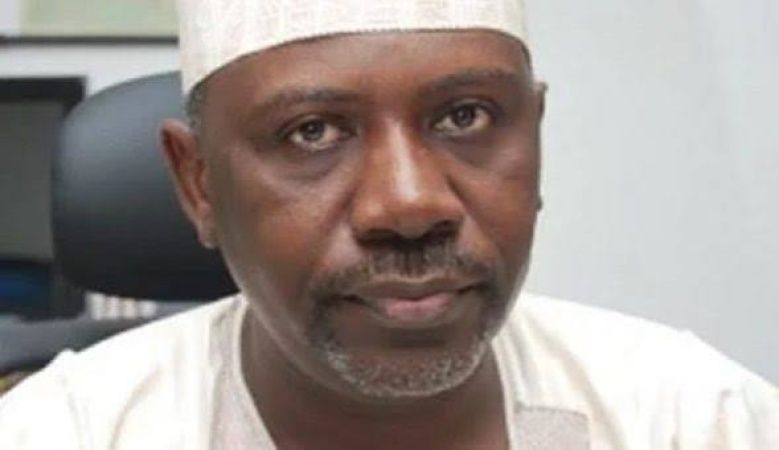
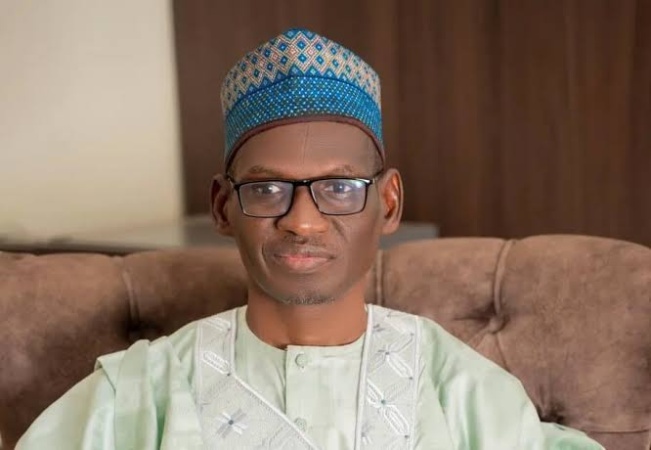
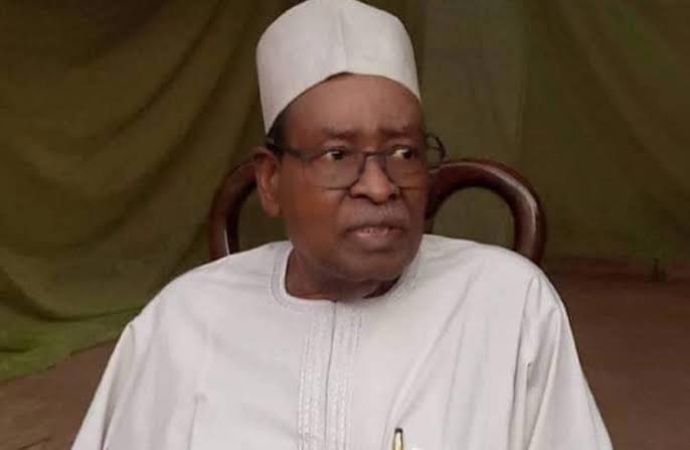
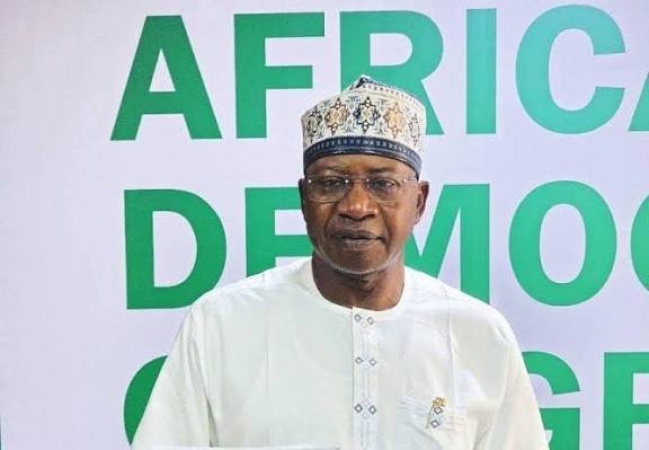
Ex-HoSF, Alhaji Bukar Goni
Former Head of the Civil Service of the Federation, Alhaji Bukar Goni, has revealed that the Federal Government was prepared and financially capable of paying a N150,000 minimum wage to civil servants, but the proposal faced opposition from state governments, local government councils, and the private sector.
Goni also called for an urgent amendment to the 1999 Constitution to remove minimum wage from the concurrent legislative list, arguing that this would allow wages to be determined by the financial capacity of states, local governments, and private employers.
He made the remarks while delivering the lead lecture at the Nigeria Public Service Lecture Series and Awards held at NICON Luxury Hotel in Abuja and organised by the Bureau of Public Service to commemorate the 2026 United Nations Public Service Day.
The event attracted several dignitaries, including the Inspector-General of Police, IGP Tunde Disu, represented by AIG Uche Ifeanyi; Prof. Tunji Olaopa; and Gombe State Governor, Inuwa Yahaya, who was represented by the state Head of Service, Prof. Mauzu Shehu.
Speaking on the theme, “Transforming Public Institutions: Advancing Innovation, Participation and Inclusion,” Goni recalled the challenges encountered during negotiations on the minimum wage.
According to him, as Chairman of the Minimum Wage Negotiations Committee, discussions were conducted under intense pressure, with negotiations stalling for several days as state governments, local government authorities, labour unions, and private-sector representatives struggled to reach a consensus.
He maintained that restructuring the constitutional framework governing minimum wage would promote a more realistic and sustainable wage system that reflects the economic realities of different employers across the country.
“The Federal Government was willing to pay 150,000 as Minimum wage for workers, but the states and local governments said they cannot afford it. In the case of the representatives of the private sectors, they said, ‘Look, we cannot pay. You have increased fuel prices, you have increased tariffs on electricity, so the only way we can pay is to downsize.’
“And for us at the Federal level, downsizing will compound Nigeria’s problems. Nobody wants to hear that someone has been asked to go home from work because the Federal government increased the minimum wage. So unless the 1999 constitution is amended, Nigeria may not be able to address the minimum wage issue holistically. The amendment will allow for pay as you can afford across all sectors,” Goni said.
Goni also raised concerns about inter-agency rivalry in the country, saying it was not only hindering the development agenda but also impeding effective service delivery and military operations.
Goni said Nigeria’s protracted military operations against terrorism and banditry are hindered by a lack of synergy amongst military institutions. He said that under late President Muhammadu Buhari, the Army and the Nigerian Air Force (NAF) failed to work together to tackle security challenges frontally, a situation that allowed the crisis to fester until today.
He also cited the rivalry between the Ministry of Works, Ministry of Water Resources and Ministry of Transport, saying there were instances where the Minister of Works initiated constructions of Bridges, and Railway lines along Federal Highways and Water ways, only for the Ministries of Water Resources and that of Transport to respond to the Federal Executive Council Memo:” what is the business of Ministry of Works with Ministries of Transport and Ministry of Water Resources?”
Goni said Nigeria’s education curriculum needed restructuring and review to create a 50- to 100-year vision for the country, adding that it was unacceptable that subjects from the 1960s and 1980s are still being taught in secondary schools and universities. He said such scenarios showed that the country’s national manpower development issues have not been genuinely addressed.
He also pointed out that without adequate funding, no reforms in key government institutions would succeed, and he regretted that the lack of funding hindered police and military operations in Nigeria. He cited the Police Reforms documents authored by the late Inspector General of Police, MD Yusuf, who recommended over 1.5 trillion naira for Police Reforms.
Goni expressed surprise that, when he was called back to help harmonise the Police Service with the Ministry of Interior under President Buhari, he was shocked that more than six years after the take-off of the Police Reforms, only 105 million naira had been released for the far-sighted reforms.
“There is nothing the police can achieve with that kind of underfunding, especially with the situation across the country,” Goni said
The Ex-HoSF highlighted that technological innovations would have both positive and negative impacts on the government’s reforms, but noted that trust and the integrity of civil servants would determine how far the country would advance in the shortest possible time.
Speaking at the event, the Head of the Civil Service of the Federation, Mrs Didi Walson-Jack, said the government would continue to invest in ventures that ensure effective and efficient service delivery across all Ministries, Departments and Agencies (MDAs).
Mrs Walson-Jack, who was represented by the Permanent Secretary in the HoSF Office, Alhaji Kaaba Suleiman Usman, said that reforms are meant to ensure that citizens feel the impact of government programmes even at the grassroots level.
The HoSF described the theme of the lecture series as apt and timely, saying it would provide a basis for cross-fertilisation of ideas and opportunities for deeper reflection about the future of Nigeria’s civil service.
The Director General of the Bureau, Alhaji Dasuki Arabi, said the theme of the 2026 Lectures aligned with the current transformative efforts of the present administration to drive public service with innovation, participation and digital inclusion.
He said President Bola Tinubu has anchored his Renewed Hope Agenda on three pillars: innovation, participation, and digital inclusion, adding that the Bureau has the onerous responsibility to ensure that all MDAs are linked to the government’s transformation agenda.
Arabi, who praised the President, the Secretary to the Government of the Federation, Dr George Akume, and the Head of the Civil Service of the Federation, Mrs Didi Walson-Jack, for their commitment to national transformation, urged Nigerian public servants to be prepared for deeper use of technology.
Arabi commended state governments that have keyed into public service reforms based on the Bureau’s guidelines, saying in the years ahead, there would be more responses to the issues of climate change, extreme weather conditions, and flooding. (The Nation)