ADAD
ADAD
Updating your news feed...
NEWS EXPRESS is Nigeria’s leading online newspaper. Published by Africa’s international award-winning journalist, Mr. Isaac Umunna, NEWS EXPRESS is Nigeria’s first truly professional online daily newspaper. It is published from Lagos, Nigeria’s economic and media hub, and has a provision for occasional special print editions. Thanks to our vast network of sources and dedicated team of professional journalists and contributors spread across Nigeria and overseas, NEWS EXPRESS has become synonymous with newsbreaks and exclusive stories from around the world.

.webp)
.webp)

.webp)
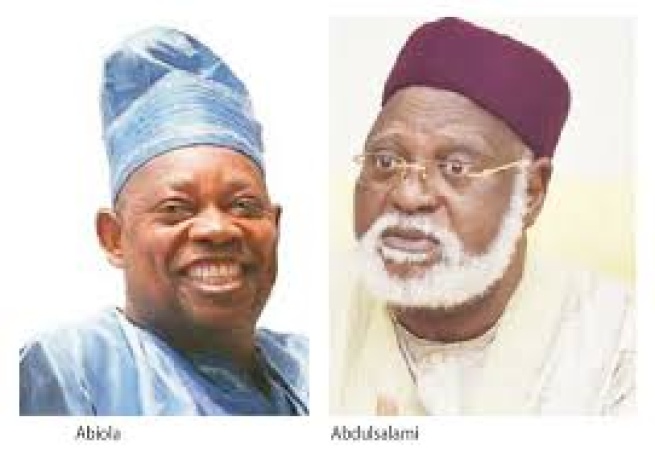
Abiola , Abdulsalami
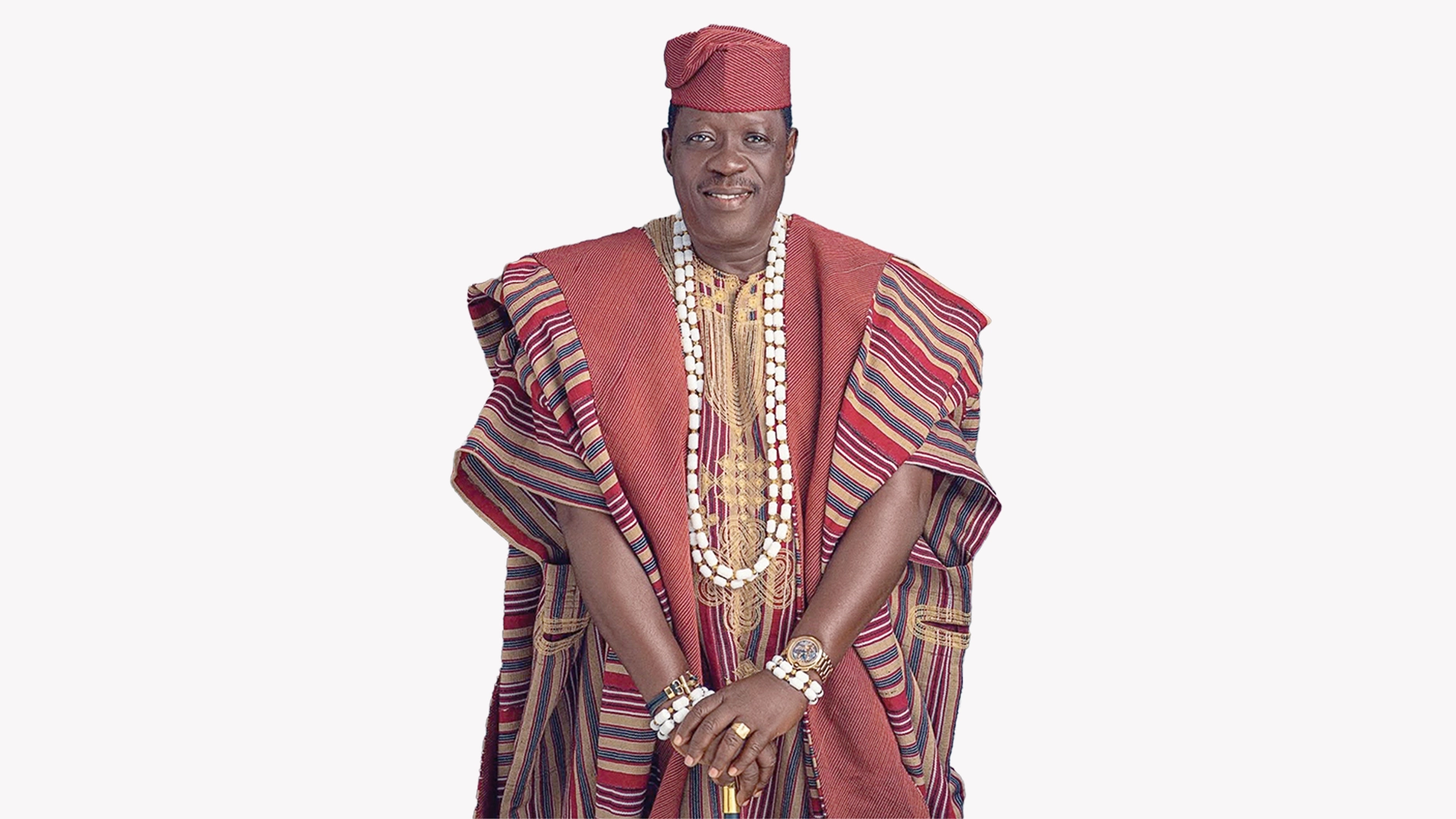
Former Head of State, Gen. Abdulsalami Abubakar (rtd), has explained why the presumed winner of the June 12, 1993 presidential election, Chief MKO Abiola, was neither immediately released from detention nor sworn in as President after the military government of Gen. Sani Abacha ended in June 1998.
Abdulsalami, who succeeded Abacha following the latter’s death on June 8, 1998, said the option of releasing and installing Abiola as President was considered politically impracticable because it lacked national consensus and risked plunging the country into another round of crisis.
The former Head of State made the disclosure in his autobiography, “Call of Duty: An Autobiography of Gen. Abdulsalami Alhaji Abubakar”, one of three books unveiled in Abuja yesterday during activities marking his 84th birthday.
In a chapter titled “MKO Abiola’s Sudden Death,” Abdulsalami recalled the difficult decisions his administration faced while attempting to resolve the political crisis that followed the annulment of the June 12, 1993 presidential election.
According to him, his government adopted a gradual approach to dismantling the repressive policies inherited from the Abacha regime, beginning with the release of pro-democracy activists, detained politicians and military officers convicted over alleged coup plots.
He said Abiola’s release was intended to be the culmination of those efforts, but the process was complicated by divergent political demands and concerns about national stability.
“Abiola’s release was going to be the climax, the best moment, as it were. We were working towards it, holding consultations across the political landscape and waiting for the appropriate window to free him,” Abdulsalami wrote.
He explained that while some politicians and pro-democracy activists demanded that Abiola be immediately freed and sworn in as President based on the June 12 election results, the proposal generated strong opposition from other political interests across the country.
“Releasing Abiola and installing him as President based on the annulled election was not a national consensus. It was not going to fly in most parts of Nigeria. It was easier said than done,” he stated.
The former military ruler revealed that political groups and stakeholders advanced conflicting proposals on how to resolve the crisis.
He said former Military Governor of Kaduna State, Col. Abubakar Umar (rtd), suggested that Abiola should head a Government of National Unity while he, Abdulsalami, retained the position of Commander-in-Chief until January 2,000.
The five registered political parties at the time, he disclosed, demanded the dissolution of military-era institutions, including the National Electoral Commission and transition agencies, while the apex Igbo socio-cultural organisation, Ohanaeze Ndigbo, called for the dissolution of the political parties and the commencement of an entirely new transition programme.
According to Abdulsalami, while the Yoruba socio-political group, Afenifere, advocated that Abiola be installed as President to serve a four-year term, other regional interests argued that if the country intended to reverse past military interventions, then previous constitutional disruptions should also be revisited.
“Some said President Shehu Shagari, who was overthrown in 1983, should be restored. At another meeting, some politicians argued that if we wanted to go back to June 12, we could as well restore the First Republic which was terminated in 1966,” he wrote.
He recalled that one participant even suggested that former Senate President, Chief Nwafor Orizu, who briefly served as Acting President before the 1966 coup and was still alive at the time, should be reinstated.
The former Head of State said the conflicting positions underscored the absence of consensus on Abiola’s immediate installation as President.
Beyond the political disagreements, Abdulsalami said his administration also had serious security concerns regarding Abiola’s release.
He noted that powerful interests within the system remained opposed to Abiola’s freedom and could potentially undermine efforts to resolve the crisis peacefully.
According to him, the treatment Abiola suffered in detention, including restrictions on family visits and medical access, demonstrated the existence of entrenched forces hostile to the businessman-politician.
“There were people who vehemently opposed his release from detention throughout the time Abacha was in power. All these extremely desperate and dangerous people were lurking within the system,” he wrote.
Abdulsalami disclosed that his administration initially focused on improving Abiola’s living conditions while consultations continued.
He said Abiola was moved to a safer and more comfortable location and granted greater access to family members and his personal physician, Dr. Ore Falomo.
“For the first time in years, his family was allowed to see him and his doctor was given greater access to him. We had no Issues with Abiola at all,” he wrote.
The former Head of State further revealed that he had planned to hold a personal meeting with Abiola after completing consultations with key political stakeholders.
According to him, the objective was to discuss possible options for resolving the crisis and understand Abiola’s own views regarding the future political arrangement.
“Some said he should be persuaded to take part in a new transition programme. Some suggested that he be given an eminent role in the Fourth Republic In recognition of his travails and contributions to the enthronement of democracy.
“I needed to discuss with him and understand what was on his own mind,” he stated.
However, Abdulsalami said the meeting never took place because Abiola died before the process could be concluded.
“Unfortunately, our meeting never took place. He died while we were still preparing the ground for his release.
“It is not true that he died on the day we wanted to release him. It was mere speculation. We were in the process, but a final date had not been decided upon,” he wrote.
The former Head of State described Abiola as a respected bridge-builder whose leadership qualities and national outlook were needed in Nigeria.
“I didn’t have a personal relationship with Abiola, but I knew him by reputation. He was someone I respected and saw as a bridge-builder, the kind that Nigeria needs at all times,” he wrote.
Abiola, widely believed to have won the June 12, 1993 presidential election adjudged by many observers as Nigeria’s freest and fairest poll, died in detention on July 7, 1998, a month after Abacha’s death and less than a month after Abdulsalami assumed office. (The Nation)
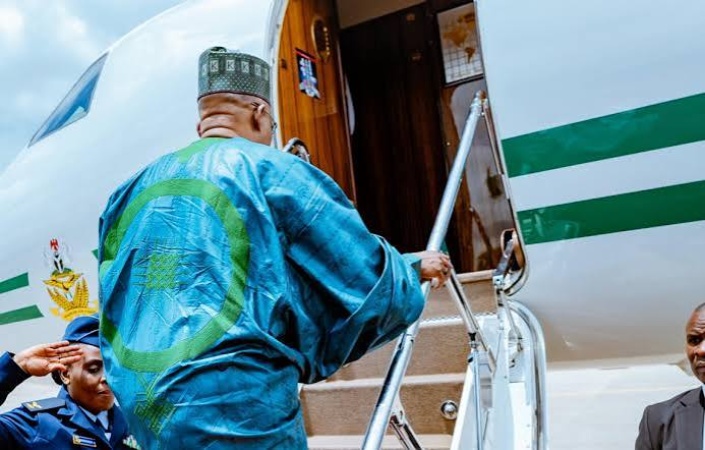
•Former Head of State, Gen. Abdulsalami Abubakar
Police chased, stoned my brother to death in Delta river — Sibling
Mr Victor Friday, an unemployed graduate, speaks with CHUKWUDI AKASIKE on the circumstances surrounding the death of his elder brother, Joshua Ibanga (also known as Amadi), alleging that some police officers in Delta State were complicit
How are you related to the deceased?
He was my elder brother.
How did you get the news of your brother’s death?
A man named Amejuma, who is my friend, called me while I was at work and asked, “Is Amadi your brother?” Amadi was my brother’s nickname, so I said yes. He then told”me, “He is the one the ”olice just killed in the river.”
As soon as I heard that, I rushed to the community. I left work a few minutes after 9 a.m. and headed to the scene. When I got to the riverside, I met some people there. They said someone was inside the river, but I remained quiet.
My friend and I went to get divers. For about five hours, we were there. Some of the youths in the community were saying that the police had been wreaking havoc in the community.
It got so heated that the youths became very angry because the police had been doing these things for a very long time. Now, they had killed somebody.
But I still didn’t believe it was my elder brother who was inside the river until they finally brought him out. I have the video of when his corpse was brought out. When they recovered his body after about five or six hours in the river, he was still bleeding from his face despite being inside the water for so long.
When we brought his body out, his stomach was still flat. He didn’t drown. That day was a market day. Before we brought him out, I had already heard that the police had come.
Can you recall what actually happened that led to his death?
I learnt he was sitting with his friend’s child. The police came with an informant who is an indigene of the community. My brother was sitting there and saw the police stopping motorcycles and carrying out their activities. He didn’t move; he was only sitting with a 12-year-old child. So, when they were about to leave, the informant pointed him out and told the policemen to arrest my brother.
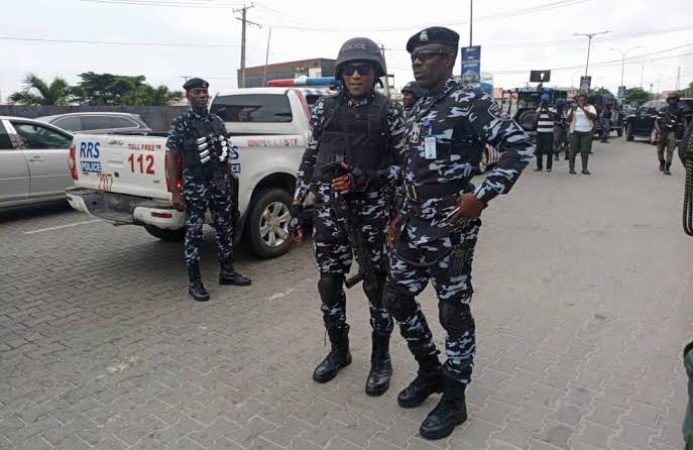
We later learnt he did this because he had issues with my brother. The informant’s name is Ashara. When they came close to my brother, some of them were on foot while others came out of their Sienna vehicle. They were RRS policemen. When they approached him, he started running.
Why did he run?
He ran because the normal thing here is that when they get to you, whether you are innocent or not, they will start harassing you, and you will have to bail yourself.
Bail yourself with money? How?
That’s how it is in the community. So, he ran and left the place. The 10-year-old child saw the police chase him. He wanted to divert into a street, but they blocked him with the Sienna.
Was he running on foot or driving a car?
No, he was running on foot, and the only option left was for him to head towards the riverside. While some policemen chased him on foot, others pursued him in their vehicle.
My brother dived into the river and, since the policemen could not swim, they started throwing stones at him. The mother of the 12-year-old child, who was on a motorcycle, saw everything when the policemen were throwing stones into the river, but she never knew it was my brother they were pelting with stones.
But when she got off the motorcycle, the child told her that it was Uncle Amadi whom the police were throwing stones at in the river. She immediately ran to the riverside and saw the policemen entering their Sienna and leaving.
She was calling my brother, but he wasn’t responding, not knowing that the stones had already caused serious injuries to his head. He was just floating there, and the next thing she saw was bubbles before my brother sank deep into the river.
What is the name of that community?
The community is Ubeji in Warri, Delta State. It is an Itsekiri community.
When did this incident happen?
It happened on March 31.
What was your brother’s offence?
Nothing. When they caught the informant, Ashara, he said that the policemen chased my brother to the riverside and, when they got there, turned back. When we met the Commissioner of Police in his office, he said that the five policemen claimed they didn’t chase anybody. But their informant said they chased him to the river.
The policemen didn’t know that the informant had already confessed. When we got there, the police were denying it. However, the informant was not there when we met the Commissioner of Police.
So, they didn’t know that the informant had already confessed. The videos are there. When divers brought his corpse out of the river, he was still bleeding.
He was In the river for about six hours, and his stomach was flat. I don’t know why the Commissioner of Police would tell us to carry out an autopsy on my brother’s body.
That’s what is holding up the case. There is no money to conduct the autopsy.
Are you saying the police asked the family of the deceased to pay for the autopsy?
Yes. As it is now, there is no money because my brother was the one helping the family. I am a graduate, but I am still job hunting. I don’t have any money for an autopsy.
Our lawyer said the police were trying to frustrate us so that we would abandon the matter, which I think is already happening because my brother’s corpse is still in the mortuary. It has been over two months already, and we can’t even afford the autopsy.
How much is the autopsy?
The autopsy costs N300,000. When I called the police officer, she said she was waiting for my uncle regarding the autopsy. We were advised to use our own doctor. We were also advised not to allow the police to use their own doctor to perform the autopsy.
Since the case is against them, we should not allow that. My uncle said he wanted to use his own doctor. But before then, I think what they were saying was that we should do the autopsy, and they would provide the doctor.
When I said we wanted to bring our own doctor, they started saying they were waiting for us to carry out the autopsy. But there is no money for it.
In this case, it is very glaring that the matter does not even require an autopsy. They know what they are doing. Since the incident, none of them has called us or said anything. They know that even if we want to pursue the matter to the end, we need money to do so. There is no money for the case.
Are you seeking a lawyer who will handle this matter for you pro bono?
That is what I have been looking for. That is what I have been praying for.
How would you describe your brother?
Anybody can go to the community and ask about his character. They should ask if my brother was a troublesome person. If he were troublesome, the youths in the community would not be angry. The youths were very angry. Everybody knows Amadi as a very peaceful person.
What was your brother’s occupation?
He was working at the Warri Refinery. Ubeji is not far from the Warri Refinery.
Since the Warri Refinery is no longer operational, my elder brother went into entertainment with his friend. They organised shows together, sold recorded music, rented out instruments and sold cooked noodles. That was what he was doing while waiting for the refinery to resume operations.
Have the policemen who allegedly pelted your brother with stones been arrested because of the incident?
They only brought the five of them to the office, and they claimed that they did not touch my brother. They said that when they got to the community, everybody ran away. That’s what they are claiming.
But their informant is saying they chased people to the riverside and then turned back. Yet the police say they didn’t chase anybody.
Do you think your brother was actually stoned to death?
Yes. I still have the video of when they brought him out of the water. You can see everything.
What was your immediate reaction when you got the message about your brother’s death?
I didn’t believe it. I couldn’t believe that something like that could happen to my family. That was my brother.
When they brought his corpse out of the river, I felt so cold. It was really my brother inside the river.All the while they said my brother was in the river, I felt maybe he was hiding somewhere until the divers brought him out. Everybody saw it.
That was when it dawned on me that it was my elder brother who had been killed. Again, that incident in March made it four years since I lost my mother.
Is your brother married, and does he have a child?
He was not married and had no child.
How is the larger family coping with his absence?
Everybody is still in shock. My grandmother is very ill because of the shock. She is seriously ill.
What about the community?
The youth leader called for some time. He also talked about assisting with the burial arrangements and said it was wrong to continue pursuing the matter because we don’t have money for the case.
That didn’t sit well with me. Even if I don’t have money, I still cannot allow my brother to die in vain.
Is the family considering going to court to seek redress?
We want to do all that. The only setback we have is the financial aspect. That is the only thing holding us back.
We are just four brothers, and he has now left me to take care of my other brothers. He was the one helping the family financially. Now, I am left here with my three younger brothers. Where do I start from?
Sorry about that. What is your message to the Delta State Government?
The Delta State Government should do something about this police harassment. It is becoming too much.
How do you want the state government to intervene?
I want the state government to assist me in every way it can. This should not be happening to citizens or any human being at all. It is inhumane and wrong.
What they do in that community is that when they arrive, they just arrest anybody, beat the person up, and falsely claim they caught the person with weed or something else.
An innocent man once said he was inside a hotel when they started beating him. The day he went to court, it was my uncle who showed him a way forward.
For no reason, they beat him to the extent that he lost his sight. It was my uncle who gave him money for treatment. He paid N70,000 to secure his release.
That was why my brother ran away, because that would have been his fate as well. That is what they do. (Sunday PUNCH)