ADAD
ADAD
Updating your news feed...
NEWS EXPRESS is Nigeria’s leading online newspaper. Published by Africa’s international award-winning journalist, Mr. Isaac Umunna, NEWS EXPRESS is Nigeria’s first truly professional online daily newspaper. It is published from Lagos, Nigeria’s economic and media hub, and has a provision for occasional special print editions. Thanks to our vast network of sources and dedicated team of professional journalists and contributors spread across Nigeria and overseas, NEWS EXPRESS has become synonymous with newsbreaks and exclusive stories from around the world.




















Loading banners
Loading banners...

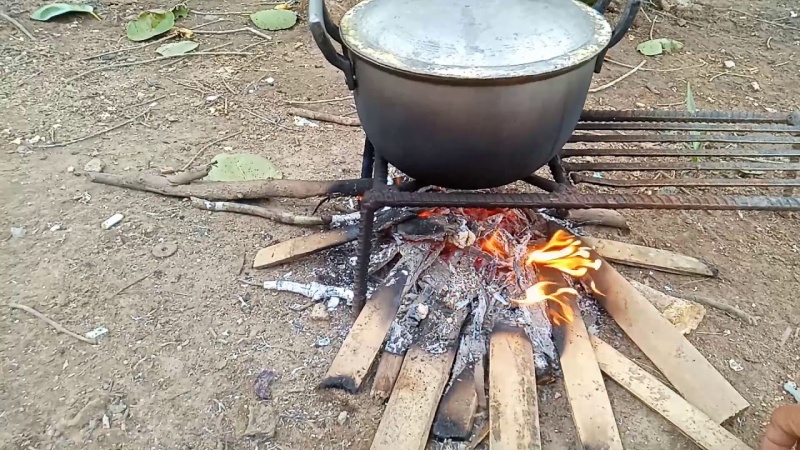
charcoal and firewood
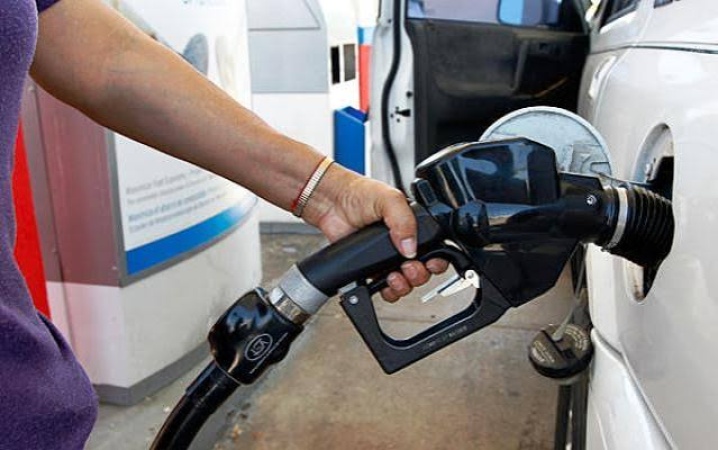
The continued increase in the price of cooking gas by marketers is pushing many Nigerians to use charcoal and firewood.
The Nigerian Association of Liquefied Petroleum Gas Marketers (NALPGAM) had warned that persistent increases in cooking gas prices could trigger widespread public dissatisfaction if urgent interventions are not introduced.
The association said marketers are grappling with soaring depot prices, supply constraints, logistics challenges and rising operational costs.
According to NALPGAM, marketers currently pay between N25.2 million and N26.2 million for 20 metric tonnes of LPG, depending on location, a development that has significantly increased the cost of supplying the product to consumers.
NALPGAM noted that the rising cost of LPG has imposed severe hardship on households, food vendors and small businesses that rely on cooking gas for their daily operations.
It warned that many families could be compelled to abandon LPG and return to traditional cooking fuels such as firewood and charcoal if prices continue to rise beyond their purchasing power.
According to the association, such a shift would reverse years of progress made in promoting cleaner and safer cooking energy across the country.
It stressed that ongoing government efforts and public awareness campaigns encouraging the adoption of LPG are under threat as affordability continues to decline.
The marketers further called for urgent measures to address the challenges affecting the sector, warning that failure to stabilise prices could undermine national clean-energy goals and increase dependence on environmentally harmful cooking alternatives.
Kaduna residents lament rising cost
Maimuna Sani, a mother of two based in Kaduna, said she now uses cooking gas only in the mornings because it is safer and allows her to prepare breakfast quickly so her children can get to school on time. On weekends, however, she relies on charcoal due to the high cost of gas.
She said charcoal, which sells for between N200 and N500 per measure, has become a cheaper alternative.
“To be honest, charcoal is more economical than gas. With just N200 worth of charcoal, you can prepare a meal, unlike gas,” she said.
Maimuna recalled that the last time she bought gas was about a month ago, when it sold for N1,200 per kilogram. She spent N14,000 on the purchase and expressed concern over the latest increase in price.
Another resident of Dan Mani community, Kaduna, Badamasi Isa Adamu, said his household alternates between gas and charcoal depending on available income.
“When I have money, I buy gas, but when I don’t, I go back to charcoal. At the moment, we only use gas to boil water in the morning so the children can drink tea before going to school.
“For the rest of our cooking, we use charcoal. Even when I buy gas, I usually purchase only three or four kilograms. The last time I bought it, it cost N1,400 per kilogram, and it has already finished,” he said.
Similarly, Bello Idris said gas in his home is now reserved mainly for boiling water, while charcoal is used for most cooking.
“I recently bought gas at N1,600 per kilogram. Honestly, it pains me because I struggled to afford it,” he said.
He lamented that many households had embraced cooking gas because of its convenience, but rising prices were forcing them back to charcoal.
“Now it has become too expensive again, which is why we have returned to using charcoal. The government should help make it more affordable for ordinary people,” he added.
Charcoal becoming expensive in Kano
Checks by Daily Trust in Kano revealed that the price of a kilogram of gas is between N1,500 and N1,550, as against the N1,100 it sold last month.
Aisha Suleiman, a mother of five in Kano, said she abandoned gas after struggling to refill her cylinder.
“We used to buy gas at N1,100 per kilogram, but now it is very high. I cannot afford it. I switched to charcoal. A bag costs around N8,000 and lasts me almost two weeks. It is stressful, but at least I can cook without worrying about refilling every few days,” she explained.
Malam Ibrahim Kabiru said firewood has become his family’s main option since his house is spacious enough to accommodate cooking outside the kitchen.
“Gas is now for the rich. I go to the outskirts to buy firewood at N1,000 per bundle. It lasts longer than gas, though it produces smoke, and my children complain, but we have no choice. Even charcoal is becoming expensive nowadays,” he said.
Another housewife, Maryam Ali, who also sells charcoal, said their sales have increased recently due to the way people are switching to it from gas.
She said, “Now, I sell my charcoal almost two times faster than I used to do just a few weeks ago, courtesy of the cooking gas price hike. People are complaining and say it is not affordable,” she added.
Maryam also said many people opted for charcoal and firewood during Sallah when people needed to fry their meat amidst the price hike.
Charcoal making waves in Rivers, Bayelsa, Borno
Most residents of Port Harcourt, Rivers State and Yenagoa, Bayelsa State are resorting to using charcoal stoves to prepare their foods.
A resident of Port Harcourt, Rivers State capital, Victory Elechi, said since the price of gas is becoming unaffordable and kerosene is even costlier, the best way to manage her family in terms of preparing food is to make use of a charcoal stove.
She said for the past two weeks she has used the charcoal stove, it has been less expensive for her, instead of buying a kg of gas for N1,700.
“All I need now is to buy the charcoal at a cheaper rate, and of course, the stove is not costly either, it’s more affordable, and it doesn’t bring out smoke.
“Two of my neighbours have also purchased the charcoal stove, it’s the cheapest means to cook at the moment. When the gas price comes down, I can go back to using gas,” she said.
Ebide Elvis said the charcoal stove is just the best at the moment.
She said with the current economic realities in the country, it’s ideal for one to use what she can afford, adding that an electric stove would have been the best option if not for the challenge of epileptic power supply.
In Borno, some of the households interviewed said the high cost of gas has forced them to resort to using charcoal and firewood.
A housewife, Aisha Abubakar, said the price of gas has risen from N18,000 to N20,600 for 12.5kg within one week, which compelled her to abandon it.
“I bought a charcoal stove at the cost of N8,000 and a bag of charcoal for N8,500 and started using it. I’m now using it comfortably without any problem,” he said.
Abubakar said her only fear is the rumour going around that the price of charcoal will also increase.
“I don’t know how people will survive if the price of charcoal increases. I pray that the gas price will normalise so that we continue using it,” she said.
Another resident, Sadiq Haruna, said the cost of cooking gas is out of reach; therefore, they resorted to using charcoal and firewood.
“I now have peace of mind. I used to spend one-third of my salary on cooking gas. I bought a bag of charcoal for N9,000 with some firewood. For one week now, we have used less than one-fourth. It is very cheap and reliable,” he said.
Ahmed Aji, a charcoal dealer at Bulunkutu Tsallake, said that since the gas price went up, many people started patronising his business.
“I can assure you that, within one week, our sales have increased by 20 per cent,” he said.
Asked if the price of charcoal had increased, he said, “The price has not changed in the past one month,” he said.
Lagos residents turn to power stove
In Lagos, many households are turning to power stove and green gel as alternative cooking options amid the rising cost of Liquefied Petroleum Gas (LPG).
A power stove user, Kemi Adeniran, said the cooking system is highly affordable and has helped her cut cooking fuel expenses significantly.
“The power stove has reduced my cooking costs by about 70 per cent. In terms of heat intensity, what a gas cooker can do in 40 minutes, I can achieve in about 30 minutes with a power stove. I spend between N3,000 and N4,000 monthly, so it helps me save money,” she said.
Adeniran explained that the stove runs on pellets, which serve as its primary fuel source.
“How much you consume depends on family size and how often you cook. To ignite it, the pellet acts as a catalyst, and I either use paper or fire starters,” she added.
Another resident, Ruth Dahunsi, said her mother uses Green Gel as an alternative cooking fuel because it is cheaper than cooking gas.
She, however, noted that the product is not widely available.
“Green Gel is not very common and can only be found at a limited number of filling stations,” she said.
The founder of PowerStove Energy, Okey Esse, said demand for the product has increased considerably as more households seek affordable alternatives to LPG.
“Both low- and middle-income households are feeling the impact of rising prices of cooking gas and charcoal. The cost of both energy sources has gone up significantly,” he said.
According to him, the power stove has maintained a stable retail price of N300 per kilogram over the past three years despite rising costs in the energy market.
“What we have guaranteed our customers and prospective users is price stability. For the past three years, there has been no variation in our retail price,” he added.
In Gombe state, the recent hike in the price of Liquefied Petroleum Gas (LPG), popularly known as cooking gas, is forcing many households to reduce consumption and resort to alternative cooking fuels such as charcoal and firewood.
The cost of cooking gas, which has risen in recent weeks from around N1,200 per kilogram to around N1,500, has put additional pressure on families already struggling with the high cost of living.
Some residents who depend on cooking gas for domestic use said they have been forced to cut down on consumption due to the rising costs.
According to Usman Adamu, a cooking gas user, many families can no longer afford the quantities they previously purchased.
He said, “Now, instead of people buying 5kg or 12 kg, people are forced to buy less than that, thereby reducing the period the refilled cylinder could last in their respective homes.
“Refilling a 12kg cylinder that costs around N14,000 and usually lasts a month could no longer be possible, because of the high cost, people are now buying what they can afford. As such, they have to combine it with charcoal or firewood. The increase in price has really affected us.”
Another resident, Kamal Adamu, said households are adopting strategies to manage the increasing energy expenses.
“Due to the increase in cooking gas prices, we now use gas only when necessary and rely on charcoal for other cooking needs as a way of managing household expenses,” he said.
Our correspondent reports that owners of cooking gas outlets are complaining of low patronage because of the sudden increase in the price.
Malam Baba Alhaji, who operates a cooking gas outlet near Tashan Dukku, said an increase in the wholesale prices has negatively affected sales and threatened the livelihoods of gas retailers.
“From March until recently, we sold one kilogram at around N1,240, but now it is being sold at between N1,500 and N1,600 in some places. Because of this, customers have reduced significantly, and it is becoming a serious threat to our business,” he said.
Baba Alhaji added that the development also raised concerns among residents and environmental advocates, “who fear that increased dependence on charcoal and firewood could worsen deforestation and expose families to health risks associated with indoor air pollution.”
He, therefore, urged the government and relevant agencies to implement measures that would stabilise the cooking gas prices and make cleaner energy sources more affordable for households.
Residents in Jos, Plateau State, said they have resorted to using charcoal instead of gas, stressing that charcoal is cheaper and the only alternative to cooking gas.
Maman Hasan, a housewife, said she had resorted to using charcoal since the rise in the price of cooking gas because “I cannot afford gas. It is very expensive.”
Another resident, Inusa Ibrahim, said: “The only alternative for us now is charcoal. We don’t have another option. Even firewood is more expensive compared to charcoal. I am now using charcoal.”
Women risk health challenges
Speaking with Daily Trust, Prof. Dayo Ayoade, an energy law expert at the University of Lagos, said the problem is all part of the entire energy paradox of Nigeria, where a very wealthy country struggles to supply energy resources to its people at a reasonable price.
He added that the cause of the increase is global due to the Middle East conflict and the closure of the Strait of Hormuz and internal supply chain constraints.
He added that low- and middle-income households are particularly vulnerable to the high cost of cooking gas, adding that without access to clean and more convenient LPG usage, people will now retreat to traditional methods such as charcoal and firewood.
He said this mode of cooking has long been associated with respiratory diseases, carbon monoxide poisoning and even lung cancer risk.
He said, “So, women and young children, girls especially, bear a very significant portion of the risk because they’re the ones that stay in the kitchen, and also they’re the ones that will go and look for this firewood, meaning that they may not have access to education anymore, and it will reverse all we have been saying about girl child education.
“Also, using traditional fuel bears significant environmental risks and implications. For instance, we have a lot of deforestation going on, the destruction of the habitat of both animal and plant life.
“We’ve lost a lot of biodiversity over the years because of this, something we can never recover again. Also, we have the climate change aspects because burning pollutants will aid global warming, which is an issue that cannot be ignored.
“And then economically, vulnerable families who are poor already now have to spend their scarce resources on healthcare and all these challenges. This means that the overall productivity of the economy suffers, and that’s a big problem.”
He urged the federal government to intervene in the LPG price to stabilise it.
“If they want to provide subsidies, which is not a good idea in the long run, that’s one option on the table. However, they can improve the logistics for transporting, production, and storage of LPG, which will always be useful. And of course, we need to adopt and keep using clean cooking technologies to ensure we have sustainable development in line with SDG 7, which is on affordable and clean energy,” he said. (Daily Trust)