ADAD
ADAD
Updating your news feed...
NEWS EXPRESS is Nigeria’s leading online newspaper. Published by Africa’s international award-winning journalist, Mr. Isaac Umunna, NEWS EXPRESS is Nigeria’s first truly professional online daily newspaper. It is published from Lagos, Nigeria’s economic and media hub, and has a provision for occasional special print editions. Thanks to our vast network of sources and dedicated team of professional journalists and contributors spread across Nigeria and overseas, NEWS EXPRESS has become synonymous with newsbreaks and exclusive stories from around the world.


















Loading banners
Loading banners...

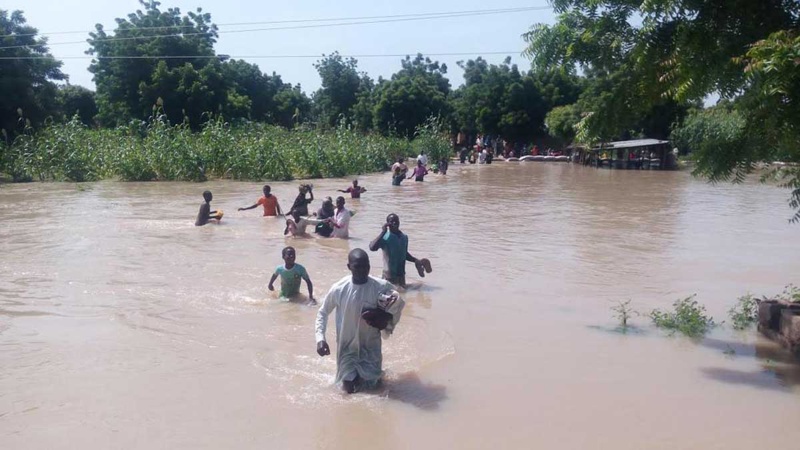
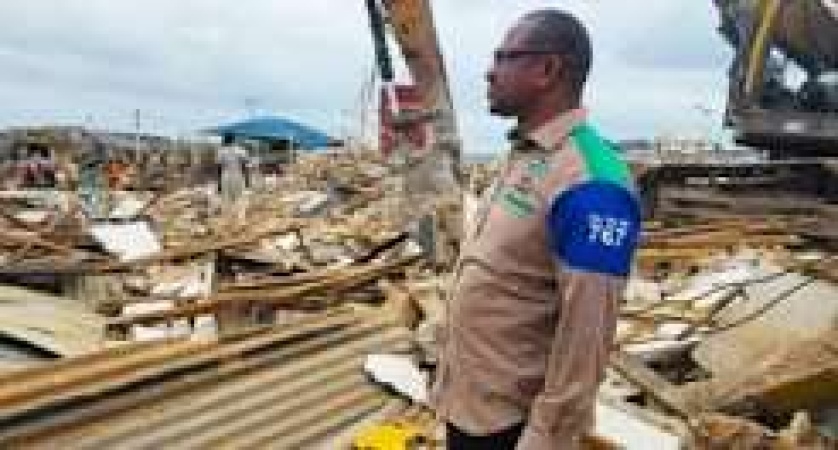
A flooded community
Ahead of the fresh round of devastating flooding in this year’s rainy season, estimates show that states are still reeling from recent losses totalling N13 trillion.
Besides human lives, which are unquantifiable, the flooding episodes in 2024 and 2025 destroyed houses, infrastructure, agriculture, and the productivity of small businesses, totalling about $9.5 billion or N13 trillion.
While these costs remain uncovered, a new concern has emerged over the prediction that 19 to 33 states nationwide are at risk of severe cloudbursts in 2026.
Stakeholders applauded the Nigerian Meteorological Agency’s (NiMET) early warning alerts. They, however, said the routine nature of extreme weather requires a national emergency and strategic intervention to cushion the huge losses it causes.
Of note is the strategic use of the ecological funds nationwide, ecologically sensitive infrastructure, better land-use planning, enforcement of building regulations, and inadequate flood-control infrastructure.
Recall that some states, including Lagos, Adamawa, Akwa Ibom, and Benue, last year paid for the country’s slow adaptation to extreme weather.
According to the National Emergency Management Agency (NEMA), as of October 2025, at least 231 people have died, 607 have been injured, and more than 315,000 residents have been affected in 86 local government areas across 25 states.
The agency reports that 40,493 houses and 46,304 farmlands have been destroyed, with nearly 113,400 persons displaced nationwide.
While last year’s rainy season impact is lower than the catastrophic 2022 floods that displaced 1.4 million people, the frequency and spread of flooding show that the underlying risks remain largely unaddressed.
In Lagos State alone, NEMA estimated that more than 57,000 residents were affected during the rainy season, placing Nigeria’s commercial capital among the three worst-hit states alongside Adamawa and Akwa Ibom.
An analysis of recent reports by the World Bank, UNDP, and the Lagos Economic Development Update (LEDU 2025) estimated that the combined average direct and indirect costs of flooding nationwide between 2024 and 2025 could exceed N13 trillion.
The breakdown by sector shows that housing and property accounted for roughly N6.2 trillion (44 per cent) in damages from collapsed or submerged structures; Agriculture and food production suffered losses of N4.1 trillion (29 per cent), following the destruction of farmlands and crops across the Middle Belt and northern states.
Also, infrastructure, including roads, bridges, schools and energy facilities, accounted for about N2.3 trillion (16 per cent); livelihoods and services, such as informal trade, transport and manufacturing, accounted for the remaining N1.4 trillion (10 per cent).
The estimate reflects not only physical damage but also income losses, post-disaster reconstruction costs, and productivity declines. Analysts say these recurring shocks shave between 0.4 and 0.7 per cent off Nigeria’s yearly GDP growth.
Lagos, Africa’s fastest-growing megacity and home to more than 20 million people, faces a unique combination of urban flooding and coastal inundation. Last year’s rainfall, projected at up to 1,900 millimetres, overwhelmed drainage systems in parts of Ikorodu, Badagry, and Lagos Island.
Dire days ahead
A fresh NiMET warning predicted flash floods in 19 states. According to the agency, the affected states would include Lagos, Ogun, Oyo, Ondo, Ekiti, Edo, Delta, Rivers, Bayelsa, Akwa Ibom, Cross River, Imo, Anambra, Enugu, Ebonyi, Kwara, Nasarawa, and Zamfara.
The agency noted that the combination of early heavy rainfall and dry, hardened soil conditions could trigger dangerous surface runoff and sudden flooding in many urban and rural communities.
The latest alert comes after the Federal Government revealed that more than 14,000 communities spread across 33 states and the Federal Capital Territory could face severe flooding in 2026.
The warning has renewed fears of widespread displacement, infrastructure damage and humanitarian challenges if preventive measures are not urgently implemented.
Women, children and the elderly bear the heaviest burden of the climate change crisis. NEMA data indicated that nearly 143,700 children are among the 2025 victims, many now living in makeshift camps with limited access to health services.
Public health experts fear outbreaks of waterborne diseases such as cholera and typhoid as stagnant pools persist in densely populated areas.
Agricultural economists warned that continued flooding could worsen food insecurity and inflation. The destruction of over 46,000 hectares of farmland, including rice paddies, maize and cassava fields, threatens both rural incomes and national grain reserves.
NiMet linked the extreme rainfall to changing climate patterns and ocean warming, stressing the need for improved early warning dissemination and for adaptive farming techniques such as raised beds, flood-tolerant crop varieties, and watershed management.
Urgent, strategic interventions needed
There are concerns that states have not utilised their ecological fund, a component of Nigeria’s federal revenue allocation designed to tackle environmental challenges such as erosion, desertification, flooding, oil spills, and drought.
According to the National Bureau of Statistics (NBS), the 36 states received N22.90 billion as ecological fund from the Federation Account Allocation Committee (FAAC) between January and May 2025. There is little to show for these allocations.
In a strategic move to curb the devastating effects of flooding, the Lagos State government has recently launched a flood risk insurance policy to provide rapid financial relief to vulnerable residents. The policy would enable the government to promptly provide direct cash transfers and emergency support to affected communities.
Governor Babajide Sanwo-Olu said about four million vulnerable residents across seven local government areas would benefit in the initial phase.
The policy provides up to $7.5 million in coverage per flood event, creating a financial safety net for high-risk communities. The beneficiaries would not need to apply or pay premiums, as the scheme is structured as a state-backed community protection system.
Sanwo-Olu said the government would leverage residents’ registration and social databases to quickly identify and reach people during emergencies.
Also, environmentalists urged a shift from emergency relief to resilience-building. They recommend channelling part of the federal and state ecological funds into long-term flood management infrastructure, such as retention basins, wetland restoration, and urban drainage expansion.
Development partners are also stepping in, with the World Bank’s ongoing Nigeria Erosion and Watershed Management Project (NEWMAP) and the Hydro-Meteorological Resilience Project planning to improve forecasting capacity and flood-control works in high-risk states.
However, access to climate-finance instruments remains limited. Nigeria has yet to fully operationalise its National Climate Change Fund or establish a functional insurance mechanism for flood-related losses. As one analyst put it, “We spend billions every year rebuilding what could have been prevented at half the cost.”
The Federal Government also pledged to integrate flood-risk reduction into the Renewed Hope Agenda, with commitments to update urban planning codes, enforce right-of-way protections for drains, and improve cross-border dam management with Cameroon. Lagos State, for its part, plans to expand its stormwater channels and strengthen the Drainage Enforcement Agency (LASDREA) to curb illegal reclamation of floodplains.
An environmentalist, Dr Godwin Ojo, told The Guardian that early warning signals and emergency alerts are commendable but insufficient for effective flood governance.
“Government must rise to the challenge of flood disaster prevention, rescue, and rehabilitation. Local communities in rural areas have limited chances of survival due to the absence of basic infrastructure to support temporary evacuations. Relief measures should meet the real needs of survivors, not serve as tools for cheap politics or publicity,” he said.
Ojo identified the persistent dumping of solid waste into drainage systems as a major urban menace that worsens flooding.
He called for orientation programmes and public enlightenment campaigns to address the clogging of drainage channels.
He added that millions of dollars are available globally to address climate vulnerabilities and impacts. “Flood control projects and compensation to victims qualify for adaptation funding support to build prevention infrastructure and resilience,” he explained.
However, he lamented that “funding procedures remain tedious and cumbersome and should be drastically simplified to allow countries from the Global South to access adaptation resources.”
Ojo observed a growing awareness of climate-resilient agriculture and flood-resistant infrastructure but said more deliberate investment is required. “Resources should be channelled into building climate-resilient infrastructure,” he added.
The Director of Programmes, Communication for Development and Social Change (CDSC), Dr Emmanuel Okezie, attributed recurring flood disasters to fragmented responsibilities and weak institutional coordination.
“Flood risk is shared across ministries of water resources, environment, works, and land planning, as well as NEMA and state agencies, but overlapping mandates and ad-hoc coordination create gaps in prevention, early warning, and recovery,” he said.
Okezie explained that while relevant laws and standards exist, enforcement remains inconsistent, especially at the local level. Many agencies, he noted, lack the capacity, standard operating procedures, and financing to act on early warnings.
He called for a legally anchored national flood governance framework that clarifies institutional roles, sets enforceable land-use and drainage standards, and establishes a national flood coordination unit with dedicated funding.
Okezie urged the Federal Government to publish mandatory national standards for drainage design, minimum setbacks from waterways, flood-proofing of buildings, and green-blue infrastructure guidelines.
He further advocated adopting climate-smart cropping systems that promote flood-tolerant rice and maize varieties, raised-bed planting, rotational cropping, improved farmland drainage, and agroforestry buffers, alongside sustained investment in breeder programmes and seed distribution.
The Chairman, Board of Trustees, Nigerian Environment Study/Action Team (NEST), Prof. Chinedum Nwajiuba, said the climate has undergone a tremendous change that is not in line with the season.
He said this may affect the planting season and agricultural production in several states. (The Guardian)