ADVERTISEMENT

ADVERTISEMENT

ADVERTISEMENT

ADVERTISEMENT

Updating your news feed...
NEWS EXPRESS is Nigeria’s leading online newspaper. Published by Africa’s international award-winning journalist, Mr. Isaac Umunna, NEWS EXPRESS is Nigeria’s first truly professional online daily newspaper. It is published from Lagos, Nigeria’s economic and media hub, and has a provision for occasional special print editions. Thanks to our vast network of sources and dedicated team of professional journalists and contributors spread across Nigeria and overseas, NEWS EXPRESS has become synonymous with newsbreaks and exclusive stories from around the world.
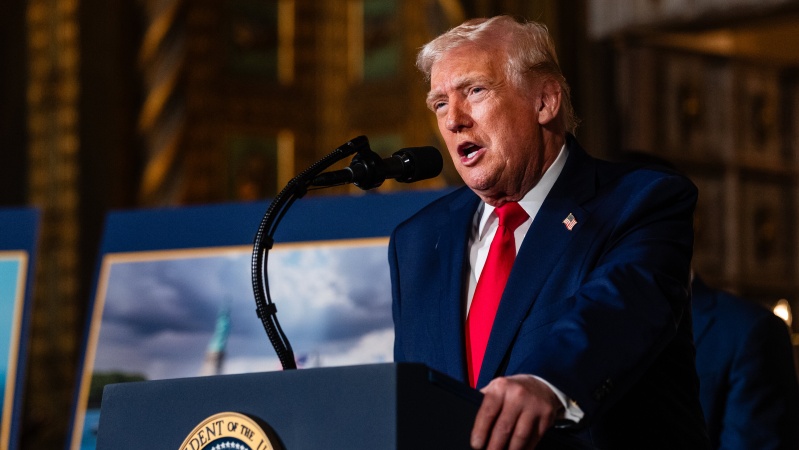
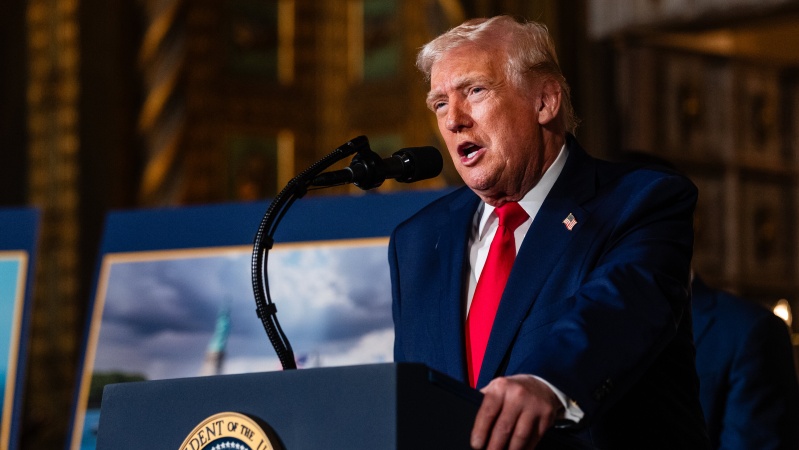
US President Trump
•Trump orders Pentagon to protect Nigerian Christians targeted by ISIS – Hegseth
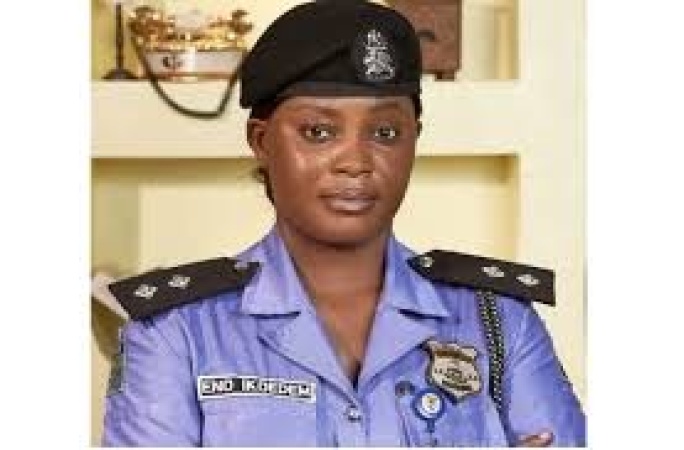
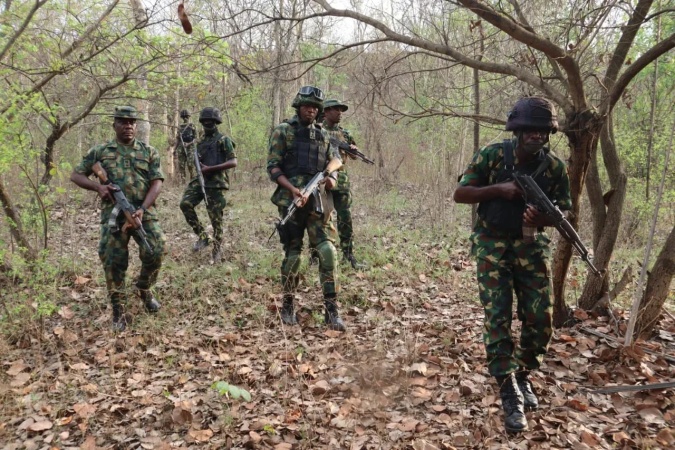
The US Commission on International Religious Freedom, USCIRF, yesterday accused some police and army officers of colluding with Fulani militias in deadly attacks and mass abductions targeting religious communities across Nigeria.
It also urged US Congress to bar individuals lobbying on behalf of foreign governments Washington had blacklisted for severe religious freedom violations from receiving payment for such services.
This is even as US Secretary of War, Pete Hegseth, revealed yesterday that President Donald Trump has ordered the Pentagon to prioritise Nigerian Christians targeted by ISIS, adding that the directive quietly led to the killing of ISIS’ second-in-command in Nigeria.
“There’s a lot of things we do that the media pays attention to, and a lot of things that the president empowers the department to do on behalf of the American people, that he deserves great credit for,’’ he said.
In a May 2026 report, titled “Non-state Violators of Religious Freedom in Nigeria: Fulani Militants”, the US commission further stated that the Nigerian government censorship had hindered accurate analysis of the identities and motivations of the armed groups violating religious freedom.
However, efforts to get reactions from Force headquarters and its Defence counterpart in Abuja yesterday proved abortive as spokesmen of both agencies neither picked telephone calls nor replied text messages sent to their mobile phones.
But the report stated: “The fates of all these kidnapping victims, like so many others, remain unknown to the public due to the sensitivity of ransom negotiations and, in some cases, possible collusion between perpetrators and some officials from the police and/or army.
“Further complicating matters is the fact that both conflicting media narratives and reported government censorship have hindered accurate analysis of the identities and motivations of the alarming number of armed nonstate actors that violate religious freedom in Nigeria.
“Some observers have argued environmental and economic factors as the driving force behind Fulani militants’ acts of violence, while others have suggested that these actors are engaged in a concerted campaign of outright genocide against non-Muslims, especially Christians.
“In fact, multiple and overlapping factors, including religion in many cases, likely spur Fulani militants to attack communities or individuals.’’
Escalating violence
The commission also warned that escalating violence in Nigeria’s Middle Belt had driven at least 1.3 million people from their homes, as armed attacks continued to destabilise several states in the region.
It estimated that about 30,000 armed actors operate across the country in loosely organised groups, ranging from 10 to 1,000 members, with activity concentrated in the North-West, Middle Belt and parts of the south.
The report said the scale of displacement reflected what it described as a persistent and widening security crisis affecting millions of residents across central Nigeria.
It stated further: “These actors operate in a variety of contexts and with a multiplicity of likely aims and motivations. While many Fulani militant groups wage independent attacks, others periodically coordinate with a wide range of other actors, from conventional bandit gangs seeking financial enrichment to recognised terrorist organisations that espouse a violent interpretation of Islam.
“These Fulani militant attacks, among those of other actors, have forced at least 1.3 million people in the Middle Belt off their lands and into overcrowded, unsanitary, and unsafe conditions in displacement camps.”
The commission noted that the militants frequently attack isolated rural communities at night using motorcycles, automatic weapons and machetes.
“They often wield machetes and descend on vulnerable communities during the night, eliciting terror as a way to force victims to quickly leave and to achieve greater control of desired land,” the report said.
According to the report, the violence has been driven by repeated attacks on rural settlements, often leaving entire communities abandoned as residents flee for safety.
The commission described the armed actors as operating without centralised leadership but frequently carrying out coordinated raids on vulnerable rural communities across several states.
The report detailed several attacks carried out in 2025 and early 2026, including mass killings in Benue and Plateau states.
“One attack in Benue in June 2025 killed at least 200 people, including internally displaced persons living in a Catholic mission,” the report said.
It equally also cited the massacre in Yelwata, Benue State, in 2025, where more than 200 Christians, “mostly sleeping women and children,” were reportedly killed and over 3,000 people displaced.
The commission said militants deliberately timed some attacks to coincide with Christian religious holidays, saying “militant actors have often carried out operations during Christian holidays such as Christmas or Easter to further maximise the psychological impact.”
It added that in February 2026, suspected Fulani militants reportedly killed at least 32 people in Niger State and attacked Holy Trinity Parish in the Kafanchan Diocese of Kaduna State, killing three people and abducting 11 others, including parish priest, Father Nathaniel Asuwaye, while also documenting kidnappings targeting both churches and mosques.
“In February 2026, armed men kidnapped an imam and seven worshipers from a mosque in Plateau,” USCIRF stated, adding that the kidnappers demanded a ransom of N16m.
“On Easter Sunday, Fulani militants reportedly killed five worshippers at two churches in Kaduna State while abducting 31 others,” the report stated.
The commission said conflicting narratives surrounding the violence had complicated efforts to determine the motivations behind the attacks, and criticised the federal and state authorities for what it described as inadequate responses to the violence.
It stated further that some Christian advocates accused security agencies of showing favouritism toward Muslim communities during investigations and security operations, noting that governors from 11 states launched an initiative in June 2025 to establish ranch lands for herders in a bid to reduce clashes over grazing routes and farmland.
At the federal level, the US commission linked renewed Federal Government’s action to the October 2025 decision by US President, Donald Trump, to designate Nigeria as a Country of Particular Concern, CPC, over religious freedom violations.
Congress asked to bar lobbyists working for listed countries
The commission also urged Congress to bar individuals lobbying on behalf of foreign governments Washington had blacklisted for severe religious freedom violations from receiving payment for such services.
In its recommendations to lawmakers, the commission called for legislation “prohibiting any person from receiving compensation for lobbying on behalf of foreign governments of countries the State Department designates as Country of Particular Concern, CPCs.”
CPC, or Country of Particular Concern is the State Department’s designation for the worst violators of religious freedom.
Nigeria was re-designated as CPC in 2025 by President Donald Trump for tolerating systematic and ongoing violations of religious freedom.
The proposal targets lobbying efforts aimed at softening U.S policy toward those governments.
The latest proposal, part of a broader effort aimed at making religious freedom a core pillar of U.S foreign policy under the Trump’s administration, comes amid parallel lobbying efforts by the federal government and opposition figures in Nigeria to shape US policy and perception, ahead of the 2027 elections.
Nigerian political actors across the government and opposition have stepped up spending on US lobbying firms, filing contracts under the Foreign Agents Registration Act to influence Washington on security, trade and political messaging.
Early this year, the Federal Government contracted Washington-based DCI Group in a $9 million agreement to communicate its efforts to protect Christian communities and counter what it called misinformation about religious violence.
The deal, executed on December 17, 2025, through Aster Legal on behalf of National Security Adviser, Nuhu Ribadu, runs for six months through June 30, 2026, with an automatic renewal clause.
Nigeria paid a $4.5 million retainer on December, 2025, with the same amount due for the second half of the contract. The arrangement covers $750,000 monthly payment for professional services and expenses.
DCI Group’s mandate includes engaging US officials on Nigeria’s counter-terrorism operations and its handling of religiously motivated violence, with the stated goal of sustaining US support in the fight against jihadist groups in West Africa.
Similarly, former Vice President Atiku Abubakar engaged Von Batten-Montague-York, L.C. in a 12-month, $1.2 million deal signed March 10, 2026, and registered with the DOJ’s FARA Unit on April 1, 2026.
The firm was tasked with providing strategic advisory, congressional and executive branch engagement, and reputational management.
Objectives outlined in the filing include advancing understanding of Atiku’s leadership vision, strengthening his reputation in Washington, and countering narratives from incumbent Nigerian authorities.
The commission further urged Congress to authorise individuals legally residing in the U.S to sponsor relatives from persecuted and religious minority groups for resettlement in the country.
It enjoined the lawmakers to fund efforts addressing the humanitarian fallout of religious persecution, including “large populations displaced by religious persecution, including in refugee and internally displaced person, IDP, camps in countries such as Bangladesh, Iraq, Nigeria, and Sudan.”
It said the funding would cover education, healthcare, and other lifesaving initiatives.
The commission prescribed a full accounting of U.S. foreign assistance to CPC and SWL countries, including Nigeria and Sudan, “to determine whether such assistance supports or hinders efforts to advance religious freedom.”
On the executive side, the commission urged the administration to prioritise religious freedom in foreign policy and assistance programmes, and advocated release of prisoners of faith.
MBF agrees with report
Reacting to the report yesterday, National President of the Middle Belt Forum, MBF, Dr. Bitrus Pogu, said the MBF had long maintained the same position, insisting that some individuals within the nation’s security architecture are aiding the insurgents.
He said: “We have always maintained that there are people within the security services who are aiding insurgents in this country.
“It is a complex network. When you cannot explain how some things happen, especially seeing insurgents with military grade, armored personnel carriers, and lots more. We have seen that on the Plateau.
“Remember, was it 2019 or thereabouts, General T Y Danjuma said they (security men) are colluding with the insurgents. All these things are based on evidence. It is a known thing that we have people within our security network who are colluding and aiding these people.
“People within our political framework, governors, and so on, who are also aiding insurgents. It is an unfortunate development. Unfortunately, our government at the center, for whatever reason, seemed to have its hands tied and unable to do anything.
“Remember before President Jonathan left office, he said there were Boko Haram members or agents within his government. So Nigeria, whatever they (US panel) says in that regard, is justifiable. It’s known.
“All our prayer is that since they have greater intelligence and records of such things more than we do, in our cooperation or partnership with them, let them assist Nigeria in weeding out these criminal elements, so we can stop this, because every day, delay in this process strengthens the insurgents and they get more arms and ammunition as we go on.
“Again the sabotage within the security forces allows them to take over military installations and that also strengthens them as time goes on. So any delay is dangerous.
“We pray that with the information given now and the intelligence they (US) have, let them come to our aid and weed this country of the menace of insurgents. The conspiracy is too large for peace-loving components of the security agencies to deal with.
“You cannot explain why with all the technology available, the insurgents can just go in, run over even a brigade and get away with it. It means there are insiders within the security apparatus that are giving them intel and assisting them to demolish and destroy the country from within.
“So I agree with what the US Religious Freedom Panel said. And we pray that something will be done as early as possible to dismantle the criminality, to ensure that all arms that were imported, which have been diverted, are identified as well as who released the arms to the terrorists within the security forces and to do the needful.
"No stone should be left unturned in addressing this terrible conspiracy against the Nigerian nation.’’
Commission’s claim should not be dismissed—Afenifere
In its reaction, the pan-Yoruba socio-political organisation, Afenifere, said the commission’s claim should not be dismissed, adding that it was not surprised by its findings.
Afenifere’s National Publicity Secretary, Mr Jare Ajayi, said: “This is because of the strong belief that the nature of terrorism bedeviling Nigeria would not be festering for this long without complicity from some powerful quarters.”
Wondering how difficult it would be for a conflagration to be active over a stream without the handiwork of some forces, Ajayi stated that government and patriotic security agencies in Nigeria seem very determined to end banditry in the country.
“With the vows by the President and top security officers, one has the feeling that the government is determined to end terrorism in Nigeria. When President Bola Tinubu appointed General Christopher Musa, (retd), as Minister of Defence, we had a lot of hope that within months, a total stop would be put to terrorism and banditry in the country.
“Unfortunately, there seems to be a spike, rather than reduction. The reason for this could be rooted in sabotage and complicity from within and from without. This tends to buttress the alarm raised by the US Commission,” he said.
Ajayi stated that Afenifere had for about a year been calling the attention of those concerned to these areas, the need for security agencies to look inward.
The search could involve some powerful politicians, as insinuated by the Senate President, Senator Godswill Akpabio.
While the US Commission’s assertion may be uncomfortable, he said: “It is very important not to dismiss it but to use it a beacon with which to comb all areas.” (Vanguard)