Updating your news feed...
NEWS EXPRESS is Nigeria’s leading online newspaper. Published by Africa’s international award-winning journalist, Mr. Isaac Umunna, NEWS EXPRESS is Nigeria’s first truly professional online daily newspaper. It is published from Lagos, Nigeria’s economic and media hub, and has a provision for occasional special print editions. Thanks to our vast network of sources and dedicated team of professional journalists and contributors spread across Nigeria and overseas, NEWS EXPRESS has become synonymous with newsbreaks and exclusive stories from around the world.













Loading banners
Loading banners...


Mudashiru Obasa, Desmond Elliott, Noheem Adams, Fatai Mojeed and Setonji David
The outcome of the recent House of Assembly primaries of the Lagos chapter of the All Progressives Congress (APC) has exposed a power realignment within the ruling party, signalling not just the exit of some lawmakers, but the emergence of a new political order ahead of 2027. SHAKIRAT ADUNOLA reports.
Three critical factors allegedly shaped the outcome of the Lagos State House of Assembly primaries conducted by the ruling APC long before the exercise held last week.
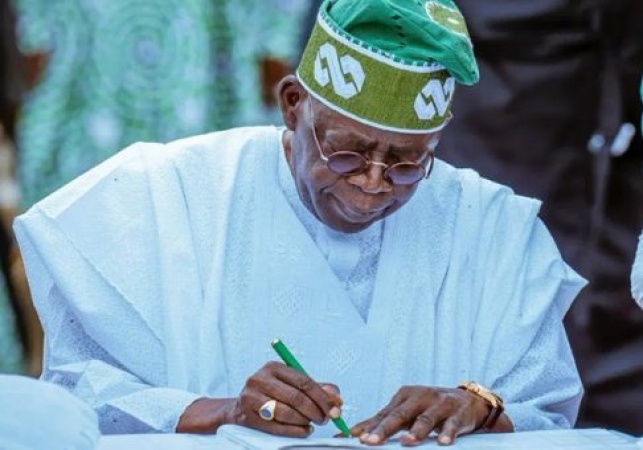
At the top of the list was the attempted impeachment of outgoing Speaker, Mudashiru Obasa, by some lawmakers early last year, a crisis that reportedly required the intervention of President Bola Tinubu before it was resolved.
From indications, many lawmakers believed to have participated in the failed plot were denied return tickets.
Secondly, the supremacy battle between the Justice Forum and the Mandate Group significantly affected the fortunes of some lawmakers, particularly members of the Mandate Movement, many of whom emerged as casualties of the internal power struggle.
The third factor was the position of party leaders, especially President Tinubu and members of the Governor’s Advisory Council (GAC), who were said to favour the injection of fresh minds into the Lagos Assembly chamber, come the next political cycle.
Far from being ordinary intra-party contests, the primaries reflected intense elite negotiations, factional supremacy battles, and the aftershocks of the 2025 Lagos Assembly crisis, which nearly fractured the state’s long-standing political structure.
The official list of successful candidates released by the Lagos APC chairman, Cornelius Ojelabi, confirmed the scale of the political earthquake.
Out of the 40 seats in the Lagos State House of Assembly, 14 sitting lawmakers failed to secure return tickets, while 24 incumbents survived the primaries and remain positioned for re-election, subject to victory at the general polls. Two lawmakers had earlier opted out of the race.
The development represents one of the largest legislative turnovers in Lagos politics since the return to democracy in 1999 and effectively signals the dismantling of old alliances that had dominated the Assembly for years.
Beyond the numbers, however, the primaries revealed a deeper battle for the soul of the Lagos APC, involving competing interests loyal to President Bola Tinubu, Chief of Staff to the President Femi Gbajabiamila, Speaker Mudashiru Obasa, influential local government chairmen, and the powerful Governance Advisory Council (GAC).
One of the most symbolic casualties was actor-turned-lawmaker Desmond Elliot, who lost the APC ticket for Surulere Constituency I to Barakat Odunuga-Bakare in a crushing defeat widely interpreted within party circles as political retribution.
Elliot’s loss was not merely an electoral one. It was tied directly to the failed impeachment attempt against Obasa earlier in 2025, which sharply divided the Assembly into rival camps.
During the crisis, Elliot was alleged to have aligned with anti-Obasa lawmakers, a move that reportedly damaged his relationship with Gbajabiamila, who is believed to have played a major role in the political calculations that followed.
The scale of the defeat, 11,385 votes against Elliot’s 270, underscored the extent to which elite forces had mobilised against him. For many observers, the result reflected how quickly political structures collapse in Lagos once a lawmaker loses the backing of dominant caucuses.
The primaries also exposed the Assembly leadership’s vulnerability. Three principal officers of the House lost their return tickets, including Majority Leader Noheem Adams, Chief Whip Fatai Mojeed, and Deputy Chief Whip Setonji David.
Their defeats highlight a fact of Lagos politics: legislative prominence offers little protection once party structures withdraw support. In the APC, survival is often determined less by public popularity than by continued acceptance within the intricate web of party caucuses, local government power blocs and elite political families.
The fallout from the 2025 Assembly crisis appeared to shape many of the outcomes. Following the failed attempt to remove Obasa as Speaker, lawmakers perceived to have sympathised with the anti-Obasa camp reportedly faced intense opposition during screening exercises, consensus arrangements and delegate mobilisation.
What eventually emerged was less a conventional primary election and more a loyalty test designed to reassert party discipline after the embarrassment of the Assembly rebellion.
The political restructuring became even more evident in Agege, Obasa’s long-time stronghold. The Speaker himself abandoned the Assembly race to secure the APC ticket for the House of Representatives, a move many insiders interpreted as both strategic survival and a preparation for a broader post-2027 political equation.
Ironically, despite Obasa’s influence, several candidates allegedly backed by his Mandate Movement faction reportedly lost in parts of Agege, further exposing cracks within one of Lagos APC’s oldest political blocs.
For decades, Lagos APC politics has revolved around two dominant caucuses, the Mandate Movement and the Justice Forum. But the outcome of the primaries suggested that the balance may now be tilting significantly toward the Justice Forum tendency and allied grassroots structures controlled by local council chairmen.
Across several constituencies, former council chairmen, younger politicians and technocrats displaced sitting lawmakers with surprising ease. In places such as Kosofe, Mushin, Oshodi-Isolo and Lagos Island, fierce contests exposed growing tensions between entrenched political figures and emerging grassroots figures.
The primaries also confirmed the growing influence of local government structures in determining political survival. Many incumbents reportedly lacked independent ward networks beyond the support of godfathers and party leaders. Once elite backing weakened, their grassroots mobilisation machinery collapsed almost instantly.
This reality has increasingly transformed Lagos politics into a system where incumbency alone no longer guarantees survival. Instead, alignment with dominant caucuses, local government chairmen and influential federal actors has become the true currency of political relevance.
Another major factor behind the shake-up was the APC’s strategic recalibration ahead of 2027. Following the surprising performance of the Labour Party in Lagos during the 2023 elections, the ruling party appears determined to inject younger, media-friendly and grassroots-oriented figures into its legislative structure to reconnect with urban voters, especially disillusioned youths.
As a result, several younger aspirants with stronger welfare networks and deeper local visibility were preferred over long-serving lawmakers viewed as politically stagnant or disconnected from grassroots realities.
The return of consensus politics also shaped the process. Although APC officially conducted primaries, many outcomes were believed to have been predetermined through negotiations among powerful party leaders.
Aspirants without access to dominant caucuses struggled to survive these arrangements, reinforcing longstanding criticisms that Lagos politics remains heavily controlled by elite consensus rather than open democratic competition.
The implications of the primaries are that the 11th Lagos Assembly may emerge as a fundamentally different institution, with new loyalties, altered power centres, and weakened old blocs.
With Obasa exiting the Assembly and a number of principal officers removed, the contest for the next Speakership has effectively opened up. Attention is already shifting toward ranking lawmakers who survived the purge and possess both institutional experience and cross-caucus acceptability.
Among those frequently mentioned are Gbolahan Yishawu of Eti-Osa II, regarded as a technocratic and experienced legislator, alongside former Deputy Speaker Mojisola Meranda and Abiodun Tobun, all of whom secured return tickets and are seen as possible pillars of the next Assembly leadership.
Yet beyond the individual ambitions lies a more profound transition. The primaries revealed that Lagos APC is gradually entering a new succession phase where old loyalties are being renegotiated, grassroots structures are becoming more assertive, and survival increasingly depends on alignment with the evolving post-2027 power configuration within the ruling party.
For now, the primaries have done more than produce candidates. They have exposed the silent war for the future control of Lagos politics. (The Guardian)