Updating your news feed...
NEWS EXPRESS is Nigeria’s leading online newspaper. Published by Africa’s international award-winning journalist, Mr. Isaac Umunna, NEWS EXPRESS is Nigeria’s first truly professional online daily newspaper. It is published from Lagos, Nigeria’s economic and media hub, and has a provision for occasional special print editions. Thanks to our vast network of sources and dedicated team of professional journalists and contributors spread across Nigeria and overseas, NEWS EXPRESS has become synonymous with newsbreaks and exclusive stories from around the world.



Loading banners
Loading banners...

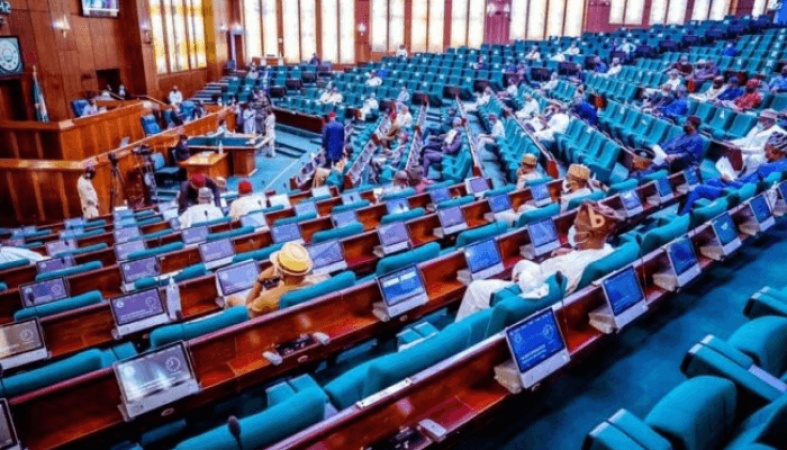
Nigeria’s proposed Sokoto-Badagry Super Highway, touted as a transformative economic corridor, is facing growing scrutiny following the approval of a $516.33 million external loan by the Federal House of Representatives.
The project, spanning about 1,068 kilometres from Illela in Sokoto State to Badagry in Lagos, is designed to link Northern agricultural zones with Southern commercial hubs, potentially boosting trade across seven States, namely, Lagos, Ogun, Oyo, Kwara, Niger, Kebbi and Sokoto.
Despite its promise, concerns persist over funding, execution, and long-term fiscal risks. With estimated costs running into trillions of naira, the highway ranks among the Country’s most expensive infrastructure projects.
Analysts warn that additional borrowing could strain Nigeria’s already high debt servicing obligations. On-site assessments reveal uneven progress. Some sections show active construction, while others remain untouched.
Communities along the corridor report mixed outcomes, from rising land speculation to modest commercial activity.
Although the Government says the project will enhance trade, security, and connectivity, stakeholders remain cautious about timelines, transparency, and whether the anticipated economic benefits will justify the mounting costs.
Chekwas Okorie, elder Statesman and former Presidential candidate, warned that the Administration of President Bola Tinubu risks future investigations by succeeding Governments over its handling of key governance issues.
In a telephone interview with BusinessDay, Okorie acknowledged the strategic importance of major infrastructure projects such as the Sokoto–Lagos Highway and the Lagos–Calabar Coastal Highway, noting that they could significantly enhance the movement of goods and services while opening up underserved regions.
However, he argued that the timing of the projects is questionable given Nigeria’s prevailing socio-economic and security challenges. Okorie maintained that resources earmarked for the road projects could have been more effectively deployed to tackle insecurity and boost agricultural productivity.
“Government may be a continuum, but incoming administrations often review past actions. There is always a day of reckoning. Decades after Abacha regime, looted assets are still being recovered. The same could happen here.
“The process is shrouded in secrecy. There was no open competitive bidding, and key details of the contracts remain undisclosed. That naturally fuels suspicion.
“Many Nigerians believe these projects are designed to serve ulterior motives, including preparations for the 2027 elections. That perception cannot be ignored,” he said.
Similarly, Martins Onovo, another former Presidential candidate, expressed reservations about the scale and timing of government borrowing, suggesting it raises legitimate concerns.
He cited the Lagos–Calabar Coastal Highway as an example, alleging cost discrepancies and lack of due process in contract awards.
“As a registered engineer, I can say the cost being quoted for some of these projects is far above what is typical. There was no competitive bidding, and in some cases, approvals did not precede contract awards,” he said.
Onovo also linked increased Government spending and borrowing to 2027 elections, noting that election periods are often characterised by significant financial outlays.
“Historically, election cycles in Nigeria are associated with large expenditures. It is therefore reasonable for citizens to question the source and purpose of such funds,” he said.
Aminu Yakudima, a Political Analyst and founding member of the People’s Democratic Party (PDP), emphasised the need for the Government to prioritise urgent socio-economic challenges over large-scale infrastructure projects.
“Infrastructure is important, but in the face of widespread poverty and insecurity, government must focus on immediate needs; security, economic empowerment, and agricultural development,” he said.
Yakudima warned that Nigeria’s rising debt profile is becoming unsustainable. “Borrowing is not inherently wrong, but the scale at which it is being undertaken is concerning. It is important to ensure that such loans translate into tangible benefits for citizens,” he noted.
He added that addressing poverty and insecurity would resonate more with Nigerians than pursuing ambitious infrastructure projects.
“What people need now is relief from hardship, improved security, and support to stabilise their livelihoods. Those are the issues that will ultimately shape public perception,” Yakudima said.
Speaking with BusinessDay, Vahyala Kwaga, Deputy Director, BudgIT said that while infrastructural development is necessary for Nigeria, it is also important for such projects to go through proper procurement processes.
Kwaga emphasised the need for transparency in government. He said that while the economic advantages are not in dispute, the real question is whether a thorough cost-benefit analysis was conducted beforehand.
“Infrastructure projects are very necessary in Nigeria at the moment and it would not be correct to say that Nigeria doesn’t need more infrastructure.
“However, the problem with such massive infrastructure projects is the potential for fraud. It is not clear how the procurement process was carried out. It is not clear if all the procurement rules were followed implementing these projects.
“No one is arguing about the economic benefits, but was there a proper cost-benefit analysis done first? So, the economic benefit is not really the issue. What we want is due process to be followed as any well-meaning Nigerian should want,” he said.
Also speaking with BusinessDay on the issue, Johnson Chukwu, Managing Director, Cowry Asset Management said that priority should be given to existing roads that are dilapidated across the country before opening up of new projects.
“The issue is very simple, why have we not finished repairing Abuja to Kaduna? Why have we not done Kaduna to Kano? Which ones are more important? Why have we not completed Lokoja to Abuja? These are more important roads.
“Why develop new ones on corridors that are hardly commuted? If we have the highways, existing highways, and they are in more better condition, then we can develop new ones.”
Jide Ojo, a Public Affairs Analyst said Bola Tinubu is pursuing large-scale infrastructure to cement a distinct legacy of national transformation. However, he warned that projects funded with public resources, and creating long-term debt, must meet strict transparency and accountability standards.
Ojo stressed the need for rigorous feasibility studies, including clear and credible repayment plans, to ensure such ambitious road projects are economically sustainable.
APC tackles critics, defends borrowing, new project
But reacting, the All Progressives Congress (APC) defended Nigeria’s rising debt profile, arguing that borrowing is a necessary fiscal tool for development, citing the United States as a leading example of a heavily indebted yet prosperous nation.
In a telephone interview with BusinessDay, Bala Ibrahim, the APC National Director of Publicity, said critics of Federal Government’s borrowing had failed to consider the intended use and long-term benefits of such loans. He also dismissed claims that the borrowings are linked to the 2027 elections.
“Courage is something very rare. On fiscal matters, governments must sometimes take tough and painful decisions that will yield gains in the future. People talk about the amount Nigeria is borrowing without considering the corresponding purpose for which the funds will be used,” he added.
Drawing a comparison with the United States, Ibrahim said, “Today, America is the most powerful nation on earth, yet it is also the most indebted, owing over $40 trillion. When converted to naira, the figure is staggering.
“You borrow to utilise other people’s money instead of tying down limited local resources. The key is to ensure that such funds are used judiciously,” Ibrahim stated.
According to him, investments in major infrastructure projects, such as the Sokoto–Badagry highway, would unlock economic opportunities, boost investment inflows, and improve ease of doing business. (Business Day)