ADAD
ADAD
Updating your news feed...
NEWS EXPRESS is Nigeria’s leading online newspaper. Published by Africa’s international award-winning journalist, Mr. Isaac Umunna, NEWS EXPRESS is Nigeria’s first truly professional online daily newspaper. It is published from Lagos, Nigeria’s economic and media hub, and has a provision for occasional special print editions. Thanks to our vast network of sources and dedicated team of professional journalists and contributors spread across Nigeria and overseas, NEWS EXPRESS has become synonymous with newsbreaks and exclusive stories from around the world.

























Loading banners
Loading banners...

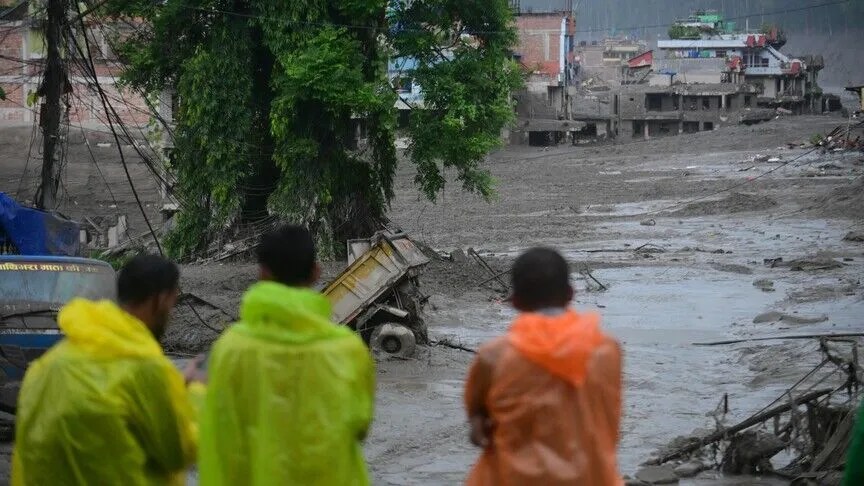
Russia researchers on Thursday said they have developed a programme to calculate the characteristics of outburst floods.
The researchers at Saint Petersburg State University (SPbU) said the new development enables the prediction of failures in earthen dams of reservoirs and lakes.
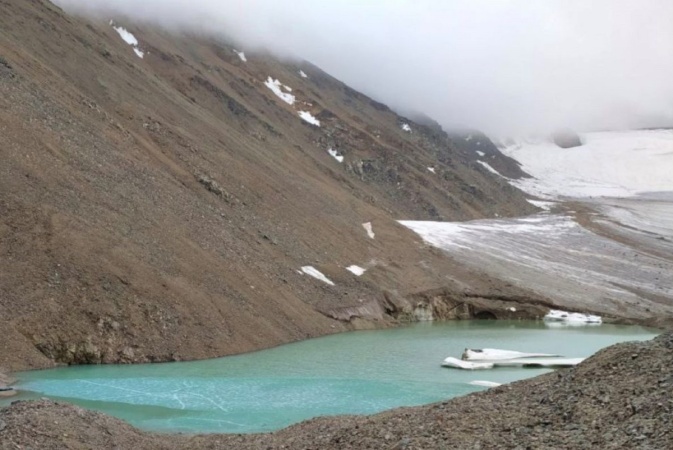
They said it also enables the prediction of outburst of mountain glacial lakes formed by moraine deposits (rock debris, clay and pebbles created by glacier movement).
The scientists’ development is designed to provide early warning of water release and thereby reduce potential destructive consequences, as reported on the university’s website.
They noted that unstable glacial lake can suddenly drain, losing large volumes of water due to rapid warming or extreme precipitation.
The researchers added that reservoirs are also at risk, including from abnormal heavy rainfall that erodes embankments and can trigger flooding.
The programme is capable of predicting key parameters of a potential dam breach: the time of failure, peak water discharge, total flood volume and the size of the breach opening.
All these are based on data such as dam dimensions, height above the lake level, soil composition and properties, as well as other inputs.
“The uniqueness of our solution lies in the fact that we have developed a method to account for the heterogeneity of earthen dams, since soil exhibits different from hydro-physical properties at different points.
“We also considered two main failure mechanisms: overtopping and erosion of a filtration channel within the dam body,” said the project lead, Associate Professor at SPbU, Galina Pryakhina.
The programme Is intended to analyse potential breaches in water bodies located in remote mountainous regions where hydrological monitoring stations are absent.
Previously, calculations for such areas required field data collected during expeditions or the use of satellite imagery.
The researchers tested the programme using three lakes where outbursts of floods have already occurred: Bashkara in the Caucasus, Maashey in the Altai, and Nurgan in Mongolia.
In the near future, the team plans to add a module for calculating water inflow, allowing simulations to account for precipitation and glacier melt contributions.
This is expected to improve the accuracy of predictions regarding the behaviour of entire lake systems. (TV BRICS/NAN)
•The work of St. Petersburg State University researchers was carried out as part of a grant from the Russian Science Foundation (project No 22-67-00020)