ADAD
ADAD
Updating your news feed...
NEWS EXPRESS is Nigeria’s leading online newspaper. Published by Africa’s international award-winning journalist, Mr. Isaac Umunna, NEWS EXPRESS is Nigeria’s first truly professional online daily newspaper. It is published from Lagos, Nigeria’s economic and media hub, and has a provision for occasional special print editions. Thanks to our vast network of sources and dedicated team of professional journalists and contributors spread across Nigeria and overseas, NEWS EXPRESS has become synonymous with newsbreaks and exclusive stories from around the world.








Loading banners
Loading banners...

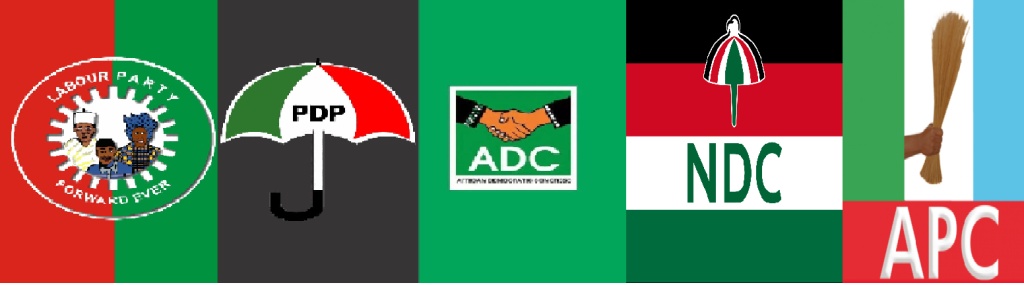
With barely three days to the start of party primaries, Nigeria’s pre-election political landscape is under strain, as last-minute negotiations collapse, alliances dissolve and opposition parties struggle to hold their structures together ahead of the 2027 general elections.
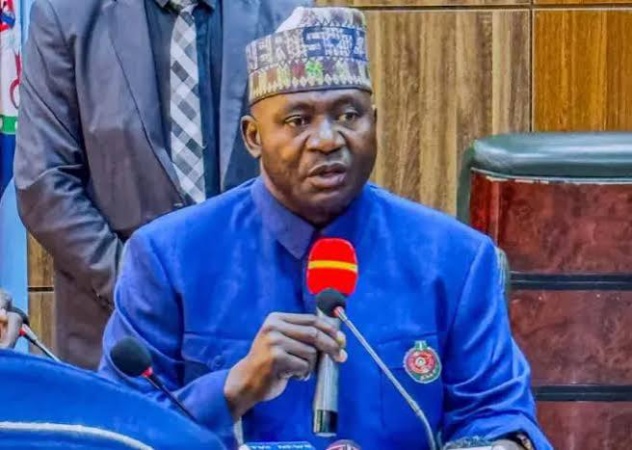
In Bauchi State, Governor Bala Mohammed is considering leading his supporters to the Nigeria Democratic Congress (NDC) after last-minute talks with the ruling All Progressives Congress (APC) collapsed.
According to the timetable released by the Independent National Electoral Commission (INEC), party primaries are scheduled to begin on April 23 and end on May 30, 2026.
It was gathered that Mohammed, who also chairs the Peoples Democratic Party (PDP) Governors’ Forum, set aside the coalition-backed African Democratic Congress (ADC) due to the party’s leadership crisis and the defection of retired Air Marshal Sadiq Abubakar, the 2023 APC governorship candidate in Bauchi State, to the ADC.
Abubakar, who lost to Mohammed in the last election, joined the ADC on July 2, 2025, ahead of the 2027 governorship race, stating that internal challenges within the APC had affected his earlier bid.
Two days ago, Mohammed’s plan to join the APC stalled after influential party figures in Abuja and Bauchi opposed a proposed 60–40 sharing formula for elective and appointive positions between new entrants and existing members.
Following the breakdown of discussions, Mohammed, who is also said to be weighing a possible PDP resurgence, began reaching out to former Bayelsa State Governor, Senator Henry Seriake Dickson, leader of the NDC, for possible collaboration.
Dickson did not respond to enquiries, but an aide, who requested anonymity, said that shortly after ending talks with APC leaders, the Bauchi governor initiated contact with the NDC leadership.
“I do not have details of their discussion, but the governor is seeking a platform where his supporters would be fully accommodated and able to pursue their political aspirations,” the aide said.
Mohammed’s ally, Samaila Burga, said talks with the APC ended because the party was unwilling to concede leadership of its structure in the state, despite the governor’s political base across wards, local councils and the state.
He added that the APC declined to extend the customary arrangement that allows an incumbent governor joining the party to take its lead in the state.
At the same time, in Adamawa State, a faction of the ADC led by Senator Aisha Dahiru Ahmed, known as Binani, has indicated readiness to leave the party over internal disputes.
Ahmed told journalists in Yola that the party’s state congresses were conducted without adequate consultation, and that her supporters were excluded despite an earlier agreement among stakeholders.
She alleged that former Secretary to the Government of the Federation, Babachir David Lawal, worked with some national officers to sideline her camp and install Sadiq Dasin as state chairman, contrary to a prior sharing arrangement reached at a meeting in Abuja hosted by former Vice President Atiku Abubakar.
The dispute follows a prolonged internal contest among three factions in the Adamawa ADC over control of the party’s structure, which led to a reconciliation meeting in Abuja.
According to Ahmed, the agreed allocation of positions was abandoned once the parties returned to Yola, with congresses conducted unilaterally and a Dasin-led executive announced.
She urged her supporters to remain calm, stating that the matter had been escalated to the party’s national leadership. She added that if no resolution is reached within one week, she would consult widely and announce the group’s next steps.
Senator Ahmed Barata said the ADC gained prominence in Adamawa after Binani joined the party, adding that her involvement strengthened its structure in the state.
“Sidelining her faction amounts to political ingratitude and a breach of trust. We have informed our supporters of the situation and await further directives,” he said.
The Guardian learnt that, while awaiting possible resolution within the stipulated period, the Binani camp has opened exploratory discussions with the Social Democratic Party (SDP) on potential alignment.
Labour Party disowns viral posts inviting Obi, Kwankwaso, calls them unauthorised
Against this backdrop, the Labour Party has distanced itself from viral social media posts inviting its former presidential candidate, Peter Obi, and the leader of the Kwankwasiyya Movement, Rabiu Kwankwaso, to return to the party, describing the messages as unauthorised.
The reaction follows a series of posts on X from an account bearing the party’s name, emblem and logo, which urged both politicians to leave the African Democratic Congress (ADC) amid ongoing uncertainty within the party.
One of the posts, accompanied by images of Obi and Kwankwaso, stated, “Dear @PeterObi @KwankwasoRM, our doors are open.”
The development comes amid heightened political speculation over the future of both men, particularly following recent comments by former Vice President Atiku Abubakar that have drawn attention to internal dynamics within the ADC.
However, the Labour Party leadership under its Interim National Chairman, Nenadi Usman, said the posts did not originate from its national secretariat.
The clarification was contained in a statement issued in Abuja by the chairman’s Special Assistant on Media and Publicity, Ken Asogwa, who said the party is not currently operating any social media accounts.
“The general public is advised to disregard any information from the fraudulent accounts, including claims that the party is expecting the return of Mr Peter Obi and Alhaji Rabiu Musa Kwankwaso. Such statements are unauthorised and do not reflect the party’s position.
“These are the same accounts earlier disowned by the party. After that notice, the operators changed the account name and handle and continued to circulate misleading information,” he said.
Asogwa added that the party’s official accounts — Labour Party-Nig on Facebook and LabourPartyNG on X — have remained inactive since the internal crisis that led to the removal of former National Chairman Julius Abure and the dissolution of the National Working Committee.
He also said the party has petitioned the police to facilitate the recovery of its official X account from former party officials.
“The matter is receiving attention, and those involved, including Abure and Alhaji Umar Farouk, are cooperating with the Deputy Inspector General of Police at the Force Intelligence Department and providing relevant information on their activities, including the use of the party’s social media platforms.
“Upon conclusion of investigations and recovery of the accounts, the public will be informed. In the meantime, the Labour Party states that it does not operate any social media account for public communication.
“All official information is issued through authorised press statements from the Office of the Interim National Chairman. Any change will be formally announced,” Asogwa stated.
NNPP elects Bala Mohammed as national chair, worries over democratic climate
The New Nigeria People’s Party (NNPP) reported a leadership change, electing Kaduna-based politician, Bala Mohammed, as its new national chairman following the resignation of Ajuji Ahmed.
Ahmed, who had served as acting national chairman since March 2024, recently joined the African Democratic Congress (ADC), according to a statement issued yesterday by the party’s National Publicity Secretary, Ladipo Johnson.
Johnson described Mohammed, a former National Organising Secretary of the party from Kaduna, as “an astute administrator,” noting that he brings “experience, tactical insight and commitment to the party’s grassroots ideology” to the position.
The party also expressed concern about the political environment ahead of the 2027 general elections, citing economic challenges, inflation and insecurity.
“We are witnessing a coordinated assault on the foundations of our democracy,” the statement said.
It identified issues such as internal party disputes, legal challenges and broader concerns about democratic processes as areas requiring attention.
The NNPP said Mohammed’s emergence comes at a critical period and that he is expected to strengthen party structures and guide preparations for the next general elections.
“Our democracy is under strain, but the NNPP remains committed to representing the interests of ordinary Nigerians,” the party stated.
It added that the new leadership places the party in a position to present its governance agenda as political activities toward the 2027 elections intensify.
Group urges Council of State to caution Tinubu, raises concerns over party crises, democratic stability
Amid the ongoing political drama, a civil society organisation, Alliance for Democratic Rights (ADR), has urged members of the Council of State to advise President Bola Ahmed Tinubu to uphold democratic principles, drawing lessons from past leaders such as Olusegun Obasanjo, Goodluck Jonathan and the late Umaru Musa Yar’Adua.
In a statement issued in Abuja yesterday, ADR’s National President, Mr Andy O. Chucks, and National Secretary, Mallam Suleiman Funtua, called on the Council—comprising former Heads of State and past and present Chief Justices of Nigeria—to apply their experience in guiding the current administration and strengthening democratic institutions.
The group expressed concern over what it described as alleged presidential involvement in the internal affairs of opposition parties, warning that such developments could affect Nigeria’s multiparty system ahead of the 2027 general elections.
According to ADR, recent developments within the African Democratic Congress (ADC) and the Peoples Democratic Party (PDP) have generated public concern, with some Nigerians suspecting external influence despite official denials.
“Former presidents and heads of state are endowed with enormous experience to guide the present leadership and halt perceived interference, including in the judiciary,” the statement said.
ADR cautioned that the role of the Presidency and elements within the judiciary in party matters could weaken democratic norms and heighten political tension if not addressed.
“The meddling in the affairs of political parties is gradually destroying citizens’ rights to a multiparty democracy,” the group stated, adding that existing laws outline the autonomy of political parties in managing their internal processes.
The organisation also raised concerns about the judiciary’s involvement in political matters, stating that courts appear to be taking on issues traditionally handled within party structures.
Further expressed reservations about the conduct of the Independent National Electoral Commission (INEC) under Prof Joash Ojo Amupitan, noting that both the electoral body and the judiciary could affect democratic stability if current trends continue.
ADR emphasised the importance of a functional opposition in sustaining democracy and cautioned against any movement towards a one-party structure.
“It should be clear that the quest for a one-party system cannot augur well for this country. Nigerians will resist it. Patriotic leaders must speak up now before it is too late,” Chucks said.
The group also drew attention to what it described as limited public intervention by the Council of State amid growing political concerns, urging its members to take steps to support democratic institutions.
ADR added that continued involvement in party affairs could weaken internal democracy and create challenges for the 2027 general elections.
APC defends Tinubu’s record, accuses opposition of spreading misinformation
The APC, for its part, has rejected claims by opposition figures seeking to discredit the performance of President Bola Tinubu, stating that the administration’s record reflects its efforts.
In a statement issued yesterday in Sokoto, the Senior Special Assistant on Media to the APC National Chairman, Yusuf Dingyadi, said critics, particularly from rival parties, were circulating claims on social media that do not reflect the administration’s activities.
“These groups are prioritising selfish interests over patriotism, national peace and collective progress.
“The use of misinformation and propaganda to question the administration’s achievements, especially in Northern Nigeria, is misleading,” Dingyadi said.
He stated that the Tinubu administration has made progress in areas such as security, infrastructure, agriculture, education and healthcare.
“Nigerians should recognise the security situation, ongoing development projects and reforms aimed at stabilising the economy.
“These efforts are intended to improve livelihoods and support sustainable growth,” he said.
Dingyadi also raised concerns about the tone of political discourse, noting the use of language and narratives that could heighten division.
“Constructive engagement is expected from citizens, particularly in view of the challenges inherited by the administration,” he added.
He reaffirmed the party’s commitment to policies aimed at improving citizens’ welfare.
“We remain focused on development and will not be distracted. Nigerians should remain attentive to information presented in the political space,” Dingyadi said.
APGA releases timetable, fees for 2027 primary elections
Elsewhere, the National Working Committee (NWC) of the All Progressives Grand Alliance (APGA) has released the provisional timetable and schedule of activities for its primary elections ahead of the 2027 general election.
The disclosure was made in a statement issued by the party’s National Publicity Secretary, Dr Ejimofor Opara, which also outlined the fees for nomination forms for various elective positions.
The statement explained that the timetable aligns with the revised schedule issued by the Independent National Electoral Commission (INEC) on February 26, 2026, and is in accordance with the party’s constitution and the Electoral Act 2026.
According to the schedule, the sale and return of expression of interest forms will take place from April 20 to May 8. Screening of aspirants for the National Assembly is set for May 11, followed by State Houses of Assembly on May 12 and governorship aspirants on May 13.
The party had earlier indicated at its South-East regional convention in Awka that expression of interest forms would be sold separately and that aspirants would undergo screening before being cleared to purchase nomination forms.
APGA stated that the sale and return of nomination forms will begin on May 14 and end on May 21.
The fees for expression of interest forms were listed as follows: President, N25 million; Senate, N6 million; House of Representatives, N4 million; Governor, N10 million; and House of Assembly, N2 million.
The timetable shows that all primary elections will be held on May 23, 2026, using the Option A4 method, while appeals arising from the primaries are scheduled to be concluded on May 28, 2026. (The Guardian)