ADAD
ADAD
Updating your news feed...
NEWS EXPRESS is Nigeria’s leading online newspaper. Published by Africa’s international award-winning journalist, Mr. Isaac Umunna, NEWS EXPRESS is Nigeria’s first truly professional online daily newspaper. It is published from Lagos, Nigeria’s economic and media hub, and has a provision for occasional special print editions. Thanks to our vast network of sources and dedicated team of professional journalists and contributors spread across Nigeria and overseas, NEWS EXPRESS has become synonymous with newsbreaks and exclusive stories from around the world.

















Loading banners
Loading banners...

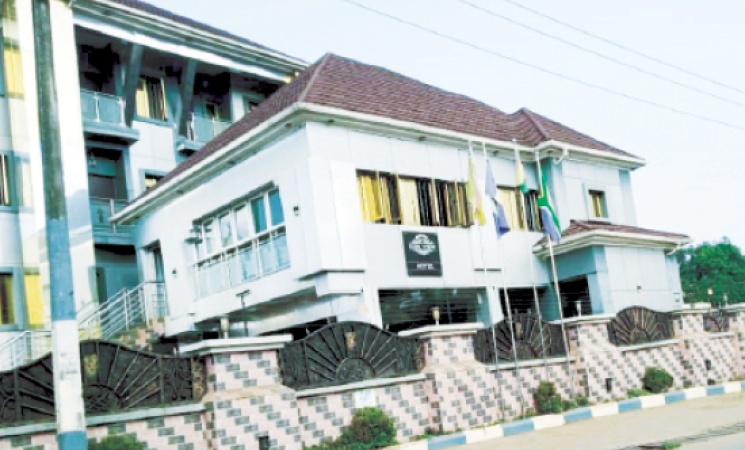
States with dense hotel inventories across Nigeria are expected to generate significantly higher revenues from consumption-based taxes, particularly the Hotel Occupancy and Restaurant Consumption Tax, as the hospitality industry continues its post-reform recovery into 2026.
Under the Lagos State framework, the Hotel Occupancy and Restaurant Consumption Tax is charged as a percentage of the total bill issued to customers, excluding Value Added Tax. While rates vary across jurisdictions, analysts say states with larger hotel bases are structurally positioned to earn more from consumption levies due to higher volumes of accommodation, food services, conferences, and events.
Data from Hotels.ng highlights a strong concentration of hotels in key commercial and tourism states, with major implications for internally generated revenue.
States with the highest hotel concentration in Nigeria, according to Hotels.ng.
The ranking shows a clear dominance of southern states, with Lagos far ahead of others, reinforcing its position as Nigeria’s hospitality and business travel hub. Industry stakeholders say this concentration reflects stronger corporate demand, tourism flows, and international arrivals in Lagos and surrounding commercial corridors.
Fiscal analysts argue that hotel-heavy states are better positioned to benefit from consumption taxes because hospitality services represent recurring taxable spending points. In Lagos, where the model is already operational, the levy is applied to total customer bills excluding VAT, giving the state access to a large and active consumption base.
Given its scale, Lagos is expected to account for a disproportionately high share of hospitality-linked tax revenue, followed by Abuja, Ogun, Oyo, and Rivers, which also benefit from sustained business travel, government activity, and regional tourism.
Despite high operating costs driven by multiple taxation and energy expenses, Nigeria’s hospitality sector remained resilient in 2025. Operators attribute the performance to relative exchange rate stability, a mildly stronger naira, and easing inflation, which supported consumer spending and boosted domestic and corporate travel.
Looking ahead to 2026, industry stakeholders expect continued but uneven growth. However, concerns persist over rising tax pressure. A hospitality investor warned that stricter enforcement could lead to more aggressive compliance measures, including closures of non-compliant facilities.
“We have no option but to comply with the new tax laws. But we have to push whatever cost we incur to the guests in order to stay in business,” the investor said. (TRIBUNE)