
ADVERTISEMENT

ADVERTISEMENT

ADVERTISEMENT

ADVERTISEMENT











Loading banners


NEWS EXPRESS is Nigeria’s leading online newspaper. Published by Africa’s international award-winning journalist, Mr. Isaac Umunna, NEWS EXPRESS is Nigeria’s first truly professional online daily newspaper. It is published from Lagos, Nigeria’s economic and media hub, and has a provision for occasional special print editions. Thanks to our vast network of sources and dedicated team of professional journalists and contributors spread across Nigeria and overseas, NEWS EXPRESS has become synonymous with newsbreaks and exclusive stories from around the world.
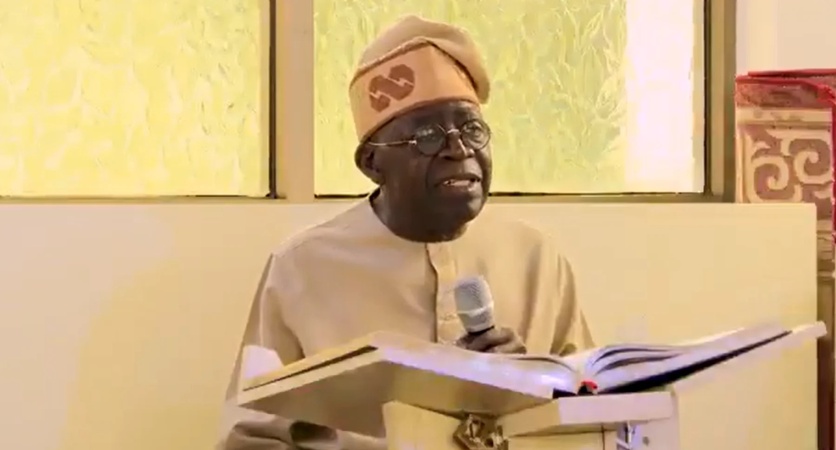
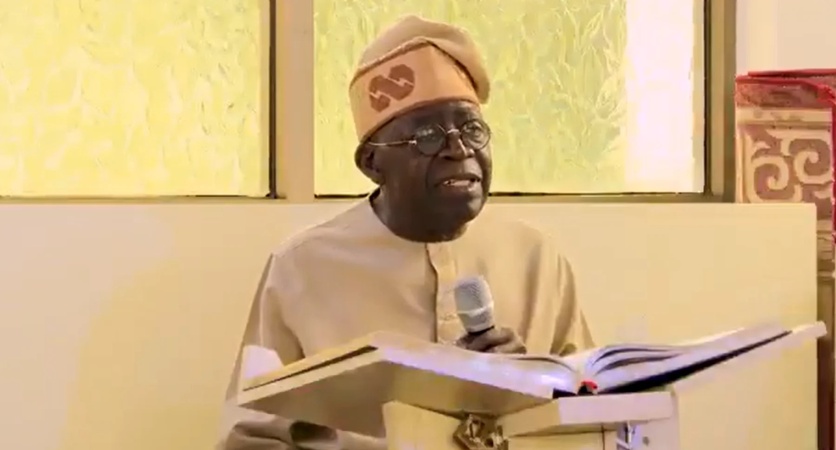
President Bola Tinubu
The Nigeria’s total public debt, which stood at N159.28 trillion as of December 31, 2025, translates into an average debt burden of about N724,000 per citizen, an analysis by Daily Trust shows.
The latest data released by the Debt Management Office (DMO) indicates a steady rise in the country’s debt profile, largely driven by increased domestic borrowing.
The DMO’s figures exclude the recently approved N8.3 trillion borrowing from the United Arab Emirates and UK Export Finance, suggesting that the debt stock could rise further in subsequent reports.
With Nigeria’s population estimated at about 220 million, the figures suggest that every citizen now carries a significant share of the national debt.
The debt stock rose from N153.29 trillion in September 2025 to N159.28 trillion in December 2025, representing a quarter-on-quarter increase of N5.98 trillion (3.9 percent). In dollar terms, the debt rose from $103.94 billion to $110.97 billion within the same period. On a year-on-year basis, the public debt increased by N14.61 trillion (10.1 percent), up from N144.67 trillion recorded in December 2024.
How domestic, external debts stand
A breakdown of the figures shows that the nation’s domestic debt remains the largest component, accounting for 53.27 percent of total public debt. It rose to N84.85 trillion in December 2025, up from N81.82 trillion in September 2025 and N74.38 trillion in December 2024.
The Federal Government holds the bulk at N80.49 trillion; while states and the Federal Capital Territory account for N4.36 trillion. The trend highlights Nigeria’s increasing reliance on local borrowing to finance fiscal gaps.
The external debt stood at N74.43 trillion, representing 46.73% of total debt. This marks an increase from N71.48 trillion in September 2025 and N70.29 trillion in December 2024. In dollar terms, the external debt rose to $51.86 billion, with the Federal Government accounting for N66.27 trillion; and the states and the FCT, N8.16 trillion.
The continued expansion of Nigeria’s debt profile has heightened concerns over fiscal sustainability, especially amid rising debt servicing obligations and pressure on government revenue.
In its 2026 macroeconomic outlook report, the Central Bank of Nigeria (CBN) had projected a debt-to-GDP ratio of 34 per cent while foreign reserves are expected to rise to $51 billion. The debt-to-GDP ratio compares a country’s total government debt to its Gross Domestic Product (GDP), showing its ability to pay debts relative to its economic output.
Public debt as a percentage of GDP is projected at 34.68 per cent by end-2026, compared with 33.98 per cent as at June 2025, predicated on expected new borrowings,” the report had stated.
Unborn generations will pay – Dr. Alaje
A financial expert, Dr Paul Alaje, has stated that the current debt stock of the country is directly owed by Nigerians and will be paid by even citizens not yet born.
According to him, the country’s growing debt stock translates into higher servicing costs, which are funded through taxation and other public revenues.
Speaking to Daily Trust yesterday, Alaje said: “The total debt stock of N159 trillion released by the Debt Management Office is reflective of the total number of loans or facilities that the Nigerian state has collected, which includes the sub-national and the federal government. That is the volume of money that is currently active in terms of debt.
“No forgiveness on any of them yet, and also cancellation. So these are debts that a significant part of them are subject to servicing. The higher our debt stock, which of course it is, the higher the rate of service, other things being equal.
“So, here is the point, as the volume increases, Nigeria has to pay more, mind you the debt they gave to us is not this year, but as of December 31 2025. So, by the time we look at the one that we have retired and the new loans that have been approved and some that have been collected this year, it is clear that by the time the DMO is reporting that on first quarter 2026, we would have crossed $160 billion. So it’s more burden on the economy. Whether we have the capacity to pay or not is a different kettle of fish.
“Also, the Bureau of Statistics also published what inflation is saying. Inflation and figures increased from 15.06 to about 15.38. That of course has implications on the quality of money in people’s pockets.
“In fact, that is not the number that matters. It’s food inflation month on month that rose by 4%. I think a lot of Nigeria should be worried about that.”
On the implication of the debt on the country, Obaje said: “The question is who will pay this debt? Will the government pay? Will the people pay? Once you are part of the citizens, government can decide to raise taxes and everybody will pay. So, it is everybody that pays. Government can remove it from VAT, it’s part of the money that they are using to pay.
“So the entire citizens will pay and those who are yet to be of working population today, labor force, those who are yet to be part of labor force, when they become part of labor force and they get attractive wage, they will also pay. Does that also mean that if this debt extends to two decades or more, unborn generation will pay? The answer is yes.”
On why the government is still borrowing despite announcing huge revenue collections, he said “The claim by NRS that they surpassed their target is not far from the truth. However, the reason for continuous borrowing could be, when government generates revenue, it’s not the same time that we need the money because revenue generation takes time.
“Meanwhile, salaries are to be paid almost immediately. Sometimes we collect, we borrow this money as stopgap. Here is the issue. Our need and what we are generating, these are two different conversations. Our need may expand, which is totally out of the control to generate revenue. This revenue generation may be increasing, but at what rate? Is it increasing the demand that we need in our country on road, on rail, on energy, and so on and so forth? Clearly the answer is not.
“So this does not reduce the impact of increased revenue generation. This is where the danger lies. When what we are generating in revenue is not enough, and we need to spend, what do we do? We have to borrow.” (Daily Trust)


