ADAD
ADAD
Updating your news feed...
NEWS EXPRESS is Nigeria’s leading online newspaper. Published by Africa’s international award-winning journalist, Mr. Isaac Umunna, NEWS EXPRESS is Nigeria’s first truly professional online daily newspaper. It is published from Lagos, Nigeria’s economic and media hub, and has a provision for occasional special print editions. Thanks to our vast network of sources and dedicated team of professional journalists and contributors spread across Nigeria and overseas, NEWS EXPRESS has become synonymous with newsbreaks and exclusive stories from around the world.













Loading banners
Loading banners...

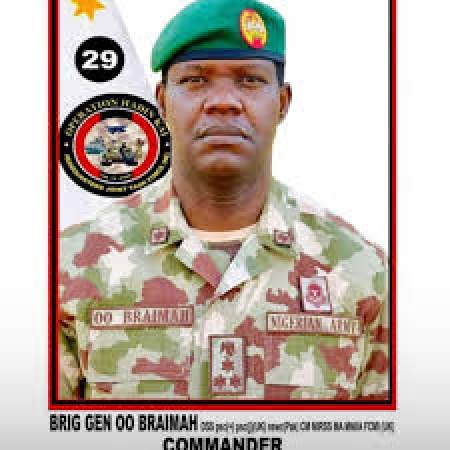
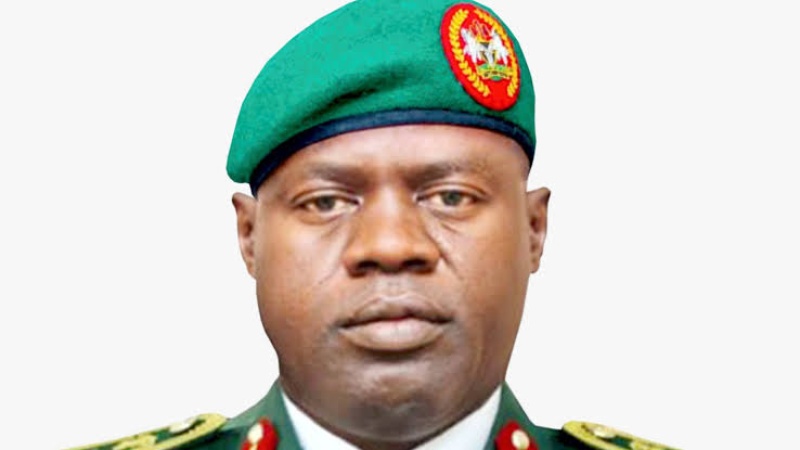
Late Brig-Gen Braimah
Fresh accounts have emerged on the circumstances surrounding the killing of the Commander of the 29 Task Force Brigade, Brigadier General Oseni Braimah, following a deadly midnight assault on a military base in Benisheikh, Borno State.
Surviving soldiers described the incident as one of the most intense attacks in recent months.
While the Nigerian Army insisted that the attack was successfully repelled and dismissed claims of heavy casualties and equipment failure, accounts from soldiers and residents painted the picture of a coordinated insurgent offensive that overwhelmed troops, leaving significant destruction in its wake.
The attack, which occurred around 12.30am on Thursday, was carried out by suspected Boko Haram and Islamic State West Africa Province fighters, who launched simultaneous assaults on multiple military positions in Benisheikh, a strategic town in Kaga Local Government Area along the Maiduguri-Damaturu highway.
According to multiple eyewitnesses, who spoke with Saturday PUNCH, the insurgents advanced in large numbers, attacking at least three military formations before pushing into civilian areas.
A soldier who survived the attack but requested anonymity because he was not authorised to speak to the press, described the scale and coordination as unprecedented.
“We are used to coordinated attacks, but this was different. They came in large numbers from different directions at the same time. It felt like they had studied our positions for weeks,” he said.
Another survivor admitted that the attackers had a numerical advantage, which affected the outcome of the engagement.
“We stood our ground at first, but they were too many. They attacked from different angles. It was like an ambush,” he said.
According to him, the troops morale began to drop as rumours spread that other locations had fallen and some soldiers killed.
“When we started hearing that our colleagues in other locations had been overrun, it shook us. Then someone shouted that the Brigade Commander was dead. That was when fear fully set in,” he added.
The confusion and psychological impact of the attack, sources said, contributed to a breakdown in coordination among troops, forcing some to retreat towards the town.
It was gathered that the gun battle lasted over one hour and 30 minutes, with multiple explosions forcing both military personnel and civilians to flee for safety.
Braimah’s death
In the aftermath of the attack, claims emerged that Brigadier General Braimah was killed due to a malfunctioning Mine-Resistant Ambush Protected vehicle.
However, military sources and individuals familiar with the late general disputed this.
A highly placed source within the brigade described the claim as misleading.
“The insurgents actually set the MRAP on fire during the attack. Saying he died because the vehicle didn’t start is not accurate. The situation was far more complex,” the source said.
Another insider suggested that only those who were with the general at the exact moment of the attack could provide a definitive account, noting that many of them also died in the encounter.
“I am aware that the insurgents closed in from various angles at the same time. It was like an ambush plan. But when the gun battle became intense, the terrorist formation scattered. What helped them was their numbers; there were too many of them,” the source added.
Corroborating the account, a former frontline driver to the late general, who identified himself simply as Blacky, noted that Braimah’s attitude towards vehicle maintenance was exemplary.
“If you talk about maintenance, General Braimah doesn’t play with repairs. Ask anyone under the 29 Task Force,” he said.
Recounting his experience working with the late general, he said, “I was General Braimah’s driver. One day, he asked me, ‘Blacky, have you not spent two years already?’ I told him I had done four years and six months. He was shocked and asked why I had not applied for rotation. That was how he put my name forward. It is not up to one week that I left the North-East.”
“If you met him with a complaint about money, pass, or anything, he would listen. I am not covering him because I was his former driver. What I am saying is fact,” he added.
However, another source within the formation pointed to possible systemic lapses, alleging weaknesses in vehicle maintenance culture within the unit.
“If there was any failure, attention should go to those responsible for maintaining operational vehicles. There have been complaints before,” the source claimed.
Civilian toll, destruction
A resident, Mustapha Abu, who spoke to Saturday PUNCH, said the intensity of the attack triggered panic across the town, with many residents abandoning their homes in the dead of night.
“We heard loud explosions and continuous gunshots. It was terrifying. People were running in all directions. Even soldiers ran into the town for cover,” he said.
Beyond military losses, residents reported significant destruction within Benisheikh, including the burning of shops, vehicles, and other civilian properties.
“Many of them came to town, and they stayed with us, offering protection and directing our movements. I think that space gave the terrorists enough time to burn the facilities and loot available military resources. When I got to the camp after the attack, it was an eyesore.
“Shops and vehicles close to the major roads belonging to civilians were set ablaze. Travellers who were resting in the community near the Bensheikh secretariat due to the routine closure of the Maiduguri–Damaturu road in the evening were also affected, as both drivers and passengers abandoned their vehicles and fled for safety,” Abu added.
“When I got to the camp after the attack, it was devastating. Vehicles were burned, buildings destroyed. Even civilian shops were not spared,” another resident, who requested anonymity, said.
The temporary withdrawal of troops into the town, sources said, created a security gap that allowed insurgents to loot military facilities and inflict further damage.
Army pushes back
Reacting to widespread reports, the Headquarters of Operation Hadin Kai dismissed claims that the attack resulted in the death of 17 soldiers, including the brigade commander.
In a statement on Friday, the Media Information Officer, Northeast Joint Task Force, Operation Hadin Kai, Lt.-Col. Sani Uba, noted that the narratives, often amplified with unrelated pictures and videos, constituted a deliberate attempt to distort facts and undermine ongoing military operations.
On the casualty figures, Uba said, “The official and verified report, as earlier released through Defence Headquarters, clearly stated that two officers and two soldiers paid the supreme price in the course of the engagement. Any contrary figure being circulated is entirely false, misleading, and devoid of credibility.”
According to him, the insinuation that the brigade commander’s vehicle was unserviceable was equally incorrect.
“The commander was mounted on a high-grade Mine-Resistant Ambush Protected (MRAP) vehicle, which was temporarily immobilised in the heat of combat while he was actively coordinating the counter-assault,” he noted.
Uba said the incident reflected the intensity of the engagement and the presence of leadership at the decisive point, not any equipment failure.
The spokesperson said the military strongly frowned on the distortion of facts and the use of such incidents for personal or political gains or propaganda.
Uba, however, maintained that troops of Operation Hadin Kai successfully repelled the attack, maintained control of their location and forced the terrorists into a disorganised retreat.
A troubling pattern
The killing of Brigadier General Braimah adds to a growing list of senior Nigerian military officers who have lost their lives in the ongoing insurgency in the North-East.
Security analysts say such incidents raise critical questions about operational strategy, intelligence gathering, and force protection in the war against Boko Haram and ISWAP.
In recent years, several high-ranking officers have been killed in similar circumstances, often during ambushes or coordinated attacks on military formations.
Brigadier General Musa Uba was the commander of the 25 Brigade of the Nigerian Army when he was killed in 2025.
Another high-ranking officer killed was Brigadier General Dzarma Zirkusu.
Also killed was another high-ranking officer, Brigadier General Dzarma Zirkusu.
He died alongside three other soldiers when ISWAP fighters ambushed them in Askira-Uba in November 2021.
Zirkusu, who was from Adamawa State, had earlier in the year been appointed Commander of the 28 Task Force Brigade in Chibok.
In September 2020, Boko Haram fighters ambushed Colonel Dahiru Chiroma Bako near Wajiroko town.
He later died from injuries sustained in the attack.
Lieutenant Colonel Muhammad Abu Ali also died in November 2016, one year after he was promoted from the rank of Major.
Another senior officer, Lieutenant Colonel Ibrahim Sakaba, was killed in November 2018 during an attack on a military base in northern Borno, where several soldiers were also killed.
Before his death, he was the Commander of the 157 Task Force Battalion in Metele.
In August 2021, the Nigerian Army denied allegations made by his wife that he was killed by fellow soldiers after he reportedly refused to participate in corruption.
Tinubu consoles military
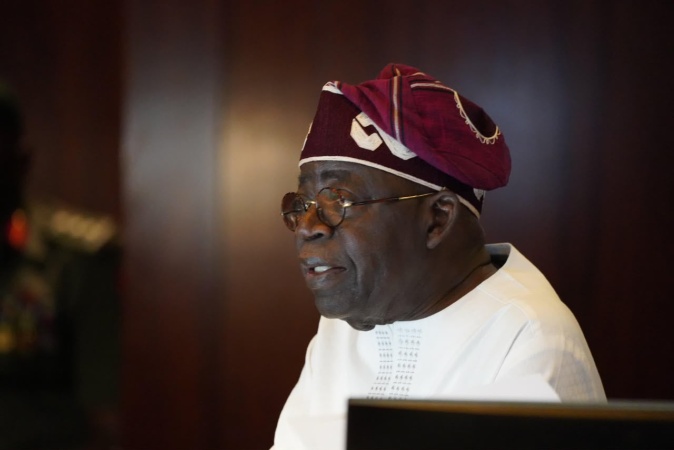
Meanwhile, President Bola Tinubu has expressed sorrow over the killing of the military officers.
The President’s message was conveyed in a statement issued on Thursday night by his Special Adviser on Information and Strategy, Bayo Onanuga.
Tinubu commended the bravery and resilience of the troops, noting that they fought gallantly to repel the attackers and prevent insurgents from overrunning communities under their protection.
He also called on Nigerians and the media to rally behind the Armed Forces in the ongoing fight against insecurity.
“From the reports I have received, our armed forces have been conducting sustained and intense land and air offensives against insurgents, neutralising many of their fighters and commanders. The insurgents’ counterattack is a sign of desperation,” the President said.
He urged the military leadership and frontline personnel not to be discouraged by the death of Braimah, as he condoled with the families of the soldiers who lost their lives in the attack.
The President assured that the Federal Government would honour the fallen soldiers and remained committed to defeating terrorism and restoring peace across the country. (Saturday PUNCH, but headline reworked)