Updating your news feed...
NEWS EXPRESS is Nigeria’s leading online newspaper. Published by Africa’s international award-winning journalist, Mr. Isaac Umunna, NEWS EXPRESS is Nigeria’s first truly professional online daily newspaper. It is published from Lagos, Nigeria’s economic and media hub, and has a provision for occasional special print editions. Thanks to our vast network of sources and dedicated team of professional journalists and contributors spread across Nigeria and overseas, NEWS EXPRESS has become synonymous with newsbreaks and exclusive stories from around the world.


















Loading banners
Loading banners...

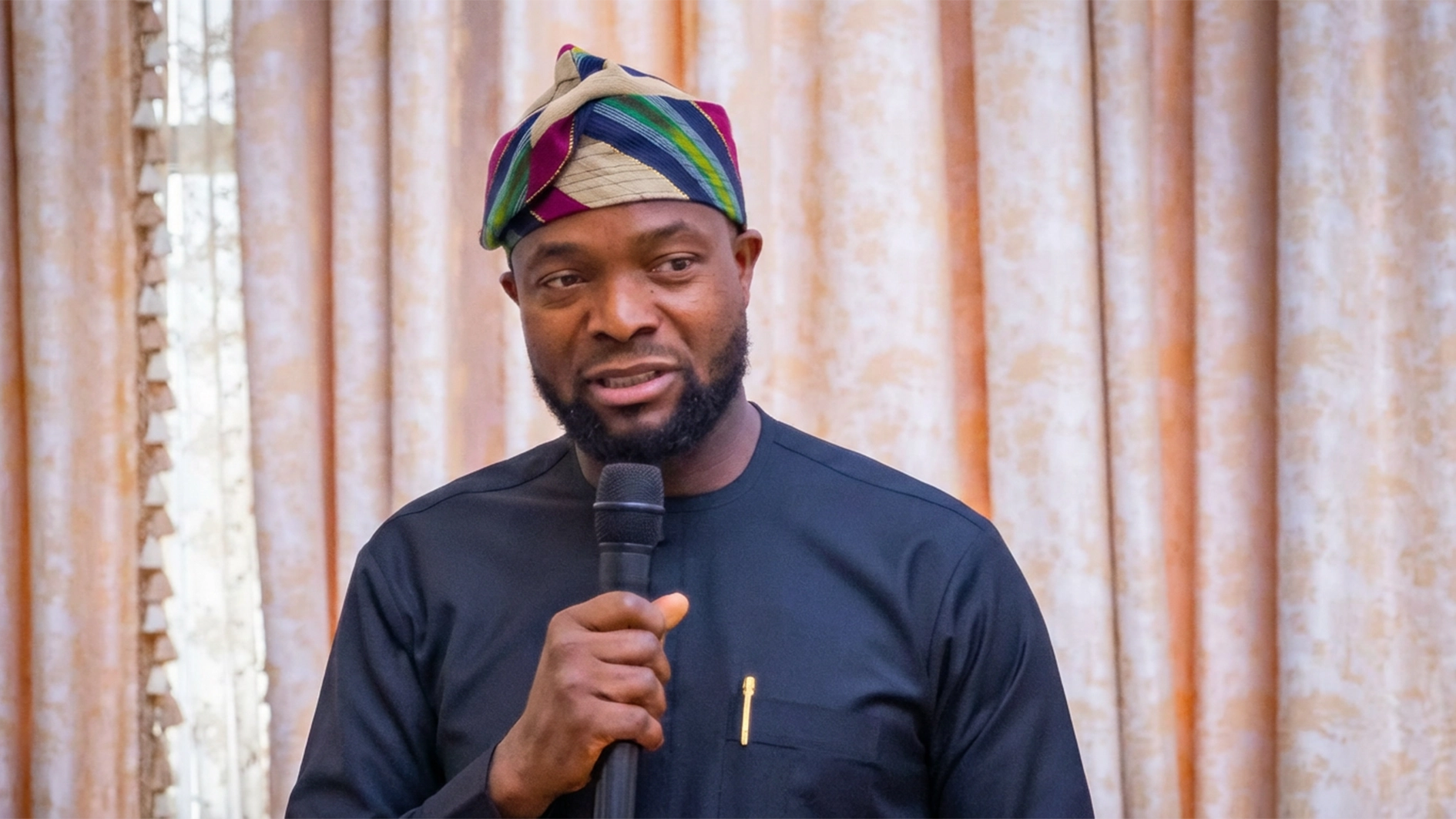
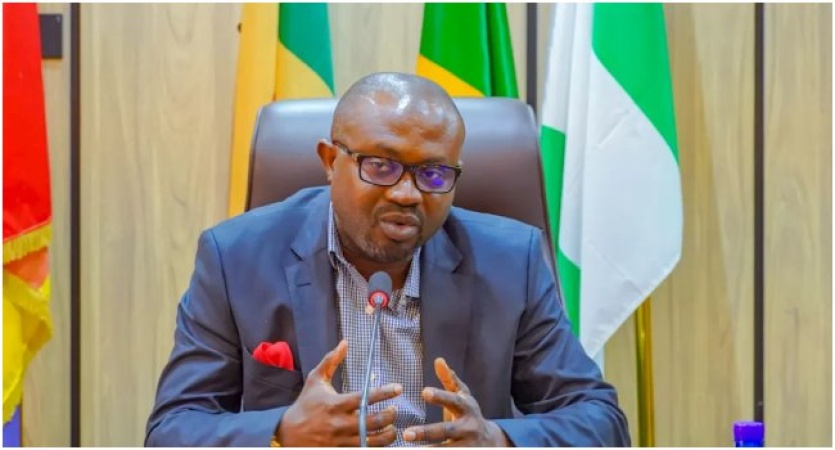
The Minister of Communications, Innovation and Digital Economy, Dr Bosun Tijani
A World Bank procurement document said seven consulting firms and five individual consultants to Nigeria’s fibre project will get $6.1 million as contract fees.
The contracts are part of the Building Resilient Digital Infrastructure for Growth (BRIDGE) programme, a $2 billion initiative designed to expand Nigeria’s broadband backbone and improve Internet access nationwide.
According to the document, the consulting contracts, spanning transaction advisory, legal compliance, technical planning and capacity development, highlight both the complexity of the BRIDGE project and the government’s reliance on external expertise.
Nigeria has intensified efforts to increase its fibre-optic network from about 35,000 kilometres to 125,000 kilometres. The expansion, if completed, is expected to improve connectivity in a country where broadband access remains uneven and often expensive.
Nigeria missed the targeted 70 per cent broadband penetration set for December 2025 as enshrined in the National Broadband Plan 2020-2025. The country ended last year with 51 per cent, but penetration currently sits at 53 per cent as of January 2026.
The procurement plan explained that the largest individual contracts are valued at $1.5 million each. One, for a transaction advisor, was signed on February 20, 2026. The other will fund university-led national digital economy research clusters; procurement began in March 2026 and is ongoing. These roles are expected to shape both the project’s financial structuring and its long-term innovation ecosystem.
Other advisory roles cover key critical areas of implementation. A $750,000 legal and regulatory compliance contract was signed on February 19, 2026, reflecting the need to navigate Nigeria’s complex regulatory environment.
Another $850,000 has been earmarked for technical planning and infrastructure advisory services, though that procurement process, which began in July 2025, is yet to be concluded.
According to the document, additional contracts include $750,000 for environmental and social impact advisory, $300,000 for supply chain and procurement strategy, and $150,000 for a baseline skills and capacity needs assessment, alongside the design of a national training programme. Most of these engagements remain at various stages of procurement, indicating that the project is still in its preparatory phase.
The project has also allocated $348,000 for five individual consultants. A contract for the BRIDGE implementation unit’s project coordinator was signed on September 30, 2025, while two roles—a legal and administrative manager and a network planning and technical lead, valued at $72,000 and $96,000—have been cancelled. Contracts for a procurement lead and a grievance redress mechanism specialist are still in progress.
The procurement plan, covering July 2025 to December 2026, will be managed through the World Bank’s Systematic Tracking and Exchanges in Procurement (STEP) platform. In line with procurement regulations revised in September 2023, the system will oversee all transactions to ensure transparency and compliance with international standards. For contracts targeting the domestic market, Nigeria’s national procurement procedures may also apply.
The advisory spending highlighted the complexity of building a nationwide fibre backbone in Nigeria, where issues such as right-of-way charges, fragmented regulations and infrastructure gaps have slowed broadband deployment for years.
Analysts say resolving these issues early could determine whether the project attracts the private capital it is counting on.
Already, the BRIDGE programme has secured about $1.123 billion in commitments from development partners. The World Bank’s concessional lending arm, the International Development Association, is providing $500 million under a pay-for-results model, while the European Bank for Reconstruction and Development has approved a $100 million investment. The European Union has also contributed €22 million or about $23.76 million.
Locally, the Federal Government has approved a $1 billion loan for the project as part of its 2025/2026 borrowing plan. The government is also seeking at least $1.1 billion from private investors, while institutions, including the African Development Bank, the Africa Finance Corporation and the Islamic Development Bank, are in talks to participate.
Funding from the World Bank will be released in stages based on progress. An initial $6 million disbursement is expected in 2026 to help establish a special purpose vehicle that will manage the project. Further funding will depend on milestones such as the rollout of the first 5,000 kilometres of fibre and later expansion targets that could reach up to 90,000 kilometres. (Guardian)