Updating your news feed...
NEWS EXPRESS is Nigeria’s leading online newspaper. Published by Africa’s international award-winning journalist, Mr. Isaac Umunna, NEWS EXPRESS is Nigeria’s first truly professional online daily newspaper. It is published from Lagos, Nigeria’s economic and media hub, and has a provision for occasional special print editions. Thanks to our vast network of sources and dedicated team of professional journalists and contributors spread across Nigeria and overseas, NEWS EXPRESS has become synonymous with newsbreaks and exclusive stories from around the world.










Loading banners
Loading banners...

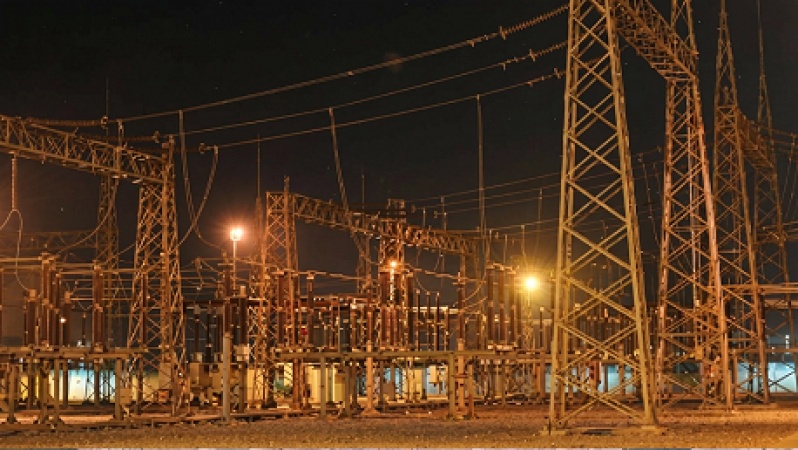
Power generating plant
A fresh crisis is emerging in Nigeria’s effort to address its long-standing electricity shortages through decentralisation, as over 16 states that have taken on regulatory powers are struggling to create effective systems.
The development, particularly in states such as Ogun, Imo and Edo, is raising concerns within the power sector as sources at the Nigerian Electricity Regulatory Commission (NERC) say some subnational governments are yet to set up fully operational State Electricity Regulatory Commissions (SERCs), while in some cases licences are being issued outside the legal regulatory framework.
With most power plants in the sector generating a kilowatt of power at N180, despite a kilometre of 330kV transmission line averaging $1 million and a 33kV distribution line, estimated at $40,000, according to documents from NERC, investment into the sector, especially at the subnational level, may remain poor amid worsening experience for consumers, who would have benefited from the new system.
Although several state regulators who spoke with The Guardian acknowledged that subnational governments may initially struggle to manage the transition, largely due to limited technical expertise, the challenges are emerging amid fresh litigation in the sector and an ongoing review of the Electricity Act 2023 at the National Assembly.
Speaking at a workshop in Ibadan that brought together regulators and state actors from Oyo, Ondo, Ekiti, Lagos, Imo, Niger and Plateau States, NERC noted that while decentralisation of electricity regulation offers opportunities, the transition is exposing structural weaknesses in Nigeria’s power governance framework.
One of the central objectives of the reforms is to bring regulation closer to electricity consumers. Under the decentralised system introduced by the Electricity Act, state governments can establish regulatory authorities to oversee electricity markets within their territories. Some of the states are Bayelsa, Lagos, Gombe, Kogi, Imo, Ogun, Ondo, Ekiti, Enugu, Niger, Edo, Oyo and Plateau.
In Abia, the Abia State Electricity Regulatory Authority (ASERA) has licensed three state-level subsidiary distribution companies (SubCos): Geometric Power Limited, Aba Power Limited and New Era Electricity Distribution Company.
In Lagos, Governor Babajide Sanwo-Olu inaugurated a five-man Board of Lagos State Electricity Regulatory Commission (LASERC), marking a major milestone in the state’s journey towards building a modern, reliable and independent electricity market.
Already, two SubCos were granted three-year licenses to IE Electricity Limited, a subsidiary of Ikeja Electric, and Excel Electricity Distribution Limited, which is understood to be a subsidiary of Eko Electricity Distribution Plc.
The development, which is creating issues relating to a framework for segregating assets, liabilities, contractual obligations, and personnel, is also raising litigations which the Nigerian judiciary has limited knowledge to manage.
While regulators are expected to be closer to electricity users, better understand local conditions and respond more quickly to service complaints, states that received regulatory transition approval months ago are yet to establish fully operational regulatory frameworks.
In Ogun State, which formally took over electricity regulation from the federal regulator in December 2024, NERC said there is currently no functional regulatory structure in place.
Instead, there have been reports of electricity permits being issued by political appointees rather than a legally constituted regulator.
NERC said a permit for an electricity-related activity was recently issued by a Special Assistant to the governor.
The implications are that electricity consumers within the state and elsewhere without formal regulators would face a vacuum as NERC had shut its forum office following the transition.
Similar concerns are emerging in Imo State, which NERC said is yet to formally license the existing distribution operator serving the state, the Enugu Electricity Distribution Company (EEDC).
Yet, within weeks of its establishment, the same regulator reportedly issued a licence to another entity, Orashi Electricity Company, to generate, transmit and distribute electricity.
The approval, according to stakeholders, was granted without a clearly defined regulatory process, raising questions about market coordination and jurisdiction.
Regulators warn that such actions risk creating serious distortions in Nigeria’s already financially fragile electricity market.
During the workshop, an example was cited where a newly licensed distribution operator connected additional industrial customers to an existing power line originally built by another distribution company.
The line, which runs from an injection substation to serve a specific industrial customer, was later found during routine inspection to have two additional industrial users connected without the knowledge of the original operator. While the new customers were paying the newly licensed distributor, the national system operator continued to record the electricity consumed against the original distributor’s allocation at the substation, resulting in a significant discrepancy between recorded supply and actual consumption that could not be explained by technical losses.
Also fuelling issues relating to the jurisdiction between federal and state regulators, under the Electricity Act, states are empowered to regulate electricity markets within their territories. However, where electricity generation plants inject power into the national grid, such as through 132kV or 330kV transmission infrastructure, those activities remain part of the wholesale electricity market overseen by the national regulator.
The Guardian learnt that clearer coordination mechanisms are now being developed through a proposed Forum of Regulators that would define licensing and approval responsibilities between federal and state authorities.
Despite the challenges, some stakeholders insist that decentralisation remains the most realistic pathway for fixing Nigeria’s electricity sector.
A power sector analyst, Adetayo Adegbemle, said feedback on the implementation of state regulatory commissions has been mixed.
“In some states, special assistants and ministry officials are issuing electricity permits without legal authority, outside the framework of the Electricity Act 2023. This poses a serious concern, because licences granted through such processes may be challenged in court and declared unconstitutional,” he said.
According to him, the development threatens to derail the main objective of regulatory decentralisation, which is to improve the overall health of the power sector.
Adegbemle noted that different states are likely to develop electricity markets at different speeds depending on their technical capacity and financial resources.
“As this decentralisation evolves, some states will get it right and some will not. Some states may eventually become wholesale sellers or exporters of electricity, while others will depend on imports from neighbouring markets,” Adegbemle said.
He noted that northern states such as Kano, Katsina and Jigawa are already exploring a regional electricity market model through a proposed tri-state regulatory framework aimed at building a regional grid, which may offer cheaper electricity.
At the same time, other states have been criticised for attempting to regulate electricity activities linked to the national grid, which falls outside their jurisdiction.
The pioneer chairman and chief executive officer of the Abia State Electricity Regulatory Authority, Emeka Onyegbule, described the issuance of electricity licences by state ministries as a serious anomaly.
“That could potentially destroy the markets we are trying to build at the subnational level. While state regulators have the authority to grant licences, it must be done through the proper regulatory process,” he said.
According to him, it is not the responsibility of state ministries or political offices to approve electricity undertakings.
Onyegbule, however, argued that decentralisation still offers major long-term benefits for Nigeria’s power sector.
He cited the recent electrification of a community in Etche, Rivers State, which reportedly received electricity supply after more than 20 years without power through a state government initiative.
“Several communities have not seen electricity for decades. Those problems cannot always be fixed from Abuja,” he said.
He added that decentralisation could significantly improve consumer protection by bringing regulatory dispute resolution closer to electricity users.
Currently, NERC operates a single customer complaints forum office in each state, meaning consumers in remote areas may have to travel long distances to lodge complaints.
“Imagine a consumer travelling from a remote part of Kogi State to Lokoja just to file a complaint. That is not practical,” he said.
Nevertheless, some investors warn that states may not yet have the capacity to regulate the entire electricity value chain.
Managing Director of Azura Power West Africa, Edu Okeke, said generation and transmission planning require long-term investment frameworks that many states cannot yet support.
“We have consistently said that states cannot regulate the full electricity value chain. While we support their regulation of the distribution space, generation and transmission require long-term planning and fiscal support, which most states cannot currently provide,” he said.
Okeke suggested that the federal government should retain regulatory authority over generation and transmission, while states focus on electricity distribution and tariff design.
Chairman of the Senate Committee on Power, Enyinnaya Abaribe, confirmed that the National Assembly is reviewing the Electricity Act to address issues that have surfaced since its implementation.
According to him, the proposed amendments include stronger penalties for electricity infrastructure vandalism, improved policy coordination between federal and state governments, and clearer guidelines governing the transfer of regulatory authority from NERC to state governments.
He said the review will also clarify jurisdictional boundaries to avoid legal conflicts and regulatory inconsistencies that could undermine Nigeria’s fragile electricity market.
In Gombe, a top source, who pleaded anonymity, said the state is on the verge of meeting necessary regulatory requirements and framework after setting up its SERC.
The source admitted that the national regulator had faced similar challenges during takeoff and should not be unexpected at the local level. (The Guardian)