ADAD
ADAD
Updating your news feed...
NEWS EXPRESS is Nigeria’s leading online newspaper. Published by Africa’s international award-winning journalist, Mr. Isaac Umunna, NEWS EXPRESS is Nigeria’s first truly professional online daily newspaper. It is published from Lagos, Nigeria’s economic and media hub, and has a provision for occasional special print editions. Thanks to our vast network of sources and dedicated team of professional journalists and contributors spread across Nigeria and overseas, NEWS EXPRESS has become synonymous with newsbreaks and exclusive stories from around the world.






















Loading banners
Loading banners...


Ex-INEC National Commissioner, Okoye
Festus Okoye, a lawyer, was National Commissioner of the Independent National Electoral Commission (INEC) between July 25, 2018, and July 24, 2023. He served as the primary spokesperson for the commission on electoral matters, voter education, and public awareness campaigns. TAIWO AMODU engaged him on the Electoral Act 2026, the controversy it has generated, among other issues. Excerpts:
WATCHING from the sidelines, do you think the Electoral Act Amendment Bill 2025 was hurriedly signed into law by President Tinubu? Secondly, would you say the agitation by Nigerians, particularly civil society groups, forced the Senate to act on the Bill? Recall that the House of Representatives passed it last December before proceeding on recess; the Senate did not act on it until February.
The President of the Federal Republic of Nigeria acted hastily when he assented to the Electoral Act 2026 after the National Assembly presented the bill to him.
The National Assembly Conference Committee on Electoral Matters finished its work on Monday, 16 February 2026. The Senate and the House of Representatives discussed and approved the Committee’s recommendations on Tuesday, 17 February 2026. On Wednesday, 18 February 2026, the President signed the Bill, and it became law. The President should have referred the Bill to the Attorney General of the Federation and the Chairman of the Independent National Electoral Commission for their comments, given the sensitive nature of the electoral legal framework. While representatives of the Ministry of Justice and the Independent National Electoral Commission participated in public hearings and technical committees, it remains the President’s duty to refer the bill to INEC, one of the federal executive bodies, in accordance with section 153 of the Constitution. It was essential for him to refer the Bill to the Commission, especially since, on Friday, 13 February 2026, the Chairman of the Independent National Electoral Commission (INEC), Professor Joash O.A. Amupitan, SAN, announced the timetable and schedule of activities for the 2027 General Election. Acting on its constitutional and legal powers and in accordance with Sections 76(2), 116(2), 132(2), and 178(2) of the Constitution of the Federal Republic of Nigeria, 1999 (as amended), the Commission designated 20 February 2027 for the Presidential and National Assembly elections, and 6 March 2027 for the Governorship and State Houses of Assembly elections. Given this timeline, the Commission will implement most of the law’s provisions and should not be faced with a fait accompli. The relationship between the Constitution and the Electoral Act must always be considered when managing deadlines and approving bills that affect the electoral process.
The Attorney General of the Federation is the Chief Law Officer of the Federation and must have the ultimate authority on laws originating from the Executive. He has a duty to review the bill and advise the President on whether to sign it. These are his powers, and he does not share them with anyone else. Moreover, the President of the Federal Republic of Nigeria has 30 days to approve or reject a bill sent to him. Section 58(4) of the Constitution states that when a Bill is presented to the President for approval, he shall, within thirty days, specify whether he grants or withholds assent. The President may act in the national interest, and the Nigerian people will support him. Conversely, it was clear that time was running out when the bill was sent to the President. The National Assembly had been working on the bill for over two years, and once it reached the plenary, politics took centre stage, and the debates became partisan, focused on party loyalty rather than national interest. This caused delays and disagreements over the real-time electronic transmission of results. The Independent National Electoral Commission waited for the Electoral Act, and when they could no longer wait, they issued the Timetable and Schedule of Activities for the conduct of elections. This is because section 28 of the Electoral Act 2022 states that the Commission shall release the timetable at least 360 days before the scheduled election date. Given the urgency and electoral uncertainty caused by the delay in passing the bill, the President cannot act until the bill is presented to him, nor can he interfere with the National Assembly’s constitutional and legal responsibilities. As you may be aware, under the Constitution, the legislative powers of the Federal Republic of Nigeria are vested in the National Assembly, which comprises the Senate and the House of Representatives. According to section 4(2) of the Constitution, they have the authority to enact laws for the peace, order, and good governance of the Federation or any part of it, on matters listed in the Exclusive Legislative List and some in the Concurrent Legislative List. It is the duty of the National Assembly to pass laws concerning the elections of the President and Vice President or Governor and Deputy Governor, as well as any other offices for which a person may be elected under the Constitution, excluding elections to a local government council or any office within such council.
In Part II of the Concurrent Legislative List, it is specified that the National Assembly may legislate for the Federation regarding the registration of voters and the procedures governing elections to a local government council. The key stakeholders in the electoral process did the right thing by insisting that the Senate of the Federal Republic of Nigeria must complete work on the electoral legal framework if it is to be used for the 2027 general election. The National Assembly is the voice of the people and must legislate for the common good. Civil society groups and organisations must continue to put pressure on public institutions to meet their responsibilities and act in the public interest.
What are the advantages contained in the new Act?
The Electoral Act 2026 presents both opportunities and challenges.
The National Assembly undermined the dignity, prestige, integrity, clarity, and effectiveness of the Act by its handling of section 60(3). The electoral law must earn the trust of all political actors and parties involved, and national consultations should be free from grandstanding and manipulation. Efforts to manipulate the provisions of sections 60, 77, and 84 of the Act caused anxiety and fierce disputes among stakeholders, delaying the bill’s passage and leading to hurried adjustments to timelines without input from the electoral management body.
Essentially, the Act’s retrospective provisions overshadow its benefits. Section 3(3) of the Electoral Act 2022 states that election funds owed to the Commission for any general election must be released at least one year before the next general election. The Electoral Act 2026 amended this provision, reducing the release period to six months and making such release compulsory. Elections involve more than just the activities on Election Day; they include preparations beforehand, on Election Day, and afterwards. A six-month fund-release period will hinder proper planning of electoral activities. The National Assembly amended sections 28, 29, and 32 of the Electoral Act and shortened the notice period for elections from 360 days to 300 days, stating that the electoral management body had already issued the Timetable and Schedule of Activities under the Electoral Act 2022. The Assembly also reduced the timeframe for submitting the list of candidates from 180 days to 120 days, despite the electoral management body’s request for 210 days. Additionally, they cut the period for publishing nominations from 150 days to 90 days.
Section 43 of the Act reversed the process for selecting polling agents and made the political party responsible for the candidates, rather than the candidates being responsible to the political parties. Section 43 of the Electoral Act 2022 states that “each political party, in consultation with its candidate”, whereas the Electoral Act 2026 states that “each candidate, in consultation with his party”. Section 47(2) of the Act designates the Bimodal Voter Accreditation System (BVAS) as part of the electoral process, replacing the Smart Card Reader. It states that for voting, the Presiding Officer shall use the Bimodal Voter Accreditation System or any other technological device prescribed by the Commission to verify, confirm, or authenticate the voter’s details in the prescribed manner. This indicates that whenever the Commission introduces new technologies for voter accreditation, it must obtain the National Assembly’s approval. Although it replaced the Smart Card Reader in section 47(2) of the Act, it inadvertently retained references to the Smart Card Reader in section 62(6)(b). It is not appropriate to specify a particular brand or version of technology in law, as technology continues to evolve and rarely regresses.
The House of Representatives’ version of section 60(3) and the Senate’s version of the same section caused significant confusion in the political arena. Most Nigerians supported the House version, which mandated the real-time electronic transmission of results to the IREV portal. It proposed that “The Commission shall electronically transmit the results from each polling unit to the IREV portal in real time, and such transmission shall be done simultaneously with the physical collation of results.” The Senate mostly approved the existing provision of the Electoral Act 2022, which states that “the presiding officer shall transfer the results, including the total number of accredited voters and the results of the ballot, in a manner as prescribed by the Commission.”
The storm that raged over the Senate stand led to the adoption of the current Section 60(3) of the Act, which states that the Presiding Officer shall electronically transmit the results from each polling station to the IREV portal. Such transmission shall be carried out after the prescribed Form EC8A has been signed and stamped by the Presiding Officer and/or countersigned by the candidates or polling agents, where available at the polling station. Provided that if the electronic transmission of the results fails due to communication failure and it becomes impossible to transmit the results contained in Form EC8A, signed and stamped by the Presiding Officer and countersigned by the candidates or polling agents where available at the polling station, then Form EC8A shall always remain the primary source for collation and declaration of the results.
The challenge was that in 2018, ahead of the 2019 general election, INEC and the Nigerian Communications Commission (NCC) established the INEC/NCC Joint Technical Committee on the Electronic Transmission of Results. The final report of the committee, signed by the two Co-Chairmen, Dr Mustapha Lecky, a National Commissioner of INEC, and Engineer UbaleMaska, the NCC Commissioner for Technical Services, presented on 9 August 2018, found that “mobile networks adequately covered 93 per cent of INEC Polling Units with capacity to cover the outstanding seven per cent.”
Nigerians felt that the ruling class did not want the electronic transmission of results and preferred an opaque electoral system that they could manipulate.
Section 77 of the Act may seem punitive, but it requires parties to maintain an accurate membership register and prevents seasonal migration between parties on the platform. It states that a party must keep a digital register of its members, including their names, genders, dates of birth, addresses, states, local government areas, wards, polling units, National Identification Numbers, and photographs, both in digital and hard-copy form. Upon registration, each member shall be issued a membership card. Every political party must submit this register to the Commission at least 21 days before the date for party primaries, congresses, or conventions. Only members listed on the register are eligible to vote and stand for election at these events. A political party shall not use any other register for primaries, congresses, or conventions apart from the one submitted to the Commission. Those insisting that this provision is draconian are seasonal nomadic political migrants, platform consultants, merchants, and lobby rangers who are not interested in building any political party.
Section 84(2) of the Act mandates direct primaries and consensus within political parties, replacing the indirect primaries outlined in the Electoral Act 2022. The Supreme Court has consistently held that the screening of candidates, the conduct of primaries, and the nomination of candidates should remain an internal matter for political parties. It is the responsibility of the party that endorses the candidates, and the law should not interfere with the party’s candidate selection process. It is also reassuring that the Act revises penalties for electoral misconduct, and that any returning officer or collation officer who intentionally collates or announces a false result commits an offence and is liable on conviction to imprisonment for a term of not less than 10 years without the option of a fine.
Section 134(1) of the Electoral Act 2022 states that an election can be challenged on specific grounds: “A person whose election is questioned was, at the time of the election, not qualified to contest the election.” Section 138 of the Electoral Act 2026 removed this ground for challenging an election. This suggests that if a candidate enters the ballot with a fake or forged certificate, they are effectively protected from prosecution. Furthermore, under section 29 of the Act, only an aspirant who participated in party primaries can challenge the qualification of a person allegedly nominated as a candidate. In the absence of such a challenge, a forger and a criminal may become a lawmaker or assume the highest office in the land.
Some have argued that acceptance of the birth certificate for voter registration will create a window for underage voters. Politicians can now perfect false age declarations for their constituents. What is your take?
Section 12 of the Electoral Act, 2026, details the eligibility requirements for voter registration. It states that an individual qualifies to register as a voter if they are a Nigerian citizen; are at least 18 years of age; are normally resident in, work in, and originate from the Local Government, Area Council, or Ward where the registration centre is located; present themselves to the Commission’s registration officers; and are not legally disqualified from voting under any relevant law, rule, or regulation in Nigeria. Section 12 of the Electoral Act aligns with the constitutional provision on citizenship and upholds the Commission’s constitutional duty to register qualified voters. For instance, section 77(2) of the Constitution states that every Nigerian citizen aged 18 or above who resides in Nigeria during the voter registration period is entitled to register to vote. Citizenship remains the primary criterion for registration. However, section 10 of the Act on continuous registration states that each applicant must appear in person at the registration venue with one of the following documents: a Nigerian birth certificate, a Nigerian passport, or a National Identification Number (NIN). This provision overrides the citizenship rules in our Constitution, particularly regarding how someone can become a Nigerian citizen and the issue of dual citizenship. Underage voters often do not register independently. Sometimes, they are registered through community agreements or conspiracies. Some of them and their parents are paid by politicians to register and vote, and unfortunately, age discrepancies can cause problems for them later in life.
If you recall, the electoral management body carried out continuous voter registration nationwide from 28 June 2021 to 31 July 2022. A total of 12,298,944 new registrations were completed through the online registration portal. Subsequently, the Commission used the Automated Biometric Identification System (ABIS) for deduplication. Of all registration records, 2,780,756 were duplicates, representing 22.6 per cent. Some registrations were completed using still images. The Commission also noted that after pre-registration ended, some Registration Officers selected incomplete pre-registration records and finalised registrations by registering individuals in certain states while choosing the ‘Special Enrolment’ option. The ‘Special Enrolment’ option is used to register voters who lack fingerprints. Some registration officers used software to create a smiling version of the same photograph to meet registration requirements. Underage and malicious registration are not the only concerns. Some Nigerians who lose their PVCs or have them defaced choose to register again rather than apply for re-issuance. Those moving from one state to another, or from one Local Government to another, or from one Registration Area to another, often opt to relocate and register anew rather than request a transfer. All these are forms of dubious registration, and civil society groups and organisations must enhance civic and voter education to keep the electoral roll clean. Malicious registrations are present in our registration process, and the Commission must implement robust, modern technology to clean the voter register and guarantee it provides a reliable foundation for the electoral process.
Should the new law have dabbled in the mode of primaries to select candidates? Why exclude indirect primaries? Shouldn’t that be the prerogative of political parties?
I agree that the method of primaries should remain entirely within the control of political parties. The Electoral Act should not dictate how parties organise their primaries, as this relates to their internal democratic processes. Nigerians must allow political parties to grow and evolve naturally. Excessive interference by external entities has impeded their development, and they frequently turn to the courts at the slightest disagreement or challenge. On November 19, 2021, the National Assembly submitted the Electoral Act Amendment Bill 2021 to President Muhammadu Buhari for his approval; the President declined to approve it, marking the fifth time he had done so. In his letter to the National Assembly titled ‘Withholding of assent to Electoral Act (Amendment) Bill 2021,’ he stated that he received advice from relevant ministries, departments, and agencies of the Federal Government and also carefully examined the electoral bill in light of the current realities in the country. He stated that, arising from the review, the conduct of elections for the nomination of party candidates solely via direct primaries, as envisaged by the Electoral Act (Amendment) Bill 2021, has serious adverse legal, financial, economic, and security consequences that cannot be accommodated given our nation’s peculiarities. He argued that conducting elections for the nomination of party candidates solely via direct primaries, as envisaged by the Electoral Act (Amendment) Bill 2021, “has serious adverse legal, financial, economic and security consequences, which cannot be accommodated at the moment considering our nation’s peculiarities.” He further opined that “The conduct of direct primaries across the 8,809 wards across the length and breadth of the country will lead to a significant increase in the cost of conducting primary elections by parties as well as higher expenses for monitoring such elections by INEC, which will need to deploy observers across these wards each time a party conducts direct primaries for the presidential, gubernatorial and legislative posts.
In addition to the increased costs mentioned above, conducting and monitoring primary elections across 8,809 wards will pose substantial security challenges, as security agencies will also be overstretched; direct primaries will be open to participation from all and sundry, and such a large turnout without effective security coordination could lead to intimidation and disruptions, thereby raising credibility issues for the outcomes of such elections. It is thus undemocratic to restrict the procedure or means of nomination of candidates by political parties, as it also amounts to undue interference in the affairs of political parties.”
I agree with the former President on this point and add that political parties must be left to find their bearings and adopt the primary system they desire.
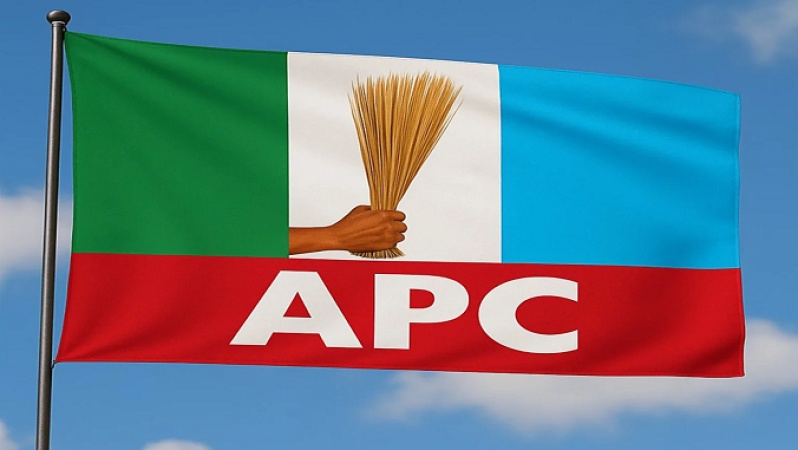
The mandatory request for the data register of party members to be submitted to INEC ahead of party congresses and conventions. Opposition parties see it as an ambush. They claim that the ruling APC had perfected its own, probably got wind of it ahead of the Bill’s passage into law. What is your take?
Section 77 of the Electoral Act, which mandates political parties to submit their membership registers before their primaries, congresses, and conventions, is not a new element of electoral law. It was incorporated into the Electoral Act of 2022, but parties breached it because the section did not specify penalties for violations or non-compliance. Section 77 now states that a party must keep a digital register of its members, including their names, genders, dates of birth, addresses, states, local government areas, wards, polling units, National Identification Numbers, and photographs, in both paper and electronic formats. Each political party must submit this register to the Commission not later than 21 days prior to their scheduled primaries, congresses, or conventions. Only members listed in the register are eligible to vote and be nominated in party primaries, congresses, and conventions. A political party shall not use any other register for these internal elections apart from the one submitted to the Commission. A party that fails to submit the membership register within the specified time frame shall lose its right to field a candidate in that election. This provision has long been in the public domain. Members of other parties have participated in the deliberations of the Joint Committee of both Houses on Electoral Matters. Furthermore, the section aims to end the seasonal migration of individuals seeking a platform. Members within parties often lack fidelity to their party’s aims and objectives and are willing to sacrifice their party’s interests. If parties are simply platforms and one can switch at any moment, even trading off a governorship mandate, it would be better to have an Independent candidature rather than people suffering for a party only for the mandate to be exchanged the next day. It is a fundamental constitutional right for those who oppose the provision and believe it infringes upon their right to freedom of association or freedom not to believe in anything to take legal action.
Those who join parties are free to leave at any time. They are also free to stay away from the political arena. It is their constitutional right. The current political parties in Nigeria are not ideal for ideological politics and are barely distinguishable from each other. The concern is that their seasonal switching and lack of loyalty to their parties may be hindered, affecting all of them.
Furthermore, there is nothing fundamentally new in the new section 77 of the Act. Section 77(2) of the Electoral Act 2022 states that every registered political party must keep a register of its members in both hard and soft copies. The only additions in section 77 of the Electoral Act 2026 are the sanctions for failing to keep the register. Unless the parties claim they kept fictitious registers. I am unable to see the ambush.
Can you give us an insider’s account of how the technical glitches in the 2023 presidential elections occurred, given that both the National Assembly and presidential elections were conducted simultaneously?
I don’t have an insider’s view of what transpired. What I know is that the Commission prepared thoroughly for the 2023 general election. Unfortunately, the technical challenges that occurred during the presidential result upload to the INEC Result Viewing Portal diminished the impact of that preparation. The electoral management body appeared before the presidential election petition tribunal and explained to Nigerians what transpired. In the case of Obi vs I.N.E.C (No.1) reported in (2023) 9 NWLR, Part 1917, the Hon. Justice Ugo, JCA reviewed evidence before him and stated that “the allegation of the petitioners that INEC shut down its IReV to manipulate votes for the 2nd respondent just does not add up for me. “If anything, the probabilities arising from the results INEC declared nationwide, as X-rayed above, rather seems to me to eloquently support INEC’s position that its inability to upload the polling unit results real time as earlier promised was not deliberate but caused by technical issues outside its control that afflicted its e-transmission system, which issues it claimed made it impossible for its e-transmission system to map the uploaded polling units results for the Presidential election to any specific state. That it claimed is unlike the much smaller National Assembly elections that were conducted simultaneously with the Presidential election. It is that phenomenon it describes as glitch that was giving it an ‘HTTP 500’ error, which resultantly delayed real-time public viewing of the said polling unit results”.
IPAC has threatened to boycott the 2027 elections if the National Assembly does not amend the Electoral Act 2026. If that is done, can it affect the credibility of the outcome?
IPAC is not a recognised political party by INEC. It lacks the authority to bind any of Nigeria’s political parties. It functions solely as a consultative forum for political parties.
Some of those claiming to be political parties do not have offices outside the Federal Capital Territory. Others lack organisational structures anywhere in the country. Some are opportunistic platforms awaiting defectors from other parties. They only become active during elections, transforming into platforms for hire. Nigeria needs ideologically driven political parties deeply rooted in their members. It requires parties in which members genuinely register, pay their dues, attend meetings willingly, and are ideologically committed to the party’s aims and principles. Such parties should be grassroots-based and not centred around any individual. What we have today are not political parties but platforms for contesting elections.
Finally, what does retirement look like to you?
I was appointed as a National Commissioner for a five-year term and left at the end of my tenure. I did not submit a letter of resignation. I was not a civil servant, nor did I retire from the Commission. Every National Commissioner is aware of their final date to leave the Commission. On that day, as specified in your letter of appointment, you depart from the Commission, and that is what I did. Nobody reminds you; you remind yourself, and you leave.
Before my appointment, I was actively practising law and had disengaged from the law firm to avoid a conflict of interest. Prior to my appointment, I served as the Executive Director of Human Rights Monitor, a human rights organisation based in Kaduna. I only temporarily withdrew, in accordance with the terms and conditions of my appointment.
I have resumed my legal practice and civil society work. I am making my modest contribution to civic and voter education. I am reading, writing, and actively engaging in my civil society activities and my legal practice. (Sunday Tribune)