Updating your news feed...
NEWS EXPRESS is Nigeria’s leading online newspaper. Published by Africa’s international award-winning journalist, Mr. Isaac Umunna, NEWS EXPRESS is Nigeria’s first truly professional online daily newspaper. It is published from Lagos, Nigeria’s economic and media hub, and has a provision for occasional special print editions. Thanks to our vast network of sources and dedicated team of professional journalists and contributors spread across Nigeria and overseas, NEWS EXPRESS has become synonymous with newsbreaks and exclusive stories from around the world.

























Loading banners
Loading banners...

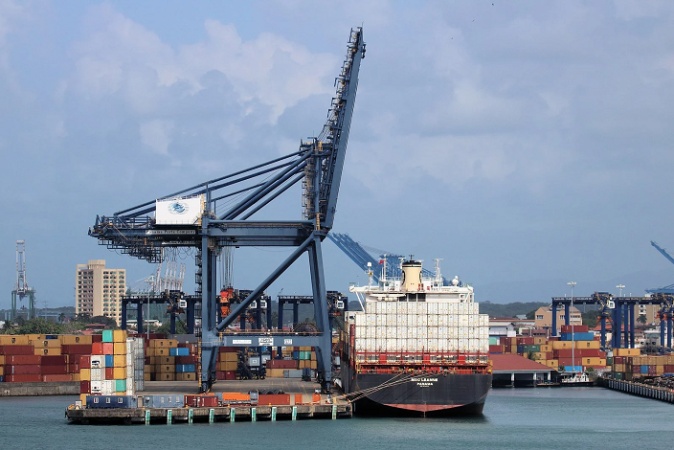
Cargo ships offloading goods at the wharf
The rapid shift from trade promotion regulations to revenue generation by government agencies in the maritime sector has raised concerns about the fate of the importers, exporters and seaport operators.
The agencies such as the Nigeria Customs Service (NCS), Nigerian Ports Authority (NPA), Nigerian Maritime Administration and Safety Agency (NIMASA), Nigerian Shippers’ Council (NSC), are currently being evaluated and driven by revenue-generation benchmarks rather than statutory mandates stakeholders claim.
Irked by this situation, the Sea Empowerment and Research Center (SEREC) said the situation is now creating a highcost regime and significantly weakening competitiveness relative to West African ports.
Head of Research, SEREC, Eugene Nweke, said this trend has now extended beyond core maritime institutions to include standards, product control, freight regulation, and environmental enforcement bodies operating within the port corridor.
He stated that a review of the mandates of NIMASA, NPA, NSC, NCS, SON, NAFDAC, NESREA, and CRFFN reveals that their primary statutory obligations are safety regulation, infrastructure management, trade facilitation, environmental compliance, and professional oversight, not revenue maximization.
“Particularly noteworthy is the recent tariff adjustment by the NPA, which has triggered consequential increases by terminal operators and shipping lines, thereby escalating overall port costs,” it noted.
SEREC stated that the recent upward review of port tariffs by NPA has resulted in: Increased terminal handling charges; higher shipping line tariffs; cascading logistics cost escalation.
It added that the use of third parties (consultants) to engage in indirect revenue sources, via loyalty and leasing, constitutes operational exploits
SEREC noted that the core mandates of NPA according to the NPA Act (Cap N126 LFN 2004) are: Port infrastructure development, channel maintenance, undertaking landlord port administration, and marine services.
Also,though the NIMASA Act 2007 mandated the agency to take charge of maritime safety administration, flag and port state control, cabotage enforcement, seafarers’ certification, and marine pollution prevention, the agency is now focusing on revenue-targeted enforcement which distorts safety inspections into punitive revenue tools rather than compliance assurance mechanisms.
Making reference to the NSC, SEREC said: “If revenue pressure influences regulatory discretion, the council’s neutrality in protecting cargo owners may be compromised.
“Therefore, in addition to the NSC aiming to strike a sustainability balance, deliberate financial funding support by the government is apt, especially, to ensure that its industry economic regulatory roles are not hijacked.”
Noting that Nigeria Customs is entrenched with revenue collection, trade facilitation, border security and anti-smuggling operations, the group said aggressive revenue benchmarks have resulted in frequent valuation disputes, reclassification controversies, post-clearance demand notices, and delays and compliance fatigue.
“However, it is expected that the integration of trade facilitation tools and efforts being channelled towards system automation or one stop shop(OSS) /time release study (TRS) is aimed to add impetus, especially in reducing cargo dwell time within the customs zone..
“Professional cum industry logic shows that the NCS stands to perform much better ( in terms of increased revenue and trade facilitation), if given cargo throughput handling targets”, he stated.
Other agencies with concerns are Standards Organisation of Nigeria (SON), National Agency for Food and Drug Administration and Control (NAFDAC), National Environmental Standards and Regulations Enforcement Agency (NESREA), and Council for the Regulation of Freight Forwarding in Nigeria (CRFFN).
SEREC said the prevailing revenue generation era is heralding inflationary pressure, whereby higher port costs translate directly into increased import costs, feeding domestic inflation.
It stated that trade competitiveness has also declined, as Nigeria risks losing its strategic West African maritime dominance.
It noted that the situation also erodes investor confidence, where unpredictable cost regimes deter long-term infrastructure and shipping investments.
Where 65 per cent to 70 per cent of institutional focus becomes more revenue-driven, it stated that regulation becomes taxation, compliance becomes negotiation, while governance becomes extraction.
SEREC calls for immediate policy recalibration, adding that Nigeria must choose between short-term revenue optics and long-term maritime competitiveness. The Guardian)