 ADAD
ADAD
Updating your news feed...
NEWS EXPRESS is Nigeria’s leading online newspaper. Published by Africa’s international award-winning journalist, Mr. Isaac Umunna, NEWS EXPRESS is Nigeria’s first truly professional online daily newspaper. It is published from Lagos, Nigeria’s economic and media hub, and has a provision for occasional special print editions. Thanks to our vast network of sources and dedicated team of professional journalists and contributors spread across Nigeria and overseas, NEWS EXPRESS has become synonymous with newsbreaks and exclusive stories from around the world.












Loading banners
Loading banners...


Senate President, Godswill Akpabio and Speaker of the House of Representatives, Tajudeen Abbas
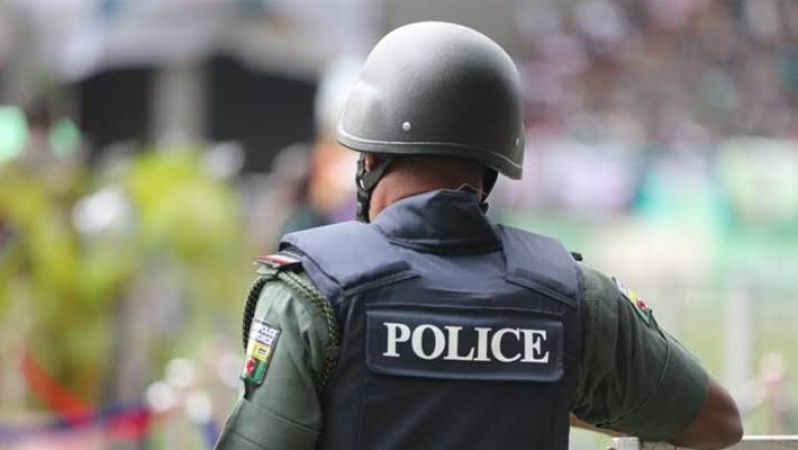
The Senate has signalled its readiness to fast-track the amendment of the 1999 Constitution to accommodate the establishment of state police, declaring that the renewed push by President Bola Ahmed Tinubu for the reform has further strengthened lawmakers’ resolve to conclude the process within weeks.
In an exclusive telephone interview with The Guardian, the Chairman, Senate Committee on Media and Public Affairs, Yemi Adaramodu, said the President’s call was receiving accelerated legislative attention, adding that near unanimity has already been achieved among federal lawmakers on the contentious reform.
According to Adaramodu, the National Assembly had made significant progress on the constitution review process even before the President’s public appeal.
“President Tinubu’s appeal on state police is being taken seriously by the National Assembly,” he said. “Even before Mr. President spoke, we had achieved near unanimity on the issue, among other items listed for amendment in the Constitution.
“Our case is being aided by agreements among many strata of leadership in Nigeria, including the Nigeria Governors’ Forum, the state Houses of Assembly and traditional rulers. So, it will not take us much longer to conclude the processes and pass the constitution amendments.”
He explained that the only reason for the delay in concluding the broader constitution review exercise was the urgency that attended the recent amendment to the Electoral Act, which required concentrated legislative effort.
“The urgency created by the Electoral Act amendment demanded that all legislative attention be given to it. We practically had to abandon many other legislative duties to concentrate on it.
“Now that we have put it behind us, the next issue is the constitution review, which we have all agreed in the National Assembly to give accelerated hearing. So, we have no problem at all with the appeal by the President because we are very much on course.”
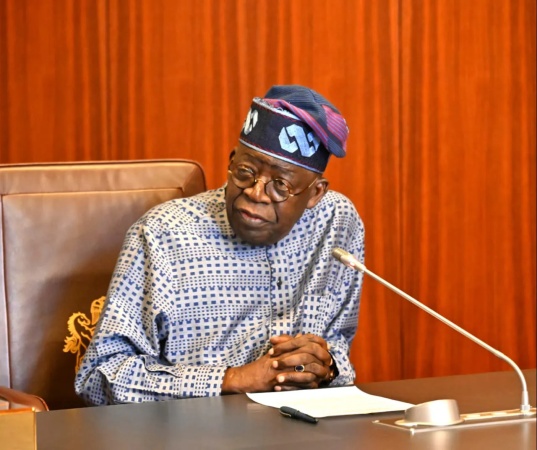
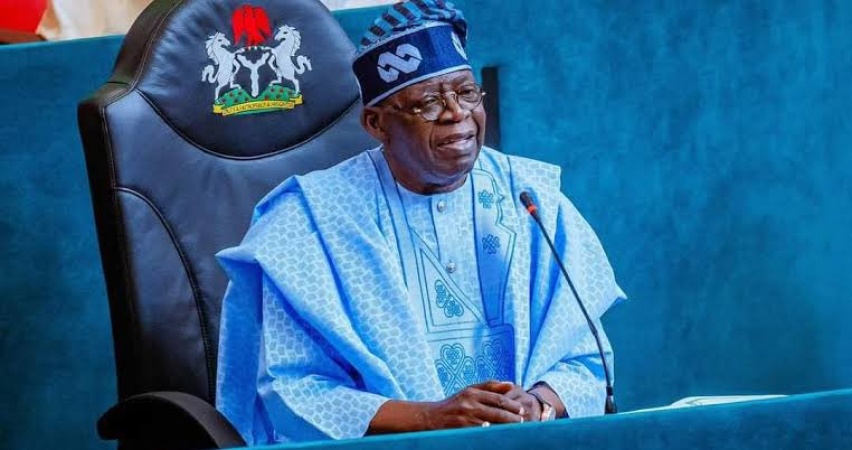
President Tinubu had called on the National Assembly to begin the formal process of amending the Constitution to allow for the establishment of state police as part of efforts to address the country’s deepening security crisis.
The President made the appeal during an interfaith breaking of fast with members of the Senate at the Presidential Villa, Abuja, describing Nigeria as “extremely challenged” by terrorism, banditry and insurgency.
“What I am asking for tonight is for you to start thinking how best to amend the Constitution to incorporate state police, for us to secure our country, take over our forests from marauders and free our children from fear,” he told the lawmakers.
Tinubu commended the Senate for what he described as consistent legislative backing in confronting security challenges and assured them that their collaboration would not be taken for granted.
At a similar gathering with state governors and senior officials at the Presidential Villa on Monday night, President Tinubu pledged that his administration would establish state police as part of renewed efforts to confront the country’s escalating security challenges.
Addressing the gathering, Tinubu said his government would not delay on its earlier promises, many of which were made before he assumed office in 2023.
His words: “What I promised Nigerians will not be postponed. Security is the foundation of prosperity. Without it, farms cannot flourish, businesses cannot grow, and families cannot sleep in peace.
“We will establish state police to curb insecurity. This is not about politics; it is about practicality. It is about empowering states with the tools to protect their people while strengthening our national framework.
“We must be bold enough to reform what is not working. We must be united enough to protect what we hold dear. Nigeria will be safer. Nigeria will be stronger. And together, we must commit to making it so.”
The renewed executive-legislative alignment appears to have injected fresh momentum into a reform that has been debated for decades but repeatedly stalled over political and constitutional concerns.
The question of state police has historically generated intense debate within the National Assembly and across the country. While proponents argue that decentralised policing is indispensable in a vast and diverse federation, critics warn of the potential for abuse by state governors and the risk of politicisation.
A strong supporter of the initiative, Senator Sani Musa (Niger East), argued that insecurity has become a universal experience across Nigeria’s 36 states.
“When we are talking about state police, every state in this country is facing one insecurity challenge or the other. If we look at the issue of state police carefully, it will be good for us,” he said.
However, former Senate Leader, Mohammed Ali Ndume, who represents Borno South, has consistently expressed reservations about the proposal, insisting that strengthening existing federal security structures may be a more prudent path.
“Personally, I don’t support state police,” Ndume said in an interview. “Right now, we have less than 400,000 police personnel nationwide, and you are clamouring for the creation of state police. Why don’t you increase the number and train, equip, arm and motivate them — what I call TEAM?”
Ndume maintained that with proper resourcing, the Nigerian Armed Forces, including the police, possess the capacity to decisively confront insurgency and banditry within a short timeframe.
Speaking in an interview with The Guardian in Kaduna after a two-day dialogue with stakeholders on ‘Citizens’ Engagement on Enhancing Police Community Synergy in Nigeria,’ the Director of Programme at CLEEN Foundation, Dr. Salaudeen Hashim, expressed fear that the creation of state police may further deepen ethnic and religious crisis in Nigeria.
He also noted that should the National Assembly endorse the idea of creating state police in the country, the financial capacity of various states would be over stretched and the welfare and safety of citizens may not be enhanced.
He said: “For me as a person, I like state policing as an approach rather than state police. The reason is that if we don’t show carefulness in putting state police in perspective, we may end up having ethnic police; and an ethnic police in a country that is already deeply polarised along ethnic and religious lines definitely would have problems.
“We have seen governors; the nature and character of the governors that we have do not suggest that state police will solve our problem in Nigeria. As a matter of fact, introducing state police would create a new problem in the country.”
Hashim argued that for state police to thrive in Nigeria, there must be an accompanying State Criminal Justice System that also supports its implementation.
“For instance, you must have State Custodian Services because that is a value chain. You must also have a process that will allow state police to function differently without any federal infrastructure, which again requires a lot of funding,” he added.
Contributing to the debate, a United Kingdom (UK)-based Nigerian, Sola Adeyemi, said the country’s security challenges have exposed the limits of a policing architecture designed for a different time and a different population.
In a piece titled, ‘Rethinking Nigeria’s Police Structure: A Country at the Edge of its Own Patience,’ made available to The Guardian, Adeyemi noted that “there are moments in a nation’s life when the familiar begins to feel inadequate, when the structures that once promised stability begin to show their age, and when the distance between the governed and those who claim to protect them becomes too wide to ignore.”
According to him, many of the threats destabilising communities – banditry in the North-West, cult violence in the South-South, kidnapping corridors in the Middle Belt – are rooted in local dynamics.
“They require policing systems that understand those dynamics, that speak the language of the communities they serve, and that can respond without waiting for distant approval,” he noted.
Adeyemi noted that debate on state police is not new, but observed that something has shifted, saying: “For years, the idea of state police was dismissed as too risky, too open to political abuse, too vulnerable to the whims of governors. Those concerns remain real. But the country has reached a point where the risks of doing nothing now outweigh the risks of reform. The centre, to borrow Chinua Achebe’s phrase, is no longer holding in the way it once did.
“The truth is that Nigeria’s police structure is stretched beyond its limits. A single national force is expected to police a vast and diverse country, from the creeks of the Niger Delta to the forests of Zamfara, from the crowded streets of Lagos to the borderlands of Borno.
“Officers are often posted far from their home regions, limiting trust and weakening the flow of local intelligence. Tactical decisions, even in moments of crisis, frequently require approval from Abuja. The result is a system that is both overburdened and under-responsive, a system that asks too much of its officers and delivers too little to its citizens.”
He, however, noted that a more effective structure would not be a simple replacement of one system with another, but a layering of responsibilities that reflects the complexity of the country itself.
“A leaner federal police, focused on terrorism, organised crime, cybercrime, and interstate investigations. State police forces, rooted in local recruitment and local accountability, responsible for everyday crime and rapid response. And community-based units, embedded within local councils, working with traditional institutions and civil society to rebuild trust and provide early-warning intelligence. Such a structure would require safeguards: Independent oversight bodies, transparent recruitment, clear separation between political officeholders and operational command. These are not optional. They are the price of reform. But they are also the foundation of a policing system that serves citizens rather than power.”
For Prof. Freedom Onuoha of the Department of Political Science, University of Nigeria, Nsukka, the to and fro argument on state police is part of the dominant narrative that is used to justify the problem Nigeria is currently facing.
“How come we are talking about Nigeria being ripe, for how long?” he asked. “The whole nature of the Nigerian State is supposed to be a federal structure. That is by design; that’s what the Nigerian state is supposed to do. But you have a federal structure wherein it is superimposed in a unitary system. So, whenever you want to talk about anything that has to do with the federal system, it’s being discussed as an anatomy or something coming rather too early whereas it should have been the practice rather than the exception.”
Onuoha said state police has been in practice in the country in a very quasi form for the past two decades. He added: “I think it is very rare now for you to talk about any of the states out of the 36 states that do not have one kind of community vigilante system enabled by the state. For example, look at Anambra State. Anambra has already, going by state law, inaugurated the Anambra Vigilante Service. Other states have theirs. If you go to the Southwest, we are having the Amotekun and stuff like that. These are clear, immature elements of this whole idea of state police. But the point is that they are struggling. You know, the political class is slightly uncomfortable using the language ‘state police’ because the idea of state police simply means you have already formalised what is already existing in a quasi form into a more legalised and institutionalised form.”
Noting that there’s nothing that state police will do that “these guys” (state vigilante services) are not doing, he argued that the conversation should shift to providing some frameworks, either new policy frameworks or new legislative frameworks, that would enable the formalisation of state police out of the quasi-frameworks currently in existence.
Onuoha added: “These informal, quasi and pseudooutfits are already performing this job. The conversation should be about the kind of federal law. The kind of federal law that will then inform the unique specificities of the state police. For example, if we are going to have a state police that will require having an office created at the federal level that superintends and oversees their operations, then it may be clearly defined in the constitution.
“So, this whole debate of always saying that the governors will manipulate them, we need to only strengthen certain institutional and legal safeguards. This is where a federal system becomes very key.
“But you see, they are not showing that necessary political will. And the tendency, therefore, is that the country is increasingly being swamped by insecurity. But a central security system is highly incapable and insufficient to address some of these security challenges that, ordinarily, state security forces could have been able to deal with, at least at the level of infancy or at the level at which they were still developing before they first started to become a national security challenge.”
On his part, elder statesman, Chief Chekwas Okorie, said that setting up state and community policing is achievable, just as he praised President Bola Tinubu’s push for its realisation.
Okorie stated that the one command structure of the country’s security architecture had been unable to tackle insecurity, stressing that there was a need to integrate home grown measures.
He noted that the push for state police by Tinubu is an opportunity for the country to address its security challenges and in the long run, institute order in society.
“I wholeheartedly welcome President Tinubu’s push for state police in Nigeria. The clamour for state police and community policing has been in the front burner for a long time.
“I am confident that an executive bill to amend the relevant aspects of the 1999 Constitution as amended by the National Assembly will be expeditiously passed if their cozy relationship with the Presidency is anything to go by. State police systems will reduce insecurity in Nigeria to the barest minimum. I support it wholeheartedly,” he stated.
Okorie urged the National Assembly to take the bull by the horn and amend the constitution to reflect the new dynamics, insisting that the country had become too large and security too complex to be effectively handled by the present architecture.
Two prominent South-West socio-political organisations, Afenifere and Yoruba Leaders of Thought, have declared that the establishment of state police is achievable, provided the Federal Government adopts the right constitutional and political strategies.
The groups, led by Chief Reuben Fasoranti and Prince Tajudeen Olusi respectively, insisted on Friday that Nigeria is long overdue for decentralised policing. They warned that continued delay in creating state police or failure to strengthen existing regional security outfits, would further aggravate the nation’s security challenges.
National Organising Secretary of Afenifere, Mr. Kole Omololu, said state police is not only achievable but constitutionally feasible and politically necessary.
According to him, the realisation of state policing does not lie within the exclusive powers of the President but is anchored in constitutional amendment, requiring the cooperation of the National Assembly and the 36 State Houses of Assembly.
“The burden of expedition lies more with the legislature than with the Executive,” he said.
Omololu noted that under the current constitutional framework, policing remains on the Exclusive Legislative List, vesting operational control solely in the Federal Government, a structure inherited from military rule.
“While this model may have been defensible in the immediate post-civil war era, it has proven increasingly inadequate in addressing the contemporary security realities of a vast and diverse federation of over 200 million people,” he said.
He described President Tinubu’s push for state police as consistent with his long-standing advocacy for true federalism.
“His position on state police is not an opportunistic political gambit but a logical extension of a long-standing ideological commitment to decentralisation. As Governor of Lagos State between 1999 and 2007, he championed fiscal federalism, constitutional restructuring and devolution of powers. His present push must be seen within that continuum,” Omololu added.
Outlining steps to actualise state policing, Omololu said the Executive must first transmit a clearly drafted constitutional amendment bill, accompanied by an implementation framework addressing operational standards, funding structure, inter-agency coordination and safeguards against abuse.
“A well-articulated blueprint would prevent the debate from being derailed by speculative fears,” he said.
He urged the leadership of the National Assembly to prioritise the amendment within its constitutional review timetable, arguing that insecurity has become an existential threat to national cohesion.
“Public hearings should be conducted expeditiously, and voting timelines clearly defined,” he added.
He called on state governors to demonstrate unambiguous commitment by mobilising their State Assemblies for ratification, noting that the amendment process requires concurrence from at least two-thirds of the states.
Addressing concerns raised by opponents with regard to abuse, he suggested embedding constitutional safeguards, including legislative oversight of appointments and harmonised operational guidelines with federal standards, while retaining federal policing powers for interstate crimes, terrorism and national security.
On capacity, he argued that states already manage complex sectors such as education, healthcare and revenue administration, and could adopt phased implementation, with capable states serving as pilots.
Drawing from comparative federal systems such as the United States, Germany, Canada and Australia, he maintained that decentralised policing does not threaten national integrity but can enhance intelligence gathering, community trust and rapid response.
According to him, pilot schemes, structured dialogue and transparent cost-benefit analyses could help shift the discourse from fear to practicality.
“The President has opened the door. It is for lawmakers, federal and state, to walk through it with statesmanlike resolve. In a federation confronting asymmetric threats and mounting public anxiety, constitutional courage is not optional; it is imperative,” Omololu stated.
Also, spokesman of the Yoruba Leaders of Thought, Mr. Bayo Aina, emphasised the need to strengthen existing regional security outfits as a demonstration of commitment to state policing.
He noted that the Federal Government’s public encouragement of governors to pursue the policy marks a significant departure from the post-1966 centralisation of governance under military rule.
“Perhaps the Federal Government should commit to financial incentives or support for states that establish functional policing organisations of their own,” Aina said.
He added that regional development commissions should also promote cooperation in security and policing efforts.
The groups maintained that while the constitutional pathway may be rigorous, the political will to pursue reform must now match the urgency of Nigeria’s deepening security concerns.
The divergence of opinion reflects broader national anxieties. Nonetheless, Deputy Speaker of the House of Representatives, Benjamin Kalu, had earlier indicated that once the National Assembly concludes its work on the relevant constitutional provisions, the amendments would be transmitted to the states for ratification.
In Plateau State, one of the regions hardest hit by recurring violence, the House of Assembly expressed readiness to support the reform.
Speaker Daniel Naalong recently wrote an open letter urging swift legislative action, arguing that while fears of political misuse are legitimate, the protection of human life must take precedence.
In Sokoto State, lawmakers have pledged to fast-track any bill establishing state police.
Similarly, the Borno State House of Assembly, through its spokesperson Babakura Maina, indicated that it stands ready to begin deliberations once the National Assembly concludes its process.
Also, Kaduna State Governor, Uba Sani, has called for the immediate creation of state police, warning that Nigeria’s centralised policing structure can no longer guarantee adequate protection, especially for rural communities.
In Zamfara, widely regarded as an epicentre of banditry, the government said it would soon transmit a state police bill to the Assembly. Kano State lawmakers are expected to commence debate on the issue upon resumption from recess, while Nasarawa and Gombe states have indicated that internal consultations are ongoing.
Under Nigeria’s constitutional framework, the establishment of state police requires an amendment to the 1999 Constitution. Such an amendment must secure a two-thirds majority in both chambers of the National Assembly and be ratified by at least 24 of the 36 state Houses of Assembly.
The fact that several state assemblies have begun preliminary moves to consider the proposal for state police is a boost for the proponents as well as a sign of growing consensus across the federation.
For now, the Senate’s pledge to accelerate consideration of the amendment marks a significant step in a reform process that has lingered for years. With the executive arm pressing for urgency and state assemblies signalling openness, the coming weeks may prove decisive.
If the National Assembly succeeds in securing the constitutionally required majorities and transmitting the amendment to the states, Nigeria could witness one of the most consequential security reforms since the return to democratic rule in 1999. (Guardian)



