Updating your news feed...
NEWS EXPRESS is Nigeria’s leading online newspaper. Published by Africa’s international award-winning journalist, Mr. Isaac Umunna, NEWS EXPRESS is Nigeria’s first truly professional online daily newspaper. It is published from Lagos, Nigeria’s economic and media hub, and has a provision for occasional special print editions. Thanks to our vast network of sources and dedicated team of professional journalists and contributors spread across Nigeria and overseas, NEWS EXPRESS has become synonymous with newsbreaks and exclusive stories from around the world.


Loading banners
Loading banners...

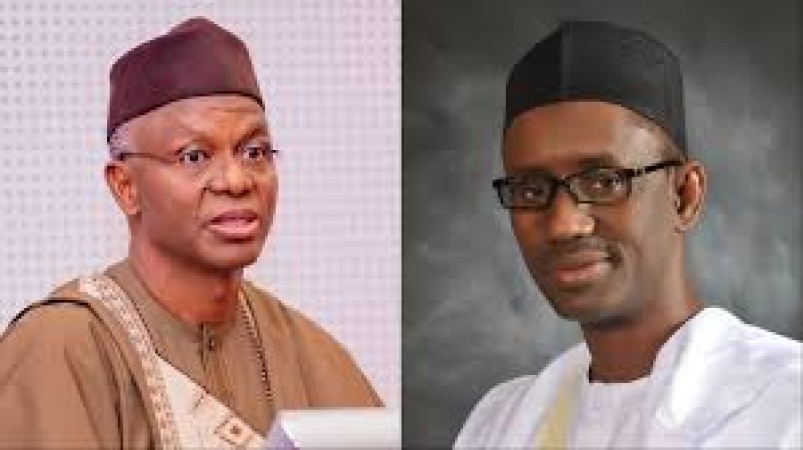
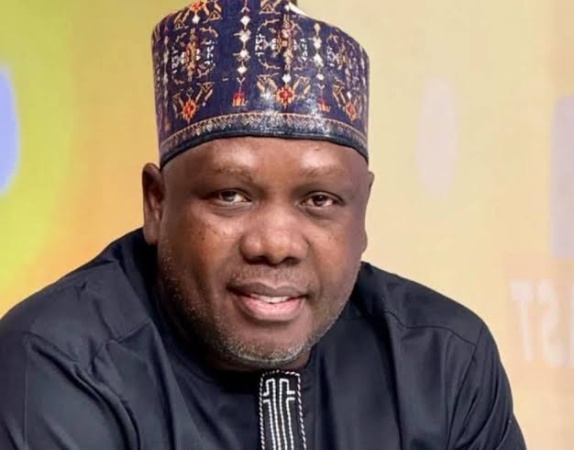
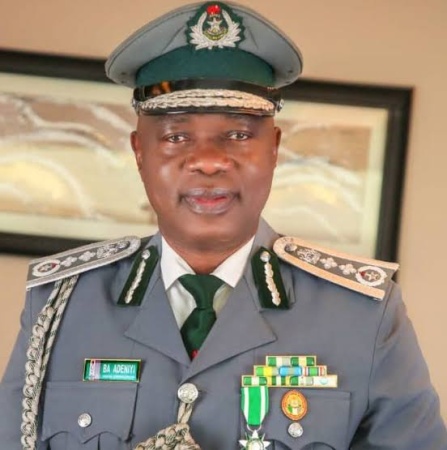
El-Rufai, Ribadu
The escalating confrontation between former Kaduna State Governor, Nasir El-Rufai, and the National Security Adviser, Nuhu Ribadu, has revived a remarkable chapter in Nigeria’s 2007 succession politics as documented by El-Rufai himself in his 2013 memoir, The Accidental Public Servant.
In pages 358 to 360 of the book, El-Rufai narrated what he described as the “beginning of our problems”, a dramatic political episode involving Ribadu, former President Olusegun Obasanjo, and the eventual successor, Umaru Musa Yar’Adua.
At the time, Ribadu was Chairman of the Economic and Financial Crimes Commission (EFCC) and one of the most powerful figures in Obasanjo’s anti-corruption architecture.
El-Rufai and Ribadu were once close allies and friends, sharing political ambitions and working together in Nigeria’s corridors of power. But 13 years after the book’s publication, the relationship between the two men appears to have soured.
El-Rufai recently alleged that Ribadu ordered his arrest and was behind an attempt to detain him at the Nnamdi Azikiwe International Airport, Abuja. Ribadu has denied the claim.
In a separate dispute, El-Rufai accused the NSA’s office of procuring thallium sulphate, a toxic compound.
The Office of the National Security Adviser denied the allegation and referred the matter to the State Security Services for investigation.
El-Rufai, was on Monday detained at the headquarters of the EFCC in Abuja on after hours of interrogation over an alleged N432 billion corruption probe.
El-Rufai on page 358 of the book which is now circulating on social media, tensions flared when Yar’Adua informed Ribadu that Obasanjo had invited him to run for president.
Ribadu’s reaction, as quoted in the memoir, was unequivocal.
“Well, Obasanjo has not told me, and as far as the presidency is concerned, I have my candidate for president, and that is Nasir El-Rufai. I am going to have to speak to Obasanjo about this.”
El-Rufai wrote that Ribadu immediately sought clarification from Obasanjo but was allegedly denied access to the President for two days.
When they eventually met, Obasanjo reportedly denied directly inviting Yar’Adua to contest, suggesting instead that the Katsina governor had approached him independently.
El-Rufai said, “When Yar’ Adua left Nuhu’s office, Nuhu immediately called Obasanjo to see if he was available to talk. Obasanjo invited him over, but by the time Nuhu got to the Villa, Nuhu was not allowed past the gate.
“For two days, Nuhu tried to see Obasanjo and Obasanjo avoided seeing him. When they finally saw each other, Nuhu demanded to know how and why he would make such a choice. Nuhu’s logic was that if we had performed creditably at the federal level, Obasanjo should pick the successor from amongst officials at the federal level, not anoint someone from amongst those he considered to be poorly-performing state governors.
“Obasanjo initially denied that he invited Yar’ Adua to run. He said Yar’Adua came to him like everyone else and said he wanted to run, but Obasanjo did not invite Yar’ Adua to run. Nuhu was relieved and left Obasanjo in peace.
Ribadu, El-Rufai claimed, initially believed Obasanjo and phoned him afterward, insisting Yar’Adua had lied. El-Rufai said he disagreed, telling Ribadu that he had known Yar’Adua since 1972 and did not believe he would fabricate such a claim.
He bluntly concluded that Obasanjo, not Yar’Adua, was being economical with the truth.
The memoir takes a more dramatic turn when El-Rufai alleged that Ribadu, convinced that Yar’Adua’s candidacy threatened his preferred succession path, resorted to what he described as instinctive “policeman logic.”
According to him, Ribadu “dusted off EFCC files,” revisited corruption petitions against Yar’Adua, and initiated investigations into Katsina State officials.
El-Rufai said, “It took sometime before Nuhu figured out Obasanjo’s games and what was really happening. Nuhu’s instinctive reaction was that of a typical policeman – dust off EFCC files and comb for petitions against Umaru. Nuhu did not realise it at the time, but he was the one in trouble, not Obasanjo or Umaru.
“He dusted off all his files and found petitions against the Katsina state governor and launched investigations. He even arrested some local government chairmen from Katsina as part of his investigation of diversion of local government funds by the state governor.
“He was clearly trying to take Yar’Adua out of the race and narrow all options to zero except for El-Rufai. This was all a one man show on the part of Nuhu – he never told me, he never confided in anyone until it was too late to counsel him otherwise. As soon as I heard that the chairman of Mashi Local Government, a young man that my sister living in Mashi town knew very well, had been arrested, I figured out what my friend was up to.
El-Rufai interpreted these actions as a strategic attempt to narrow the presidential field.
In a direct exchange he recounts in the book, El-Rufai said he confronted Ribadu:
“Nuhu, what the hell are you doing?”
Ribadu, he wrote, insisted they could still “take charge” and stop Obasanjo’s plan.
But El-Rufai said he cautioned him against escalating the situation, arguing that Obasanjo’s willingness to leave office after earlier third-term controversies was itself a democratic gain.
“Asking for anything more than this, it is just being selfish,” El-Rufai wrote that he told Ribadu.
He further warned that launching investigations at that late stage would only reinforce accusations that the EFCC targeted individuals for political reasons.
El-Rufai portrayed Ribadu as operating a one-man strategy, accusing him of failing to make his plans “open and inclusive.”
He claimed Ribadu even approached some of his wealthy associates to bankroll what he described as a “last man standing” strategy
By the time Ribadu allegedly halted the investigations, El-Rufai suggested the damage had been done politically and personally.
“I was not the only one – Oby and several others urged him to stop, and he eventually did. If Nuhu had trusted anyone with whatever his vision was and we had jointly come up with a plan for me or indeed anyone we settled on to run for president, perhaps we would have developed an overall strategy that might have worked.
“However, Nuhu never trusts anyone with his plans. He preferred to plan and act alone if he could – this is simply how he is. By the time we realised what was going on and Nuhu had even recruited a couple of my wealthy friends to support and agree to bankroll his “last man standing” strategy, things had gone really bad, for me and all of us.” (The Guardian)